Today In Charleston History: February 1

1761-Religion

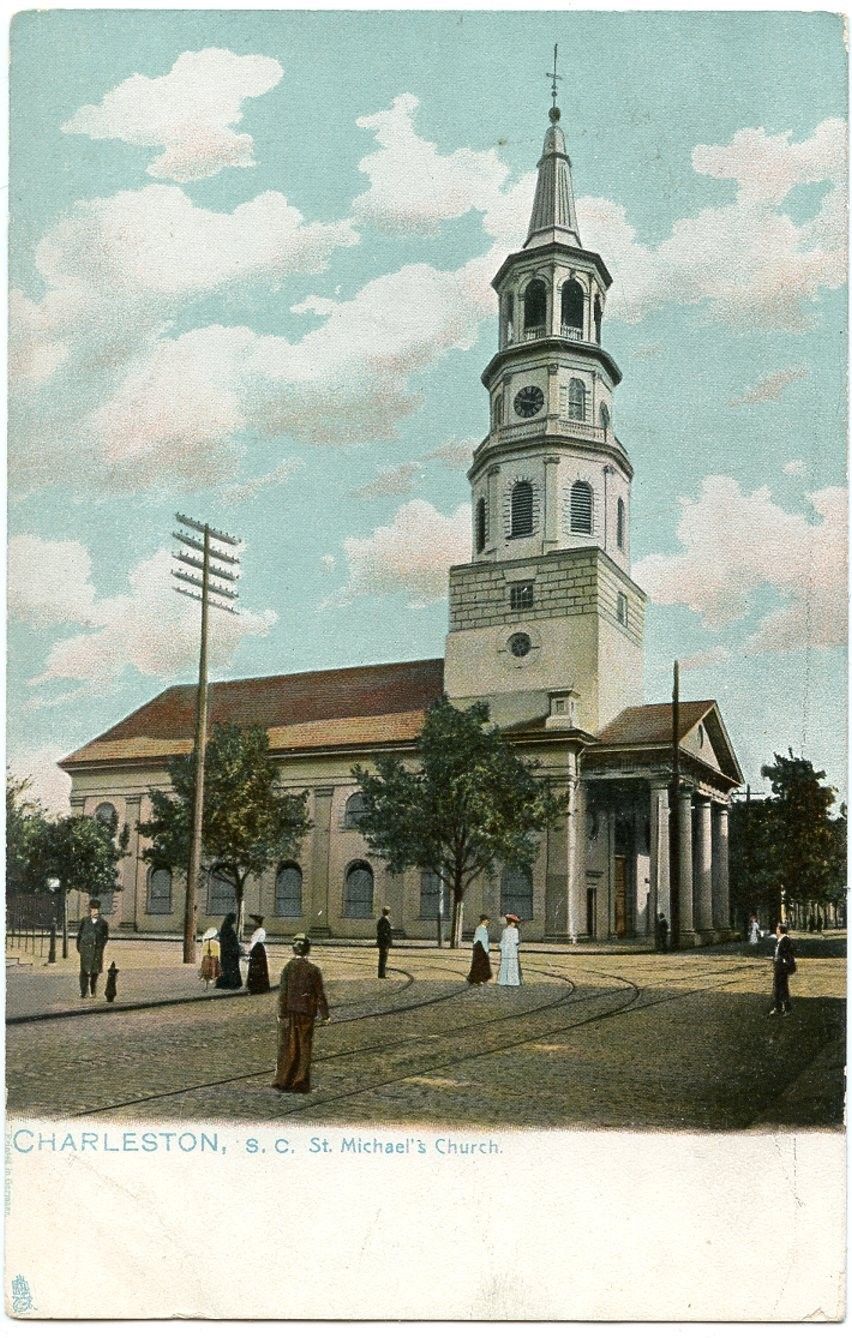
st. michael's - postcardFirst services are held at St. Michael’s Church, by Rev. Robert Cooper. It is the oldest surviving church building in Charleston, celebrating its 245th anniversary today. 

1836-Births
cordoza

Francis Lewis Cardozo

Francis Lewis Cardozo born in Charleston. Highly educated in Scotland and England, he became a Presbyterian minister, politician, and educator. He was the first black to hold a statewide office in the United States. He was elected state treasurer in 1872. After he did not cooperate with corruption, some legislators unsuccessfully tried to impeach Cardozo in 1874. He was reelected in 1874 and 1876.

1870 – Charleston Firsts

Jonathon Jasper Wright became the first black justice elected to a state Supreme Court. 
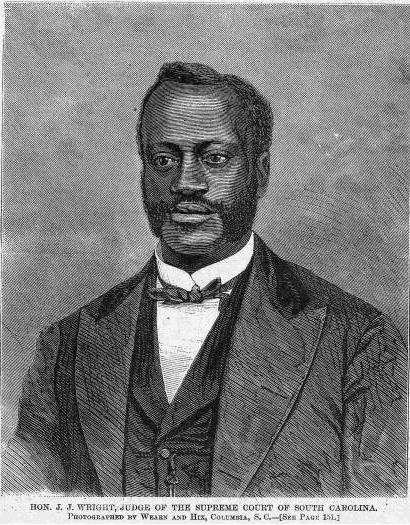
Jonathon Jasper Wright

Jonathon Jasper Wright

Jonathon Jasper Wright was born in Pennsylvania in 1840.  He attended the district school during the winter months, and worked for neighboring farmers the rest of the year. He saved up enough money to attend Lancasterian University in Ithaca, New York. 

He graduated in 1860 and for the next five years he taught school and read law in Pennsylvania. In October 1864 Wright was a delegate to the National Convention of Colored Men in Syracuse, NY. Chaired by Frederick Douglas, the convention called for a nationwide ban on slavery, racial equality under the law and suffrage for all males.

Wright then applied for admission to the Pennsylvania Bar but was refused due to his race. After the War Wright joined the American Missionary Association and was sent to Beaufort, South Carolina to organize schools for freed people.

When the Civil Rights Act was passed, Wright returned to Pennsylvania and demanded an examination for the Bar. He was admitted on August 13, 1865, and became the first black lawyer in Pennsylvania. By January 1867 he was back in South Carolina as head of the Freedman’s Bureau in Beaufort where he became active in Republican politics. He was chosen as a delegate to the historic South Carolina Constitutional Convention that met in Charleston in 1868. As one of the trained black lawyers in South Carolina, Wright had a great deal of influence in writing the Constitution and setting up the judiciary.

In a somewhat back-handed compliment, the Charleston Daily News called Wright a “very intelligent, well-spoken colored lawyer.”

There were 124 delegates to the convention, seventy-three of which were black. The new Constitution bestowed voting rights and educational opportunities “without regard to race or color.” It also included universal male suffrage, the omission of all property qualifications for office, outlawed dueling and legalized divorce.

Later that year, in the first election under the new Constitution, Wright was elected to the South Carolina Senate – one of ten black senators elected. In the South Carolina House seventy-eight of the 124 representatives were black. However, many whites had no intention of “obeying a Negro constitution of a Negro government establishing Negro equality.” The white-dominated press called it the “Africanization of South Carolina” and most whites never accepted the 1868 Constitution as legitimate. They were determined to undermine all the gains made by blacks with the support of the Yankee carpetbaggers.

Shortly after the election, Solomon Hogue resigned from the South Carolina Supreme Court to take up a seat in Congress. That left a vacant seat on the high court for the rest of his judicial term, ten months. The black Republican-dominated legislature was determined to elect a black man to the open seat to join the two white men – Chief Justice Franklin J. Moses, a scalawag (a Southerner who supported the Federal government), and Associate Justice A.J. Willard, a carpetbagger (a Yankee involved in Southern  politics.)

In fact, Moses was a former governor who was notoriously corrupt, picking up the nickname “king of the scalawags: and “the Robber Governor.”

The three candidates for the open seat were Wright, J.W. Whipper, a black representative, and one white candidate, former governor James Orr. The final vote on February 1, 1870 in the legislature was:

  • Wright, 72
  • Whipper, 57
  • Orr, 3

Ten months later, Wright was elected to a full term (six years) on the court. He was thirty years old.

1906-Births

Helen Chandler was born in Charleston. By the late 1920s she had become a hugely popular actress on the New York stage. She was in 1920 production of Richard III, which starred John Barrymore, Macbeth in 1921 with Lionel Barrymore. By the time of her first film she had been in over twenty Broadway productions. Hollywood beckoned, but whatever quality made Chandler a success on the stage did not survive the transition to film.

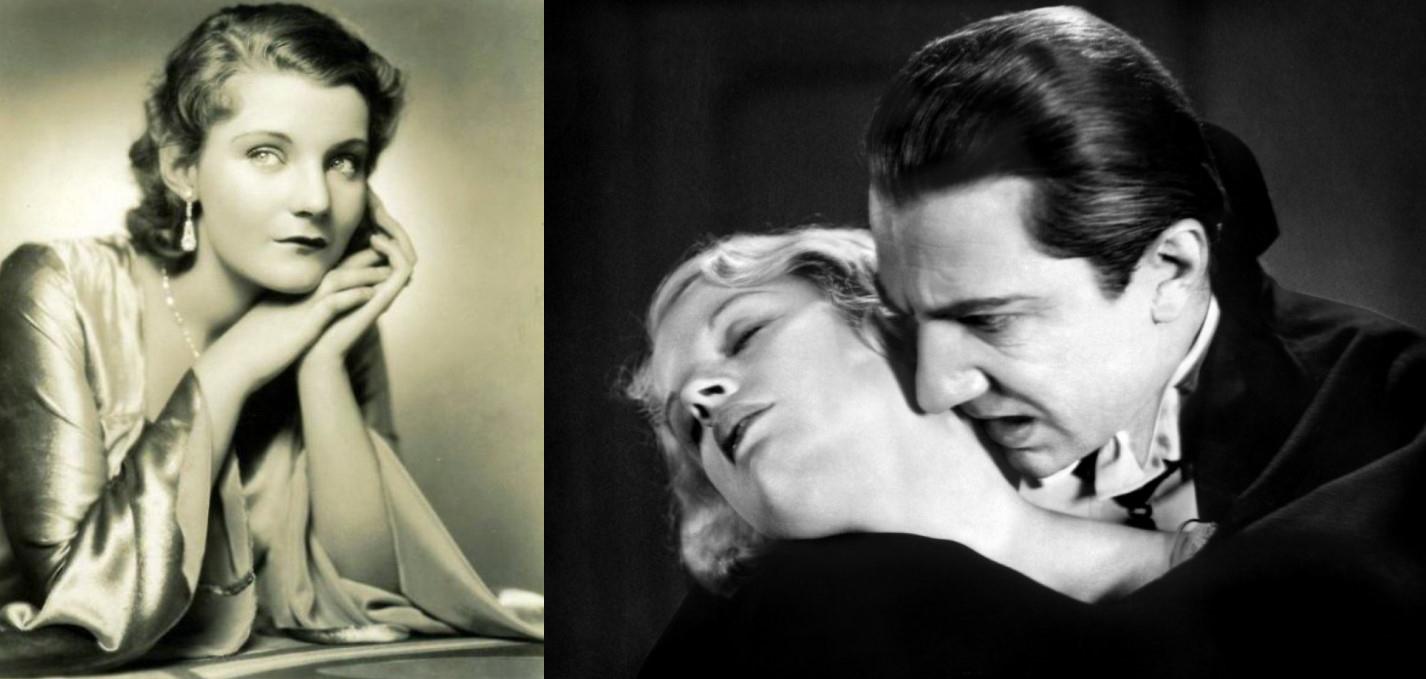
Chandler is probably best remembered by movie fans as the fragile Mina, pursued and nearly vampirized by Bela Lugosi in the original Dracula (1931). In 1937 Chandler left Hollywood and returned to the stage, but a dependency on alcohol and sleeping pills haunted her subsequent career, and in 1940 she was committed to a sanitarium. Ten years later she was disfigured in a fire, caused by smoking in bed.  Chandler died following surgery for a bleeding ulcer on April 30, 1965. Her body was cremated, and as no relative ever came forward to claim the remains, her ashes now repose in the vault of the Chapel of the Pines Crematory in Los Angeles.
helen chandler

Left: Helen Chandler in Hollywood. Right: Chandler being ravished by Bela Lugosi in Dracula, 1931
Today In Charleston History: January 31

1780 – The Seige of Charlestown

Continental Army General Benjamin Lincoln requested that Governor John Rutledge “order 1500 Negroes to assemble in the vicinity of this town with the necessary tools for throwing up lines immediately.”

1800

Charles Pinckney delivered a speech in the U.S. Senate on the subject of trial by jury.

Viewing as I do impartial juries as among the most indispensable ingredients of a free government, it is my duty to declare … that in those states in which the federal marshals have a right to summon jurors as they please, the people are not free!

1863 – Civil War
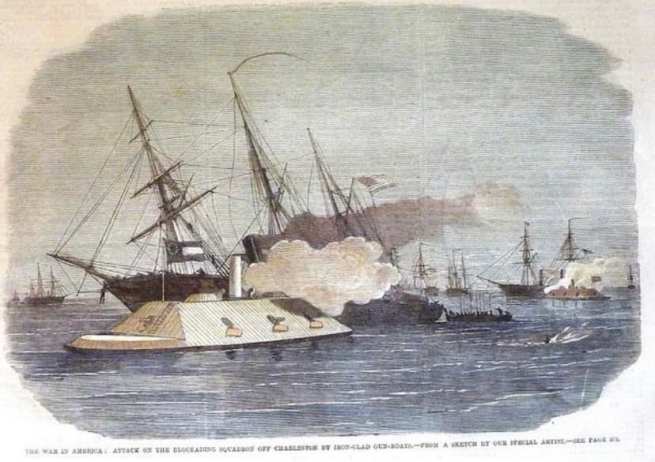
At about 5am, Confederate ironclads CSS Palmetto State and CSS Chicora attack the Union blockade outside of Charleston harbor. The Palmetto State rammed bow first into the Mercedita’s port quarter, ripping a hole in the ships keel. The Confederate crew fired its point blank into the Mercedita, bursting the ship’s boilers, immediately crippling the ship. The Chicora  and the USS Keystone State exchanged fire, with a Confederate shot hitting the steam drum on the Keystone State. The explosion killed 20 men. The Chicora signaled for the ships surrender but there was no reply.
Union ships began to arrive and both sides fired at one another until sunrise, when the wooden Union navy retreated, unable to inflict damage upon the iron side Confederate warships.

ironclad attack - 1863

 1864 – Civil War   

 Colonel W.W.H. Davis took in three Confederate Irish deserters from Charleston who complained they were “much pinched for food.” From the deserters accounts Davis reported that:

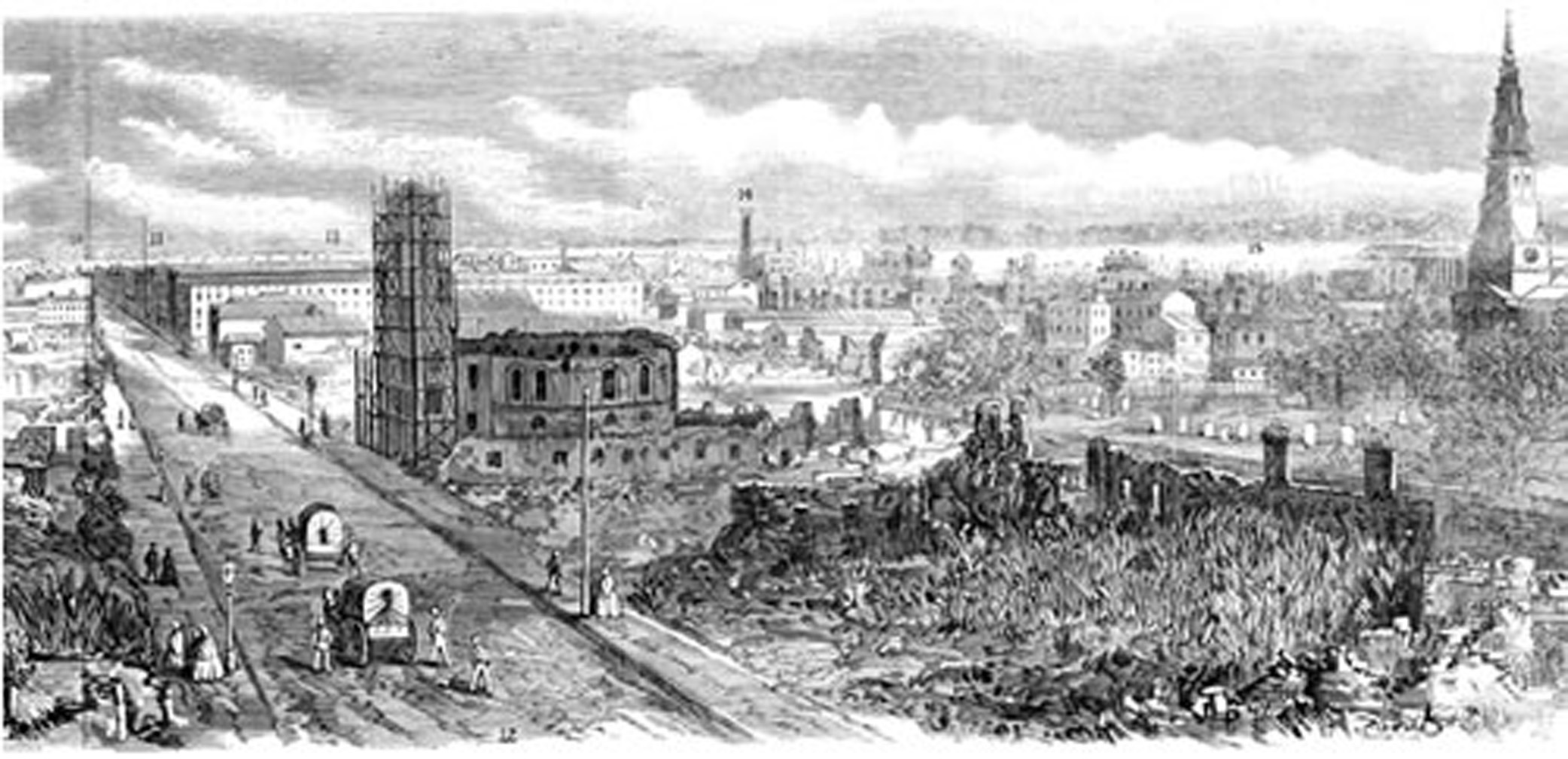
Our shells have done considerable damage in Charleston. Most of the shells explode, but as yet few people have been injured by them. Charleston is depopulated, except by the very poorest class of people, and they have moved as far uptown as they can get. Beauregard’s headquarters and all the public offices have been removed to the upper part of the city. 

meetingengraving

Charleston, Meeting Street, circa 1865 – Ruins of the Circular Church after the 1861 fire and Federal Bombardment.

Today In Charleston History: January 29

1737. Culture. Scandal

It was not unusual for husbands to place notices in the Gazette announcing their wayward wives, as a means of shaming them to society. However, Issac Simmons placed the following announcement in the Gazette about his wife, lured by the theater life:

This is to give notice to all people in Charles-town or elsewhere, not to credit harbor nor entertain Mary Simmons, the wife of Issac Simmons, which has made an elopement from her said husband especially to be employed in the Playhouse in Charles-Town, it being entirely against the said Mr. Simmons’ request. 

1751. Slavery

The Assembly received a petition of Thomas Miles for reimbursement for his slaves Venus and Kitt who “were tryed for Poisoning and condemned to be executed pursuant to the directions of the ‘Act for the better ordering and governing of Negroes and other Slaves in this Province.’” Kitt was executed but Venus was “pardoned, and was afterwards sent off the Province.” 

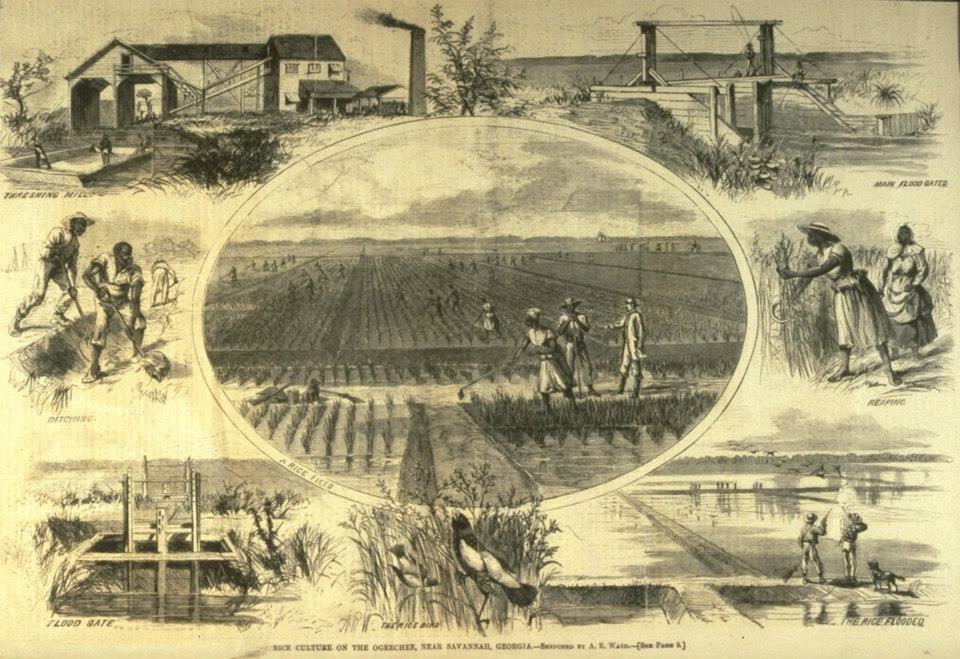
The most profitable commodity in the lowcountry was African slaves  – to work the rice fields, construct casks and barrels and build and maintain the boats that transported the rice down river from plantation to port.  Two skilled slaves represented a substantial financial investment for a planter. In present-day economics, their value would approximately be $15,000 – $20,000. The Carolina planters’ appetite for new slaves was so strong that one merchant wrote that “Negroes are the proper bait for Catching a Carolina Planter, as certain as Beef to catch a Shark.”

Lt. Governor Bull estimated there were 57,253 Negroes in South Carolina, about 15,000 adult males. He also noted that with only about 6000 white males this “must raise in our midst many melancholy reflections.”

rice production

Today In Charleston History: January 22

1787

The Columbian Herald called for drastic measures to prevent burglaries and robberies:

The danger which threatens the inhabitants from a gang of villains who now actually invest this city [Charleston], calls loudly for an extraordinary exertion of the police, but also of the inhabitants themselves. – It were to be wished that voluntary associations might be entered into to patrol the streets, guard the property of citizens, detect the villains, and bring them to condign punishment.

1800 – Slavery.

 The newly freed slave, Telemaque, now called Denmark, chose his former owner’s surname as his own, Vesey. Most freedmen chose a name that cut their ties with their former owners. Denmark, however, knew that making his living in Charleston would be hard enough and the linguistic association with a prominent white man’s name would give him a better chance to make his way in the city. 

He was unable to purchase freedom for his wife, Beck and their three children. He was also not allowed as a free black to live in the home of his wife’s master. Due to Charleston’s growth, city expansion and ship building Denmark began to make his living as a carpenter in Charleston. A Freeman carpenter could earn a respectable $1.50 per day so Vesey apprenticed himself to a “free black” carpenter named Saby Gaillard, who lived at 2 Wentworth Street.

Vesey “soon became much respected and esteem’d by de white folks … distinguished for his great strength and activity.”

vesey statue copy

Denmark Vesey statue @ Hampton Park, Charleston


Today In Charleston History: January 16

1825 – Religion. Charleston First

Several members of Beth Elohim “withdrew from the congregation, and joining a larger number who were not members, establishing a new place of worship.” They called themselves the Reformed Society of Israelites. They met at Selye’s Masonic Hall on 209 Meeting Street. This was the first Reformed Jewish Society in America. 

1825 – Slavery.

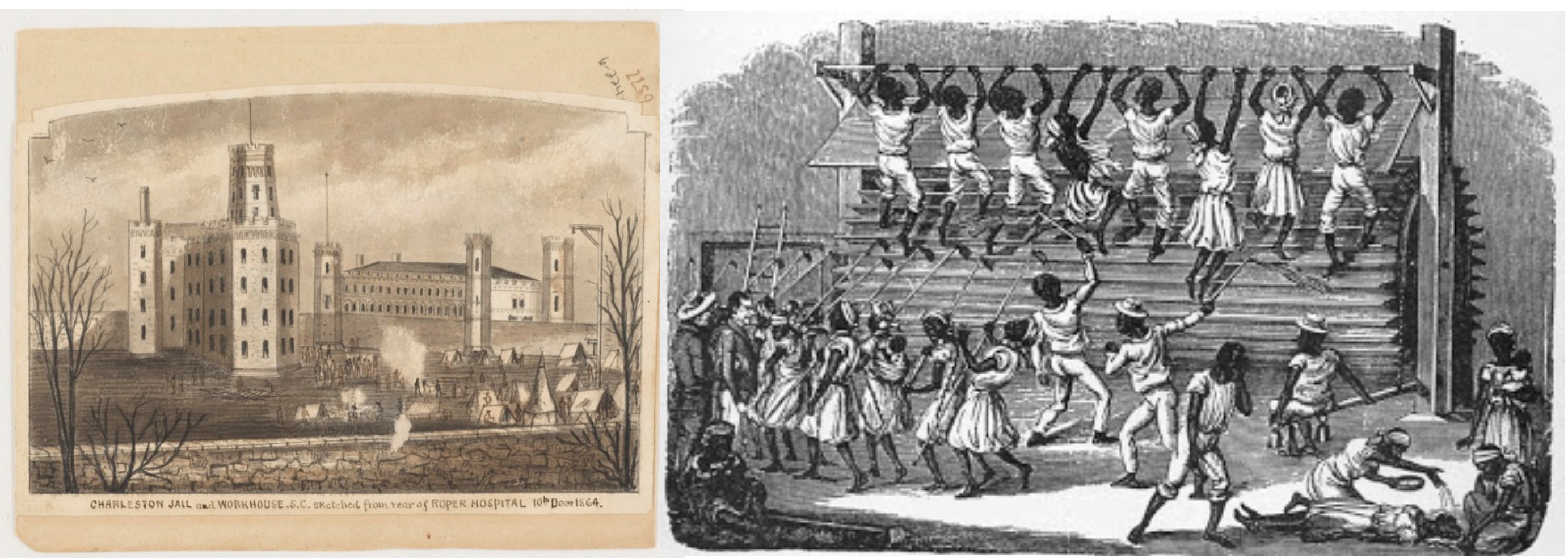
Charleston erected a treadmill in the city workhouse for the punishment of slaves, relieving white masters from the distasteful practice of whipping their slaves. For a fee, the master could send the slaves to the workhouse for punishment administered by city authorities. The slaves would walk on the treadmill in shifts, providing power for the grinding of corn. Overseers with rawhide whips maintained order.

jail and workhouse - illustration

LEFT: Jail & Workhouse, rear view, looking north from Roper Hospital on Queen Street. RIGHT: Traditional work treadmill.

Today In Charleston History: January 15

1766

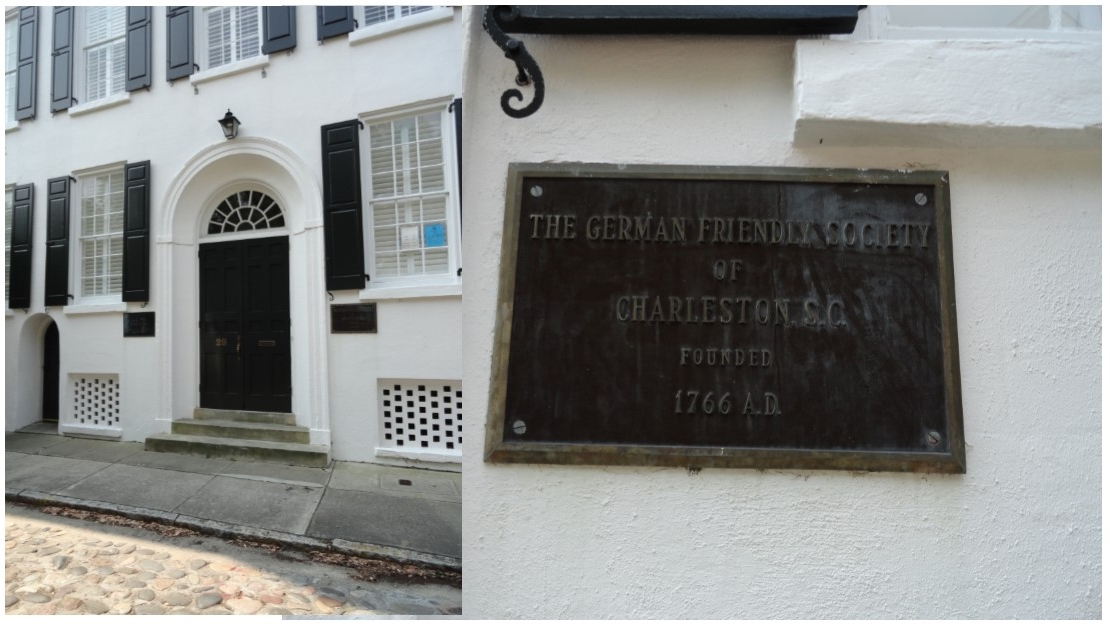
The German Friendly Society was organized in the home of Michael Kalteisen. The rules decreed that either German or English had to be spoken at the meetings. They still hold weekly meetings. 

German Friendly Society, Chalmers Street. close-up of marker on building.

German Friendly Society, Chalmers Street. close-up of marker on building. Photos byMark R. Jones

1778 – Disasters

A major fire started at the corner of Queen and Union (now State) Street. Aided by a blustery wind it burned across Charleston for seventeen hours, destroying hundreds of buildings, including most of the holdings of the Charleston Library Society, Peter Timothy’s printing shop, and Charles Pinckney, Junior’s house on Queen Street. The city was “smoking ruins, and the constant falling walls and chimneys.”

1821

Charleston Councilman, John J. Lafar warned Rev. Morris Brown that the city would not tolerate “instructional school for slaves” as “education of such persons forbidden by law.”

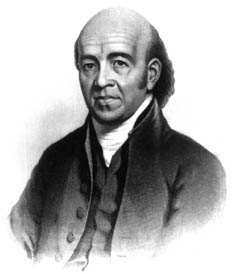
Rev. Morris Brown

Rev. Morris Brown

Morris Brown was born a free black in Charleston in 1770. In 1813 he traveled to Philadelphia with another free black, Henry Drayton, to collaborate with the Rev. Richard Allen in the founding of the country’s first African Methodist Episcopal Church (AME). Brown was a prosperous shoemaker by trade and charismatic religious leader in Charleston’s black community.  Brown and Drayton were ordained as pastors by Allen and returned to Charleston with the goal of establishing an AME congregation locally.

They discovered their church, Bethel Methodist, was embroiled in a controversy. White church trustees had voted to construct a hearse house (a carriage house / garage for storing hearses) on top of the black cemetery. Brown and Drayton led an exodus of 4300 free blacks and slaves from the church and began construction of an independent African Methodist Church at the corner of Anson and Boundary (now Calhoun) Streets.

White Charlestonians regarded the black church as “dangerous bastions of slave autonomy” and routinely disrupted the services and threatened to close the churches. Their fear was that a “latter-day Moses” would emerge from the congregation, so every Sunday service was attended by “white authorities routinely … in the back pews.”

Councilman Lafar’s warning to Rev. Brown was a not-so-subtle reminder that the city white authorities were watching their activities. 


Today In History: January 1

1787 – Deaths  
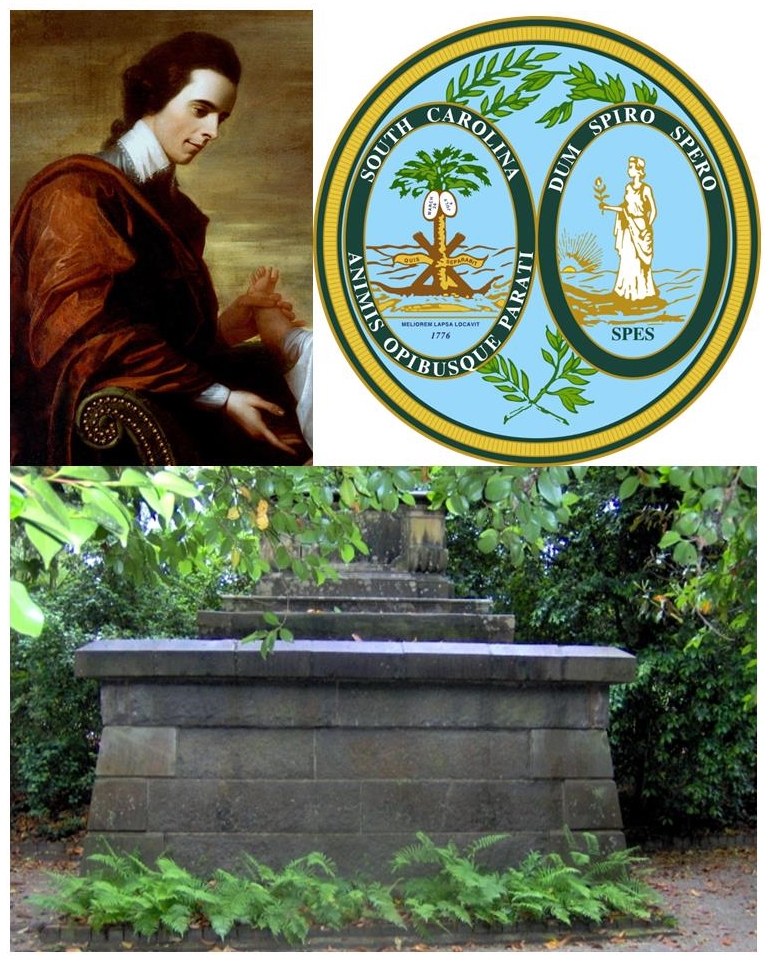
TOP: Arthur Middleton & the Great Seal of South Carolina BOTTOM: Middleton tomb at Middleton Place

TOP: Arthur Middleton & the Great Seal of South Carolina BOTTOM: Middleton tomb at Middleton Place

Arthur Middleton died and was buried at Middleton Plantation. The death notice from the State Gazette of South-Carolina described him as a “tender husband and parent, humane master, steady unshaken patriot, the gentleman, and the scholar.”

He was educated in Britain, at Westminster School, and Trinity Hall, Cambridge.He then studied law at the Middle Temple and traveled extensively in Europe where his taste in literature, music, and art was developed and refined. In 1764, Arthur and his bride Mary Izard settled at Middleton Place.

Arthur Middleton was one of the more radical thinkers in South Carolina politics – a leader of the American Party in Carolina and one of the boldest members of the Council of Safety and its Secret Committee. His attitude toward Loyalists was said to be ruthless. In 1776, Arthur signed the United States Declaration of Independence and designed the Great Seal of South Carolina with William Henry Drayton.  

During the American Revolutionary War, Arthur served in the defense of Charleston. After the city’s fall to the British in 1780, he was one of the 30+ Patriot leaders imprisoned in St. Augustine, Florida.

1788

The City Gazette reported that a man “was paraded through the streets, covered with feathers, stuck in a coat of tar, as a spectacle for the execration of others more honest than himself.

No, it was not a drunken New Years Eve celebration. Apparently, the man had gone “on board of a vessel, where he saw some goods so bewitching as to induce him to break at least one of the commandments, which says ‘Thou shalt not steal.’”

1808 – Slavery.

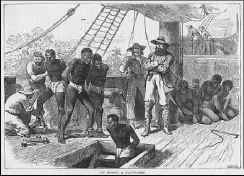
African American History Slave Ships The foreign slave trade ended by Federal law, as negotiated during the creation of the U.S. Constitution. When the US Constitution was written in 1787, a generally overlooked and peculiar provision was included in Article I, the part of the document dealing with the duties of the legislative branch:

Section 9. The migration or importation of such persons as any of the states now existing shall think proper to admit, shall not be prohibited by the Congress prior to the year one thousand eight hundred and eight, but a tax or duty may be imposed on such importation, not exceeding ten dollars for each person.

 In other words, the government could not ban the importation of enslaved people for 20 years after the adoption of the Constitution. And as the designated year 1808 approached, those opposed to enslavement began making plans for legislation that would outlaw the trans-Atlantic trade of enslaved people.

1865 – Civil War

Maj. John Johnson, a Confederate engineer wrote, “The first of January 1865, found Charleston gathered within her circle of defenses – Not invested, but much perplexed.”

Today In Charleston History: December 24

1737 – Religion
John Wesley

John Wesley

John Wesley left Charlestown for England, ending his ministry in Georgia.

1825 – Fire

A fire destroyed parts of King Street with damages estimated to be at least $80,000. Authorities determined it was the work of arsonists. Over the next several weeks, more fires were set nightly. With the Denmark Vesey slave conspiracy still fresh in resident’s mind, it was thought the arsonists were slaves.

1830

The Charleston Courier reported:

The public are respectfully informed that the Rail Road Company has purchased from Mr. E.L. Miller his locomotive steam engine and that it will hereafter be constantly employed in the transportation of passengers. The time of leaving the station in Line Street will be 8 o’clock, at 10 a.m. at 1 and half past three o’ clock p.m.. Great punctuality will be observed in the time of starting.

Best Friend of Charleston

Best Friend of Charleston

1854 – Slavery

Robert Smalls, a slave harbor pilot married hotel maid Hannah Jones.

1860

South Carolina legislature published The Declaration of the Immediate Causes Which Induce and Justify the Secession of South Carolina from the Federal Union, also known as the South Carolina Declaration of Secession. Written mainly by Christopher Gustav Memminger, it explained the reasons for South Carolina’s secession from the Union. Memminger later served as first Secretary of Treasury for the Confederate Government.

FOR full text of the “Declaration”, CLICK HERE. 

Christopher G. Memminger

Today In Charleston History: December 22

1747 – Religion

Solomon DeCosta, a Jewish merchant who seems to be in partnership with James Peyne, attended a meeting of the Commissioners for Trade and Plantations in London for “the settlement of several of their poor in South Carolina.”

1773 – American Revolution – Foundations

In the pre-dawn hours, British custom officials off loaded the 257 chests of tea and stored them in the basement of the Exchange. They informed the public that the tea would remain locked away and any attempt to remove it would be met by force. 

Exchange1823_650x650

1775

Continental Congress creates a Continental Navy, naming Esek Hopkins, Esq., as commander in chief of the fleet. Christopher Gadsden of South Carolina designed Hopkins’ personal standard, which flew from the first navy fleet. The yellow flag bore the image of a coiled snake and the Patriot motto, Don’t Tread on Me.

Gadsden, famously skeptical of any government involvement in business affairs, once stated, in the aftermath of the Jay Treaty, “Better to send a virgin to a brothel than a man to England to sign a treaty.”

900px-Gadsden_flag.svg

1812   

From Georgetown, South Carolina, Dr. Greene wrote Aaron Burr:

I have engaged passage to New-York for your daughter[Theodosia Burr Alston] in a pilot-boat that has been out privateering, but has come in here, and is refitting merely to get to New-York. My only fears are that Governor Alston may think the mode of conveyance too undignified, and object to it; but Mrs. Alston is fully bent on going.

The ship Patriot was a private vessel authorized for military service. It had been fitted with less than five cannon and attacked several British merchant ships. It was being refitted in Georgetown, her guns dismounted and hidden below decks.

1822 – Slavery

In response to the Denmark Vesey slave plot, South Carolina legislature passed the Negro Seamen Acts. Any free Negro that came into the state on a vessel would be lodged in the jail during the stay of the vessel in port. If the captain would not pay for the cost of board and lodging, the Negro would be sold into slavery.

Today In Charleston History: December 21

1800 – Birth.

Robert Barnwell Smith (Rhett) was born. 

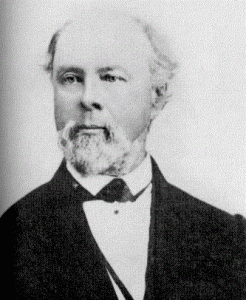
Rhett2-246x300After entering public life Robert Smith changed his last name for that of his prominent colonial ancestor Colonel William Rhett.  He studied law and became a member of the South Carolina legislature in 1826 and also served as South Carolina attorney general (1832), U.S. representative (1837–1849), and U.S. senator (1850–1852). He was pro-Southern extremist he split (1844) and one of the leading fire-eaters at the Nashville Convention of 1850, which failed to endorse his aim of secession for the whole South.

One of the original “Fire-Eaters” Rhett was was dubbed the ‘Father of Secession’ and called the ‘Lone Star of Disunion’ by his enemies in the Whig Party. In her famous diary, Mary Chesnut called Rhett “the greatest of seceders.”  During the War Rhett continued to express his radical views  through editorials in the Charleston Mercury newspaper, edited by his son. After the other Southern secession in 1861, Rhett was considered one of the leading candidates for President of the Confederate States. bit In the end, he was viewed as too radical for the position and the more conservative Jefferson Davis was selected as chief executive. 

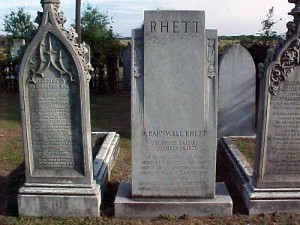
Robert-Barnwell-Rhetts-grave-300x225Rhett was critical of the Confederate Government for many reasons, including government intervention in the economy. He had previously envisioned a Confederacy that also included the Caribbean and even Brazil, but the Confederate States didn’t live up to Rhett’s dream and criticized Jefferson Davis’ adminstration as strongly as he had once criticized Washington, DC. After the War Rhett refused to apply for a Federal pardon. He died of cancer in 1876 and is buried in Magnolia Cemetery in Charleston.

1842

The Citadel, a military college, was founded in response to the Denmark Vesey rebellion. Charleston City Council established a “municipal force of 150 men … for an arsenal, or a ‘Citadel’ to protect the preserve the public property and safety.” 

1860. Day After Secession.

     The celebrations continued through the night until the sun was rising over Charleston harbor. That evening another parade of brass bands and militia units marched through the street. They stopped in front of the Mills House, where Gov. Pickens addressed the crowd:

Allow me to say to you that I hope and trust I am in possession of information that, perhaps, there may be no appeal to force on the part of the Federal authorities. If I am mistaken in this, at least as far as I am concerned, we are prepared to meet any and every issue. 

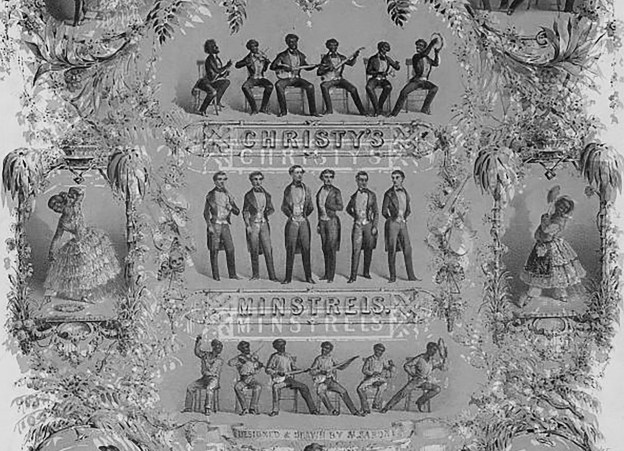
         Christy’s Minstrels, in town from New York for a series of performances at Institute Hall, entertained the crowd with their famous blackface version of “Dixie,” followed by a rousing version of the La Marseillaise.

christy minstels

1891  – Jenkins Orphanage  

Daniel Jenkins preached a sermon at the New Tabernacle Fourth Baptist Church titled “The Harvest is Great by the Laborers Are Few.” It was an appeal to the congregation to “to help these and other unfortunate children.” The congregation was just a poor as Jenkins. The donated money did not last long; it paid for some food and clothing and the rental of a small shack at 660 King Street.