Today In Charleston History: April 9

1894 – Births.

Lena Jenkins gave birth to a son, Edmund Thornton.

Edmund Thorton Jenkins

Edmund Thorton Jenkins

Edmund Jenkins (who was called “Jenks”) was the son of Rev. Daniel Jenkins, founder of the Jenkins Orphanage in Charleston. He grew up playing with the Jenkins Orphanage Band, but longed to play “serious music.” He took piano lessons in Charleston and attended Morehouse College in Atlanta.

In 1914 the Jenkins Band was invited to perform at the Anglo-American Expo in London and Jenks performed with the band until the outbreak of World War I closed down the Expo. Jenks was admitted to the Royal Academy of Music in London where he studied composition. 

His piece, “Charlestonia” was written while he was a student, and later expanded into a finished piece before his death. To learn the entire story of Jenks’ life and the Jenkins Orphanage Band, read my book Doin’ the Charleston.

1906 – Hampton Park

  John Olmsted, the nephew and adopted son of Frederick Olmsted, who designed Central Park in New York City, arrived in Charleston to work on the design of Hampton Park.  He immediately noted that the bandstand, leftover from the South Carolina Exposition that was still in place in the formal garden, should be the most notable presence in the park.

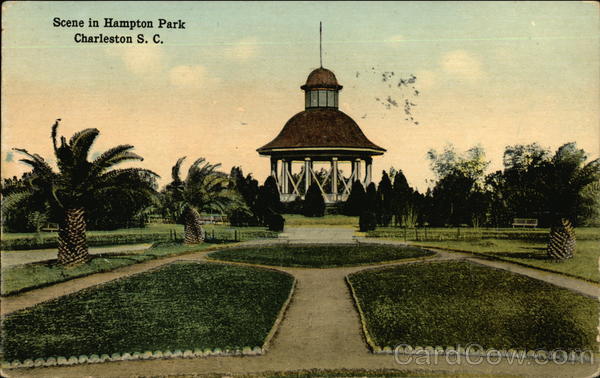
Scene in Hampton Park Charleston, SC

Today In Charleston History: April 7

1780 – The Seige of Charlestown

A group of 700 battle-tested veteran Virginia Continentals sent by Gen. George Washington arrived in Charlestown. They crossed the Wando River and landed at Christopher Gadsden’s wharf. They marched through town to the lines to the pealing of church bells. At the lines they were greeted with cheers and a firing of thirteen cannons, one for each of the independent states.

1805 – Francis Pickens Born
governor-Francis-pickens

Francis Pickens

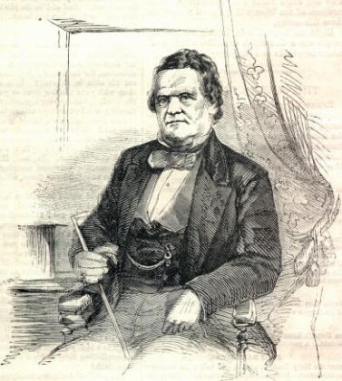
Francis Wilkinson Pickens was born in Togadoo, St Paul’s Parish, Colleton County, South Carolina. His father was former Gov. Andrew Pickens and his grandfather was Gen. Andrew Pickens, an American Revolutionary soldier at the Battle of Cowpens and later U.S. Congressman.

A cousin of Senator John C. Calhoun, Pickens was born into the culture of States Rights, and became an ardent supporter of nullification (refusal to pay federal import tariffs) when he served in the South Carolina house of representatives, before being elected to Congress and then the state senate.

Pickens served in Congress  from South Carolina from 1834 until 1843 and was a member of the South Carolina state senate from 1844 until 1846.  Under President James Buchanan, Pickens was Minister to Russia from 1858–1860, where he and his wife were befriended by Czar Alexander II. He was Governor when South Carolina became the first state to secede from the U.S.A.

As state governor during the Fort Sumter crisis, he sanctioned the firing on the ship bringing supplies to the beleaguered Union garrison, and to the bombardment of the fort. After the war,  Pickens introduced the motion to repeal South Carolina’s Ordinance of Secession, a short speech that was received in silence, in notable contrast with the rejoicing that had first greeted the Ordinance.

 1863 – Battle of Charleston

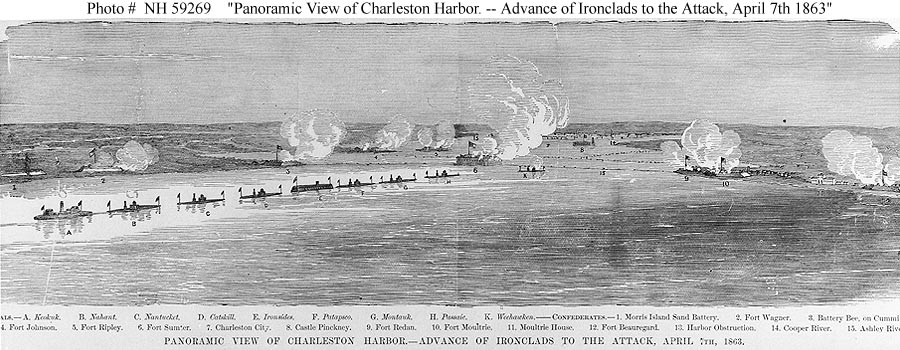
The First Battle of Charleston Harbor began at noon. Shortly after 3 p.m., they came within range of Fort Moultrie and Fort Sumter; and the battle began. Southern obstructions and a strong flood tide made the ironclads virtually unmanageable, while accurate fire from the forts played upon them at will. With the Union formation scrambled, Keokuk was compelled to run ahead of crippled USS Nahant to avoid her in the narrow channel after Nahant ’​s pilot was killed and helmsman wounded by a Confederate shot striking the pilothouse. This brought her less than 600 yards (550 m) from Fort Sumter, where she remained for half an hour receiving the undivided attention of the Confederate guns.

First_Charleston_Harbor

USS Keokuk

USS Keokuk

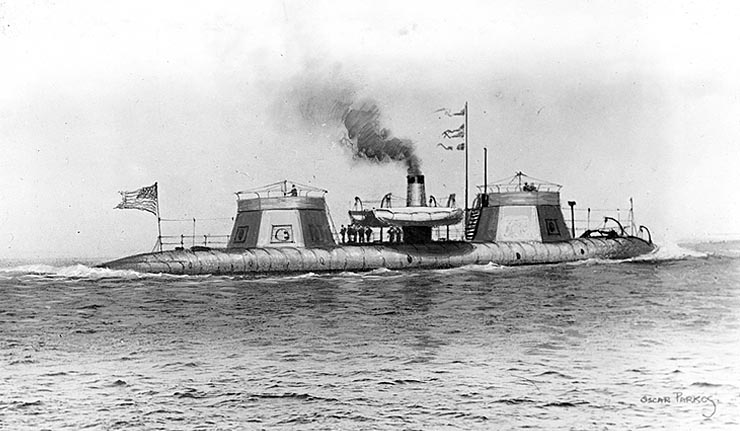
Robert Smalls, former slave, piloted ironclad USS Keokuk. The attack failed, and Keokuk was badly damaged, struck by about ninety projectiles, many of which hit at or below her waterline. Commander Rhind reported his ship as being hit by a combination of solid shot, bolts, and possibly hot shot. However, she was able to withdraw under her own power and anchor out of range, thanks in part to the skills of Robert Smalls, Her crew kept her afloat through the night, but when a breeze came up on the morning of 8 April 1863, Keokuk began taking on more water, filled rapidly, and sank off Morris Island. She had given one month of commissioned service. One of Keokuk’s sailors, Quartermaster Robert Anderson, was awarded the Medal of Honor in part for his actions during the battle. In all, 14 of Keokuk ’​s crew were injured in the battle, including Captain Rhind with a contusion to his leg. Acting Ensign Mackintosh, one of the gun captains, later died from his wounds.

Guns from the USS Keokuk

Guns from the USS Keokuk

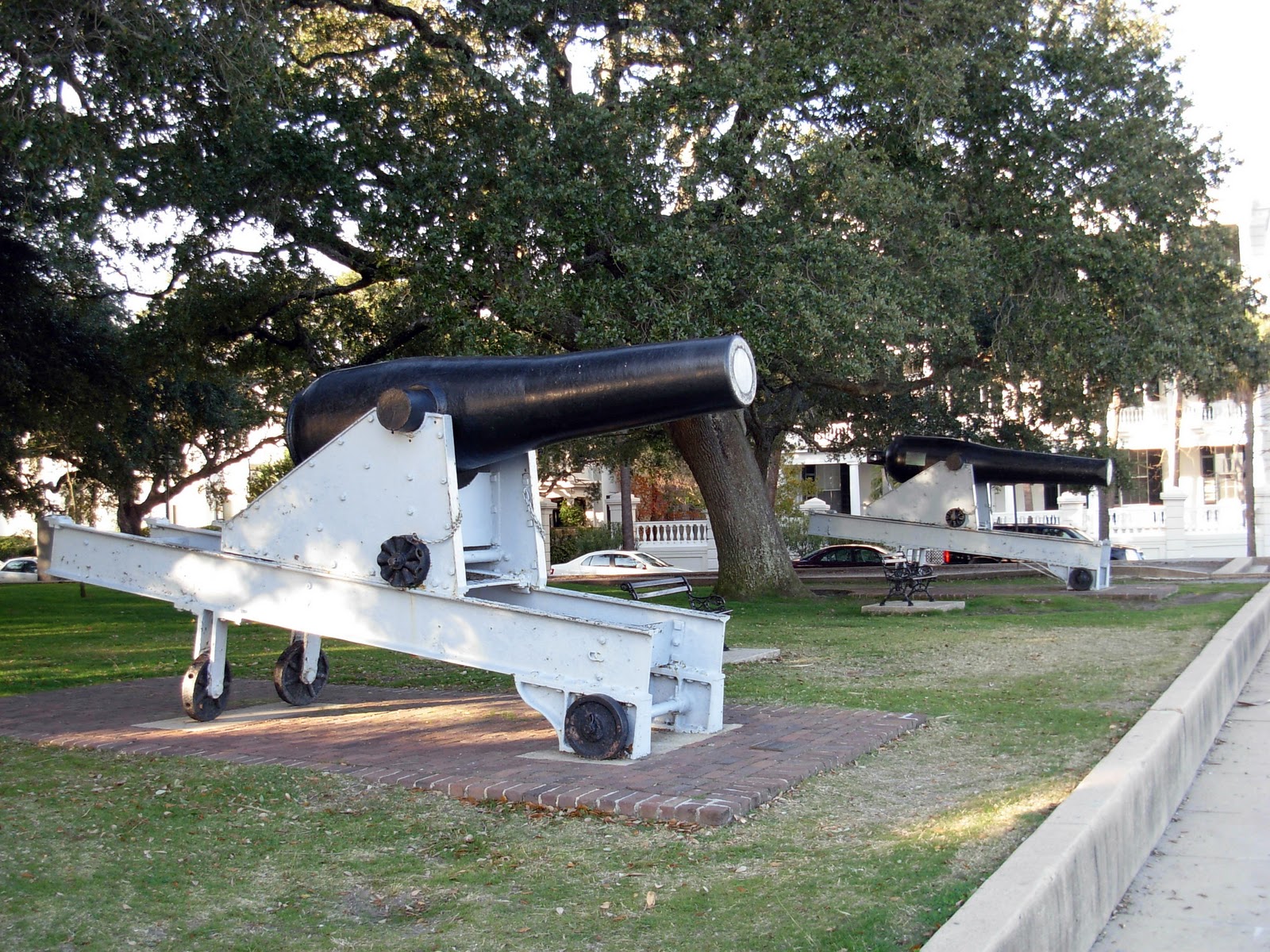
Cannons from the Keokuk are now on display at White Point Garden along South Battery.

1864 – Bombardment of Charleston

In a letter to him mother, Gus Smythe wrote:

You must not feel anxious about me up here, & never fear my falling down the stairs, tho’ there are 170 of them. Oh my, there goes that bell & such a cracking and shaking as this old steeple does get up whenever they ring … the first time you experience it you feel certain that it is going to fall immediately. It seems God’s providence was specially directed toward this vernerable – but shaky – old spire.

Today In Charleston History: April 5

1739

The South Carolina Gazette announced festivities to honor James Oglethorpe:

Tuesday last being the day appointed for the Review of the Troop and Regiment of St. Philips Charlestown, the two following commissions of his Majesty were published at Granville Bastion, under the discharge of the cannon both there and at Broughton Battery the one constituting and appointing the Hon. William Bull Lieutenant Governor in and over the province, and the other [for] his Excellency James Oglethorpe, General and Commanders of his Majesty’s Forces in the provinces of South Carolina and Georgia … In the evening his Excellency … made a general invitation to the ladies to an excellent supper and ball so the day concluded with much pleasure and satisfaction. 

1740 – Slavery
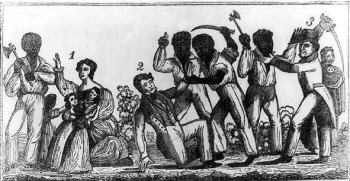
Stono Rebellion

Stono Rebellion

In response to the Stono Rebellion, the Assembly passed a new Negro Act – placing high import duty on slaves, which effectively cut off new slave trading. Its stated goal was “to ensure that slaves be kept in due subjection and obedience.”

No slave living in town was allowed to go beyond the city limits; the sale to alcohol was prohibited and teaching slaves to read and write was prohibited. Only the Assembly could grant a slave freedom. Any white person who “shall willfully cut out the tongue, put out the eye, castrate or cruelly scald” a slave was subject to a fine. 

1765 – American Revolution–The Sugar Act 

The Sugar Act was passed by Parliament. The British government had increased its debt during the French and Indian War, and was looking at various means to raise revenue. 

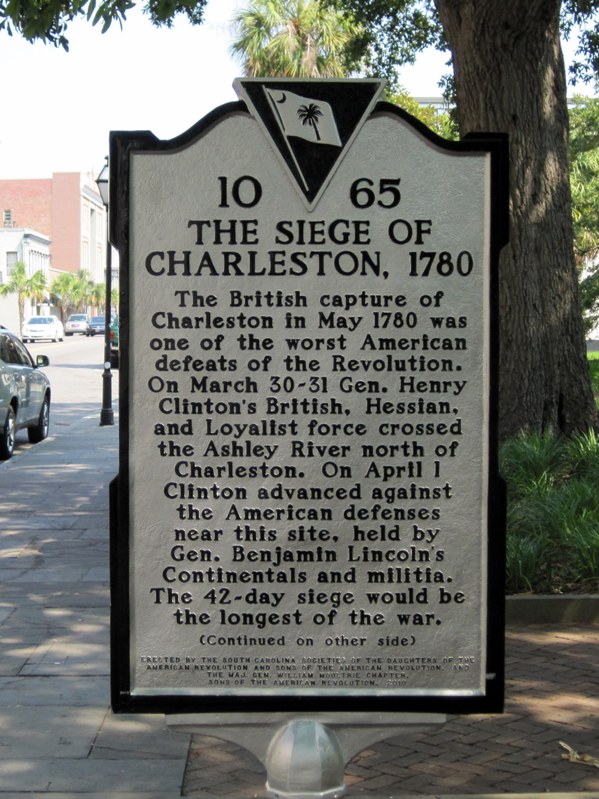
1780 – The Siege of Charlestown
Siege of Charlestown

Siege of Charlestown – British batteries outside the city.

After dark Gen. Clinton ordered the British battery at Fenwick’s Point and the Wappoo Cut, across the Ashley River, to fire upon Charlestown. The cannonballs whistling through the dark sky over the city created a “terrible clamor” with “the loud wailing of female voices.”

One of the British cannonballs struck Mr. Thomas Elfe’s house at 54 Queen Street and two damaged Governor John Rutledge’s house on Broad Street. Rutledge wrote that he was appalled at “the insulting Manner in which the Enemy’s Gallies have fired, with Impunity, on the Town.”

Also, the British galley Scourge fired eighty-five times with “every shot … into town.” During the night three British soldiers deserted to the American side. One of the soldiers “paddled himself over on a plank from James Island.”

Siege marker on King Street @ Marion Square

Siege marker on King Street @ Marion Square

1839

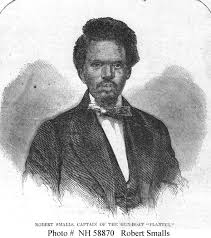
Robert Smalls was born behind his owner’s city house at 511 Prince Street in Beaufort, S.C. His mother, Lydia, served in the house but grew up in the fields, where, at the age of nine, she was taken from her own family on the Sea Islands.  The McKee family favored Robert Smalls over the other slave children, so much so that his mother worried he would reach manhood without grasping the horrors of the institution into which he was born. To educate him, she arranged for him to be sent into the fields to work and watch slaves at “the whipping post.”

By the time Smalls turned 19, he was working in Charleston. He was allowed to keep one dollar of his wages a week (his owner took the rest). Far more valuable was the education he received on the water; few knew Charleston harbor better than Robert Smalls.
smalls

Robert Smalls

It’s where he earned his job on the Planter. It’s also where he met his wife, Hannah, a slave of the Kingman family working at a Charleston hotel. With their owners’ permission, the two moved into an apartment together and had two children: Elizabeth and Robert Jr. Well aware this was no guarantee of a permanent union, Smalls asked his wife’s owner if he could purchase his family outright; they agreed but at a steep price: $800. Smalls only had $100.

By 1862, Smalls viewed the Union blockade of the Charleston harbor as a tantalizing promise of freedom. Under orders from Secretary Gideon Welles in Washington, Navy commanders had been accepting runaways as contraband since the previous September. While Smalls couldn’t afford to buy his family on shore, he knew he could win their freedom by sea — and so he told his wife to be ready for whenever opportunity dawned.

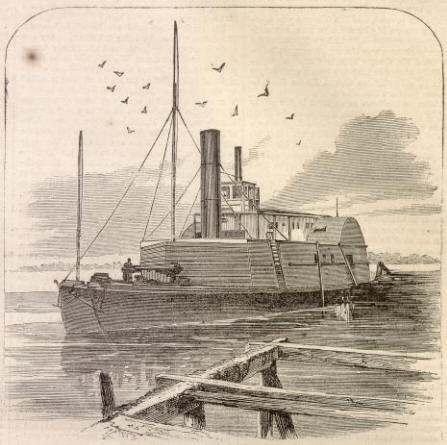
planter-gun-boat

The Planter

Just before dawn on May 13, 1862, Robert Smalls and a crew of fellow slaves, slipped a cotton steamer, Planter, off the dock, picked up family members at a rendezvous point, then slowly navigated their way through the harbor. Smalls, doubling as the captain donned the captain’s wide-brimmed straw hat to help to hide his face. As they sailed out of the harbor Smalls responded with the proper coded signals at two Confederate checkpoints and sailed into the open seas. Once outside of Confederate waters, he had his crew raise a white flag and surrendered his ship to the blockading Union fleet.

In less than four hours, Smalls had accomplished an amazing feat: commandeering a heavily armed Confederate ship and delivered its 17 black passengers (nine men, five women and three children) from slavery to freedom. “One of the most heroic and daring adventures since the war commenced was undertaken and successfully accomplished by a party of negroes in Charleston,” trumpeted the June 14, 1862, edition of Harper’s Weekly.

On May 30, 1862, the U.S. Congress, passed a private bill authorizing the Navy to appraise the Planter and award Smalls and his crew half the proceeds for “rescuing her from the enemies of the Government.” Smalls received $1,500 personally, enough to purchase his former owner’s house in Beaufort off the tax rolls following the war, though according to the later Naval Affairs Committee report, his pay should have been substantially higher.

In the North, Smalls was hailed as a hero. He lobbied Secretary of War Edwin Stanton to begin enlisting black soldiers and a few months later after President Lincoln ordered black troops raised, Smalls recruited 5,000 soldiers himself. In October 1862, he returned to the Planter as pilot as part of Admiral Du Pont’s South Atlantic Blockading Squadron. According to the 1883 Naval Affairs Committee report, Smalls was engaged in approximately 17 military actions, including the April 7, 1863, assault on Fort Sumter and the attack at Folly Island Creek, S.C.

Two months later he assumed command of the Planter when, under “very hot fire,” its white captain became so “demoralized” he hid in the “coal-bunker.” Smalls was promoted to the rank of captain, and starting in December 1863 on, he earned $150 a month, making him one of the highest paid black soldiers of the war. When the war ended in April 1865, Smalls was on board the Planter in a ceremony in Charleston Harbor at Fort Sumter.

Following the war, Smalls served in the South Carolina state assembly and senate, and for five nonconsecutive terms in the U.S. House of Representatives (1874-1886).He died in Beaufort on February 23 1915, in the same house behind which he had been born a slave and is buried behind a bust at the Tabernacle Baptist Church.

“My race needs no special defense for the past history of them and this country. It proves them to be equal of any people anywhere. All they need is an equal chance in the battle of life.” — Robert Smalls

Today In Charleston History: April 1

1766-Stamp Act. 

South Carolina courts shut down, due to lack of stamped paper. Lawyers presented a petition to hold court without stamped paper. They stated:

We claim our rights under Magna Carter, the Petition of Rights, etc … We cannot think ourselves bound by the Stamp Act, which annihilates our natural as well as constitutional rights.

Chief Justice Skinner held that the court had no power to question the authority of an act of Parliament and the fact that there was no stamped paper because of unlawful demonstrations by the people was no excuse not to follow the law.

1780 –The Seige of Charlestown.

Under cover of darkness, 3000 men marched from the British camp at Gibb’s Landing toward Charlestown. – including 1500 laborers. They stopped 1000 yards from the city’s fortifications and began construction of their seigeworks. Due to the sandy soil “the work went quickly” and within one night Gen. Clinton was amazed they “completed 3 Redoubts and a communication without a single shot.”

The following morning, Samuel Baldwin of Charlestown wrote: “We were surprised … at the sight of the works thrown up by our neighbors during the night.”

1844 – Politics

John C. Calhoun became Secretary of State in John Tyler’s Cabinet.

1927 – Doin’ the Charleston

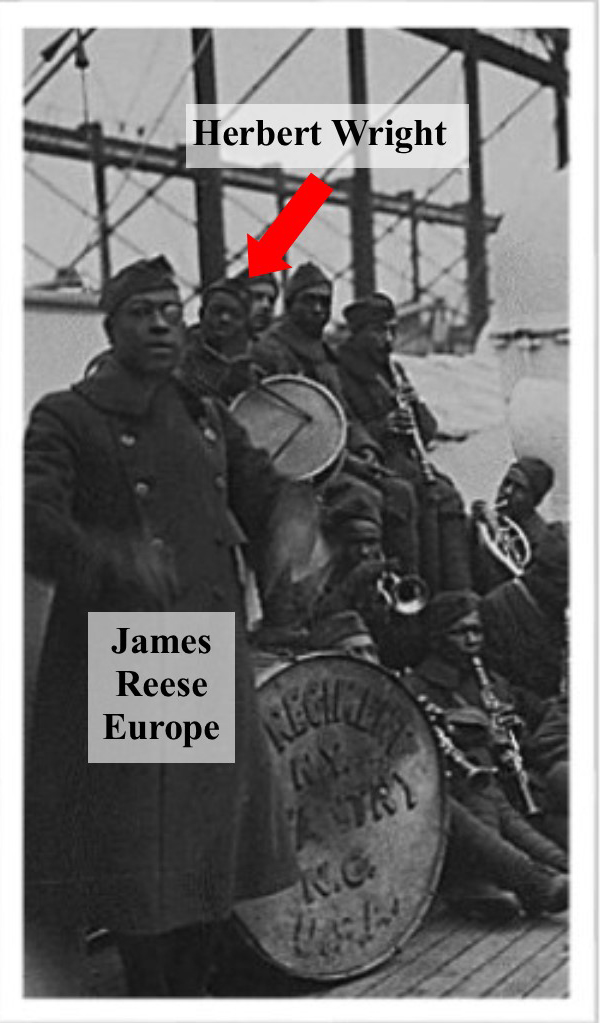
Herbert Wright of the Jenkins Orphanage was paroled on April, 1927. In 1919 he pled guilty to manslaughter and was sentenced to ten to fifteen years in the Massachusetts State Penitentiary.

Harlem Hellfighters Band

Harlem Hellfighters Band

Wright had committed a murder that shocked the nation. He had murdered band leader, James Reese Europe, backstage at Mechanics Hall in Boston. Europe was the leader of the Harlem Hellfighters Band, an outfit which had performed across Europe during World War I and has been credited in introducing jazz music to France. The Hellfighters Band was also the first black group to record music. The band included four members of the Jenkins Orphanage Band – Steve and Herbert Wright (the Percussive Twins), Amos Gaillard (trombone) and Gene Mikell (asst. director).

Read more about James Reese Europe’s life here. 

To learn the complete story of the Jenkins Orphanage Band, the Harlem Hellfighters and the murder of James Reese Europe, read Doin’ the Charleston.

doin' the charleston

Today In Charleston History: March 21

1917 – Music

From the Musical News, London: 

A song, “How Sweet Is Life” by a student, Mr. Edmund T. Jenkins, showed the composer to be possessed of a vein of melody, not original as yet, and of a style which needs unifying, but his effort was full of promise, especially in the matter of orchestration. The song was well rendered by Miss Marjorie Perkins.

Edmund Thorton Jenkins

Edmund Thorton Jenkins

Edmund Jenkins (who was called “Jenks”) was the son of Rev. Daniel Jenkins, founder of the Jenkins Orphanage in Charleston. He grew up playing with the Jenkins Orphanage Band, but longed to play “serious music.” He took piano lessons in Charleston and attended Morehouse College in Atlanta.

In 1914 the Jenkins Band was invited to perform at the Anglo-American Expo in London and Jenks performed with the band until the outbreak of World War I closed down the Expo. Jenks was admitted to the Royal Academy of Music in London where he studied composition.     

1921 – Music

Ethel Waters had her first recording session for the Pace & Handy Music Company. She recorded two songs –  “Down Home Blues” and “At The Jump Steady Ball.” The songs were composed by her Charleston friend, Tom Delaney, formerly a member of the Jenkins Orphanage Band. Also, two other former members of the Jenkins Band, brothers Bud (trombone) and Gus Aiken (trumpet), were part of the recording.  A twenty-three-year-old former chemistry student named Fletcher Henderson played the piano for the session.

“Down Home Blues” became a hit so Pace & Handy paired Waters and Delaney together and sent them out on tour, Waters on vocals and Delaney on piano.   

To learn more about Charleston’s role in American music … read Doin’ the Charleston. 

doin' the charleston

Today In Charleston History: March 9

1686-Arrivals.  

Jean Boyd, a well-educated Huguenot merchant, arrived in Charles Towne and penned a lengthy letter to his sister back in London. He described various aspects of life and culture, and sketched a map of the town.

Here we are at last landed in this much longed-for country. In truth, I had imagined that I would find the town of Charlestown built differently and much larger than it is … The temperature of the air is here the same as in the southern provinces of France.  The English, in truth, who are not accustomed to hearing large claps of thunder in England exclaim in surprise at those in Carolina, but they would never scare a French person.

boyd map - 1687

Jean Boyd’s map of Charles Towne

The head of the rivers & principally the creeks are full of crocodiles so monstrous that we saw some that were 22 feet long. They do not hurt anyone and people fear them so little that several people who were bathing went swimming after them.

When one sells something here one must specify if it will be paid for in silver; otherwise they will pay you in silver of the country, which means in corn or animals & there is a great difference, least 25% for cattle to silver. Sometimes when silver is plentiful, that is to say when the buccaneers have come, livestock is worth a lot.

Aside from game one sees many wild beasts but a  little higher up in the  country, like wolves, wildcats, leopards,  tigers, bears, foxes, raccoons,  badgers, otters, beavers & a type of black and white cat which for its only  defense (urinates)  on people who pursue it, but its urine is so foul that it is  capable  of making one feel sick. The stench does not go away for two or three months even though one washes.

1738 – Slavery.

A writer in the Gazette addressed his concerns about the issue of Negro population:

I cannot avoid observing that altho’h a few Negroes annually imported into the province might be of advantage to most People, yet such a large importation of 2600 or 2800 every year is not only a loss to many, but in the end may prove the Ruin of the Province, as it most certainly does that of many industrious Planters who unwarily engage in buying more than they have occasion or able to pay for.

1779

Andrew Groundwater and William Tweed were hanged for treason. Both men had refused to take the oath of fidelity to the Patriot cause, and were arrested for carrying a message from a British prisoner of war to Colonel Archibald Campbell. According to Charles Pinckney:

some interest was made for Groundwater … he had been captain of a small vessel, and had been of service in the bringing in to us stores and many necessary articles which we were in want of … [but also] strongly suspected of being concerned with Tweed in setting fire to the town on Trott’s point … the inhabitants were so incensed against him, that he suffered, to appease the people.

Today In Charleston History: March 7

1737 – Slavery

A curfew act was enacted for blacks in Charlestown. Any black that appeared on the street after sundown without a lantern and written permission from their master could be apprehended by any white and taken to the Watch house overnight. They would be whipped in the morning and their owners could claim them after paying a fine.

1773 – Culture
Josiah Quincy

Josiah Quincy

Josiah Quincy visited Charleston in 1773. He was was an American lawyer and patriot from Boston. He was the principal spokesman for the Sons of Liberty prior to the Revolution and was John Adams’ co-counsel during the trials of Captain Thomas Preston and the soldiers involved in the Boston Massacre.

He kept a journal of his visit in the South and recorded his impressions of Charleston. He was not impressed with the church service at St. Philips. The small number in attendance shocked his Boston-Puritan ethic. In addition he noted the minister was:

A young scarcely-bearded boy … preached and prayed as to try an affect a gay air about the service. The sermon was only seventeen and a half minutes, a solemn mockery … … few women or men stood to sing … most people freely conversed with one another during the service.

1780 – Revolutionary War

British engineers constructed a bridge over the Wappoo Cut as preparations of their siege of Charlestown. 

Today In Charleston History: March 1

1711 – Religion
St. Philips Church, 1723

St. Philips Church, 1723

At the urging of Rev. Gideon Johnston, a law was passed for “Erecting a New Brick Church,” a new St. Philip’s on “the east side of Church-street, a few poles north of Queen-street.”  The Assembly realized the true entrance of the city was not by road (Broad Street) but by ship, so it was determined to build the new church closer to the harbor.

1755

The new State House at Broad and Meeting streets opened. It was the largest and grandest building in South Carolina described as a

“two-story, large, commodious Brick Building … of about 120 by 40 feet … decorated with four … columns.”

1771 – Slavery

Edmund Jones and Joseph Jordan were hanged for “aiding runaway slaves.” Jones, the master of the schooner Two Josephs, and Jordan, a sailor, allegedly had stolen the schooner, taking with them several slaves. Several slaves who had run away on the Two Josephs, were hanged together with Jordan and Jones.

1774
Edward Rutledge

Edward Rutledge

Edward Rutledge married Henrietta Middleton, daughter of Henry Middleton, one of the wealthiest and most influential men in South Carolina with 50,000 acres and 800 slaves. This marriage solidified many alliances with other prominent South Carolina families that would play important roles in the coming Revolution. 

Today In Charleston History: February 23

1915 – Deaths

Robert Smalls died, ending an extraordinary life. 

smallsSmalls was born on April 5, 1839, behind his owner’s city house at 511 Prince Street in Beaufort, S.C. His mother, Lydia, served in the house but grew up in the fields, where, at the age of nine, she was taken from her own family on the Sea Islands.  The McKee family favored Robert Smalls over the other slave children, so much so that his mother worried he would reach manhood without grasping the horrors of the institution into which he was born. To educate him, she arranged for him to be sent into the fields to work and watch slaves at “the whipping post.”

By the time Smalls turned 19, he was working in Charleston. He was allowed to keep one dollar of his wages a week (his owner took the rest). Far more valuable was the education he received on the water; few knew Charleston harbor better than Robert Smalls.

It’s where he earned his job on the Planter. It’s also where he met his wife, Hannah, a slave of the Kingman family working at a Charleston hotel. With their owners’ permission, the two moved into an apartment together and had two children: Elizabeth and Robert Jr. Well aware this was no guarantee of a permanent union, Smalls asked his wife’s owner if he could purchase his family outright; they agreed but at a steep price: $800. Smalls only had $100.

By 1862, Smalls viewed the Union blockade of the Charleston harbor as a tantalizing promise of freedom. Under orders from Secretary Gideon Welles in Washington, Navy commanders had been accepting runaways as contraband since the previous September. While Smalls couldn’t afford to buy his family on shore, he knew he could win their freedom by sea — and so he told his wife to be ready for whenever opportunity dawned.

planter-gun-boat

The Planter

Just before dawn on May 13, 1862, Robert Smalls and a crew of fellow slaves, slipped a cotton steamer, Planter, off the dock, picked up family members at a rendezvous point, then slowly navigated their way through the harbor. Smalls, doubling as the captain donned the captain’s wide-brimmed straw hat to help to hide his face. As they sailed out of the harbor Smalls responded with the proper coded signals at two Confederate checkpoints and sailed into the open seas. Once outside of Confederate waters, he had his crew raise a white flag and surrendered his ship to the blockading Union fleet.

In less than four hours, Smalls had accomplished an amazing feat: commandeering a heavily armed Confederate ship and delivered its 17 black passengers (nine men, five women and three children) from slavery to freedom. “One of the most heroic and daring adventures since the war commenced was undertaken and successfully accomplished by a party of negroes in Charleston,” trumpeted the June 14, 1862, edition of Harper’s Weekly.

On May 30, 1862, the U.S. Congress, passed a private bill authorizing the Navy to appraise the Planter and award Smalls and his crew half the proceeds for “rescuing her from the enemies of the Government.” Smalls received $1,500 personally, enough to purchase his former owner’s house in Beaufort off the tax rolls following the war, though according to the later Naval Affairs Committee report, his pay should have been substantially higher.

In the North, Smalls was hailed as a hero. He lobbied Secretary of War Edwin Stanton to begin enlisting black soldiers and a few months later after President Lincoln ordered black troops raised, Smalls recruited 5,000 soldiers himself. In October 1862, he returned to the Planter as pilot as part of Admiral Du Pont’s South Atlantic Blockading Squadron. According to the 1883 Naval Affairs Committee report, Smalls was engaged in approximately 17 military actions, including the April 7, 1863, assault on Fort Sumter and the attack at Folly Island Creek, S.C.

Two months later he assumed command of the Planter when, under “very hot fire,” its white captain became so “demoralized” he hid in the “coal-bunker.” Smalls was promoted to the rank of captain, and starting in December 1863 on, he earned $150 a month, making him one of the highest paid black soldiers of the war. When the war ended in April 1865, Smalls was on board the Planter in a ceremony in Charleston Harbor at Fort Sumter.

Following the war, Smalls served in the South Carolina state assembly and senate, and for five nonconsecutive terms in the U.S. House of Representatives (1874-1886).He died in Beaufort on February 23 1915, in the same house behind which he had been born a slave and is buried behind a bust at the Tabernacle Baptist Church.

“My race needs no special defense for the past history of them and this country. It proves them to be equal of any people anywhere. All they need is an equal chance in the battle of life.” — Robert Smalls
Today In Charleston History: February 21 – Charleston Firsts

1838-Slavery

 Angelina Grimke addressed a Committee of the Legislature of the State of Massachusetts, the first time a woman was invited to speak before a legislative body. She spoke against slavery, and also defended women’s petitioning both as a moral and religious duty and as a political right. Abolitionist Robert F. Wallcut stated that “Angelina Grimké’s serene, commanding eloquence enchained attention, disarmed prejudice and carried her hearers with her.”

By this time she was an accomplished orator, having spoken publicly eighty-eight times to an audience of approximately 40,000 people. Her appearance created a furor. Most people believed a women’s place was in the home, NOT in the public, and certainly not being a public speaker, and certainly not on such an inflaming topic – slavery. Angelina later wrote:

I never was so near fainting under the tremendous pressure of feeling. My heart almost died within me. The novelty of the scene, the weight of responsibility, the ceaseless exercise of the mind thro’ which I had passed for more than a week – all together sunk me to the earth. I well nigh despaired.

1865

The Fifty-fifth Massachusetts Volunteer Infantry, led by Col. Charles Fox, triumphantly marched into Charleston. The 55th was the sister regiment of the renowned Massachusetts 54th Volunteers. The enactment of the Emancipation Proclamation by United States President Lincoln on January 1, 1863 had opened the way for the enlistment of free men of color and newly liberated slaves to fight for their freedom within the Union Army. As the ranks of the 54th Massachusetts quickly reached its full complement of recruits, an overflow of colored volunteers continued to pour in from several other states outside Massachusetts-many of whom simply had not arrived in time-prompting Governor John Albion Andrew to authorize yet another regiment of colored soldiers sponsored by the Commonwealth. Thus, the 55th Massachusetts Volunteer Infantry came into being.

Colonel_Charles_Fox_Leads_the_Massachusetts_55th_Regiment_into_Charleston