Today In Charleston History: June 19

1749Slavery

The Assembly passed an addition to the Negro Act of 1740 which decreed death for any Negro who administered poison to any person.

1778-American Revolution – South Carolina Navy

Commodore Alexander Gillon led a South Carolina naval excursion and captured two British vessels.

1822-Denmark Vesey Rebellion

The trials of the conspirators began. Rolla Bennett, “the slave of his Excellency, Governor Bennett” was called before the court.  A slave named Joe LaRoche entered the room, swore on the Bible and testified that Rolla had asked him to join the rebellion three weeks ago. He testified, “I told him it could not be done and that our parents for generations back had been slaves, and we had better be contented.” Rolla testified as:

I know Denmark Vesey, on one occasion he asked me, what news? I told him; none. He replied, we are free, but the white people here won’t let us be so; and the only way is, to raise up and fight the whites. I went to his house one night, to learn where the meetings were held … Vesey told me, he was the leader in this plot … Vesey induced me to join. When I went to Vesey’s house, there was a meeting there, the room was full of people, but none of them white … He was the first to rise up and speak, and he read to us from the bible, how the children of Israel were delivered out of Egypt from bondage; he said, that the rising would take place last Sunday night, (the 16th June,) …

 In the official report, Negro Plot: An Account of the Late Insurrection Among a Portion of the Black in Charleston, South Carolina it was concluded:

Rolla represented himself as the commander of the force which was to rendezvous in the vicinity of his master’s mills, & explained to the witness fully the order of attack; the division of the forces; and said, “that his troops, in their way into town, would fix his old buck (his master) and the intendant.” On being asked whether it was intended to kill the women and children, he remarked when we have done with the men we know what to do with the women.

Rolla was pronounced “unanimously guilty” and ordered to “prepare for death.”

Batteau Bennett was tried next. From the Negro Plot:

It was proved that Batteau confessed to two persons, (both of whom were introduced as witnesses,) that he belonged to the conspiracy … He stated he was to head a party near Canon’s bridge, and that he expected aid from the country. Batteau was found guilty, and sentenced to be executed on the 2d of July.

  Next on trial was John Horry, the slave of former indendent, Elias Horry. John had been arrested at his master’s house at 59 Meeting Street. John, a coachman for the Horry family, testified that “As soon as the slaves took the streets, he planned to go up stairs and kill his master and family.”

Horry asked, “Tell me, are you guilty? For I cannot believe it unless I hear you say so. What were your intentions?

John replied, “To kill you, rip open your belly & throw your guts in your face.”

Stephen Smith, Peter Poyas and Ned Bennett were also found guilty and sentenced to be hanged on July 2.

S10817710025 Branford-Horry House Charleston County 72dpi 24 Bit Color Photo By: Natalie Ford, Clemson Univsersity Graduate Program in HP

Branford-Horry House, Charleston, SC, inherited by Elias Horry in 1801.
Today In Charleston History: June 18


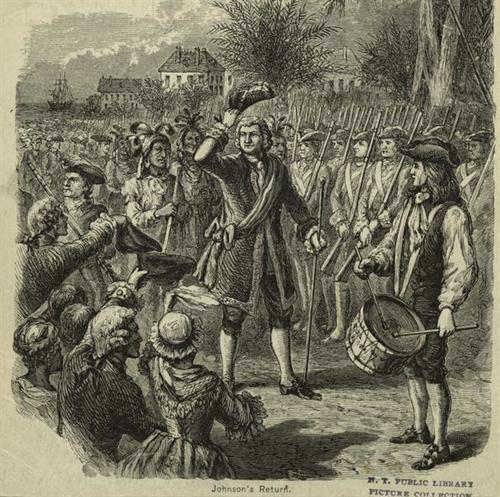
1718-Piracy
Gov. Johnson's Return.

Gov. Johnson’s Return.

Governor Robert Johnson wrote to the Proprietors, appealing for a frigate or two to cruise the Carolina coast to protect their commerce:

About fourteen days since, four sail appeared in sight of town, immediately took the pilot boat … and in a few days took eight or nine outward-bound vessels … Hardly a ship goes to sea but falls into the hands of the pirates.

1770-American Revolution – Foundations

News that Rhode Island had broken the Association led to the Sons of Liberty hanging an effigy between Dillon’s Tavern and Gray’s Tavern on Broad Street. The note attached read: Similar Treatment to all who Violate the Association. (Note: The Association was a 1769 agreement among the Colonies to not import British goods.)

The effigy was removed and placed in the Guard House. During the night, it was stolen, paraded around the town and burned on the Green. 

1773-American Revolution

Henry Laurens wrote:

I am more of opinion now, than ever, that there will be Bloodshed. God avert it. Innocent persons will fall a Sacrifice to the knavery & bad policy of wrong Heads on each Side & these will escape with the plunder.

1775-American Revolution – Arrivals
Lord William Campbell

Lord William Campbell

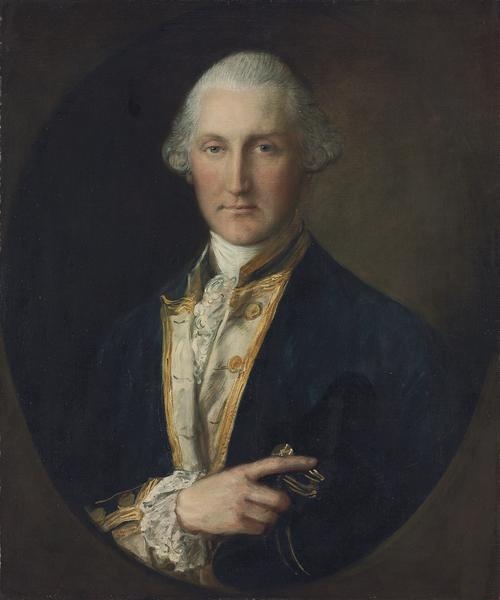
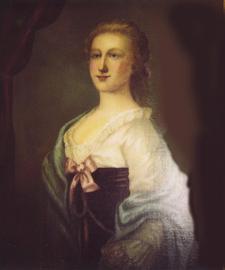
Lord William Campbell arrived in Charlestown as the new Royal governor. Married to Sarah Izard, one of South Carolina’s most powerful families, Campbell expected his arrival to be greeted with typical fanfare – booming cannons and cheering crowds. However, arriving six weeks after the news of the massacre in Boston, with the rising revolutionary passions, he greeted with “sullen silence.”

Campbell moved into the Miles Brewton House at 27 King Street until his residence was ready at 34 Meeting Street. He quickly learned that he was little more than a figurehead, due to the power wielded by the Provisional Congress. Campbell knew of the political rift between the aristocratic low-country (more revolutionary) and the backwoods commoners (more loyal) in the South Carolina upstate. He flooded the backcountry with pamphlets claiming that the Provisional Congress could not be trusted and had taken illegal power.

He also began to coordinate with backcountry Loyalists.

1812-War of 1812.

The United States declared war on Great Britain.

No Words … Charleston Shooting

need to identfy

No words to describe the horrific events that happened overnight in my hometown in a historic church, Emmanuel A.M.E. The mass shooting of (at least) nine people conducting a Wednesday prayer meeting, is the act of a cold and hateful predator.  

This past week, I have written in my “Today In Charleston History” blog a series of postings about a delegation of black leaders of the African Methodist Episcopal church from Philadelphia who arrived in Charleston to conduct religious services. Charleston is too good of a city to endure such ugliness. Every citizen should be vigilant to assist law enforcement in their effort to hunt down and catch the evil animal who killed these people.

In lieu of my regular daily posting … I am re-posting the historical events of 1818 dealing with the A.M.E. Church.   

June 7, 1818-Slavery. Religion.

Rev. Richard Allen and a delegation from Philadelphia arrived in Charleston at the invitation of Rev. Morris Brown to support the local A.M.E. (African Methodist Episcopal) Church. In 1794 Allen had founded the A.M.E. Church in Philadelphia, the first independent black denomination in the United States.  In 1816 he was elected the first bishop of the A.M.E. Church.

June 9, 1818 – Religion-Slavery

Rev. Richard Allen conducted a service on Wednesday evening at the A.M.E. Church. The city guard was called out to break up the service. One hundred and forty black congregants were arrested – including Denmark Vesey, Peter Poyas, Monday Gell and Gullah Jack – and spent the night in jail. The next morning a judge lectured them on the particulars of the 1800 law that prohibited black religious meetings after dark with a black majority.

June 11, 1818 – Slavery. Religion

“Black Priests” appeared before the City Council asking for permission to “allow them to hold their meetings in the way they wished.” The Council denied the request, claiming that the “Missionaries” of the Philadelphia AME church were “fire-brands of discord and destruction.”

They did, however, allow daylight meetings as long as a “single white person” was present to monitor the service.

June 15, 1818 – Slavery. Religion. 

In direct defiance of the City Council, Rev. Richard Allen (of Philadelpha) conducted a Sunday service in a private home for a blacks-only congregation. The city guard once again disrupted the service. Allen and his Philadelphia delegation were arrested and sentenced to “one month’s imprisonment, or to give security and leave the state.”

Allen and his group returned to Philadelphia under the threat of his arrest, but black religious services continued to be conducted in private homes at night, often conducted by Denmark Vesey. Gullah Jack, however, was angered by what he called “the desecration of sacred ground” (the disruption of religious services), and claimed he “wanted to begin” to organize against the whites. 

Today In Charleston History: June 17 … Charleston First.

1831

The boiler of the Best Friend exploded while picking up lumber cars at the “forks in the road”, where Dorchester and State Roads merged, near the Eight Mile House. Engineer Nicholas Darrell wrote:

When I ran the Best Friend, I had a Negro fireman to fire, clean and grease the engine. This Negro, annoyed at the noise occasioned by the blowing off the steam, fastened the valve-lever down and sat upon it which caused the explosion, badly injuring him.

This nameless Negro fireman was killed by his injuries, and was the first fatality on an America railroad. This explosion ended all train service on the C&HRR for a month.

Best Friend of Charleston

Best Friend of Charleston

1862-Civil War    

Mr. Frederick Paturzo finished removing seven of St. Michael’s bells, as well as the bells of St. Philip’s and First Scots. The eighth bell in St. Michael’s remained to be as the Municipal Alarm and became known as “Great Michael.” The bells of St. Philip’s and First Scots were donated to the Confederate cause. The bells of St. Michael’s were ultimately taken to Columbia for safe keeping.

2015 – Emanuel A.M.E. Massacre

At approximately 8 p.m. Dylan Roof entered Emanual A.M.E. Church on Calhoun Street in Charleston, S.C. and was invited to participate in a Bible study with a small group of thirteen people, being conducted by the pastor, Clementa C. Pinckney. When the group began to pray, Roof, pulled out a Glock 41 .45 caliber pistol, and began shooting. 

At 9.05 p.m. the Charleston Police Department began receiving 911 calls of a shooting at the church.  The dead included six women and three men,  Eight died at the scene; the ninth, Daniel Simmons, died at MUSC Medical Center. They were all killed by multiple gunshots fired at close range.

  • Cynthia Marie Graham Hurd (54) – Bible study member and manager for the Charleston County Public Library system.
  • Susie Jackson (87) – a Bible study and church choir member.
  • Ethel Lee Lance (70) – the church’s sexton
  • Depayne Middleton-Doctor (49) – a pastor who was also employed as a school administrator.
  • Clementa C. Pinckney (41) – the church’s pastor and a South Carolina state senator.
  • Tywanza Sanders (26) – a Bible study member; grandnephew of Susie Jackson.
  • Daniel Simmons (74) – a pastor who also served at Greater Zion AME Church in Awendaw.
  • Sharonda Coleman-Singleton (45) – a pastor; also a speech therapist and track coach at Goose Creek High School; mother of MLB prospect Chris Singleton.
  • Myra Thompson (59) – a Bible study teacher.

The victims were later collectively known as “The Charleston Nine”.

Today In History: June 16

1701-England. Religion.

King William III issued a charter establishing the “Society for the Propagation of the Gospel in Foreign Parts” as “an organisation able to send priests and schoolteachers to America to help provide the Church’s ministry to the colonists.”

1776-American Revolution

The privateer Polly, commanded by Capt. Francis Morgan and carrying a cargo of 300 barrels of gunpowder, 20 chests of cartridges, 90 barrels of rum, sugar, and gin, tried to run the gauntlet of British ships into Charleston Harbor.

The Polly ran aground near Stono Creek and the Patriots scuttled and abandoned her. The HMS Bristol sent eight boats under the command of Lt. Molloy to investigate and attempt to refloat the Polly, but she had five feet of water in her hold. So, they set her on fire, and she

“blew up with a great Explosion… It would have been much greater but she had five feet of water in her hold, which had damaged a great deal of the Powder.”

1788-Piracy

Richard Cain, Richard Williams, William Rogers, John Masters, and William Pendergrass from the schooner Two Friends, were executed for piracy and murder at Hangman’s Point opposite the city of Charleston.

The bodies of William Rogers and Richard Williams, being the principal aggressors, were cut down and conveyed to Morris’s island, there to be hung in chains.

1802

Aaron Burr sailed from Charleston on the Comet. The ailing Theodosia traveled with her father, her three-week old son and her sister-in-law Maria Alston to her father’s house in New York, Richmond Hill, to escape the Charleston summer.

1826

Another fire set by arsonists on King Street resulted in $100,000 in damages. Four years after the discovery of the Denmark Vesey plot,  Much of the white population was living in dread of another slave insurrection.

1862-Civil War

On this day, a Union attempt to capture Charleston, South Carolina, is thwarted when the Confederates turn back an attack at Secessionville, just south of the city on James Island. Read about the Battle of Secessionville.

The Union army establishes a foothold on James Island on the Stono River. Harper’s Weekly

The Union army establishes a foothold on James Island on the Stono River. Harper’s Weekly

1934-Porgy and Bess
George Gershwin and Debose Heyward on Chalmers Street, Charleston, SC

George Gershwin and Debose Heyward on Chalmers Street, Charleston, SC

George Gershwin arrived by train in Charleston with his cousin, artist Henry Botkin. They drove out to Folly Beach where Heyward had rented a cottage at 708 West Arctic Avenue. Gershwin was in the lowcountry to work on the score for his proposed opera, Porgy and Bess, based on Dubose Heyward’s novel and stage play, Porgy. 

For the entire story of Gershwin’s visit and Porgy and Bess read Doin’ the Charleston. doin' the charleston

Today In Charleston History: June 15

1737-Births
Rebecca Brewton Motte

Rebecca Brewton Motte

Rebecca Brewton, daughter of Robert Brewton, was born at her father’s house, 21 Church Street. She married Jacob Motte and later lived in her brother’s house at 27 King Street and live there with the British occupying force in 1780. 

1786-Natural Disasters

Fire swept down Broad Street, destroying fourteen buildings, including the state house.

1818-Slavery. Religion. Denmark Vesey Rebellion

In direct defiance of the City Council, Rev. Richard Allen (of Philadelpha) conducted a Sunday service in a private home for a blacks-only congregation. The city guard once again disrupted the service. Allen and his Philadelphia delegation were arrested and sentenced to “one month’s imprisonment, or to give security and leave the state.”

Allen and his group returned to Philadelphia under the threat of his arrest, but black religious services continued to be conducted in private homes at night, often conducted by Denmark Vesey.  Gullah Jack, however, was angered by what he called “the desecration of sacred ground” (the disruption of religious services), and claimed he “wanted to begin” to organize against the whites. 

1822-Denmark Vesey Rebellion

Watching the increased militia activity on the streets, and hearing of the arrests, Denmark Vesey and Monday Gell destroyed all incriminating letters and documents they had in their possession. Gullah Jack buried a small cache of gunpowder and weapons on the Buckley farm in the Charleston Neck. All three men then went into hiding.

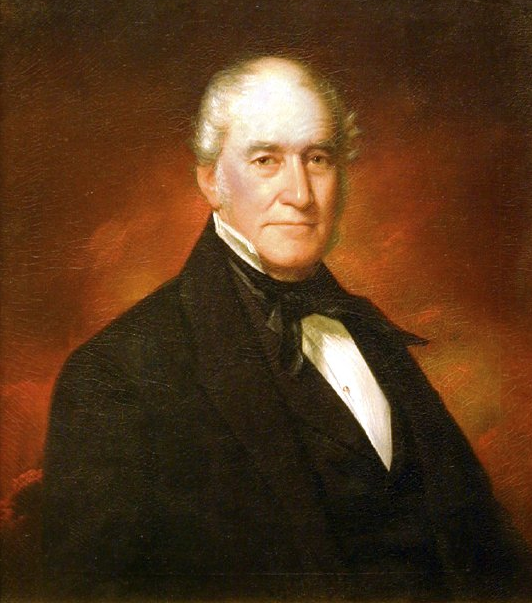
Thomas_Bennett_JrGov. Bennett signed a General Order calling out Col. Croft’s 16th Regiment, the Washington Light Infantry, the Republican Artillery and the Charleston Neck Rangers. Bennett also requested the assistance of the federal government. He wrote to Secretary of War John C. Calhoun, a South Carolina native, about his “State of alarm and his inability to defend his city.” Bennett wrote that a show of federal force:

would tend not only to tranquilize the public mind, but produce the happiest effects upon that class of persons who have caused the present excitement.

1864-Bombardment of Charleston   

Gen. Foster notified General Henry Halleck, Army Chief of Staff, that:

The fire upon the city of Charleston had been somewhat increased, and had been continued night and day, at irregular intervals, the number of shots varying from 30 to 60 in ordinary firing.

Today In Charleston History: June 14

1751-Religion

Charlestown was divided into two Anglican parishes: St. Michael’s, south of Broad Street and St. Philip’s, north of Broad.

1774-American Revolution

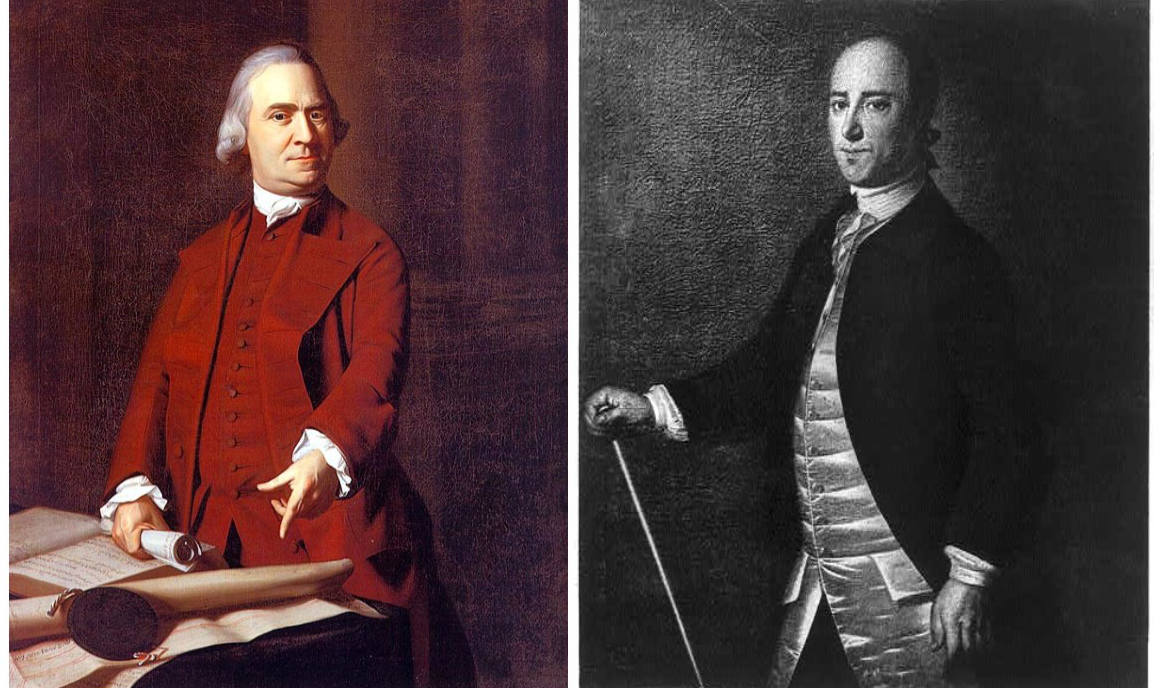
Christopher Gadsden wrote to Sam Adams in Boston, assuring him that South Carolina would stand firm with Massachusetts, reminding him that South Carolina was the last to desert the non-importation agreement in 1770. He wrote:

For my part I would rather see my own family reduced to the utmost Extremity and half cut to pieces than to submit to their damned Machinations. 

(L) - Sam Adams. (R) - Christopher Gadsden

(L) – Sam Adams. (R) – Christopher Gadsden

1775-American Revolution – Continental Congress 

Edward Rutledge was appointed to a three-member committee to draft George Washington’s commission and instructions as commander of the Continental Army.  

1822-Denmark Vesey Rebellion

George Wilson informed his master, Major John Wilson of 106 Broad Street, about the plot to kill whites, related to him by Rolla Bennett.

8:00 p.m.

Major Wilson informed Intendent (mayor) Hamilton that the governor’s slaves were involved in an insurrection planned for two nights hence – Sunday June 16. The story Wilson told was so similar to that of William Paul and Peter Prioleau that Hamilton and Governor Bennett had no choice but to believe it.

Just before midnight, Gov. Bennett ordered the arrest of ten slaves including Peter Poyas, Mingo Harth, and his own personal slaves, Rolla and Ned Bennett.

1864-Bombardment of Charleston  

Captured Union officers purposely placed in range of Federal guns at 180 Broad Street in an attempt to stop the bombardment of Charleston. The Charleston Mercury announced:

 For some time it has been known that a batch of Yankee prisoners, comprising the highest in rank now in our hands, were soon to be brought hither to share in the pleasures of the bombardment. These prisoners we understand will be furnished with comfortable quarters in that portion of the city most exposed to enemy fire. The commanding officer on Morris Island will be duly notified of the fact of their presence in the shelled district and if his batteries still continue at their wanton and barbarous work, it will be at the peril of the captive officers.’ 

The Charleston Daily Courier wrote:

We do not confine these prisoners in a fortress or a walled town or city, or thrust them forward in our battle as the Yankees do with the unfortunate negro … We place them in our city of Charleston, among and near our own wives and children …

Two views of the O'Conner House, 180 Broad Street, where Union officers were imprisoned within range of Federal guns.

Two views of the O’Conner House, 180 Broad Street, where Union officers were imprisoned within range of Federal guns.

Today In Charleston History: June 13

1713-Yemassee War.

The Cherokee war party returned north. That left the remaining Catawba force to face a rapidly-assembled militia under the command of George Chicken from Goose Creek.  In the Battle of the Ponds, the Chicken militia routed the Catawba, who returned to their villages and decided on peace.

1777-American Revolution

The Marquis de Lafayette and the Baron de Kalb arrived in America on North Island in Winyah Bay. They proceeded to Benjamin Huger’s house in Georgetown to join the American military cause. 

1796-Disasters

A fire broke out in Lodge Alley. Winds blew it westward, toward the center of the city where it burned “a vast Number of Houses and … left many Citizens without the Means of being otherwise accommodated.” St. Philip’s Church was also in the path of the fire, but was saved by the heroic actions of a slave called Boney. The fire:

would have destroyed that venerable building but for the heroic intrepidity of a negro, who, at the risk of his life, climbed to the very summit of the belfry, and tore off the burning shingles.

1822-Denmark Vesey Rebellion

Ned Bennett turned himself in to the authorities at the Work House. He told the wardens that he learned his name had been mentioned in association with a planned rebellion and he wished to clear his name. He was questioned for several hours, cleared and released.

He then walked the five blocks from the Work House to Denmark Vesey’s house on Bull Street to attend a meeting to finalize plans for the rebellion.       

1838-Disasters

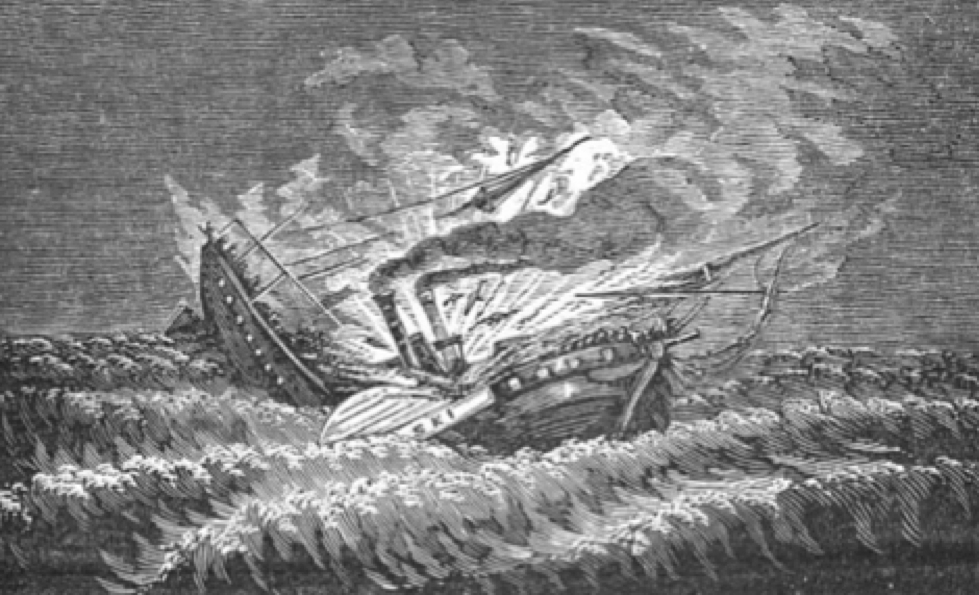
The steamship Pulaski exploded and sank just off the Charleston harbor. It was owned by the Savannah and Charleston Steam Packet Company to safely and speedily carry freight and passengers between Savannah to Baltimore with stops in Charleston.

The sinking of the Pulaski

The sinking of the Pulaski

That night, after taking on about sixty-five passengers in Charleston the Pulaski steamed to about thirty miles off the North Carolina coast through a dark night and moderate weather. Around ten o’clock the Pulaski’s starboard boiler suddenly exploded and swept some passengers into the sea and scalded others to death. Panicked passengers, most of them wearing their night clothes, sought refuge on the promenade deck. The bow of the Pulaski rose out of the water and eventually she ripped apart.

Passengers clung to furniture and pieces of wreckage. As the Pulaski sank, the crew lowered four life boats but two of them capsizing while the other two filled with frantic passengers.

Three days later the Henry Camerdon, schooner bound for Wilmington, North Carolina, rescued the 30 survivors. There were more than 100 deaths. Passengers rescued were:
MRS. P. M. NIGHTINGALE, servant and child.
MRS. W. FREHER and child, St. Simons, Geo.
J. H. COOPER, Glynn, Georgia.
F. W. POOLER, Savannah, Georgia.
Capt. POOLER, son.
WILLIAM ROBERTSON, Savannah, Georgia.
ELIAS L. BARNEY, N.C.
SOLOMON ________
S. HIBBERD, 1st mate Pulaski.
W. C. N. SWIFT, New Bedford.
F. A. ZENOHTENBERG, Munich.
CHARLES B. TAPPAN, New York.
GIDEON WEST, New Bedford, boatswain.
B. BRAGG, Norfolk, steward.

1864-Bombardment of Charleston 
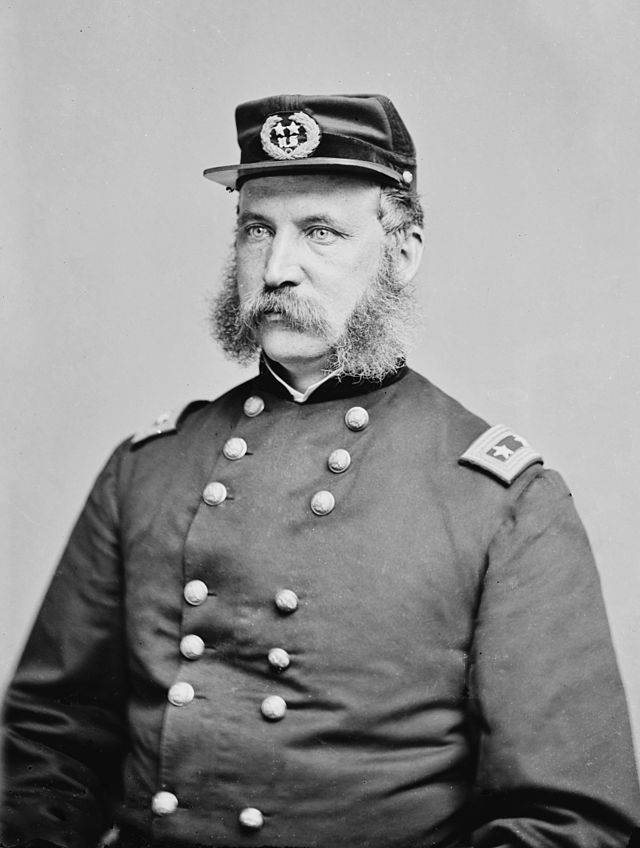
Gen. Samuel Jones
Gen. Samuel Jones

Confederate Gen. Samuel Jones, in an effort to stop or reduce the bombardment of the city, notified Union Gen. John G. Foster that

five Union generals and forty-five field officers had arrived in the city for safe keeping … in commodious quarters in a part of the city occupied by non-combatants, the majority of whom are women and children. It is proper, however, that I should inform you it is a part of the city which has been for many months exposed day and night to the fire of your guns.

Gen. John Foster

Gen. John Foster

      Union Gen. Schimmelfenneg, before forwarding the letter to Gen. Foster added a note:

Charleston must be considered a place “of arms.” It contains a large arsenal, military foundries … and has already furnished three iron-clads to the enemy. It is our duty to destroy these resources. In reference to the women and children of the bombarded city, I therefore can only say the same situation occurs wherever a weak and strong party are at war … In my opinion the endeavor of the enemy to force us to give up the bombardment should be the reason for its continuation … as a means to force him to give up his barbarous practices.

Today in Charleston History: June 12

1749
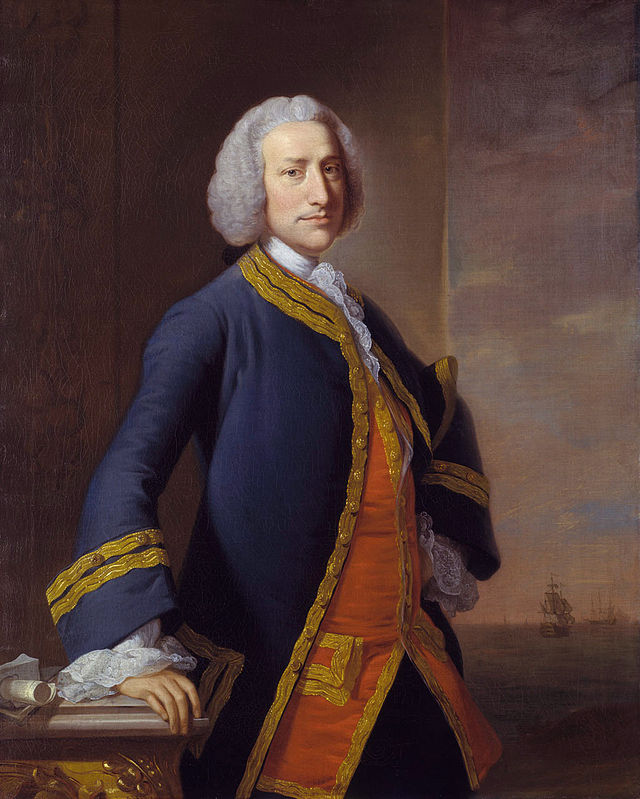
Lord George Anson

Lord George Anson

War of Jenkin’s Ear ended.  Celebration lasted in Charles Town throughout the day and into the night with “Demonstrations of Joy … sky-rockets … and other illuminations.” One of the heroes of the war, Commodore George Anson, had been stationed in Charles Town with the Royal Navy.  Anson formed a squadron and raided Spanish possessions in the Pacific.

1785
Noah Webster

Noah Webster

Noah Webster arrived in Charleston for a lecture. He was traveling across the country trying to gain support for his idea of simplifying English spelling and to explain his phonetic alphabet.

Today In Charleston History: June 11

1747-Slavery
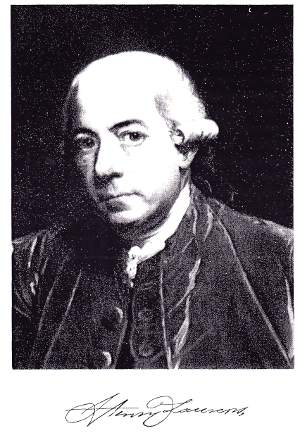
Henry Laurens

Henry Laurens

Henry Laurens returned from his internship London and opened an import and export business. Through his English contacts, Laurens entered into the slave trade with the Grant, Oswald & Company who controlled 18th century British slave castle in the Republic of Sierra Leone, West Africa known as Bunce Castle. Laurens contracted to receive slaves from the “rice coast” of Serra Leone, catalogue and market the human product by conducting public auctions in Charles Town. His company Austin and Laurens, in the 1750s, handled was responsible for the sales of more than eight thousand Africans

1754-Slavery. Executions

Two female slaves of Mr. Childermas Croft were burned alive for setting fire to their master’s main house and several plantation outbuildings in Charleston.

1766- Arrivals

 New royal governor, twenty-five year old Charles Grenville Montagu, Duke of Cumberland, arrived. He presented a petition directing the Assembly to pay former Governor Boone’s salary for two and a half years. Montagu Street and Cumberland Street in Charleston are named after him. 

While in Charlestown, Montagu lived in the home owned by Charles and Eliza Lucas Pinckney, who were living in England at the time. The Pinckney’s house was located at the present corner of East Bay and Guignard streets (formerly Molly Darcy’s Pub – now a parking lot)). It was destroyed by the 1861 fire.  

Ruins of the Pinckney mansion

Ruins of the Pinckney mansion, looking west from East Bay up Guignard Street.

1788-Executions

Five men and one woman – Robert Stacy, Josiah Jordan, John George, Edward Hatcher, Thomas Smith, and Ann Connely – were hanged for the robbery and murder of Nicholas John Wightman.

1818 –Slavery. Religion

“Black Priests” appeared before the City Council asking for permission to “allow them to hold their meetings in the way they wished.” The Council denied the request, claiming that the “Missionaries” of the Philadelphia AME church were “fire-brands of discord and destruction.”

They did, however, allow daylight meetings as long as a “single white person” was present to monitor the service.