Today In Charleston History: February 25

1746 – Births

Charles Cotesworth Pinckney, a Future signer of the U.S. Constitution, was born in Charles Town. He was the eldest son of Charles and Eliza Pinckney. Seven years later, he accompanied his father, who had been appointed colonial agent for South Carolina, to England. As a result, Cotesworth enjoyed a European education.
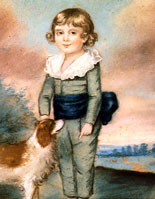
SC-C117key

Charles Cotesworth Pinckney, age 6

He received tutoring in London, attended several preparatory schools, and went on to Christ Church College, Oxford, and graduated in 1764. Pinckney next pursued legal training at London’s Middle Temple. He was accepted for admission into the English bar in 1769. He then spent part of a year touring Europe and studying chemistry, military science, and botany under leading authorities.

In late 1769 Pinckney sailed home. He entered private practice in South Carolina and was elected to the provincial assembly. In 1773 he acted as attorney general in the colony. In 1775 he was a supporter of the patriot cause and was elected to the provincial congress. The next year he was elected to the local committee of safety and made chairman of a committee that drew up a plan for the interim government of South Carolina.

When hostilities broke out, Pinckney, who had been a royal militia officer since 1769, pursued a full-time military calling and joined the First South Carolina Regiment as a captain. He rose to the rank of colonel and fought in the South in defense of Charleston and at the Battles of Brandywine, PA, and Germantown, PA. He commanded a regiment in the campaign against the British in the Floridas in 1778 and at the siege of Savannah. When Charleston fell in 1780, he was taken prisoner and held until 1782. The following year, he was discharged as a brevet brigadier general.

19065-004-E8F2454A

Pinckney, military officer for Continental Army

After the war, Pinckney resumed his legal practice and the management of estates in the Charleston area but found time to continue his public service, which during the war had included tours in the lower house of the state legislature (1778 and 1782) and the senate (1779).

Pinckney was one of the leaders at the Constitutional Convention. He was present at all the sessions, and strongly advocated for a powerful national government. He proposed that senators should serve without pay, but that idea was not adopted, but he exerted influence in such matters as the power of the Senate to ratify treaties and the compromise that was reached concerning abolition of the international slave trade. 

Pinckney became a devoted Federalist. Between 1789 and 1795, he declined presidential offers to command the U.S. Army, to serve on the Supreme Court and as Secretary of War and Secretary of State. In 1796, he accepted the post of Minister to France, but the revolutionary regime refused to receive him and he was forced to proceed to the Netherlands. The next year, however, he returned to France when he was appointed to a special mission to restore relations with that country. During the ensuing XYZ affair, refusing to pay a bribe suggested by a French agent to facilitate negotiations, he was said to have replied “No! No! Not a sixpence!”

When Pinckney arrived back in the United States in 1798, he found the country preparing for war with France. That year, he was appointed as a major general in command of American forces in the South and served in that capacity until 1800, when the threat of war ended. That year, he represented the Federalists as Vice-Presidential candidate, and in 1804 and 1808 as the Presidential nominee, but was defeated on all three occasions.

pinckney_1_lg

An elderly Cotesworth Pinckney

For the rest of his life, Pinckney engaged in legal practice, served in the legislature, and was active in many philanthropic activities. He was:

  • a charter member of the board of trustees of South Carolina College (later the University of South Carolina)
  • first president of the Charleston Bible Society
  • chief executive of the Charleston Library Society

During the later period of his life, Pinckney enjoyed his Belmont estate and Charleston high society. He was twice married; first to Sarah Middleton in 1773 and after her death to Mary Stead in 1786. He died in Charleston in 1825 at the age of 79 and was interred there in the cemetery at St. Michael’s Episcopal Church.
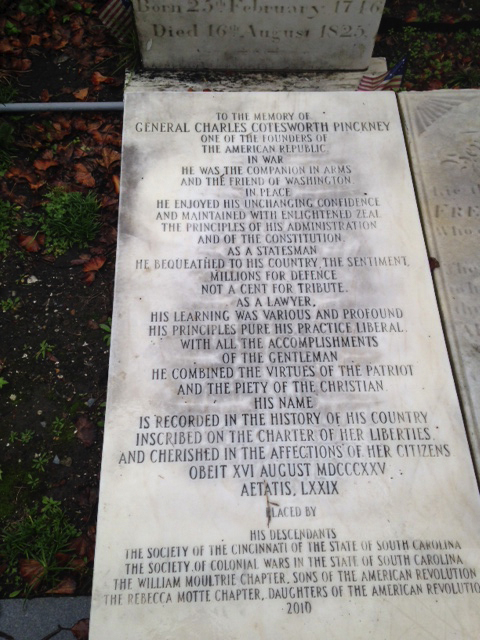
Charles-Cotesworth-Pinckney-Grave-Charleston-SC

Grave of Charles Cotesworth Pinckney, St. Michael’s Church

1807

George Alfred Trenholm  was born in Charleston, South Carolina. Due to his father’s death, George left school at age 16 to work for a major cotton broker, John Fraser and Company in Charleston. By 1853 he was head of the company, and by 1860 he was one of the wealthiest men in the United States with financial interests in steamships, hotels, cotton, plantations, and slaves. His fortune including owning real estate worth $90,000 and personal property (including slaves) valued at about $35,000.  About 39 enslaved persons lived with Trenholm’s family as domestic staff in Charleston.

GATrenholm

George Trenholm

When the War broke out, Trenholm immediately moved his company’s head office from New York to the Bahamas, Bermuda and Liverpool. He was appointed to South Carolina’s State Marine Battery Commission, where he oversaw construction of the Confederate ironclad Chicora. Trenholm also personally financed construction of a twelve-vessel flotilla for Charleston’s defense. During the War, his company – now called Fraser, Trenholm and Company – became the Confederate government’s overseas banker. From their Liverpool office, they arranged cotton sales and financed its own fleet of blockade runners, profiting more than $9 million.

Confederate Secretary of the Treasury, Christopher Memminger, used Trenholm as an unofficial adviser. When Memminger resigned, Trenholm was appointed to that post on July 18, 1864.

When Richmond fell to Federal troops, Trenholm fled with the rest of the government in April 1865 and reached Fort Mill, South Carolina. Due to illness he asked President Jefferson Davis to accept his resignation, which Davis accepted with his thanks on April 27, 1865. Trenholm was later briefly imprisoned at Fort Pulaski near Savannah, Georgia. He was pardoned by President Andrew Johnson and ordered released on October 11, 1865. 

E. Lee Spence wrote a book in 1995, Treasures of the Confederate Coast: The ‘Real Rhett Butler’ & Other Revelations, which effectively argued the case that Trenholm was the inspiration for the character of Rhett Butler in Margaret Mitchell’s Gone with the Wind.

1910

The South Carolina Military Academy officially changed its name name to “The Citadel, The Military College of South Carolina.” The word “Academy” had become synonymous with secondary schools and the public had the misconception that the South Carolina Military Academy was a preparatory school.

1920px-The_Citadel_at_the_start_of_the_Civil_War._Image_on_display_at_Fort_Sumter_National_Monument

The South Carolina Military Academy, c. 1861. 

Today In Charleston History: February 24

1698 – Disaster

A devastating fire destroyed about one-third of Charles Town, burning the “dwellings, stores and outhouses of at least fifty families … the value of £30,000 sterling.”

1819

President James Monroe visited the Charleston Orphan House and in the evening attended the Charleston Theater.

orphan house postcard

Charleston Orphan House

1828 – Charleston & Hamburg Rail Road

Charles Parker and Robert K. Payne, at the direction of William Aiken, left Charleston by carriage to examine a potential route for the C&HRR. They

“arrived at the Six Mile House at one o’clock, where Mr. Arnot, the keeper, was requested to provide dinner as soon as possible.”

They paid $1.62 for the meals. Later that afternoon they crossed the Ashley Ferry (later known as Bee’s Ferry).

Over the next several weeks, they traveled west toward Hamburg, South Carolina, using Ashley River Road (passing Drayton Hall, Mangolia Planation, Runnymede, Millbrook and Middleton Place) to Bacon’s Bridge. They crossed the Edisto River at Givhan’s Ferry.

1946

The Nicaugra Victory slammed into the Cooper River Bridge. Five people were killed, the Elmer Lawson family, when their car plunged into the chilly waters of the Cooper River.

1954

Dr. Sarah Allan Campbell dies. First women to receive a medical degree in South Carolina.

Sarah Campbell Allan born in Charleston and led an attempt to have women accepted at the all-male College of Charleston. At age 29, she applied for admission to the all-male Medical College of South Carolina. She graduated from the Women’s Medical College of the New York Infirmary for Women and Children in 1894. Scored highest grade on the examination given by the South Carolina Medical Board and granted license #40 in October 1894.

Today In Charleston History: February 23

1915 – Deaths

Robert Smalls died, ending an extraordinary life. 

smallsSmalls was born on April 5, 1839, behind his owner’s city house at 511 Prince Street in Beaufort, S.C. His mother, Lydia, served in the house but grew up in the fields, where, at the age of nine, she was taken from her own family on the Sea Islands.  The McKee family favored Robert Smalls over the other slave children, so much so that his mother worried he would reach manhood without grasping the horrors of the institution into which he was born. To educate him, she arranged for him to be sent into the fields to work and watch slaves at “the whipping post.”

By the time Smalls turned 19, he was working in Charleston. He was allowed to keep one dollar of his wages a week (his owner took the rest). Far more valuable was the education he received on the water; few knew Charleston harbor better than Robert Smalls.

It’s where he earned his job on the Planter. It’s also where he met his wife, Hannah, a slave of the Kingman family working at a Charleston hotel. With their owners’ permission, the two moved into an apartment together and had two children: Elizabeth and Robert Jr. Well aware this was no guarantee of a permanent union, Smalls asked his wife’s owner if he could purchase his family outright; they agreed but at a steep price: $800. Smalls only had $100.

By 1862, Smalls viewed the Union blockade of the Charleston harbor as a tantalizing promise of freedom. Under orders from Secretary Gideon Welles in Washington, Navy commanders had been accepting runaways as contraband since the previous September. While Smalls couldn’t afford to buy his family on shore, he knew he could win their freedom by sea — and so he told his wife to be ready for whenever opportunity dawned.

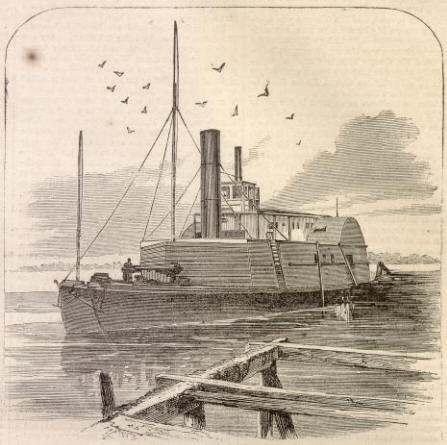
planter-gun-boat

The Planter

Just before dawn on May 13, 1862, Robert Smalls and a crew of fellow slaves, slipped a cotton steamer, Planter, off the dock, picked up family members at a rendezvous point, then slowly navigated their way through the harbor. Smalls, doubling as the captain donned the captain’s wide-brimmed straw hat to help to hide his face. As they sailed out of the harbor Smalls responded with the proper coded signals at two Confederate checkpoints and sailed into the open seas. Once outside of Confederate waters, he had his crew raise a white flag and surrendered his ship to the blockading Union fleet.

In less than four hours, Smalls had accomplished an amazing feat: commandeering a heavily armed Confederate ship and delivered its 17 black passengers (nine men, five women and three children) from slavery to freedom. “One of the most heroic and daring adventures since the war commenced was undertaken and successfully accomplished by a party of negroes in Charleston,” trumpeted the June 14, 1862, edition of Harper’s Weekly.

On May 30, 1862, the U.S. Congress, passed a private bill authorizing the Navy to appraise the Planter and award Smalls and his crew half the proceeds for “rescuing her from the enemies of the Government.” Smalls received $1,500 personally, enough to purchase his former owner’s house in Beaufort off the tax rolls following the war, though according to the later Naval Affairs Committee report, his pay should have been substantially higher.

In the North, Smalls was hailed as a hero. He lobbied Secretary of War Edwin Stanton to begin enlisting black soldiers and a few months later after President Lincoln ordered black troops raised, Smalls recruited 5,000 soldiers himself. In October 1862, he returned to the Planter as pilot as part of Admiral Du Pont’s South Atlantic Blockading Squadron. According to the 1883 Naval Affairs Committee report, Smalls was engaged in approximately 17 military actions, including the April 7, 1863, assault on Fort Sumter and the attack at Folly Island Creek, S.C.

Two months later he assumed command of the Planter when, under “very hot fire,” its white captain became so “demoralized” he hid in the “coal-bunker.” Smalls was promoted to the rank of captain, and starting in December 1863 on, he earned $150 a month, making him one of the highest paid black soldiers of the war. When the war ended in April 1865, Smalls was on board the Planter in a ceremony in Charleston Harbor at Fort Sumter.

Following the war, Smalls served in the South Carolina state assembly and senate, and for five nonconsecutive terms in the U.S. House of Representatives (1874-1886).He died in Beaufort on February 23 1915, in the same house behind which he had been born a slave and is buried behind a bust at the Tabernacle Baptist Church.

“My race needs no special defense for the past history of them and this country. It proves them to be equal of any people anywhere. All they need is an equal chance in the battle of life.” — Robert Smalls

Today In Charleston History: February 22

1752

The cornerstone of St. Michael’s Church was laid.

1934 – Porgy and Bess

heywardand gershwin

George Gershwin and Dubose Heyward

In a letter to Dubose Heyward, George Gershwin reported that “I have begun composing music for the first act, and I am starting with the songs and spirituals first.” He then asked Heyward to join him in New York so the work could be expedited.

Over the next two months, while living in a guest suite of Gershwin’s famous fourteen-room house at 132 East Seventy-second Street, Heyward wrote the lyrics for almost a dozen Gershwin compositions, including “Summertime,” “A Woman Is a Sometime Thing,” “Buzzard Song,” “It Take A Long Pull to Get There,” “My Man’s Gone,” “It Ain’t Necessarily So” and “I Got Plenty of Nuttin’.” 

Today In Charleston History: February 21 – Charleston Firsts

1838-Slavery

 Angelina Grimke addressed a Committee of the Legislature of the State of Massachusetts, the first time a woman was invited to speak before a legislative body. She spoke against slavery, and also defended women’s petitioning both as a moral and religious duty and as a political right. Abolitionist Robert F. Wallcut stated that “Angelina Grimké’s serene, commanding eloquence enchained attention, disarmed prejudice and carried her hearers with her.”

By this time she was an accomplished orator, having spoken publicly eighty-eight times to an audience of approximately 40,000 people. Her appearance created a furor. Most people believed a women’s place was in the home, NOT in the public, and certainly not being a public speaker, and certainly not on such an inflaming topic – slavery. Angelina later wrote:

I never was so near fainting under the tremendous pressure of feeling. My heart almost died within me. The novelty of the scene, the weight of responsibility, the ceaseless exercise of the mind thro’ which I had passed for more than a week – all together sunk me to the earth. I well nigh despaired.

1865

The Fifty-fifth Massachusetts Volunteer Infantry, led by Col. Charles Fox, triumphantly marched into Charleston. The 55th was the sister regiment of the renowned Massachusetts 54th Volunteers. The enactment of the Emancipation Proclamation by United States President Lincoln on January 1, 1863 had opened the way for the enlistment of free men of color and newly liberated slaves to fight for their freedom within the Union Army. As the ranks of the 54th Massachusetts quickly reached its full complement of recruits, an overflow of colored volunteers continued to pour in from several other states outside Massachusetts-many of whom simply had not arrived in time-prompting Governor John Albion Andrew to authorize yet another regiment of colored soldiers sponsored by the Commonwealth. Thus, the 55th Massachusetts Volunteer Infantry came into being.

Colonel_Charles_Fox_Leads_the_Massachusetts_55th_Regiment_into_Charleston

Today In Charleston History: February 20

1787

t. pinckneyThomas Pinckney became the thirty-sixth governor of South Carolina

1787-Constitutional Convention

The Legislature chose five men to attend the Constitutional Convention:

  • John Rutledge
  • Charles Cotesworth Pinckney (older brother of the governor)
  • Henry Laurens, who declined to serve, citing health concerns
  • Charles Pinckney (Cotesworth Pinckney’s 2nd cousin)
  • Pierce Butler.
1805-Births

grimke, angelina

Angelina Grimke


Angelina Grimke was born in Charleston. Along with her older sister, Sarah, she became on the most famous abolitionists in America.

1865 – Federal occupation

Rev. Howe refused Col. Bennett’s order to pray for the president of the United States at St. Paul’s Church. 

The offices of the Courier were turned over to George Wittemore and George Johnson, Northern correspondents who arrived with the army. They were “authorized to issue a loyal union newspaper.”

Miles Brewton House, at 27 King Street, became Federal army headquarters.

miles brewton house

Miles Brewton House, 27 King Street


Today In Charleston History: February 19

1865

A 100-gun salute fired by the Union fleet off the harbor and a 38-gun salute from a land battery celebrated the capture of Charleston. Union photographer began to take pictures of the ruins across the city while Federal troops began a systematic looting spree throughout the city, stealing furniture, pictures, mirrors, statues, pianos, books and silverware. The black population of Charleston freely paraded through the streets carrying a coffin which read “Slavery Is Dead.”

Lt. Colonel Augustus G. Bennett had accepted the city’s surrender the day before. His troops were met at the intersection of Broad and East Bay Streets by  city councilman, George W. William who handed the colonel a note to from Mayor Macbeth which read:

The military authorities of the Confederate States have evacuated the City. I have remained to enforce law and preserve order until you take such steps as you think best.

exchange 1865

Exchange Building (c. 1866.) View from East Bay Street. Courtesy of the Library of Congress

A Review: FIRST FROST by Sarah Addison Allen

Sarah Addison Allen has written six quirky small town Southern novels that mix gentle realism with magical fantasy. First Frost is a sequel to her first book, Garden Spells, a charming novel that set her template. Allen’s books are a winning fluffy concoction which usually include:

  • a small Southern town
  • a couple of disjointed female characters with tragedy in the past
  • a supporting cast of quirky characters, some of whom see to possess otherworldly abilities

first frostIn Allen’s two most recent novels, The Peach Keeper and Lost Lake, that formula was beginning to feel a bit worn. Neither of those books had the freshness and the storylines felt forces. With First Frost, Allen returns to form a bit, mainly because it is a revisit to the fertile ground where the template was established – the Waverly sisters.

Claire Waverley has started a successful new venture, Waverley’s Candies.  Though her handcrafted confections are singularly effective, the business of selling them is costing her the everyday joys of her family, and her belief in her own precious gifts. Her sister Sydney is losing her balance also. With each passing day she longs more for a new baby Yet the longer she tries, the more her desire becomes an unquenchable thirst, stealing the pleasure out of the life she already has.

Sydney’s teenaged daughter, Bay, has lost her heart to the boy she knows it belongs to…if only he could see it, too. But how can he, when he is so far outside her grasp that he appears to her as little more than a puff of smoke?

When a mysterious stranger shows up and challenges the very heart of their family, each of them must make choices they have never confronted before.  And through it all, the Waverley sisters must search for a way to hold their family together through their troublesome season of change.

Although Allen’s fiction is often called “fluffy”, “enchanting” and “charming,” creating such lightweight concoctions is harder than it looks, an art within itself. And as charming as her books are, I keep hoping that Allen at some point moves away from this template. I’m sure her publisher is clamoring for more and more of the same because publishers have become infected with a Hollywood mentality – they only want what has sold before.

Allen, however, has a real gift of developing characters and situations. She can become an American version of Maeve Binchy … yes, she has that sort of talent. Here’s hoping that Allen at some point will move past her current template and into meatier (pun intended) and more involved stories. I, for one, will be anxious to read them.

4 palmettos

Today In Charleston History: February 18 – Charleston Firsts

1735 – Charleston Firsts

The first public presentation of an opera in the colonies is performed at Broad and Church – Shepherd’s Tavern. The opera was titled Flora or Hob In The Well.  Local musicians provided the musical accompaniment on organ and fiddle.

1820 – Execution

 John and Lavinia Fisher were executed. Contrary to what everyone seems to believe (due to lazy tour guides and myth-perpetuating web pages)  they were NOT convicted of murder. Their crime was highway robbery. And also contrary to what everyone seems to believe, she was NOT hanged in her wedding dress. Also, contrary to what everyone seems to believe, she was NOT the first female serial killer. Enough said, let’s move on. 

For more accurate info, refer to my book, Wicked Charleston: The Dark Side of the Holy City (pg. 77-84), or James Caskey’s Charleston Ghosts: Hauntings in the Holy City, (pg. 37-44) or Six Miles From Charleston by Bruce Orr.  

1850

James Petigru’s wife, Adele, attempted suicide by chloroform.

1865 – Civil War

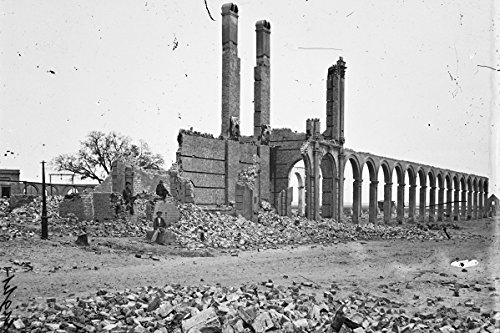
Early in the morning, the Northeastern Railroad Depot accidently blew up, killing and wounding hundreds of evacuating civilians. The Confederates had stored a large quantity of gunpowder there prior to abandoning the city. Children playing with a candle ignited the powder, and over 150 people died in the explosion. Fires started by the rain of flaming debris destroyed more buildings.

railroad depot

Ruins of the depot

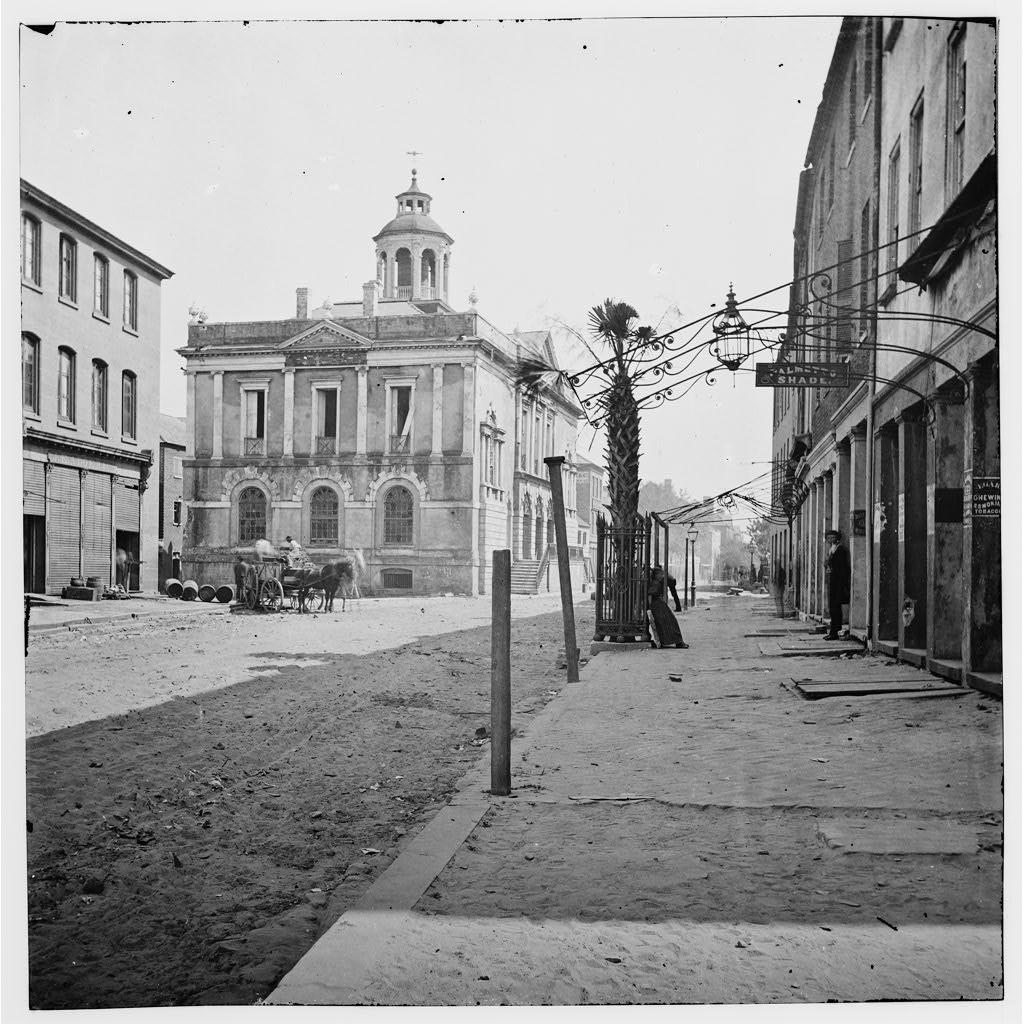
Later that morning Union Lt. Col. Augustus Bennett landed at Mills Wharf (East Bay and Broad Streets) with a small party of twenty-two men. They raised a regimental flag over the post office (Old Exchange Building) – the first U.S. flag to fly over Charleston since 1860 on the same pole on which the first secession flag was raised on December 1860.

At 10 o’clock, Bennett’s troops were supplemented by the Fifty-second Pennsylvania and the Third Rhode Island artillery. They moved through the city and established headquarters at the Citadel building on Marion Square. He immediately dispatched troops “with instructions to impress negroes where ever found and to make them work the fire apparatus until all fires were extinguished.”

Bennett secured the arsenal and guarded the largest stores of cotton, tobacco, rice and other foodstuffs in the city.  Later that day Gen. Gillmore wired Army chief of staff Halleck in Washington, D.C.:

The city of Charleston and its defenses came into our possession this morning, with over 200 pieces of good artillery and a supply of fine ammunition. The enemy commenced evacuating all the works last night, and Mayor MacBeth surrendered the city to the troops of Gen. Schimmelfenneg at 9 o’clock this morning, at which time it was occupied by our forces … Nearly all the inhabitants remaining in the city belong to the poorer classes.

A Review: “Charleston” by Margaret Bradham Thornton

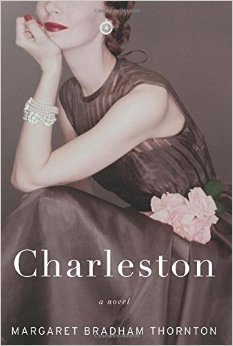
charleston coverWow. How do novels this bad get published by a professional publishing house? Oh, never mind, I forgot about James Patterson. As a Charleston resident, I try to read as many novels that take place in my home town as I can. This is one of the worst.

Charleston is another in the seemingly endless line of novels written by upper-class middle-aged white women with three names who claim Charleston as their heritage. The book’s major flaw is the pervasive air of pretention that oozes from each page. There are endless pages of name-dropping of old Charleston names, clothes, furniture and antiques, which have nothing to do with the story, except that you begin to realize everyone in this neighborhood is most likely kin to each other.

The book also never makes clear what time period in which it takes place. We can assume it is not in the 21st century, since none of the characters have cell phones or computers. But of course, since every character in the book is “old Charleston” and lives South of Broad Street, social pressure may not allow them to possess modern technology. I’m guessing it is set in the recent past (the 1990s, maybe.)  

The plot (and I am stretching here to attach that description to it) is that Eliza returns home to Charleston after being away for many years (stop me if you’ve heard this one before) and rekindles a relationship with a former boyfriend, Henry. Henry is publisher of the local paper and divides his time between three houses in the area (just to let you know he comes from “old money.”) There are also some bewildering sub-plots about paintings and slave pottery, which require Eliza to visit library archives and museums. We get to listen to her have discussions over tea about painting techniques (yawn.)

Oh, I almost forgot, Eliza’s love, Henry, has a son from a previous marriage which he has raised by himself (making him a sensitive modern man) after the wife abandoned them. Then, the ex-wife shows up! And she suddenly wants to be involved in the kid’s life … well, never mind. It’s awful. It was also about this time in the book that I got the sneaking suspicion that Henry and Eliza might actually be kin to each other.

The book comes to such a screeching stop (to call it a conclusion would be inaccurate), and with a plot twist so jarring, that one has to assume the author got tired of writing about these people and finished it as quickly as possible. I don’t blame her.

At least one third of the novel consists of Eliza strolling the streets of Charleston, name dropping people and houses, and historical tidbits. Problem is: the author gets so much of the factual and geographical details of the city wrong that it is beyond comical.

First of all you cannot turn onto Church Street from South Battery (it’s one way – in the other direction).

The author mentions two episodes of horse-drawn carriages driving down the street in the neighborhood South of Broad. Each time the author goes out of her way to point out the time of day (both well after 6:00 p.m.) Since the author is part of “old Charleston” she certainly must know that tours are not allowed on those streets after 6:00 p.m. If she wanted to reflect “real” Charleston, she would have written a scene where the locals call the police and try to have the tour guide arrested for giving illegal tours. In another scene she describes the carriage driver’s uniform and then says “the tour guide slapped the reins on the double team of draft horses.” Sorry, the carriage company she described, only uses single draft animals.  

In one embarrassing chapter, the author has Eliza walk down Church Street and point out houses and details. On the walk she mentions the George Everleigh House, where Francis Marion jumped from the second floor (wrong house; its five blocks over on Tradd Street). She then mentions the Nathaniel Russell House and spends several paragraphs describing the architecture (again, the author has conveniently moved the house three blocks from its actual location on Meeting Street).

Eliza later finds herself at the corner of Archdale and Chisholm Streets (doesn’t exist – Chisholm is 10 blocks away) and mentions the two churches on Archdale – St. Luke’s Lutheran and St. John’s Unitarian (I will pause as local Charlestonians finish laughing.) The two churches are actually St. John’s Lutheran and the Unitarian Church of Charleston.

Charleston is amateurish and worst of all, boring, the greatest sin a piece of fiction can suffer. This past year I have read dozens of self-published 99 cents Amazon books that are more professional and entertaining than Charleston

1 palmetto