Today In Charleston History: March 27

1780 – The Siege of Charlestown.

From St. Michael’s steeple, Peter Timothy reported over thirty British flatboats along the Wappoo Cut “skulking in the marsh.”
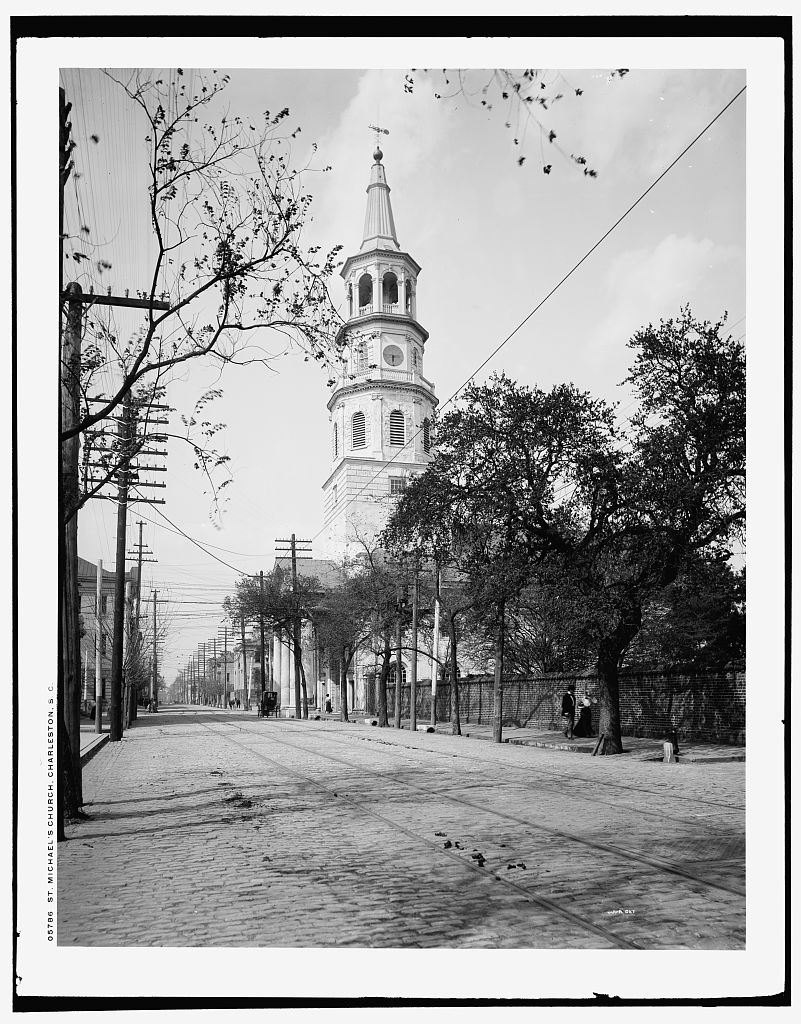
St. Michael's Church

St. Michael’s Church

During the months leading up to the British siege of Charlestown, St. Michael’s steeple was used as a lookout tower to report on troop movements outside the city. Peter Timothy, editor/publisher of the South Carolina Gazette was a Revolutionary and published passionate pro-Patriot stories. After the British successfully captured Charlestown, Timothy was one of thirty-three patriots arrested and placed in the provost dungeon of the Exchange Building.

During their passage to exile in St. Augustine, Timothy was “lost at sea” according to British reports. 

1812.

Robert Newman Gourdin was born at Buck Hall Plantation in St. John’s Parish. He was the son of Dr. Samuel Gourdin and Mary Doughty Gourdin.

Gourdin graduated from South Carolina College in 1831, read law, and was admitted to the bar in 1834. He and his brother Henry were members of the prosperous mercantile firm Gourdin, Matthiessen, and Company of Charleston. Robert Gourdin was active in city and state affairs; he served as an alderman in Charleston and toward the end of the Civil War he served as a colonel in the South Carolina reserves.

Gourdin was a signer of the Ordinance of Secession from St. Philip and St. Michael’s Parishes, Charleston, at the Secession Convention of South Carolina; he was listed in the Journal of the Convention as a commission merchant, age 48, in 1860. He was chairman of the Executive Committee of the “1860 Association” of Charleston. Gourdin, who never married, died in Charleston February 17, 1894, and is buried in Magnolia Cemetery, Charleston, South Carolina.

1860. Road To Disunion.

Population trends were going against the South, and Southerners were also becoming dependent on Northern manufacturers. The Mercury noted that:

A church built in Charleston was apt to have its doors, windows, and even pulpit made to order in the North. We thus starve our own artisan-laborers and send out money away to strengthen, enrich and fatten those who are ready to draw the sword of extermination on us.

1888. Lily Langtry Plays Charleston.

The “fair Jersey lily” as she was called, appeared on the Charleston stage at the Academy of Music. As a young woman, Lily Langtry had been celebrated in New England society for her “beauty and charm. Her looks and personality attracted interest and invitations from artists and society hostesses.” In 1874, the 20-year old Lily married Irish landowner Edward Langtry. For the next decade she became famous in European society, becoming the mistress of the Prince of Wales, Albert Edward, and was befriended by Oscar Wilde and actress Sarah Bernhardt. She also became the mistress of German Prince Louis of Battenberg and Charles Chetwynd, Earl of Shrewsbury.

lily langtry - two views

Lily Langtry, two views. Courtesy of the Library of Congress

In 1881, due to her husband’s financial difficulties (and Lily no longer the official mistress of Prince Albert) she became an actress and quickly was drawing large crowds to the theater, more due to her scandalous celebrity than her skill on the stage.

Her appearance in Charleston met with mixed reviews. Her beauty and style were fawned over in local papers, filled with detailed descriptions of her costumes:

The lower skirt was of satin brocade, trimmed in waves of golden beads, the tight-fitting bodice covered with three glittering pendants … a short puffed sleeve … on the right arm, while from the bare left arm fell a drapery of white crepe which, with the crepe over-skirt and train, gave a very Grecian effect to the whole.

Every seat at the Academy of Music was priced at $1.50; there were no “cheap seats” for Lily’s performance. Although she was praised as a beauty, a reviewer reported that “it was doubtful that one in twenty would care to see her again.”


Today In Charleston History: March 26

1726 – Ansonborough
Lord Anson, 1755

Lord Anson, 1755

Capt. George Anson purchased a tract of land which later would bear his name – Ansonborough – from his winnings at cards. According to local legend, Anson won the entire tract in a single game from Thomas Gadsden. In fact, Gadsden conveyed this tract to Capt. George Anson for £300 sterling. This was an unusually large sum for such a young naval officer to possess, so it is quite possible that Anson’s winnings at cards was the source of his money. 

Anson later led a British expedition that circumnavigated the world and served as Admiral as the British Fleet from 1756-62.

1737 – Crime & Punishment

Alexander Forbes was convicted of “stealing Cloathes and other things.” He was sentenced to “be whipped on the bare back at the cart’s tails through the town.”

1776 – American Revolution. Charleston First

Four months before the Declaration of Independence was signed, South Carolina adopted a state constitution, drafted by the Provincial Congress and the Republic of South Carolina was born. Charles Cotesworth Pinckney was chosen to chair the Constitutional Committee. This was the first plan for an independent government in the American colonies. 

South Carolina President (later govenor)  John Rutledge

South Carolina President (later govenor) John Rutledge

John Rutledge was elected as the state’s president, Henry Laurens its vice-president and William Henry Drayton, Chief Justice. The 1776 Constitution was considered a temporary measure until “an accommodation of the unhappy differences between Great Britain and America can be obtained.” It gave the president “absolute veto power” over the acts of the legislature. Due to his power, Rutledge picked up the nickname “Dictator.”

For the second time in its history, South Carolina had forced a change in its government – in 1719 they had overthrown the Proprietors and now they had replaced British rule with a local government.

1820 – Scandal

Charles Pinckney, in Washington, D.C., was caught in an abandoned house with a “mulatto wench.” A butcher who had been robbed saw Pinckney go into the house and thought it was the robber. A group of men surrounded the house and began to holler for the “thief to come out!” Pinckney, panicked, jumped out of window and attempted to run away. Due to his age, he was unable to outrun his pursuers, who released him when they realized their mistake.

1861. Lincoln’s Spies In Charleston. 

Col. Ward Lamon, former law partner to President Lincoln,arrived in Charleston to meet with Gov. Pickens who told Lamon that “nothing can prevent war except acquiescence of the President of the United States of secession.” Any attempt to reinforce the Southern forts would mean war. Lamon responded that no attempt to reinforce Sumter would happen, and that the fort would most likely be abandoned.

Rev. Anthony Toomer Porter met James Chesnut on the street. Toomer expressed his dismay that war was now inevitable. Chesnut, however, was more optimistic. He told Toomer, “There will be no war, it will be all arranged. I will drink all the blood shed in the war.” Henry Gourdin, however, agreed with Porter that “nothing now but a miracle can arrest the onward course towards destruction and war.”

1900

The first Shakespearean play of the 20th century in Charleston was The Taming of the Shrew, at the Academy of Music. “Despite the fact that it was Lent” there was a “very large crowd …. in this most decorous and conventional of cities.”

academy of music

Academy of Music, Market and King Street (present site of the Riveria Theater.

Today In Charleston History: March 25

1781 – British Occupation.

Lord Rawdon, British commander in the South after Cornwallis was posted to Virginia, decreed that all jobs in Charlestown were closed to any but Loyalists to the King.  Many men who were sympathetic to the rebel cause were forced to pledge British allegiance out of the necessity of feeding their family.

Francis Edward Rawdon-Hastings, 1st Marquess of Hastings

Francis Edward Rawdon-Hastings, 1st Marquess of Hastings

Today In Charleston History: March 24

March 24

1663

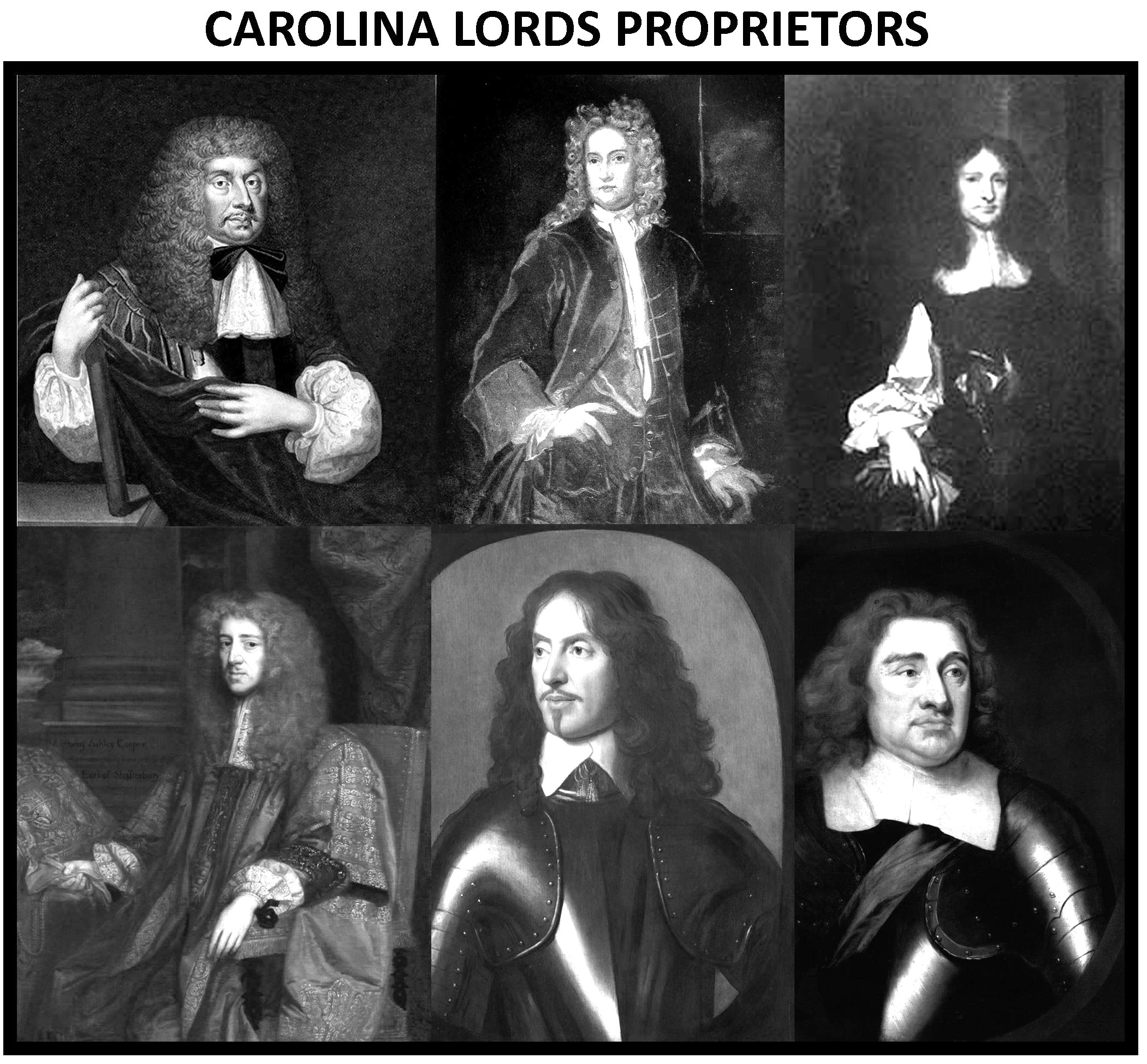
Charles II granted the territory called Carolana to the “true and absolute Lords and Proprietors.” The eight men were:

  • John Berkeley, Baron Berkeley of Stratton – Berkeley fought on the Royalist side during the Rebellion, general of the Royal forces in Devon. He also became a Proprietor for the Colony of New Jersey.
  • Sir William Berkeley – During the Rebellion, William served as Governor of Virginia and was a consistent supporter of Royal rule.
  • Sir George Carteret – Served as lt. governor of Jersey, the largest of the channel islands, fifteen miles off the French coast, which became a refuge for Royalists during the Rebellion. Carteret ran an active privateering campaign against Parliament, who branded him a pirate. After the execution of Charles I, Carteret had Charles II declared King  in Jersey,  even though the action forced  him  into  exile  for nine years.  He also became a Proprietor  of New Jersey. 
  • Sir John Colleton, 1st Baronet – Served in the infantry during the Rebellion and made heavy financial contributions to the Royal cause. After Charles’s execution, Colleton fled to Barbados where he acquired an extensive estate.
  • William Craven, Earl of Craven – Contributed substantial financing for the Royal cause during the Rebellion. Known for his “bawdy language,” Craven was one of the few noblemen who did not flee London during the Great Plague of 1665. He remained in the city to help keep order and donated property for mass grave sites.
  • Anthony Ashley Cooper, Baron Ashley of Wimborne St. Giles – A political opportunist who started the Rebellion as a Loyalist, then became a supporter of Cromwell after the War, but then devoted much of his energy for the Restoration of Charles II, for which he was well rewarded, becoming one of the most politically powerful men in England.
  • Edward Hyde, Earl of Clarendon – Maternal grandfather of two monarchs, Queen Mary II and Queen Anne, Hyde was one of Charles’ closest advisors during the nine-year exile. His daughter, Anne, married Charles’s younger brother, James, Duke of York. Later in life he authored the acclaimed “History of the Rebellion.”
  • George Monck, Duke of Albemarle – A brilliant military leader for Charles during the Rebellion, Monck was arrested and spent two years in the Tower of London. Accepting a commission as Major General he fought with Cromwell in Ireland and Scotland. After being elected to Parliament in 1660, Monck campaigned for the Restoration of Charles II. He was rewarded as Knight of the Most Noble Order of the Garter, the most prestigious honor in England.

Each Proprietor contributed £75 sterling to establish a fund for financing a colony in Carolina. They also agreed, if necessary, to contribute an additional £500 sterling each. The Proprietors, of course, hoped that no more money would be required. There was a strong consensus that the colony could be established by luring experienced settlers from established Caribbean colonies like Barbados and Bermuda, by offering large land grants in lieu of providing financing.

Six of the Lords Proprietors of the Carolina Colony

Six of the Lords Proprietors of the Carolina Colony

1804

William Johnson of Charleston was appointed an Associate Justice of the Supreme Court. He was the first of Thomas Jefferson’s three appointments to the court, and is considered to have been selected for sharing many of Jefferson’s beliefs about the Constitution. Johnson was the first member of the U.S. Supreme Court that was not a member of the Federalist Party.

220px-WilliamJohnson

William Johnson

Born in Charleston on December 27, 1771, Johnson was the second son of blacksmith William Johnson and his wife Sarah Nightingale. Graduated first in his class from the College of New Jersey (Princeton) in 1790, Johnson went on to read law under attorney Charles Cotesworth Pinckney, The following year, on March 16, Johnson married Sarah C. Bennett, sister of future governor Thomas Bennett.

Today In Charleston History: March 23

1738

Sarah Chamberlain was found guilty of “the Murder of her Bastard Child.” She was sentenced to death.

1740 –Religion.

 While in Charlestown Rev. George Whitefield conducted public services – open air preaching –  that disregarded the Book of Common Prayer, an offense against the Church of England, of which he was a licensed minister. Rev. Alexander Garden called on him to explain his offense. Whitefield warned that God had been:

Contending with the people of South Carolina … for two years –  with disease, the Stono Rebellion … God has a quarrel with you, for your abuse of and cruelty to the poor negroes.

Rev. George Whitefield - open air preaching

Rev. George Whitefield – open air preaching

Today In Charleston History: March 22

 1765 – American Revolution –The Stamp Act.

stamp actIn a another attempt to pay the debt run up during the French and Indian War, British Parliament passed the Stamp Act,  which required that most printed materials in the colonies be produced on “stamped paper” (an embossed revenue mark)  from London. The printed materials included newspapers, legal documents, playing cards and magazines. There was quick and passionate opposition to the Stamp Act in Boston, Philadelphia and Charlestown.

South Carolina’s London agent Charles Garth wrote to John Rutledge informing him of the proposed Stamp Act being argued in Parliament. In Garth’s opinion the Act could not be successfully opposed by the colonies.

The Stamp Act was viewed as a threat by most Charles Town’s men. Just a year before they had managed to secure the upper hand over Governor Boone who had challenged the Assembly’s right to determine the validity of elections. 

1794 – Execution

Thomas Walsh “was assisted in his devotions by the Rev. Dr. Keating, pastor of the Roman Catholic church” before he was hanged for counterfeiting in Charleston. He then

politely waved his hand to the crowd and said, ‘Good day, gentlemen’ before he pulled the cap over his face” and was immediately launched into eternity.

1888

Charles Dickens, Jr. appeared at the Academy of Music, reading excerpts from his father’s famous works.

1924
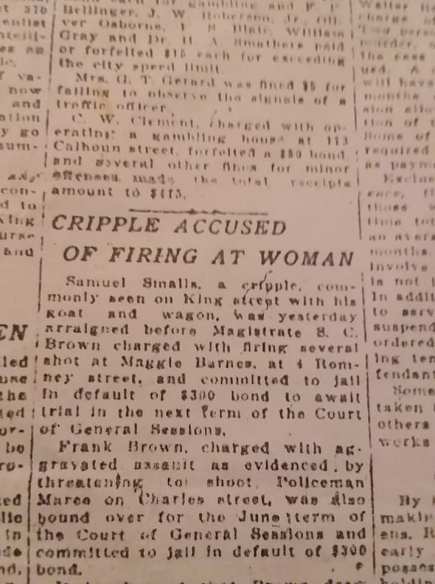
Samuel Smalls, a disabled black Charleston street peddler, often seen on his goat cart, was arrested for shooting at his girlfriend Maggie Barnes at 4 Romney Street. DuBose Heyward, wrote the novel Porgy, based on Smalls’ arrest and the fight with his girlfriend. George Gershwin read and collaborate with Heyward on “Porgy and Bess.”

sammy smalls arrest

Today In Charleston History: March 21

1917 – Music

From the Musical News, London: 

A song, “How Sweet Is Life” by a student, Mr. Edmund T. Jenkins, showed the composer to be possessed of a vein of melody, not original as yet, and of a style which needs unifying, but his effort was full of promise, especially in the matter of orchestration. The song was well rendered by Miss Marjorie Perkins.

Edmund Thorton Jenkins

Edmund Thorton Jenkins

Edmund Jenkins (who was called “Jenks”) was the son of Rev. Daniel Jenkins, founder of the Jenkins Orphanage in Charleston. He grew up playing with the Jenkins Orphanage Band, but longed to play “serious music.” He took piano lessons in Charleston and attended Morehouse College in Atlanta.

In 1914 the Jenkins Band was invited to perform at the Anglo-American Expo in London and Jenks performed with the band until the outbreak of World War I closed down the Expo. Jenks was admitted to the Royal Academy of Music in London where he studied composition.     

1921 – Music

Ethel Waters had her first recording session for the Pace & Handy Music Company. She recorded two songs –  “Down Home Blues” and “At The Jump Steady Ball.” The songs were composed by her Charleston friend, Tom Delaney, formerly a member of the Jenkins Orphanage Band. Also, two other former members of the Jenkins Band, brothers Bud (trombone) and Gus Aiken (trumpet), were part of the recording.  A twenty-three-year-old former chemistry student named Fletcher Henderson played the piano for the session.

“Down Home Blues” became a hit so Pace & Handy paired Waters and Delaney together and sent them out on tour, Waters on vocals and Delaney on piano.   

To learn more about Charleston’s role in American music … read Doin’ the Charleston. 

doin' the charleston

Today In Charleston History: March 20

1706   

Judge Nicholas Trott convicted a woman (not named) of witchcraft. Reverend Dr. Francis Le Jau wrote:

A notorious Maelfactor evidently guilty of Witchcraft & who had kill’d several persons by the Devils help was lately return’d by the Grand Jury. The last Sedition begun while the Judge was examining Evidence relating to the accused Witch that is still in our prisons … that she has many powerful friends here.

Judge Trott also convicted Sarah Dickenson of murder and sentenced her to “be drawn upon a Hurdle, to the place of Execution and there shall be burned to Death.”

1719 – Bloodless Revolution

The Lords of Admiralty in London consented to send “a frigate as soon as possible.” South Carolina Governor Johnson had written a letter illustrating the Proprietors’ inability to defend their territory and subsequently, their charter.

The man-of-war Flambourg, under Captain Hildesly, arrived on duty in the harbor, while the Phoenix under Captain Pierce patrolled the coast for freebooters. Better late than never, the citizens felt.

1830

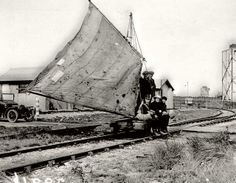
The Charleston & Hamburg Rail Road completed one mile of track in the Charleston Neck. Chief engineer Horatio Allen tested the track with a small two-axle wagon with a single mast supporting a sail – 5×9 feet in size – a “sail wagon.”  Thirteen passengers and three tons of freight were propelled at fifteen miles per hour along the rail.

A

A “sail wagon” from England, 1922, similar in concept to the larger one used in Charleston.

Today In Charleston History: March 19

1778 – Politics
Rawlins_Lowndes

Rawllins Lowndes

South Carolina President Rawlings Lowndes approved changes to the state constitution that changed the title of South Carolina’s chief executive’s office from president to governor, although he was called “president” until the end of his term. It also disestablished the Church of England in South Carolina.

1785 – Education

The Legislature granted a charter for College of Charleston to “encourage and institute youth in the several branches of liberal education.” The founders of the College include three signers of the Declaration of Independence (Edward Rutledge, Arthur Middleton and Thomas Heyward, Jr.) and three future signers of the United States Constitution (John Rutledge, Charles Pinckney and Charles Cotesworth Pinckney).

The Act also granted the college almost 9 acres of land bounded by present-day Calhoun, St. Philip, Coming and George streets; three-fourths of the land was soon sold to pay debts,  In 1837 CofC became America’s first municipal college in the country.

Randolph Hall, College of Charleston main campus

Randolph Hall, College of Charleston main campus

Today in Charleston History: March 18

1758

A report about British quartering (housing of troops) was presented to the Assembly. Prepared by Peter Manigault, Christopher Gadsden, Charles Pinckney, Henry Laurens and Rawlins Lowndes, the report stated:

Officers and Soldiers cannot, legally or constitutionally, be quarter’d in private Houses, without the special Consent of the Owners or Possessors of such Houses. 

1782 – Births.
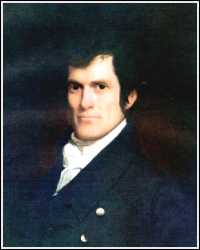
Calhoun as a young man

Calhoun as a young man

John Caldwell Calhoun was born in Abbeville, in the South Carolina backcountry. His mother was described as being “full of intelligence and energy … strong will and temper” – attributes her son would most definitely inherit.

During his life Calhoun became one of the most influential politicians of the 19th century. He was educated at Yale served in South Carolina’s legislature and was elected to the United States House of Representatives serving three terms. In 1812, Calhoun and Henry Clay, two famous “warhawks”, who preferred war to the “putrescent pool of ignominous peace”, convinced the House to declare war on Great Britain.

Calhoun was secretary of war under President James Monroe from 1817 to 1825 and ran for president in the 1824 election along with four others, John Q. Adams, Henry Clay, Crawford, and Andrew Jackson. However, Calhoun withdrew from the race, due to Jackson’s support, and ran for vice president unopposed. Calhoun was vice president of the United States in 1824 under John Quincy Adams and was re-elected in 1828 under Andrew Jackson.

Jackson was for the Tariff of 1828 (Tariff of Abominations) and caused Calhoun to be opposed to Jackson, which led to Calhoun’s resignation in 1832. Because he could not do anything about Jackson’s views toward tariffs, which benifitted only industrial North and hurt slaveholding South, John C. Calhoun became the first vice president to resign.

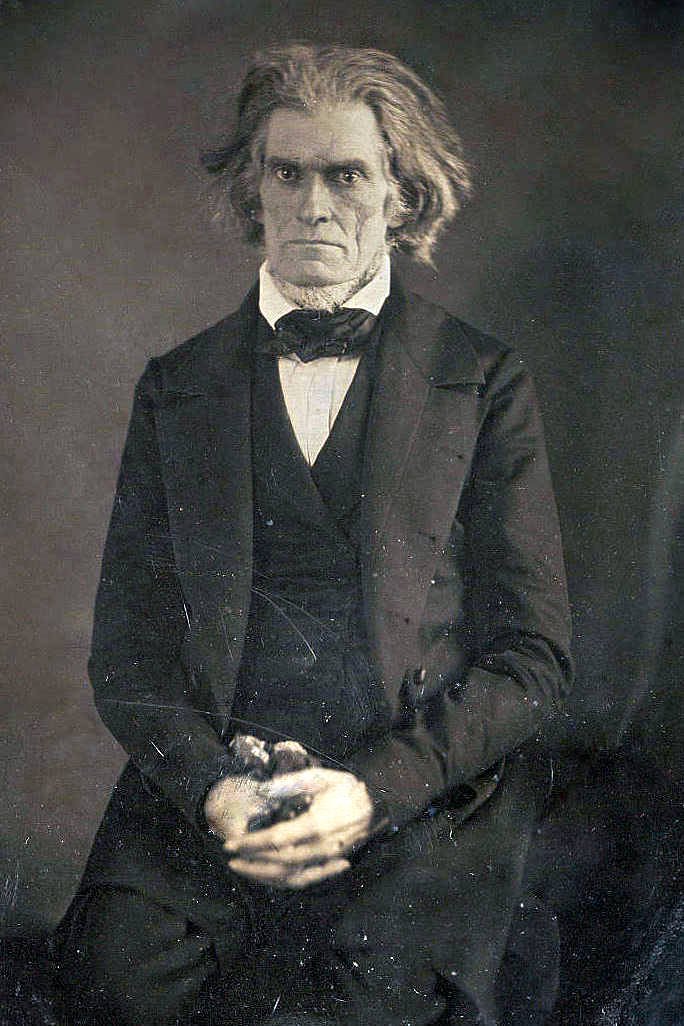
Calhoun as an elder statesman

Calhoun as an elder statesman

Calhoun wrote an essay about this conflict, “The South Carolina Exposition and Protest”, in which he asserted nullification of federal laws, and in 1832 the South Carolina legislature did just that. This gave Calhoun the nickname “the Great Nullifier.” 

The next year in the Senate Calhoun and Daniel Webster opposed each other over slavery and states’ rights in a famous debate. In 1844 President John Tyler appointed Calhoun secretary of state. In later years he was reelected to the Senate, where he supported the Texas Annexation and defeated the Wilmot Proviso.

John Caldwell Calhoun died in Washington, D.C. on March 31, 1850 and was buried in St. Phillips Churchyard in Charleston. In 1957, United States Senators honored Calhoun as one of the five greatest senators of all time.


Calhoun's tomb in St. Philip's cemetery

Calhoun’s tomb in St. Philip’s cemetery