Today In Charleston History: April 6

1670-Arrivals  
17th century frigate

17th century frigate, similar to the Carolina.

“Early in April” (the only date recorded, but upon investigation of related documents, letters etc … April 6-7 seems to accurate) the Carolina sailed into what is now Charleston harbor, navigated past something called “Oyster Point” (a spit of sandy land which at low tide was covered with shells) and sailed up the Kiawha (Ashley) River. About three miles inland they landed on the west bank. They named the settlement Albemarle Point (named after George Monck, Duke of Albermarle, one of the Lords Proprietor.) Albermarle Point is currently the site of Charles Town Landing, a state park. It became the third English colony in North America (Virginia, 1607 and Massachusetts, 1620).

They chose a nine-acre site on what is now called Town Creek, making the settlement invisible to vessels sailing into the harbor until they sailed more than three miles inland around the curve of the Ashley River. Security from the Spanish was always a major consideration.

The cargo of the Carolina included:

  • 15 tons of beer
  • 30 gallons of brandy
  • 59 bushels of flour
  • 12 suits of armor
  • 100 beds and pillows
  • 1200 grubbing hoes
  • 100,000 four penny nails
  • 756 fishing hooks

The passengers include: 29 “Masters” (men of property) and “free” persons; 63 indentured white servants; and 1 black slave. One of the servant girls, Affra Harleston, married the first mate of the Carolina, John Coming.

1861

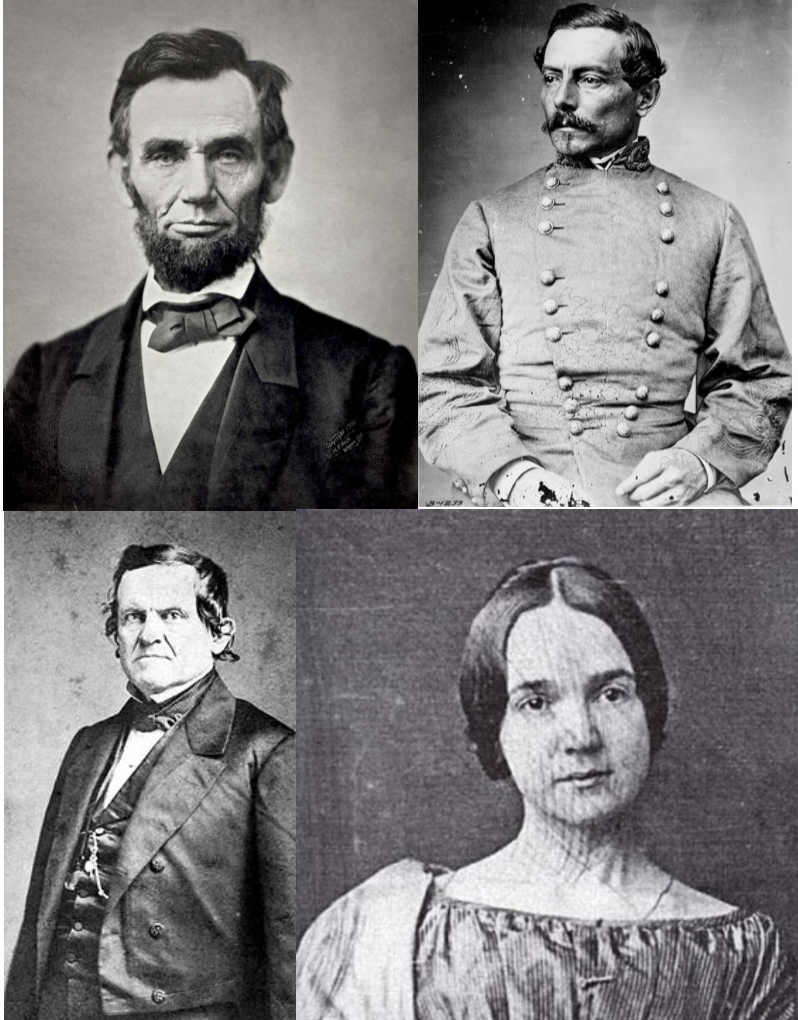
Pres. Lincoln notified Governor Francis Pickens and Gen.P.G.T. Beauregard that he had sent a naval expedition to resupply Fort Sumter, including 200 reinforcements. Pres. Jefferson Davis ordered Beauregard to prevent those provisions from being delivered.

Mary Chesnut, wife of Col. James Chesnut, second in command to Beauregard, wrote on April 6:

The plot thickens, the air is red hot with rumors … In spite of all, Tom Huger came for us and we went on the Planter to take a look at Morris Island …

A reporter for the New York Times wrote about the attitude among Charleston’s city’s elite. He suggested that a doctor be sent to the city to “give us a proper analysis of them.” He reported:

The more I see of the men of Charleston, the more convinced I am that very many of them act, talk and behave like perfect children … Charleston is a sublime mystery not measured by any of the common-sense rules that govern one in their intercourse with ordinary people.

illustration

Top: Pres. Lincoln & Gen. Beauregard Bottom: Gov. Pickens & Mary Chesnut

Today In Charleston History: April 5

1739

The South Carolina Gazette announced festivities to honor James Oglethorpe:

Tuesday last being the day appointed for the Review of the Troop and Regiment of St. Philips Charlestown, the two following commissions of his Majesty were published at Granville Bastion, under the discharge of the cannon both there and at Broughton Battery the one constituting and appointing the Hon. William Bull Lieutenant Governor in and over the province, and the other [for] his Excellency James Oglethorpe, General and Commanders of his Majesty’s Forces in the provinces of South Carolina and Georgia … In the evening his Excellency … made a general invitation to the ladies to an excellent supper and ball so the day concluded with much pleasure and satisfaction. 

1740 – Slavery
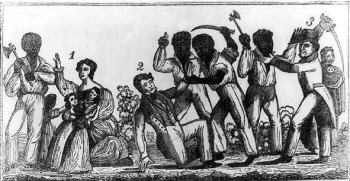
Stono Rebellion

Stono Rebellion

In response to the Stono Rebellion, the Assembly passed a new Negro Act – placing high import duty on slaves, which effectively cut off new slave trading. Its stated goal was “to ensure that slaves be kept in due subjection and obedience.”

No slave living in town was allowed to go beyond the city limits; the sale to alcohol was prohibited and teaching slaves to read and write was prohibited. Only the Assembly could grant a slave freedom. Any white person who “shall willfully cut out the tongue, put out the eye, castrate or cruelly scald” a slave was subject to a fine. 

1765 – American Revolution–The Sugar Act 

The Sugar Act was passed by Parliament. The British government had increased its debt during the French and Indian War, and was looking at various means to raise revenue. 

1780 – The Siege of Charlestown
Siege of Charlestown

Siege of Charlestown – British batteries outside the city.

After dark Gen. Clinton ordered the British battery at Fenwick’s Point and the Wappoo Cut, across the Ashley River, to fire upon Charlestown. The cannonballs whistling through the dark sky over the city created a “terrible clamor” with “the loud wailing of female voices.”

One of the British cannonballs struck Mr. Thomas Elfe’s house at 54 Queen Street and two damaged Governor John Rutledge’s house on Broad Street. Rutledge wrote that he was appalled at “the insulting Manner in which the Enemy’s Gallies have fired, with Impunity, on the Town.”

Also, the British galley Scourge fired eighty-five times with “every shot … into town.” During the night three British soldiers deserted to the American side. One of the soldiers “paddled himself over on a plank from James Island.”

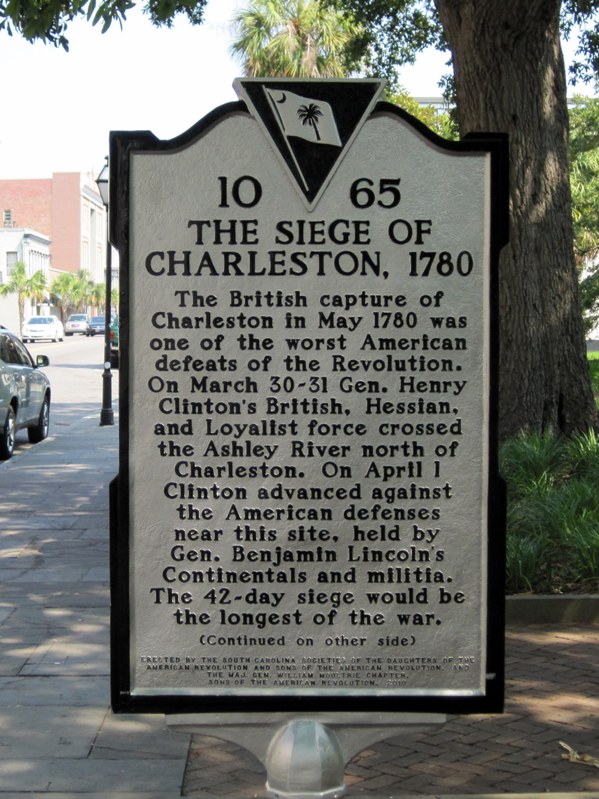
Siege marker on King Street @ Marion Square

Siege marker on King Street @ Marion Square

1839

Robert Smalls was born behind his owner’s city house at 511 Prince Street in Beaufort, S.C. His mother, Lydia, served in the house but grew up in the fields, where, at the age of nine, she was taken from her own family on the Sea Islands.  The McKee family favored Robert Smalls over the other slave children, so much so that his mother worried he would reach manhood without grasping the horrors of the institution into which he was born. To educate him, she arranged for him to be sent into the fields to work and watch slaves at “the whipping post.”

By the time Smalls turned 19, he was working in Charleston. He was allowed to keep one dollar of his wages a week (his owner took the rest). Far more valuable was the education he received on the water; few knew Charleston harbor better than Robert Smalls.
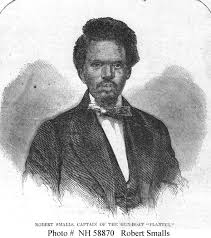
smalls

Robert Smalls

It’s where he earned his job on the Planter. It’s also where he met his wife, Hannah, a slave of the Kingman family working at a Charleston hotel. With their owners’ permission, the two moved into an apartment together and had two children: Elizabeth and Robert Jr. Well aware this was no guarantee of a permanent union, Smalls asked his wife’s owner if he could purchase his family outright; they agreed but at a steep price: $800. Smalls only had $100.

By 1862, Smalls viewed the Union blockade of the Charleston harbor as a tantalizing promise of freedom. Under orders from Secretary Gideon Welles in Washington, Navy commanders had been accepting runaways as contraband since the previous September. While Smalls couldn’t afford to buy his family on shore, he knew he could win their freedom by sea — and so he told his wife to be ready for whenever opportunity dawned.

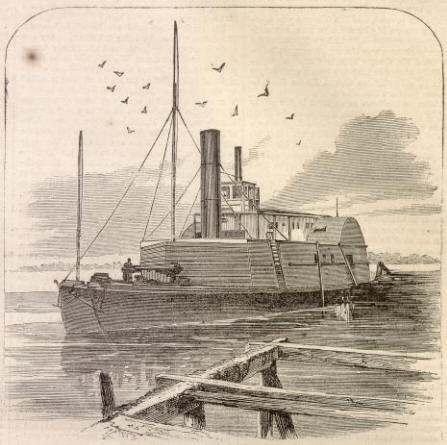
planter-gun-boat

The Planter

Just before dawn on May 13, 1862, Robert Smalls and a crew of fellow slaves, slipped a cotton steamer, Planter, off the dock, picked up family members at a rendezvous point, then slowly navigated their way through the harbor. Smalls, doubling as the captain donned the captain’s wide-brimmed straw hat to help to hide his face. As they sailed out of the harbor Smalls responded with the proper coded signals at two Confederate checkpoints and sailed into the open seas. Once outside of Confederate waters, he had his crew raise a white flag and surrendered his ship to the blockading Union fleet.

In less than four hours, Smalls had accomplished an amazing feat: commandeering a heavily armed Confederate ship and delivered its 17 black passengers (nine men, five women and three children) from slavery to freedom. “One of the most heroic and daring adventures since the war commenced was undertaken and successfully accomplished by a party of negroes in Charleston,” trumpeted the June 14, 1862, edition of Harper’s Weekly.

On May 30, 1862, the U.S. Congress, passed a private bill authorizing the Navy to appraise the Planter and award Smalls and his crew half the proceeds for “rescuing her from the enemies of the Government.” Smalls received $1,500 personally, enough to purchase his former owner’s house in Beaufort off the tax rolls following the war, though according to the later Naval Affairs Committee report, his pay should have been substantially higher.

In the North, Smalls was hailed as a hero. He lobbied Secretary of War Edwin Stanton to begin enlisting black soldiers and a few months later after President Lincoln ordered black troops raised, Smalls recruited 5,000 soldiers himself. In October 1862, he returned to the Planter as pilot as part of Admiral Du Pont’s South Atlantic Blockading Squadron. According to the 1883 Naval Affairs Committee report, Smalls was engaged in approximately 17 military actions, including the April 7, 1863, assault on Fort Sumter and the attack at Folly Island Creek, S.C.

Two months later he assumed command of the Planter when, under “very hot fire,” its white captain became so “demoralized” he hid in the “coal-bunker.” Smalls was promoted to the rank of captain, and starting in December 1863 on, he earned $150 a month, making him one of the highest paid black soldiers of the war. When the war ended in April 1865, Smalls was on board the Planter in a ceremony in Charleston Harbor at Fort Sumter.

Following the war, Smalls served in the South Carolina state assembly and senate, and for five nonconsecutive terms in the U.S. House of Representatives (1874-1886).He died in Beaufort on February 23 1915, in the same house behind which he had been born a slave and is buried behind a bust at the Tabernacle Baptist Church.

“My race needs no special defense for the past history of them and this country. It proves them to be equal of any people anywhere. All they need is an equal chance in the battle of life.” — Robert Smalls

Today In Charleston History: April 4

1764

The South Carolina Weekly Gazette is renamed South Carolina & American General Gazette by Robert Wells its publisher.

1780 – The Seige of Charlestown

John Lewis Gervais in Charlestown wrote that the American batteries “fired a great deal all night & threw Several shells at the Enemy’s Works” – a total of 573 cannonballs. Since the British were unable to return fire, they continued the construction of their fortifications.

1920 
Eamon De Valera arrives in Charleston

Eamon De Valera arrives in Charleston

Eamon De Valera arrived in Charleston. He was a leader of Ireland’s struggle for independence against Great Britain. He traveled to the United States from the newly proclaimed Republic of Ireland in an attempt to gain diplomatic recognition for and raise money to support his fledgling nation. Escorted by a select committee in a parade down King Street, he received a spectacular welcome led by Charleston’s first Irish Catholic mayor, John P. Grace, and most members of the city council which granted him “Freedom of the city.” He was celebrated at a sumptuous banquet at the grand Charleston Hotel, and applauded at speeches given to enthusiastic audiences at both the Garden Theater and the Academy of Music.

Albert Sottile recalled:

Mr. DeValera’s appearance at the Victory caused a great ovation. The applause from those in the balcony were so thunderous that it caused the balcony structure to sink several inches, causing a big bulge in the center. A near catastrophe was miraculously escaped.

chas_victory_02

Today In Charleston History: April 3

1736Arrivals.
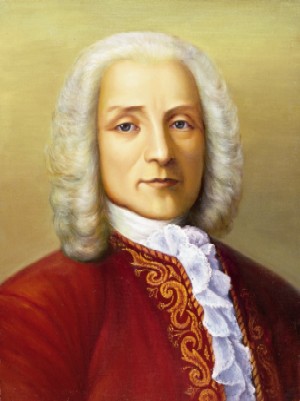
Charles Pachelbel

Charles Theodore Pachelbel

Charles Theodore Pachelbel (baptized Karl Theodorus) arrived in Charlestown. Born in Germany in 1690, he was the son of the famous Johann Pachelbel, composer of the popular Canon in D.

Pachelbel initially migrated to Providence, Rhode Island to install an organ in Trinity Church in 1733. Three years later he arrived in Charlestown and stayed until his death.

1758

Christopher Gadsden paid £6000 currency for fifteen acres of high land (and twenty-nine acres of marsh) in northeastern Charlestown, which became known as Gadsdenboro. Today it is approximately the area that encompasses the Maritime Center and Ansonborough Field.

1776- American Revolution

South Carolina legislature required all ministers and lay officials of each church to support the Patriot cause. President John Rutledge signed an act that prescribed the death penalty and confiscation of property for anyone who aided the British. Rutledge also appointed 46-year-old Col. William Moultrie, former militiaman and Indian fighter, in charge of preparing the city’s military defense.

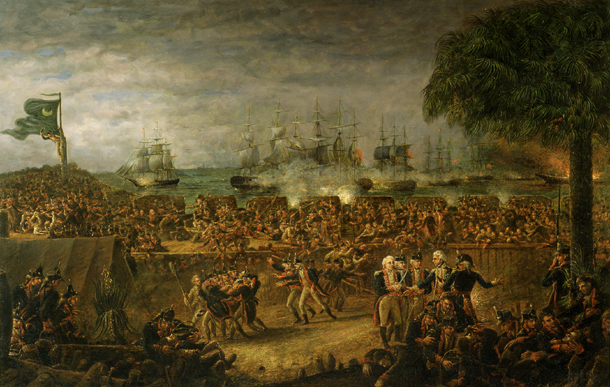
Moultrie supervised the building of a “large fort” on Sullivan’s Island, considered to be the key to the geographically shielded harbor. A large vessel sailing into Charleston had to cross the Charleston Bar, a series of submerged sand banks lying about 8 miles southeast of the city. A half-dozen channels penetrated the bar, but only the southern pair could be navigated by deep-draft ships. A broad anchorage called Five Fathom Hole lay between the bar and Morris Island. Just a thousand yards north of that shoal loomed the newly constructed Fort Sullivan.

Battle of Ft. Sullivan

Battle of Ft. Sullivan

During the next weeks, Moultrie’s work gangs cut thousands of spongy palmetto logs and rafted them over from the other islands and the mainland. The fort’s design was described as “an immense pen 500 feet long and 16 feet wide, filled with sand to stop the shot.” The workers constructed gun platforms out of 2-inch planks and nailed them together with spikes.

 Fort Sullivan was intended was to make an invasion as costly as possible, or, to prevent an invader from landing at all. Since such a fixed defensive position could not reasonably be expected to annihilate the enemy, the fort would have to be backed up by inland troops and a well-armed city.

Today In Charleston History: April 2

1737- Slavery.

The disproportionate numbers of Negro slaves versus white settlers began to concern some citizens. In a letter to the South Carolina Gazette, a writer called “Mercator” argued about the danger of the “importation of Negroes.” He argued that in the four years past there had been imported 10,447 Negroes and in the four years before only 5153. He suggested that some method to prevent the large importation of Negroes must be speedily adopted or else there would be “the most fatal consequence to the province.”

1776
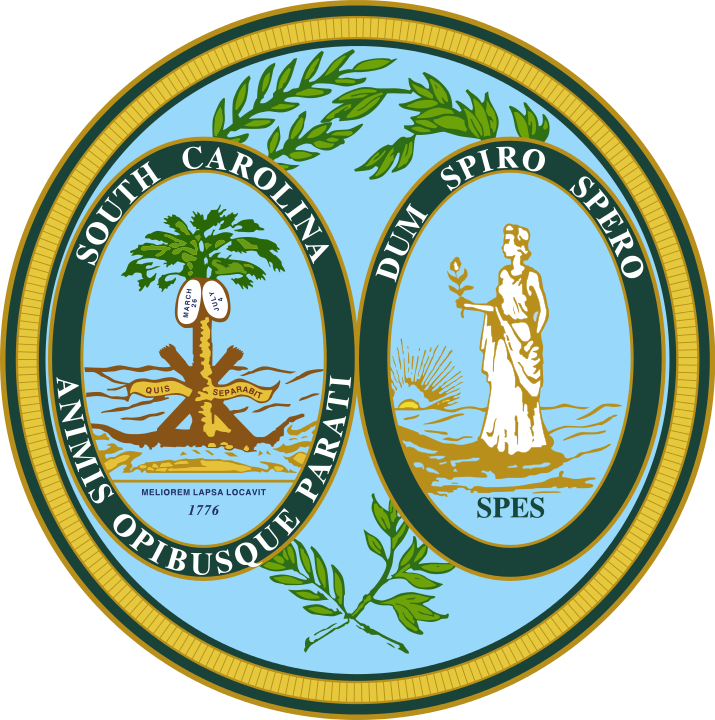
Seal of South Carolina

Seal of South Carolina

A state seal of South Carolina was authorized to be designed by Arthur Middleton and William Henry Drayton.

1783

Charles Pinckney returned to Charlestown and lived at 2 Orange Street, and helped his mother with his father’s estate. The will reserved property valued at £53, 000 and stipulated that “sixty of the worst of my plantation slaves” be sold to pay his debts. He left his mansion on Queen Street to his son, Charles. The remainder of his estate – three plantations, Fee Farm and Drainfield in St. Bartholomew’s Parish and Snee Farm in Christ Church – were to be divided equally among his wife and children.

1864-Bombardment of Charleston.

In a letter to his Aunt Janey, Gus Smythe wrote:

I have got the most responsible post in the Signal corps here & the most dangerous when they are shelling, for they avowedly make this steeple their mark when firing & have made some very close shots. To look down on them from here, all around the foot of the Steeple, in the grave yard, Streets, City Hall, Court House, Guard House & houses, it seems & is miraculous that so far they have missed. I only hope they continue to do so, for tho’ there may be some “glory” there will be little pleasure in tumbling down with the Steeple.

1902
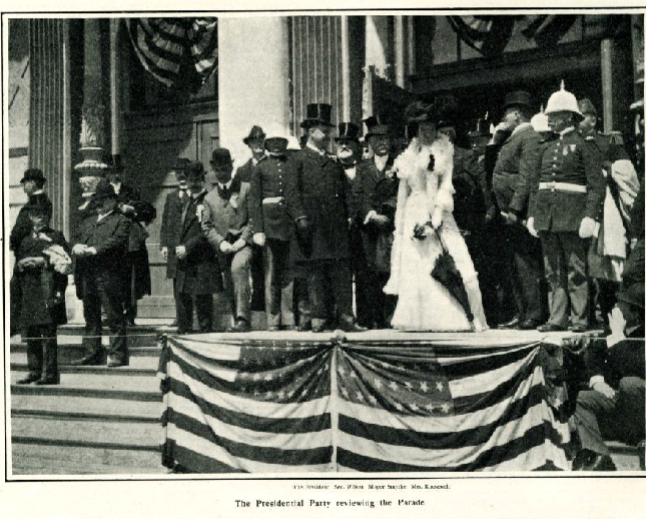
roosevelt, expo

Pres. Roosevelt at the Expo

President’s Day at the South Carolina West Indian Exposition with President Teddy Roosevelt visiting the Ivory City. Thousands of people lined the streets while a parade of three thousand representing all branches of the military marched to the Exposition. The president gave a speech and attended a luncheon at the Woman’s Building.

Today In Charleston History: April 1

1766-Stamp Act. 

South Carolina courts shut down, due to lack of stamped paper. Lawyers presented a petition to hold court without stamped paper. They stated:

We claim our rights under Magna Carter, the Petition of Rights, etc … We cannot think ourselves bound by the Stamp Act, which annihilates our natural as well as constitutional rights.

Chief Justice Skinner held that the court had no power to question the authority of an act of Parliament and the fact that there was no stamped paper because of unlawful demonstrations by the people was no excuse not to follow the law.

1780 –The Seige of Charlestown.

Under cover of darkness, 3000 men marched from the British camp at Gibb’s Landing toward Charlestown. – including 1500 laborers. They stopped 1000 yards from the city’s fortifications and began construction of their seigeworks. Due to the sandy soil “the work went quickly” and within one night Gen. Clinton was amazed they “completed 3 Redoubts and a communication without a single shot.”

The following morning, Samuel Baldwin of Charlestown wrote: “We were surprised … at the sight of the works thrown up by our neighbors during the night.”

1844 – Politics

John C. Calhoun became Secretary of State in John Tyler’s Cabinet.

1927 – Doin’ the Charleston

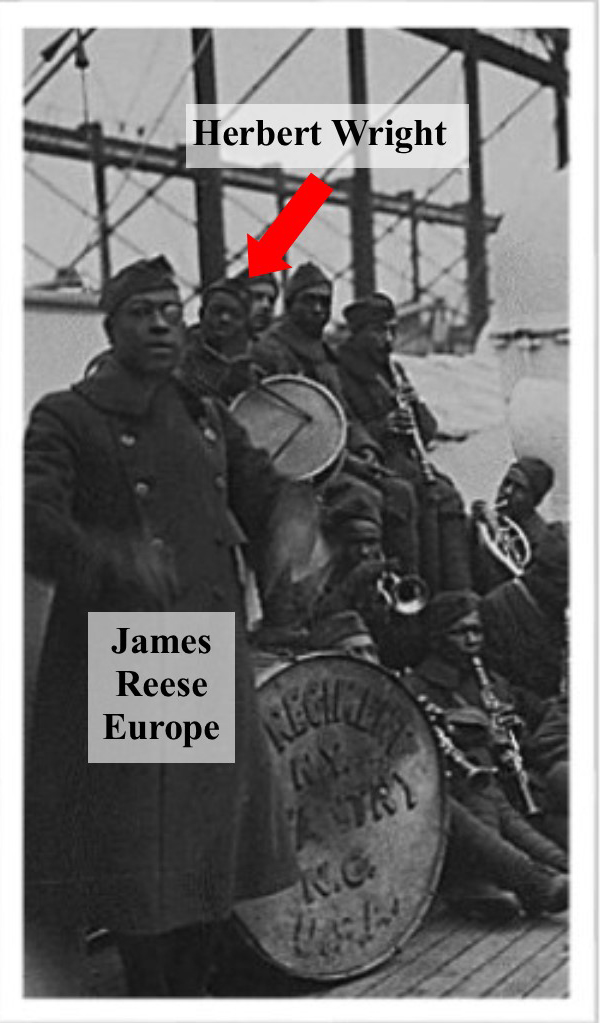
Herbert Wright of the Jenkins Orphanage was paroled on April, 1927. In 1919 he pled guilty to manslaughter and was sentenced to ten to fifteen years in the Massachusetts State Penitentiary.

Harlem Hellfighters Band

Harlem Hellfighters Band

Wright had committed a murder that shocked the nation. He had murdered band leader, James Reese Europe, backstage at Mechanics Hall in Boston. Europe was the leader of the Harlem Hellfighters Band, an outfit which had performed across Europe during World War I and has been credited in introducing jazz music to France. The Hellfighters Band was also the first black group to record music. The band included four members of the Jenkins Orphanage Band – Steve and Herbert Wright (the Percussive Twins), Amos Gaillard (trombone) and Gene Mikell (asst. director).

Read more about James Reese Europe’s life here. 

To learn the complete story of the Jenkins Orphanage Band, the Harlem Hellfighters and the murder of James Reese Europe, read Doin’ the Charleston.

doin' the charleston

Today In Charleston History: March 31

1850 – Death

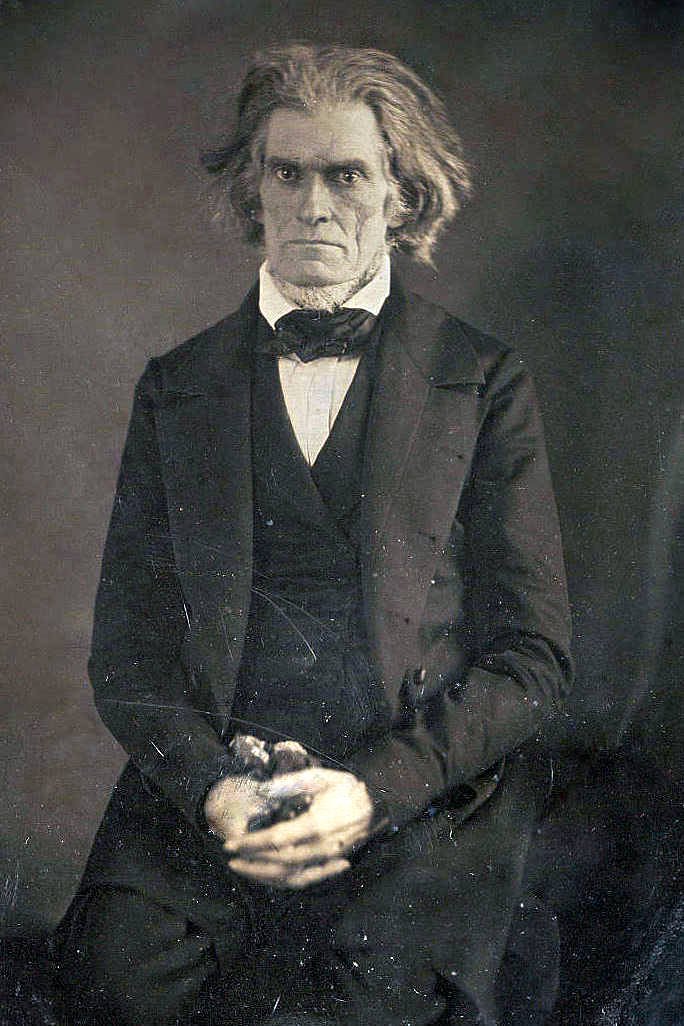
John C. Calhoun, at the age of 68, died of tuberculosis at the Old Brick Capitol boarding house in Washington, D.C. He was buried at St. Philip’s Cemetery in Charleston. 

Calhoun served in South Carolina’s legislature and was elected to the United States House of Representatives serving three terms. From 1808 to 1810 an economic recession hit the United States and Calhoun realized that British policies were ruining the economy. In 1812, Calhoun and Henry Clay, two famous “warhawks”, who preferred war to the “putrescent pool of ignominous peace”, convinced the House to declare war on Great Britian.

Calhoun's tomb in St. Philip's cemetery

Calhoun’s tomb in St. Philip’s cemetery

Calhoun served as Secretary of War under President James Monroe from 1817 to 1825 and ran for president in the 1824 election along with four others, John Q. Adams, Henry Clay, William Crawford, and Andrew Jackson. However, Calhoun withdrew from the race, due to Jackson’s support, and ran for vice president unopposed.
Calhoun was vice president of the United States in 1824 under John Quincy Adams and was re-elected in 1828 under Andrew Jackson.

Calhoun as an elder statesman

Calhoun as an elder statesman

Jackson supported the Tariff of 1828 which caused fierce opposition between the president and vice president. Because the tariffs benefited  the industrial North and hurt the slave-holding South, John C. Calhoun became the first vice president to resign. (On October 10, 1973 Vice President of the United States Spiro Agnew resigned after being charged with federal income tax evasion.)

Calhoun wrote an essay about this conflict, “The South Carolina Exposition and Protest”, in which he asserted nullification of federal laws, and in 1832 the South Carolina legislature did just that. The next year in the Senate Calhoun and Daniel Webster opposed each other over slavery and states’ rights in a famous debate. In 1844 President John Tyler appointed Calhoun secretary of state. In later years he was reelected to the Senate, where he supported the Texas Annexation and defeated the Wilmot Proviso.

In 1957, United States Senators honored Calhoun as one of the five greatest senators of all time.

1864-Bombardment of Charleston 

In a letter to his mother, Gus Smythe, look-out for the Confederate Signal Corps, wrote from the steeple of St. Michael’s Church:

Here am I on my lofty perch, behind a big telescope , looking out for any movements of the Yankees which may be of sufficient importance to send up to Gen. Jordan … My tour of duty to-night is from 1:30 a.m. to 9 a.m. & I have been on duty half the day … The worst difficulty is the trouble of getting up here, for it is no joke climbing up 150 feet … our place is in the upper piazza, above the clock. We have boarded it in, & bunks put in for us to sleep in so that we are tolerably comfortable, except when the wind blows thro’ the cracks  of the boards at a great & there is always a wind up here.

Gus Smythe

Gus Smythe

Today In Charleston History: March 30

 1780 – The Siege of Charlestown.

John Laurens, 1780 (by Charles Willson Peale)

John Laurens, 1780 (by Charles Willson Peale)

First action that morning was led by Col. John Laurens’ unit against the advancing British light infantry. After several hours of scattered battle, Lauren’s men retreated back behind the city’s fortifications at dark. Laurens described it as “a frolicking skirmish for our young soldiers.” It was the first engagement fought within sight of the city, or as one officer noted, “in view of … many ladies.”

The British set up camp at Gibbes Landing (present-day Lownde’s Grove), which was a perfect staging area from which to lay siege to Charlestown.

Three principal types of artillery used during the Revolution: field guns, howitzers and mortars.

  • Field Guns: mounted on large-wheeled carriages and fixed to fire at low angles. Varied in size from three-pound (weight of solid shot fired) to forty-two pounds. Larger guns weighed appx. 5000 pounds (2½ tons).
  • Howizters: Similar to field guns, but with shorter and stockier barrels. Could be fired at a low or high angle. Range: 1300-2000 yards.
  • Mortars: a useful weapon because of its small size and ease of movement.  It usually had a fixed trajectory (around 45 degrees), and the distance the shot traveled was adjusted by varying the powder charge.  Just like the howitzer, the use of the exploding shell was popular to reach troops inside fortifications. Range: 2000 yards.

 1843 – Marriage.

Susan Petigru King Bowen, in later life

Susan Petigru King Bowen, in later life

Susan Petigru, 19, married Henry Campbell King, “short, stout, and physically unattractive.” Henry was the son of a prominent Charleston lawyer, Mitchell King, and friend of Susan’s father.  

Susan, the daughter of another prominent Charleston lawyer, James Petigru, was something of a rebel so the marriage to King was considered the best the Petigrus could do for her. Susan herself wrote that she would “probably get no better offer.” She had been a rambunctious child who grew to be a quick-tempered woman who never bothered to conform to the role of a society belle. She moved into her husband’s family mansion at 24 George Street.

Today In Charleston History: March 29

1722 – Religion.
St. Philips Church, 1723

St. Philips Church, 1722

On Easter Sunday, the congregation of St. Philip’s worshipped for the first time in their new church. The structure was described as a

work of … Magnitude Regularity Beauty … not paralleled in his majesty’s Dominions in America … lofty arches and massive pillars, an octagonal tower topped by a dome and a quadrangular Lantern and weathervane soared eighty feet above the church.

1780 – The Seige of Charlestown.

The British army crossed the Ashley River and landed on the Charlestown peninsula, two miles north of the Continental lines, approximately near the present-day site of the Citadel. 

Due to lack of men the Continental army could not stop the British crossing. Gen. Lincoln was so determined to save Charlestown that he gambled by keeping the bulk of the Southern Army within the city. However, he did order a light infantry unit led by Col. John Laurens to take post outside the city’s fortifications “to watch the motions of the Enemy and prevent too sudden an approach.” He also wrote to the Continental Congress:

We have to lament that, from the want of Men, we are denied the advantages of opposing them with any considerable force in crossing this river.


Today In Charleston History: March 28

1683   
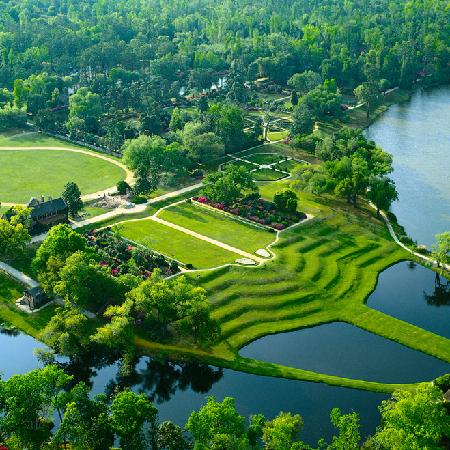
aerial-photo-of-middleton

Aerial photo of Middleton Place

Arthur Middleton received 800 acres from the Proprietors. Arthur was active in public life and became president of the convention that overthrew the Lords Proprietors in 1719. His son, Henry, married Mary Williams whose dowry included the property which is now called Middleton Place, a National Historic Landmark. 

Henry’s son, Arthur, was a signer of the Declaration of Independence.

1769

In a public letter in the South Carolina Gazette and Country Journal, Rev. Charles Woodmason expressed the outrage of the back country people of the most recent election. He publically ridiculed Christopher Gadsden as the “Scriblerus of the Libertine” and claimed he and the Sons of Liberty were hypocrites – protesting British taxation without representation yet turning around and taxing the back country without allowing them fair representation. Woodmason wrote:

Lo! Such are the Men who bounce and make such Noise about Liberty! Liberty! Freedom! Freedom! Rights! Privileges! and what not … and these very Scribblers and Assembly Orators … keep under the lowest Subjection half the Inhabitants of this Province … These are the Sons of Liberty!

1778 – American Revolution

Legislation was passed that ordered all males sixteen or older to swear allegiance to South Carolina and agree to defend the state against George III. This precipitated the first mass exodus of Tories from Charlestown, making the city a predominant Patriot stronghold.

1818- Births

Wade Hampton III was born in Charleston, in the William Rhett house. His grandfather had created one of America’s largest fortunes from cotton. Although opposed to secession, Hampton remained loyal to his state and rose to the rank of Lt. General during the Civil War, seeing action at the First Battle of Bulls Run, the Peninsula Campaign and Gettysburg. After the War Hampton became one of the most prominent men who popularized the “Lost Cause” movement across the South. He was elected governor in 1876.

wade hampton illustration

LEFT: Wade Hampton. RIGHT: 54 Hasell Street (William Rhett House, 1712), Hampton’s birthplace. Currently a private residence in Charleston

1900

Mayor J. Adger Smyth and the Charleston City Council endorsed the plans for an Exposition in Charleston. The newly organized South Carolina Interstate and West Indian Exposition Co. had already raised more than $40,000 and chosen Captain F.W. Wagner as the company’s chairman.

Not everyone was confident of the Exposition’s success. W.D. Parsons wrote in the Inter-State Journal, “The audacity of this little town in sandwiching in an exposition between the great fairs of Buffalo and St. Louis is truly great.”