Today In Charleston History: April 14

1737-Religion

John Wesley arrived from Savannah for a second visit to Charlestown. He noted in his diary:

I had the pleasure of meeting with the clergy of South Carolina among whom in the afternoon there was such a conversation for several hours on ‘Christ our Righteousness’ as I had not heard at any visitation in England or hardly any other occasion.

During Wesley’s visit he arranged with Lewis Timothy to publish the Collection of Psalms and Hymns, the first Anglican hymnbook published in the American colonies.

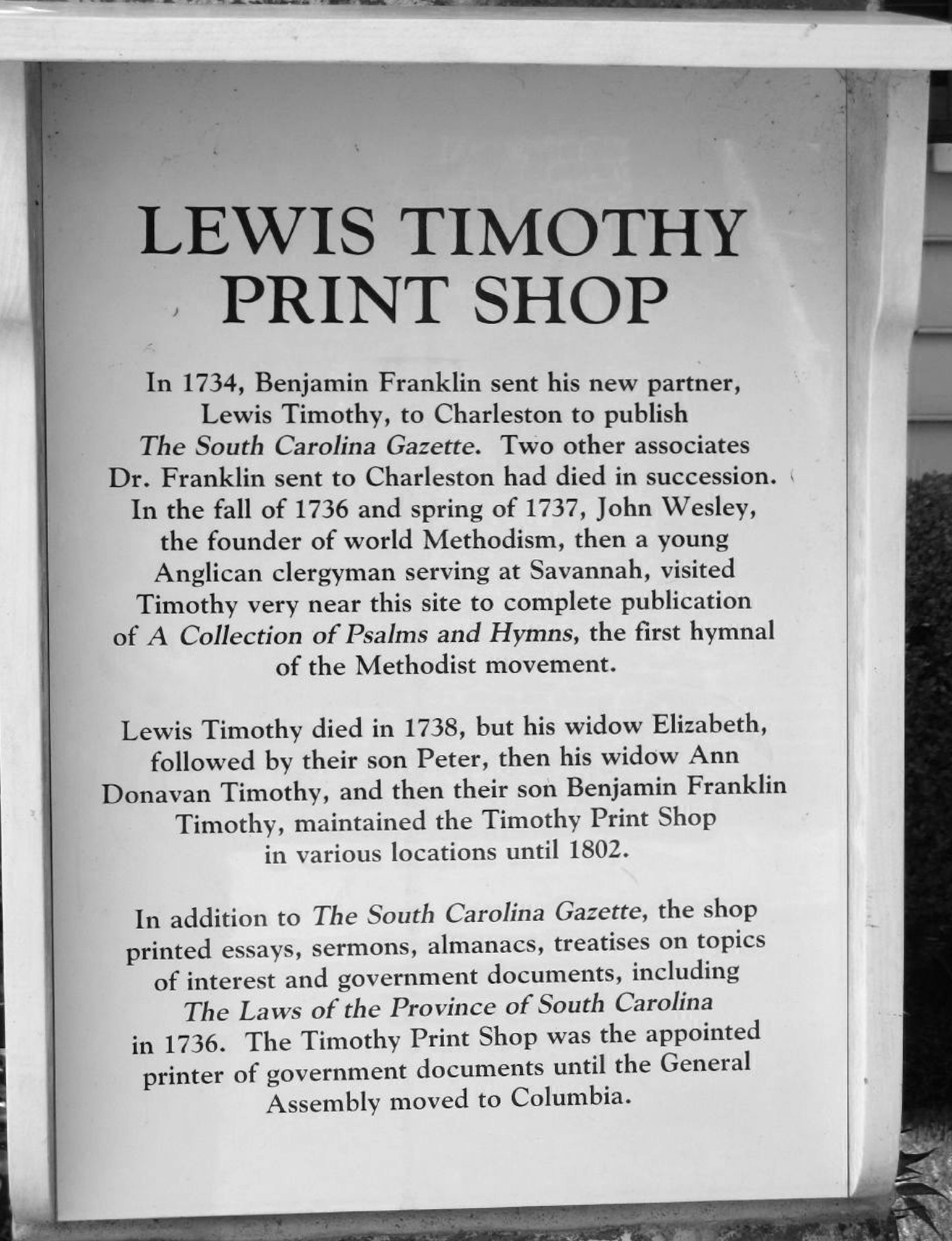
Lewis Timothy print shop

Lewis Timothy print shop marker on King Street, Charleston

1780-American Revolution 

Lt. Colonel Tarleton and his British dragoons took an American cavalry encampment commanded by General Issac Huger, at Middleton’s Plantation in Goose Creek. In a surprise attack Tarleton’s troops killed fifteen and captured eighteen. Tarleton noted that “Lt. Colonel Washington was Prisoner but afterward thro’ the Darkness of the Morn escaped on foot.”

This action effectively cut off Gen. Lincoln’s escape route from Charlestown. The Continental Army was now stuck in the city.

 1861 – Civil War

The Federal garrison at Sumter saluted the American flag with a fifty-gun salute.  The harbor was filled with thousands of Charlestonians, on every type of boat imaginable, to watch the surrender. Major Robert Anderson takes the Stars and Stripes with him when they evacuate the fort. 

The New York Times correspondent described the scene:

The bells have been chiming all day, guns firing, ladies waving handkerchiefs, people cheering and citizens making themselves generally demonstrative. It is regarded as the greatest day in the history of South Carolina.

1865 – Civil War

Maj. Gen. Robert Anderson, who surrendered Fort Sumter to the Confederates, came out of retirement to re-raise the same Stars and Stripes over Fort Sumter that he had lowered in surrender four years earlier. This flag is now on exhibit at the Fort Sumter Visitor Education Center.

Robert Smalls, the slave who had stolen his master’s boat, the Planter, and fled to freedom, returned with the Planter to Charleston harbor for the ceremonial raising of the American flag upon Ft. Sumter.

ft sumter flag raising

Flag Raising ceremony at Fort Sumter. Library of Congress

Today In Charleston History: April 13

1737-Epidemics

The London Frigate, a slave ship, arrived in Charleston from Guinea with small pox on board. It spread so extensively that there were not enough healthy people to take care of the ill.

1780-The Siege of Charlestown

The British had managed to mount seventeen 24-pound cannons, two 12-pounders, three 8-inch howitzers and nine mortars.  At 10:00 am the batteries in the neck, north of the American lines opened steady fire until midnight.

      Major William Croghan wrote:

The balls flew thro’ the streets & spent their fury on the houses; & those who were walking or visiting in the town, as was usual during the former quiet, now flew to their cellars, & others to their works, as the places of greatest safety.

The first day’s bombardment killed two soldiers, several women and children, two cannons were destroyed and two houses burned to the ground. 

During the day, Governor John Rutledge and a few members of privy council, including Charles Pinckney left the city, heading for the backcountry. Gen. Lincoln persuaded Rutledge to “Preserve the Executive Authority … give confidence to the people and throw in the necessary succours and supplies to garrison.” That left Lt. Governor Christopher Gadsden the leading civil authority in the city.

The governor’s entourage included a number of invalids, including Lt. Colonel Francis Marion and his broken ankle. At noon they crossed the Cooper River leaving behind the constant booming of artillery and a city covered with smoke and fire.

1830

At a Thomas Jefferson birthday celebration in Washington, DC, Pres. Andrew Jackson toasted: “Our Federal union – It must be preserved.” V-P John Calhoun replied, “The union – Next to our liberties the most dear.”

1832 – Passenger Train Wreck – Charleston First

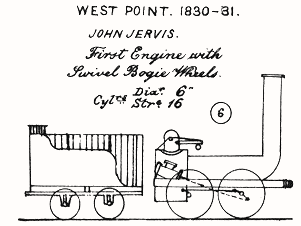
The first passenger train wreck in the United States occurred on the C&HRR. Pulled by the West Point, the axle of the lead car snapped and was destroyed, tossing passengers out of the open car into a “low swampy place filled with mud and water.” Five of the passengers were seriously injured, but recovered.

west point

1861 – Civil War

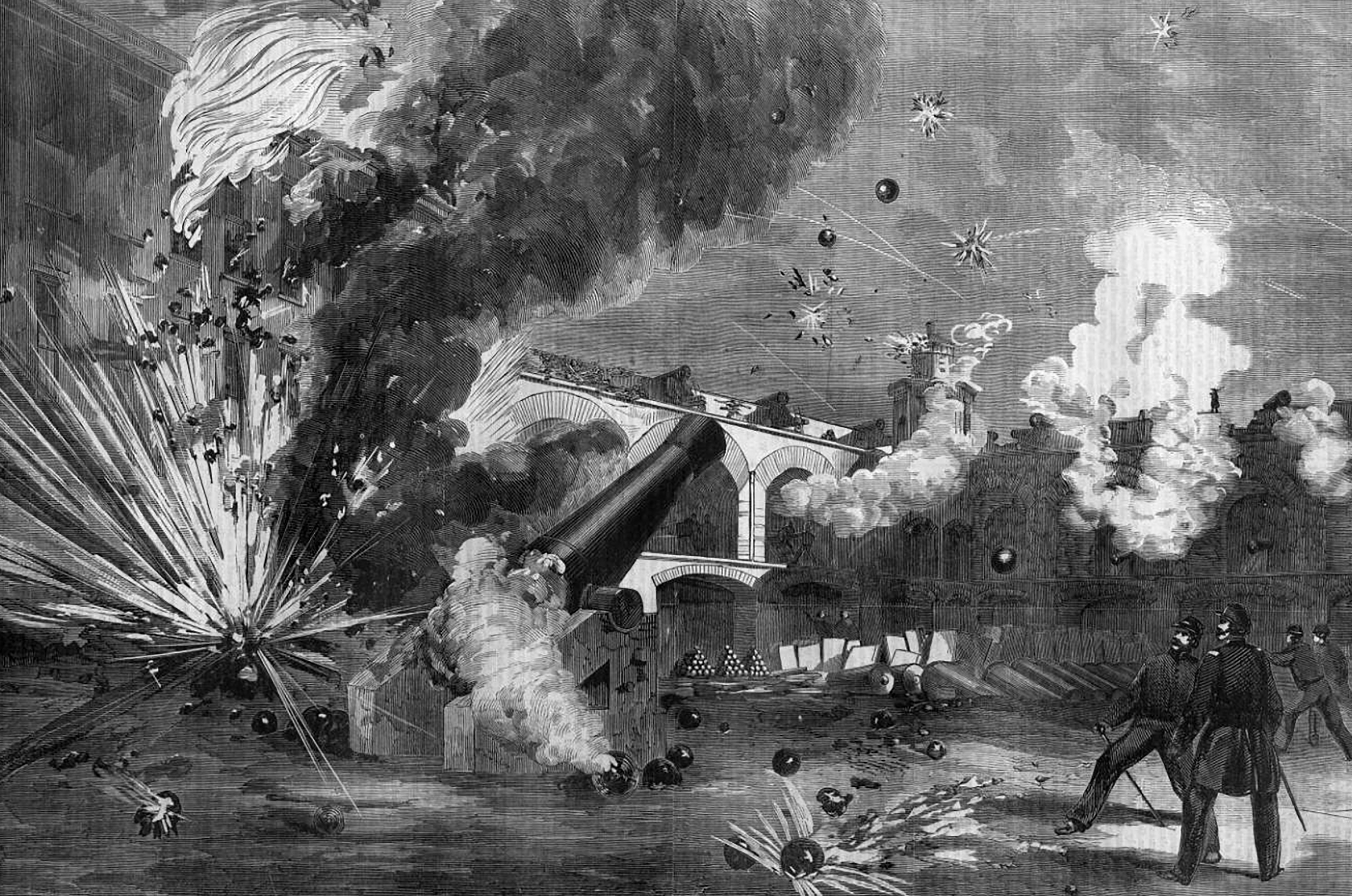
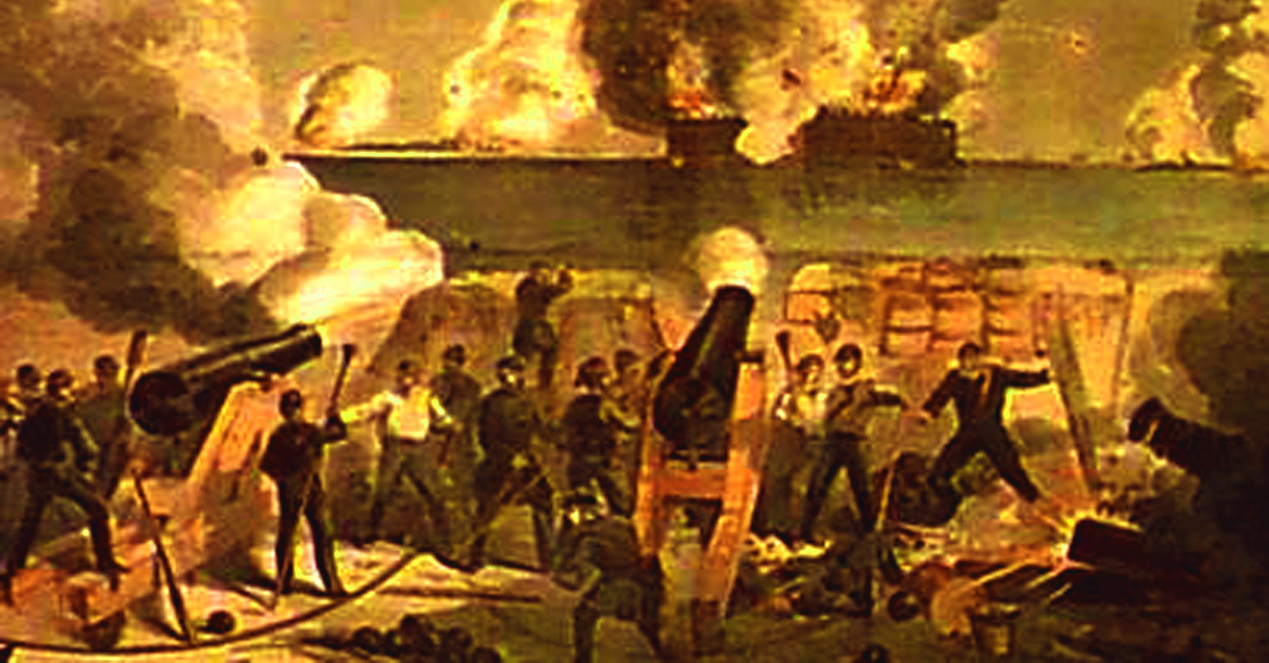
By 8:00 a.m. the upper story of the officer’s quarters at Sumter were burning. The most immediate danger was the 300 barrels of gunpowder stored in a magazine. At one o’clock the flagstaff at Fort Sumter was struck by a Confederate shell and crashed to the ground. The soldiers rushed to rehoist the flag before the Confederates assumed they had surrendered.

About this time, former Senator Louis Wigfall of Texas visited Fort Sumter. During the midst of the bombardment, Wigfall had himself rowed out by slaves. Soldiers at Sumter were perplexed by a man waving a white handkerchief from a sword. The Federals raised a flag of truce and Wigfall, although he had no authority to do so, told the first Federal officers he met, “Let us stop this firing. You are on fire, and your flag is down. Let us quit.”

Anderson arrived a moment later and Wigfall told him:

You have defended your flag nobly sir. You have done all that it is possible to do, and General Beauregard wants to stop this fight. On what terms, Major Anderson, will you evacuate this fort?

ft sumter - interior

Inside Fort Sumter during the bombardment. Courtesy Library of Congress

Anderson felt some relief. His soldiers were half-way starved, exhausted and down to their last three shots. The American flag was taken down and Wigfall’s white handkerchief was raised in its place. The firing from all batteries ceased – the battle over.

Church bells rang across the city. Men on horseback galloped across the city, shouting the news. Spectators on the Battery sea wall cheered hysterically, the sound carrying across the Charleston harbor to the exhausted soldiers into Fort Sumter.

Hermann Klatte, a partner in a local liquor outlet called “Lilienthal & Klatte” on East Bay Street, wrote: 

 Yesterday morning at 4:30 they began fighting at Fort Sumpter…the United States flag was not raised again….Somewhat after 2:00 Sumpter surrendered unconditionally to the southern Confederacy, and soldiers from the same government will take over soon, and the bells are playing…victory.

1865

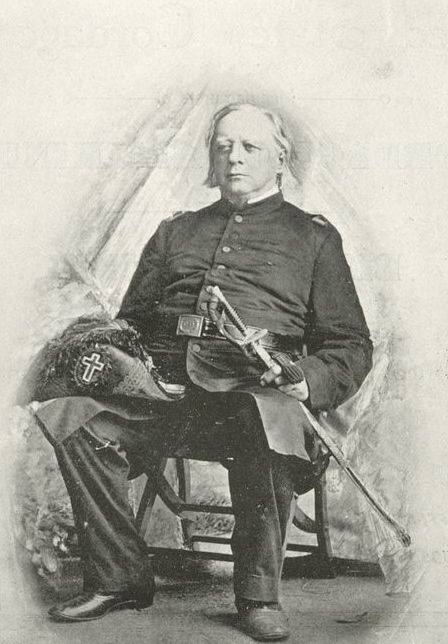
Henry Ward Beecher, a Northern Congregationalist minister and staunch abolitionist, arrived in Charleston to preach at Ft. Sumter. Beecher’s sister, Harriet Beecher Stowe had written the wildly popular (and universally hated in the South) Uncle Tom’s Cabin. President Lincoln had personally selected him, stating, “We had better send Beecher down to deliver the address on the occasion of raising the flag because if it had not been for Beecher there would have been no flag to raise.”

Henry Ward Beecher, Army Chaplain

Henry Ward Beecher, Army Chaplain

Today In Charleston History: April 13 – Charleston First

1832 – Passenger Train Wreck – Charleston First

The first passenger train wreck in the United States occurred on the C&HRR. Pulled by the West Point, the axle of the lead car snapped and was destroyed, tossing passengers out of the open car into a “low swampy place filled with mud and water.” Five of the passengers were seriously injured, but recovered.

west point

Today In Charleston History: April 12 – Charleston First, Fort Sumter

 1861 – Civil War – Firing on Fort Sumter – Charleston First

After contacting his superiors in Montgomery, Beauregard wrote another dispatch and about midnight, his aides rowed out to Fort Sumter again flying a white flag. His response to Anderson was:

MAJOR: In consequence of the verbal observation made by you to my aides, Messrs. Chesnut and Lee, in relation to the condition of your supplies, and that you would in a few days be starved out if our guns did not batter you to pieces, or words to that effect, and desiring no useless effusion of blood, I communicated both the verbal observations and your written answer to my communications to my Government.

If you will state the time at which you will evacuate Fort Sumter, and agree that in the mean time you will not use your guns against us unless ours shall be employed against Fort Sumter, we will abstain from opening fire upon you. Colonel Chesnut and Captain Lee are authorized by me to enter into such an agreement with you. You are, therefore, requested to communicate to them an open answer.

I remain, major, very respectfully, your obedient servant,
G. T. BEAUREGARD, Brigadier-General, Commanding.

About 1:30 a.m. Anderson assembled his officers and read the Confederacy’s latest offer. For the next ninety minutes they discussed their response. They all considered the condition that they would not fire unless Sumter was shot at to be unacceptable. If the Federal supply ship arrived no doubt Confederate batteries would open fire upon it. The Federal officers were determined not repeat their lack of response during the Star of the West episode. But they were unsure of when (or even if) the supply ship would arrive. The officers agreed they could hold out four more days. Anderson composed his next reply to Beauregard:

GENERAL: I have the honor to acknowledge the receipt by Colonel Chesnut of your second communication of the 11th instant, and to state in reply that, cordially uniting with you in the desire to avoid the useless effusion of blood, I will, if provided with the proper and necessary means of transportation, evacuate Fort Sumter by noon on the 15th instant, and that I will not in the mean time open my fires upon your forces unless compelled to do so by some hostile act against this fort or the flag of my Government by the forces under your command, or by some portion of them, or by the perpetration of some act showing a hostile intention on your part against this fort or the flag it bears, should I not receive prior to that time controlling instructions from my Government or additional supplies.

I am, general, very respectfully, your obedient servant,

ROBERT ANDERSON, Major, First Artillery, Commanding.

The Confederate aides, Chesnut, Chisholm and Lee, read the reply immediately. Chesnut, following Beauregard’s orders, composed the following note:

SIR: By authority of Brigadier-General Beauregard, commanding the Provisional Forces of the Confederate States, we have the honor to notify you that he will open the fire of his batteries on Fort Sumter in one hour from this time.

We have the honor to be, very respectfully, your obedient servants.

JAMES CHESNUT, JR., Aide-de-Camp.
STEPHEN D. LEE, Captain, C. S. Army, Aide-de-Camp.

Chesnut delivered the message to Anderson. After reading it, Anderson pulled out his pocket watch and checked the time – it was 3:20 a.m. He asked Chesnut, “I understand you, sir, then, that your batteries will open in an hour from this time?”

Chesnut replied, “Yes, sir. In one hour.”

Anderson walked the Confederate officers to their boat. It was beginning to rain. He shook hands with each of them. “Gentlemen, if we do not meet again in this world, I hope we may meet in a better one,” he told them.  

Inside Fort Sumter Anderson ordered his men to prepare to receive an attack within the hour. He urged them to sleep if possible, that they would be returning fire at dawn.

The Confederate officers made the one-mile journey from Fort Sumter to Fort Johnson within half an hour. Col. Chesnut told Captain George James, battery commander at Johnson, they had given Anderson a deadline, and it was to be met. He as to fire a signal shot at 4:30 a.m.  

Chestnut, James and Chisholm, anxious to return to Beauregard as soon as possible, then got back in their boat and began to row across the harbor to Charleston. Out in the middle of the water, in the drizzling rain, not a single star was visible against the dark forbidding sky.  At exactly 4:30, Lt. Henry S. Farley pulled a lanyard on one of the cannons at the beach battery on James Island. A mortal shell arced high across the water, heading for Ft. Sumter, its glowing fuse leaving a glowing contrail, illuminating the sky. It exploded just above the fort like Fourth of July fireworks, spreading an orange-red glow across the horizon.

firing on sumter

 Confederate batteries at Fort Johnson fire on Fort Sumter, April 12, 1861. Courtesy Library of Congress

Within a minute of the signal shot, another shell screamed across the harbor and exploded within Fort Sumter. Beauregard had given precise orders on the firing rhythm. The forty-three guns that faced Sumter were each to fire in turn, in a counterclockwise circle, with two minutes between each shot, in order to save shot and powder.

In Charleston, Chesnut’s wife, Mary, was having a restless night. As she wrote in her diary:

I do not pretend to sleep. How can I? If Anderson does not accept terms at four, the orders are he shall be fired upon. I count four, St. Michael’s bells chime out and I begin to hope. At half-past four the heavy booming of a cannon. I sprang out of bed, and on my knees prostrate  prayed as I have never prayed before … I knew my husband was rowing about in a boat somewhere in that dark bay, and that the shells were roofing it over, bursting toward the fort. The women were wild out there on the housetop. 
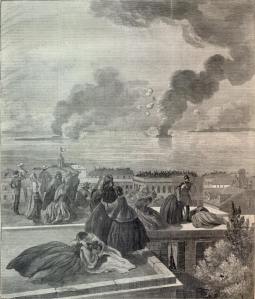
charleston-civil-war-start-bomb-sumter

Watching the bombardment from Charleston rooftops. Courtesy Library of Congress

In Charleston, the bombardment was a spectacle. As dawn broke, the streets were filled with people rushing in the rain to find a vantage point to watch the battle. The sea wall along the Battery was quickly crammed with ladies and gentlemen in their finest clothes. Boys scampered around, climbing on anything in an attempt to have a better view of the harbor.

There was not a single person who believed the Yankees would win.
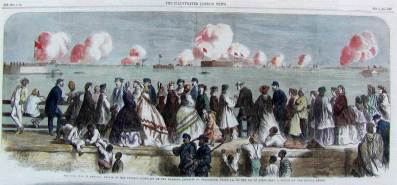
14. battery party

TOP: Watching the bombardment from the Battery. Courtesy Library of Congress

 Anna Brackett, a school teacher, described the scene in Charleston:

Women of all ages and ranks of life look eagerly out with spyglasses and opera glasses. Children talk and laugh and walk back and forth in the small moving place as if they were at a public show.

As dawn broke just after six, the Federal garrison at Sumter mustered for roll call and breakfast, which consisted mainly of salt pork. Private Joe Thompson wrote, “Our supply of foodstuffs are fast giving out. Yesterday our allowance was one biscuit.”

At 6:30 Capt. Doubleday ordered the first Federal shot in reply aimed at the Iron Battery at Cummings Point. It landed beyond the battery and into the marsh.  

James Petigru, while sitting in his office at 8 St. Michael’s Alley wrote:

All the world is gone to witness the bombardment of Fort Sumter by the collective forces of South Carolina. Our politicians have succeeded in evoking the spirit of hostility on both sides.

By full light the rain had stopped and for the next two days, Fort Sumter was hammered from three sides by Confederate batteries, with more than 2,500 shots fired the first day. Overnight the bombardment slackened but resumed in full force the next morning.

Charleston (and America) would never be the same again. 

Today In Charleston History: April 12

1768

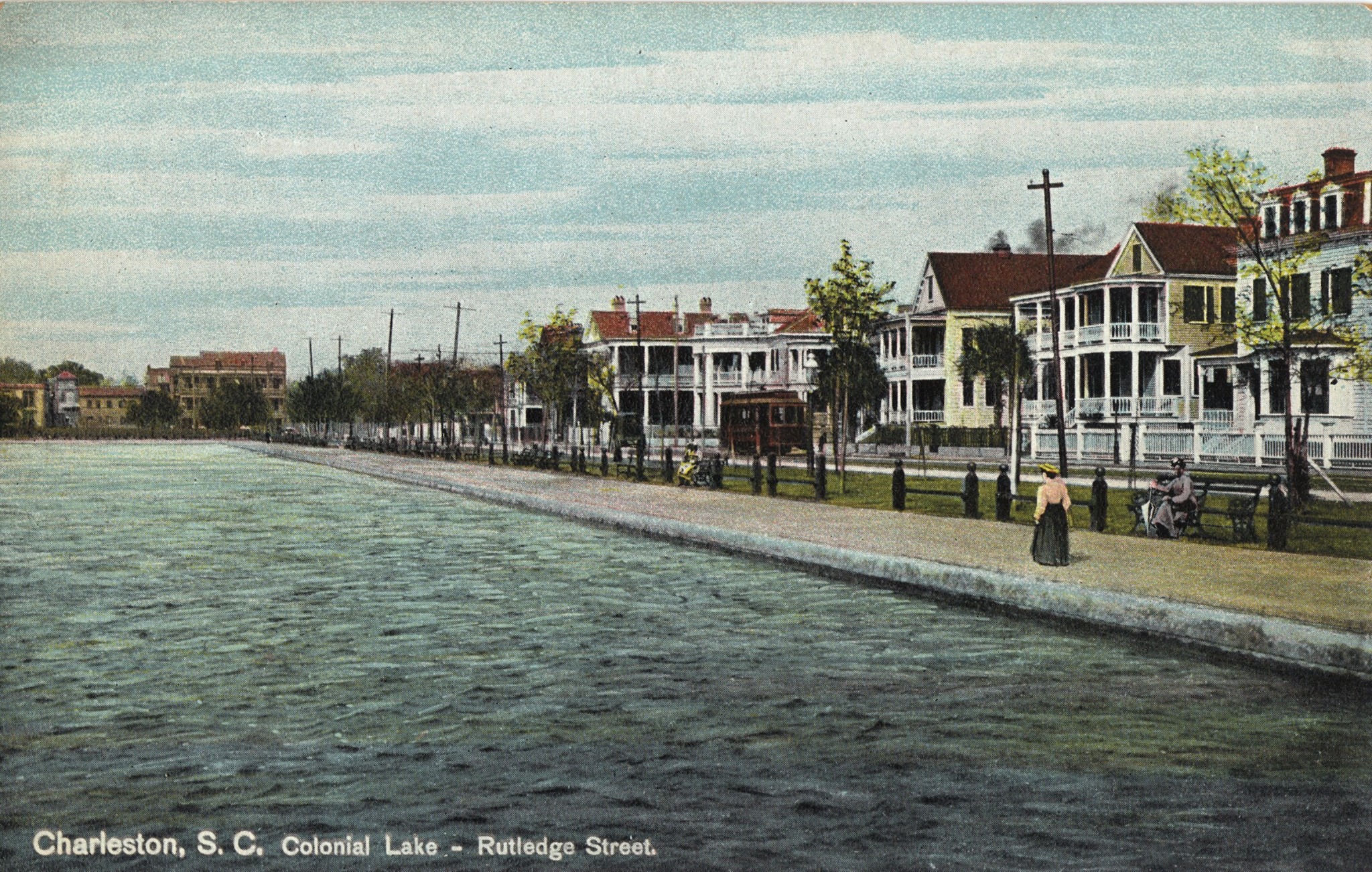
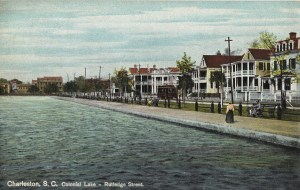
 colonial lake - 1910Colonial Lake, a Charleston landmark established by the Commons House of Assembly, encompasses a city block in the midst of two neighborhoods. It was one of several public works projects initiated under Gov. Charles Greville Montagu. The original commissioners are names that still well-known in Charleston today: Henry Middleton, Isaac Mazyck, Rawlins Lowndes, Edward Fenwick, William Henry Drayton, Arthur Middleton and William Savage.

The Colonial Commons Commission was established to oversee the lake area, specifically to:

authorize Commissioners to cut a canal from the upper end of Broad Street into Ashley River; and to reserve the vacant marsh on each side of the said canal, for the use of a common for Charlestown.

1770: American Revolution – Foundations

The Townsend Acts were repealed by Parliament. However, in an effort to avoid the appearance of weakness in the face of intense colonial protest, the tea tax was left in place.

1861 – Civil War – Firing on Fort Sumter – Charleston First

After contacting his superiors in Montgomery, Beauregard wrote another dispatch and about midnight, his aides rowed out to Fort Sumter again flying a white flag. His response to Anderson was:

MAJOR: In consequence of the verbal observation made by you to my aides, Messrs. Chesnut and Lee, in relation to the condition of your supplies, and that you would in a few days be starved out if our guns did not batter you to pieces, or words to that effect, and desiring no useless effusion of blood, I communicated both the verbal observations and your written answer to my communications to my Government.

If you will state the time at which you will evacuate Fort Sumter, and agree that in the mean time you will not use your guns against us unless ours shall be employed against Fort Sumter, we will abstain from opening fire upon you. Colonel Chesnut and Captain Lee are authorized by me to enter into such an agreement with you. You are, therefore, requested to communicate to them an open answer.

I remain, major, very respectfully, your obedient servant,
G. T. BEAUREGARD, Brigadier-General, Commanding.

About 1:30 a.m. Anderson assembled his officers and read the Confederacy’s latest offer. For the next ninety minutes they discussed their response. They all considered the condition that they would not fire unless Sumter was shot at to be unacceptable. If the Federal supply ship arrived no doubt Confederate batteries would open fire upon it. The Federal officers were determined not repeat their lack of response during the Star of the West episode. But they were unsure of when (or even if) the supply ship would arrive. The officers agreed they could hold out four more days. Anderson composed his next reply to Beauregard:

GENERAL: I have the honor to acknowledge the receipt by Colonel Chesnut of your second communication of the 11th instant, and to state in reply that, cordially uniting with you in the desire to avoid the useless effusion of blood, I will, if provided with the proper and necessary means of transportation, evacuate Fort Sumter by noon on the 15th instant, and that I will not in the mean time open my fires upon your forces unless compelled to do so by some hostile act against this fort or the flag of my Government by the forces under your command, or by some portion of them, or by the perpetration of some act showing a hostile intention on your part against this fort or the flag it bears, should I not receive prior to that time controlling instructions from my Government or additional supplies.

I am, general, very respectfully, your obedient servant,

ROBERT ANDERSON, Major, First Artillery, Commanding.

The Confederate aides, Chesnut, Chisholm and Lee, read the reply immediately. Chesnut, following Beauregard’s orders, composed the following note:

SIR: By authority of Brigadier-General Beauregard, commanding the Provisional Forces of the Confederate States, we have the honor to notify you that he will open the fire of his batteries on Fort Sumter in one hour from this time.

We have the honor to be, very respectfully, your obedient servants.

JAMES CHESNUT, JR., Aide-de-Camp.
STEPHEN D. LEE, Captain, C. S. Army, Aide-de-Camp.

Chesnut delivered the message to Anderson. After reading it, Anderson pulled out his pocket watch and checked the time – it was 3:20 a.m. He asked Chesnut, “I understand you, sir, then, that your batteries will open in an hour from this time?”

Chesnut replied, “Yes, sir. In one hour.”

Anderson walked the Confederate officers to their boat. It was beginning to rain. He shook hands with each of them. “Gentlemen, if we do not meet again in this world, I hope we may meet in a better one,” he told them.  

Inside Fort Sumter Anderson ordered his men to prepare to receive an attack within the hour. He urged them to sleep if possible, that they would be returning fire at dawn.

The Confederate officers made the one-mile journey from Fort Sumter to Fort Johnson within half an hour. Col. Chesnut told Captain George James, battery commander at Johnson, they had given Anderson a deadline, and it was to be met. He ordered a signal shot at 4:30 a.m.  

Chestnut, James and Chisholm, anxious to return to Beauregard as soon as possible, then got back in their boat and began to row across the harbor to Charleston. Out in the middle of the water, in the drizzling rain, not a single star was visible against the dark forbidding sky.  At exactly 4:30, Lt. Henry S. Farley pulled a lanyard on one of the cannons at the beach battery on James Island. A mortal shell arced high across the water, heading for Ft. Sumter, its glowing fuse leaving a glowing contrail, illuminating the sky. It exploded just above the fort like Fourth of July fireworks, spreading an orange-red glow across the horizon.

firing on sumter

Confederate batteries at Fort Johnson fire on Fort Sumter, April 12, 1861. Courtesy Library of Congress

Within a minute of the signal shot, another shell screamed across the harbor and exploded within Fort Sumter. Beauregard had given precise orders on the firing rhythm. The forty-three guns that faced Sumter were each to fire in turn, in a counterclockwise circle, with two minutes between each shot, in order to save shot and powder.

In Charleston, Chesnut’s wife, Mary, was having a restless night. As she wrote in her diary:

I do not pretend to sleep. How can I? If Anderson does not accept terms at four, the orders are he shall be fired upon. I count four, St. Michael’s bells chime out and I begin to hope. At half-past four the heavy booming of a cannon. I sprang out of bed, and on my knees prostrate  prayed as I have never prayed before … I knew my husband was rowing about in a boat somewhere in that dark bay, and that the shells were roofing it over, bursting toward the fort. The women were wild out there on the housetop. 

charleston-civil-war-start-bomb-sumter

Watching the bombardment from Charleston rooftops. Courtesy Library of Congress

In Charleston, the bombardment was a spectacle. As dawn broke, the streets were filled with people rushing in the rain to find a vantage point to watch the battle. The sea wall along the Battery was quickly crammed with ladies and gentlemen in their finest clothes. Boys scampered around, climbing on anything in an attempt to have a better view of the harbor.

There was not a single person who believed the Yankees would win.

14. battery party

TOP: Watching the bombardment from the Battery. Courtesy Library of Congress

 Anna Brackett, a school teacher, described the scene in Charleston:

Women of all ages and ranks of life look eagerly out with spyglasses and opera glasses. Children talk and laugh and walk back and forth in the small moving place as if they were at a public show.

As dawn broke just after six, the Federal garrison at Sumter mustered for roll call and breakfast, which consisted mainly of salt pork. Private Joe Thompson wrote, “Our supply of foodstuffs are fast giving out. Yesterday our allowance was one biscuit.”

At 6:30 Capt. Doubleday ordered the first Federal shot in reply aimed at the Iron Battery at Cummings Point. It landed beyond the battery and into the marsh.  

James Petigru, while sitting in his office at 8 St. Michael’s Alley wrote:

All the world is gone to witness the bombardment of Fort Sumter by the collective forces of South Carolina. Our politicians have succeeded in evoking the spirit of hostility on both sides.

By full light the rain had stopped and for the next two days, Fort Sumter was hammered from three sides by Confederate batteries, with more than 2,500 shots fired the first day. Overnight the bombardment slackened but resumed in full force the next morning.

Charleston (and America) would never be the same again. 

1962

One hundred and one years after the first shot of the Civil War, Martin Luther King spoke at Mother Emanuel AMC Church, after several other local churches refused to allow him to speak there, fearing retribution.

Today In Charleston History: April 11

1842 – Deaths.

Bishop John England died.

Bishop_John_EnglandEngland was an Irish-born American Roman Catholic (1786) who became the first bishop of Charleston. Ordained in 1808, England became an instructor at St. Patrick’s Seminary, Cork, where in 1812 he was made president. His outspoken opposition to governmental intervention in the selection of Irish and English bishops displeased some of his superiors.

He was named bishop of the new diocese of Charleston—comprising the states of North Carolina, South Carolina, and Georgia—and was consecrated in Ireland (Sept. 21, 1820). Seeing that the first need of his diocese was education, he prepared and printed a catechism and a missal for Americans. He founded the United States Catholic Miscellany, the first Roman Catholic newspaper in the United States. An eloquent orator, he was also the first Roman Catholic clergyman invited to speak before the U.S. Congress (1826), where for two hours he described the doctrines of his church. He became a U.S. citizen in the same year.

1861 – Civil War

Gen. P.G.T. Beauregard sent a letter to Major Anderson demanding the surrender of Fort Sumter. The letter was carried by Col. James Chesnut, Alexander Chisolm and Stephen Dill Lee. Their boat, carrying a white flag, landed at Ft. Sumter at 3:34 p.m. They were escorted to the guardroom, just inside the gate. The note from Beauregard read:

SIR: The Government of the Confederate States has hitherto forborne from any hostile demonstration against Fort Sumter, in the hope that the Government of the United States, with a view to the amicable adjustment of all questions between the two Governments, and to avert the calamities of war, would voluntarily evacuate it.

There was reason at one time to believe that such would be the course pursued by the Government of the United States, and under that impression my Government has refrained from making any demand for the surrender of the fort. But the Confederate States can no longer delay assuming actual possession of a fortification commanding the entrance of one of their harbors, and necessary to its defense and security.

I am ordered by the Government of the Confederate States to demand the evacuation of Fort Sumter. My aides, Colonel Chesnut and Captain Lee, are authorized to make such demand of you. All proper facilities will be afforded for the removal of yourself and command, together with company arms and property, and all private property, to any post in the United States which you may select. The flag which you have upheld so long and with so much fortitude, under the most trying circumstances, may be saluted by you on taking it down.

Colonel Chesnut and Captain Lee will for a reasonable time, await your answer.

I am, sir, very respectfully, your obedient servant,
 G. T. BEAUREGARD, Brigadier-General, Commanding. 

Anderson read the note to his officers and they agreed to reject the Confederacy’s ultimatum. About 4:30 p.m. Anderson handed his response to Chesnut and the Confederate aides boarded their boat to carry it back to Beauregard in Charleston.

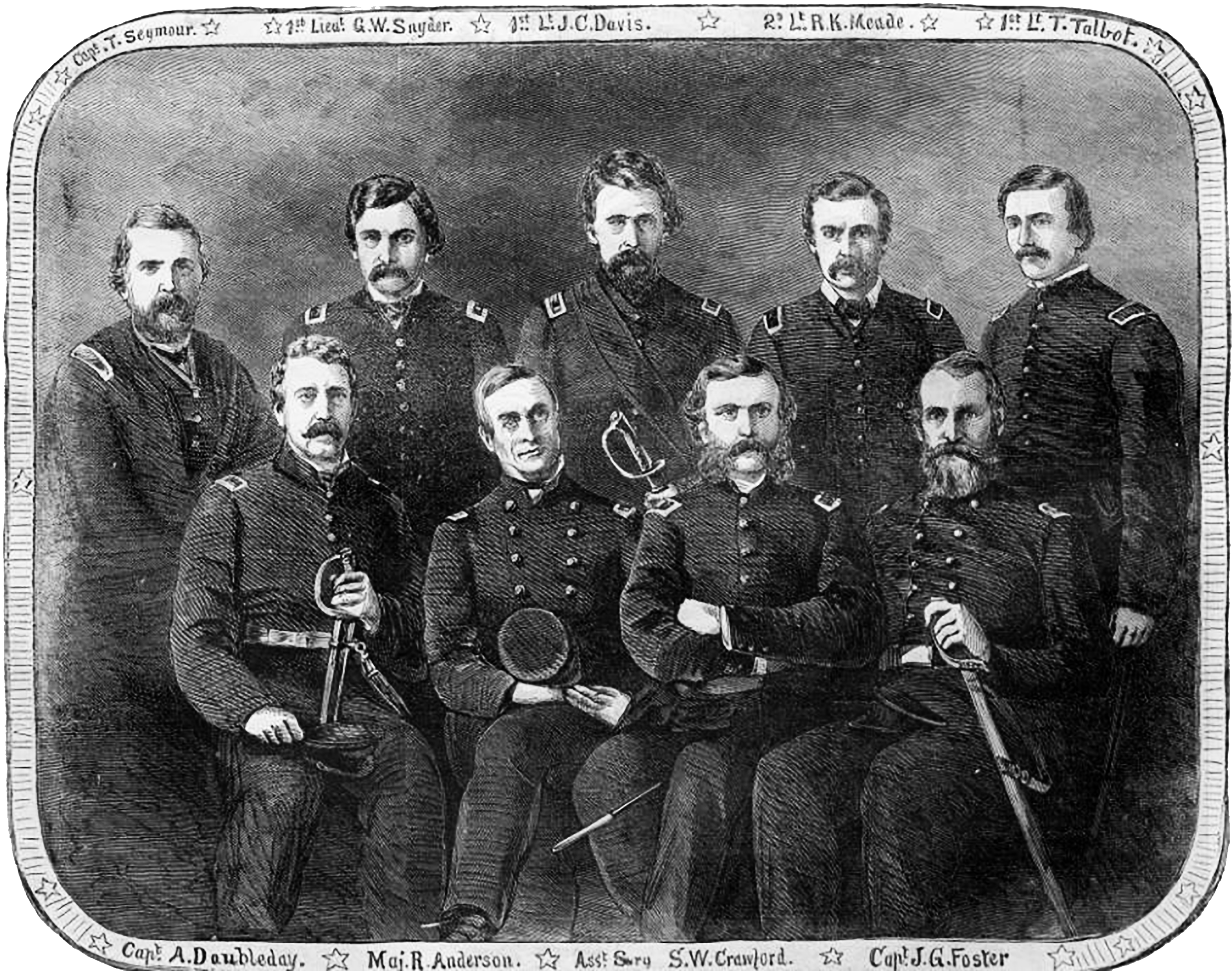
Federal officers at Fort Sumter. BACK ROW, L-R: Capt. Seymour, 1st Lt. Snyder, 1st Lt. Davis, 2nd Lt. Meade, 1st lt. Talbot. FRONT ROW, L-R: Capt. Doubleday, Major Anderson, Asst. Surgeon Crawford, Capt. Foster. Courtesy Library of Congress

Federal officers at Fort Sumter. BACK ROW, L-R: Capt. Seymour, 1st Lt. Snyder, 1st Lt. Davis, 2nd Lt. Meade, 1st lt. Talbot. FRONT ROW, L-R: Capt. Doubleday, Major Anderson, Asst. Surgeon Crawford, Capt. Foster. Courtesy Library of Congress

As they were leaving Anderson asked, “Will General Beauregard open his batteries without further notice to me?”

Col. Chesnut, a former U.S. Senator, and therefore the most senior of the aides answered, “No, I can say to you that he will not, without giving further notice.”

Anderson replied, “Gentlemen, if you do not batter the fort to pieces about us, we shall be starved out in a few days.”  Anderson was sending Beauregard, a friend and former colleague, a subtle message: that if the resupply effort from Washington was unsuccessful, Anderson was going to have to decide whether to surrender the fort.

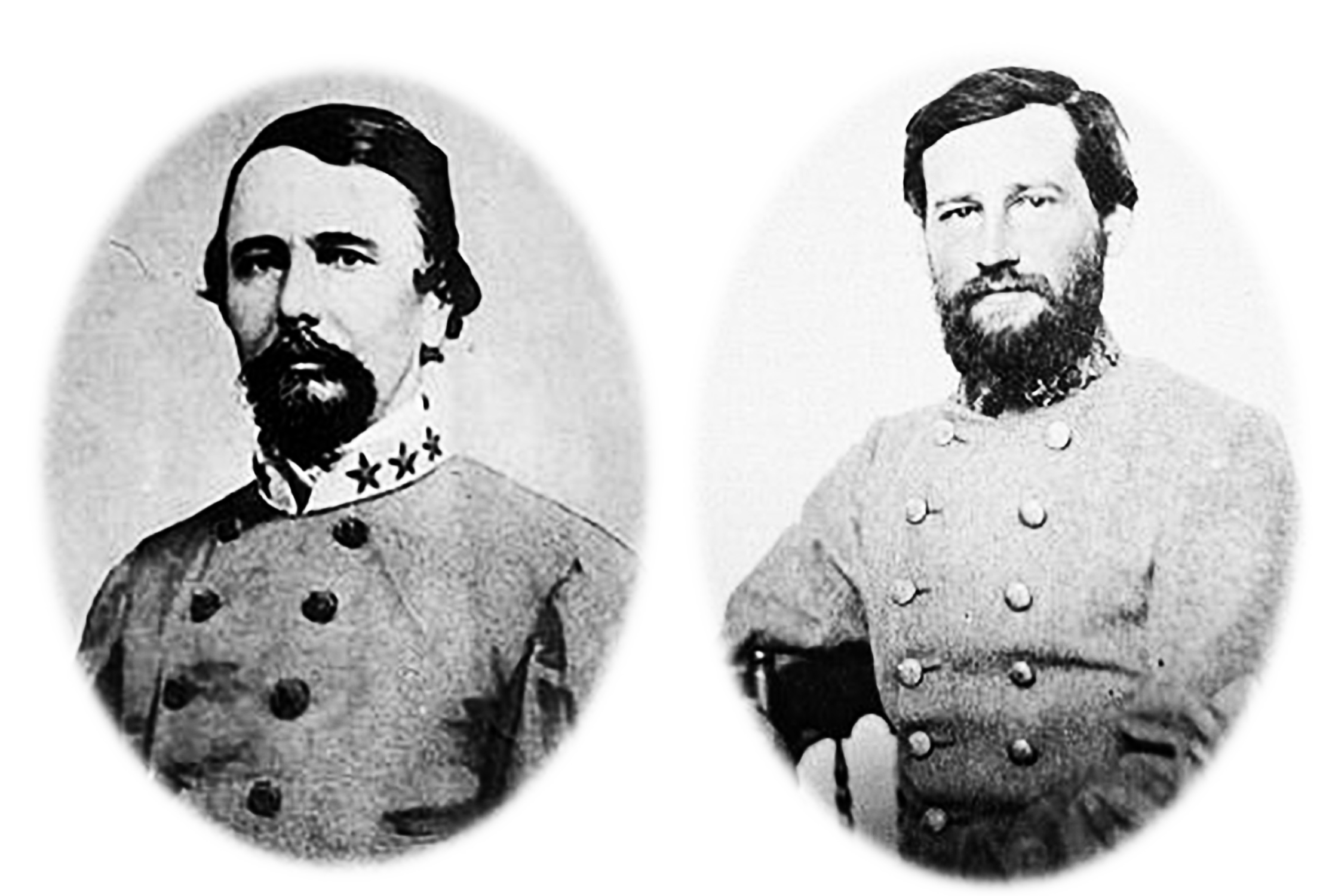
James Chesnut and Stephen Dill Lee, Confederate Aides-de-Camp to Gen. Beauregard. Courtesy Library of Congress

James Chesnut and Stephen Dill Lee, Confederate Aides-de-Camp to Gen. Beauregard. Courtesy Library of Congress

While these events on at Fort Sumter were playing out, in downtown Charleston, rumors had spread that something was going to happen. Emma Holmes described it in her diary:

 A day never to be forgotten in the annals of Charleston … the whole afternoon & night the Battery was thronged with spectators of every age and sex, anxiously watching and awaiting with the momentary expectation of hearing the war of cannon opening on the fort or on the fleet which was reported off the bar. Everybody was restless and all who could go were out.

At approximately 5:30 p.m., Chesnut delivered Anderson’s note to Beauregard in Charleston. It read:

GENERAL: I have the honor to acknowledge the receipt of your communication demanding the evacuation of this fort, and to say, in reply thereto, that it is a demand with which I regret that my sense of honor, and of my obligations to my Government, prevent my compliance. Thanking you for the fair, manly, and courteous terms proposed, and for the high compliment paid me.

I am, general, very respectfully, your obedient servant,

ROBERT ANDERSON, 
Major, First Artillery, Commanding.

To be continued … tomorrow …

Today In Charleston History: April 10

1693 – Religion

The Huguenots complained to the Lords Proprietors about threats made upon their estates. The Proprietors replied to the Carolina governor:

The French have complained to us that they are threatened to have their estates taken from their children after their death because they are aliens. Now many have bought the land they enjoy of us … God forbid that we should take advantage …

They also complain that are required to begin their Divine Worshipp at the same time that the English doe, which is inconvenient to them in regard that severall of their congregations living out of Towne are forced to come and go by water; & for the convenience of such they begin their Divine Worshipp earlier or later as the tide serves, in which we would have them not molested. 

1780 – The Siege of Charlestown

General Henry Clinton issued a summons of surrender for delivery to Continental Gen. Lincoln who replied that “Duty and Inclination point to the propriety of supporting it [Charlestown] to the last extremity.”

1861 – Civil War

Gen. P. G. T. Beauregard received word from Confederate Secretary of War Leroy Pope Walker to require the surrender of Fort Sumter from the Federals. All around Charleston, Confederate troops prepare for conflict; a rebel floating battery is stationed off Sullivan’s Island. 

disunion_coddington_batteryside-blog427

Floating Battery, Charleston, SC – Ft. Sumter in the background left

Today In Charleston History: April 9

1894 – Births.

Lena Jenkins gave birth to a son, Edmund Thornton.

Edmund Thorton Jenkins

Edmund Thorton Jenkins

Edmund Jenkins (who was called “Jenks”) was the son of Rev. Daniel Jenkins, founder of the Jenkins Orphanage in Charleston. He grew up playing with the Jenkins Orphanage Band, but longed to play “serious music.” He took piano lessons in Charleston and attended Morehouse College in Atlanta.

In 1914 the Jenkins Band was invited to perform at the Anglo-American Expo in London and Jenks performed with the band until the outbreak of World War I closed down the Expo. Jenks was admitted to the Royal Academy of Music in London where he studied composition. 

His piece, “Charlestonia” was written while he was a student, and later expanded into a finished piece before his death. To learn the entire story of Jenks’ life and the Jenkins Orphanage Band, read my book Doin’ the Charleston.

1906 – Hampton Park

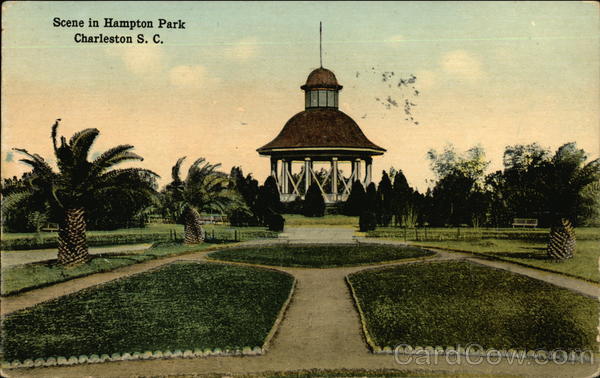
  John Olmsted, the nephew and adopted son of Frederick Olmsted, who designed Central Park in New York City, arrived in Charleston to work on the design of Hampton Park.  He immediately noted that the bandstand, leftover from the South Carolina Exposition that was still in place in the formal garden, should be the most notable presence in the park.

Scene in Hampton Park Charleston, SC

Today In Charleston History: April 8

1758 – Religion

Richard Clark, rector of St. Philip’s, grew a long beard and began to stroll the streets all day yelling, “Repent! Repent! The Kingdom of Heaven is at hand.” Some took him seriously as a prophet, but most found him amusing, or disturbed. He soon resigned and moved back to England.

1780 – The Siege of Charlestown

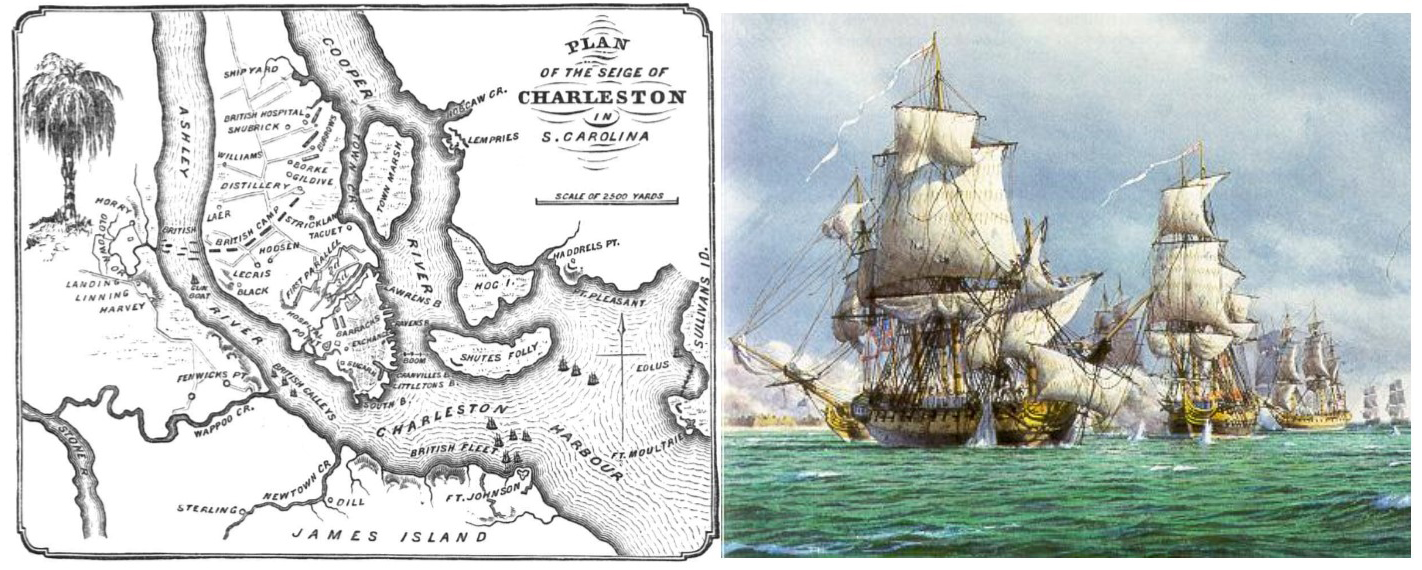
In the afternoon the British fleet weighed anchor and nine warships and three transports moved up the channel to Ft. Moultrie. At half past four Peter Timothy said that “the Admiral has received & returned the Fire of Fort Moultrie and passed it without any apparent Damage.” They landed at Fort Johnson on James Island. 

In less than ninety minutes eleven British ships had sailed past and were safely out of the range of Ft. Moultrie’s forty guns.

Left: Plan for the British Siege of Charlestown. Right: British fleet sails past Ft. Moultrie.

Left: Plan for the British Siege of Charlestown. Right: British fleet sails past Ft. Moultrie.

Today In Charleston History: April 7

1780 – The Seige of Charlestown

A group of 700 battle-tested veteran Virginia Continentals sent by Gen. George Washington arrived in Charlestown. They crossed the Wando River and landed at Christopher Gadsden’s wharf. They marched through town to the lines to the pealing of church bells. At the lines they were greeted with cheers and a firing of thirteen cannons, one for each of the independent states.

1805 – Francis Pickens Born

governor-Francis-pickens

Francis Pickens

Francis Wilkinson Pickens was born in Togadoo, St Paul’s Parish, Colleton County, South Carolina. His father was former Gov. Andrew Pickens and his grandfather was Gen. Andrew Pickens, an American Revolutionary soldier at the Battle of Cowpens and later U.S. Congressman.

A cousin of Senator John C. Calhoun, Pickens was born into the culture of States Rights, and became an ardent supporter of nullification (refusal to pay federal import tariffs) when he served in the South Carolina house of representatives, before being elected to Congress and then the state senate.

Pickens served in Congress  from South Carolina from 1834 until 1843 and was a member of the South Carolina state senate from 1844 until 1846.  Under President James Buchanan, Pickens was Minister to Russia from 1858–1860, where he and his wife were befriended by Czar Alexander II. He was Governor when South Carolina became the first state to secede from the U.S.A.

As state governor during the Fort Sumter crisis, he sanctioned the firing on the ship bringing supplies to the beleaguered Union garrison, and to the bombardment of the fort. After the war,  Pickens introduced the motion to repeal South Carolina’s Ordinance of Secession, a short speech that was received in silence, in notable contrast with the rejoicing that had first greeted the Ordinance.

 1863 – Battle of Charleston

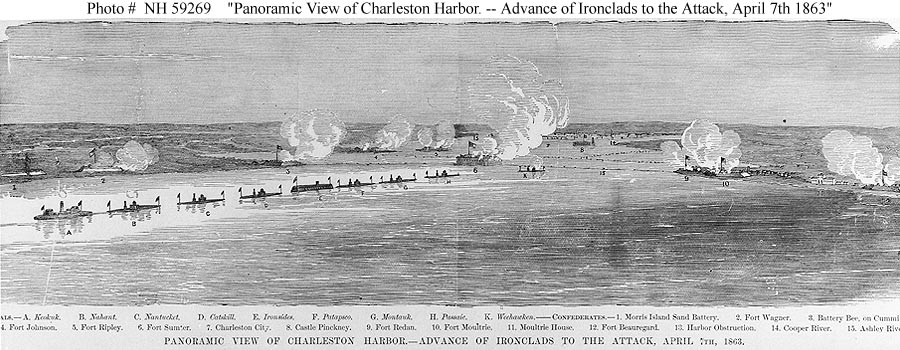
The First Battle of Charleston Harbor began at noon. Shortly after 3 p.m., they came within range of Fort Moultrie and Fort Sumter; and the battle began. Southern obstructions and a strong flood tide made the ironclads virtually unmanageable, while accurate fire from the forts played upon them at will. With the Union formation scrambled, Keokuk was compelled to run ahead of crippled USS Nahant to avoid her in the narrow channel after Nahant ’​s pilot was killed and helmsman wounded by a Confederate shot striking the pilothouse. This brought her less than 600 yards (550 m) from Fort Sumter, where she remained for half an hour receiving the undivided attention of the Confederate guns.

First_Charleston_Harbor

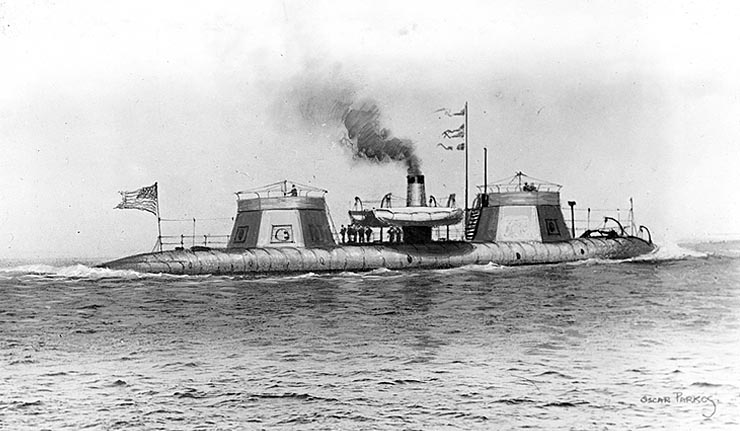
USS Keokuk

USS Keokuk

Robert Smalls, former slave, piloted ironclad USS Keokuk. The attack failed, and Keokuk was badly damaged, struck by about ninety projectiles, many of which hit at or below her waterline. Commander Rhind reported his ship as being hit by a combination of solid shot, bolts, and possibly hot shot. However, she was able to withdraw under her own power and anchor out of range, thanks in part to the skills of Robert Smalls, Her crew kept her afloat through the night, but when a breeze came up on the morning of 8 April 1863, Keokuk began taking on more water, filled rapidly, and sank off Morris Island. She had given one month of commissioned service. One of Keokuk’s sailors, Quartermaster Robert Anderson, was awarded the Medal of Honor in part for his actions during the battle. In all, 14 of Keokuk ’​s crew were injured in the battle, including Captain Rhind with a contusion to his leg. Acting Ensign Mackintosh, one of the gun captains, later died from his wounds.

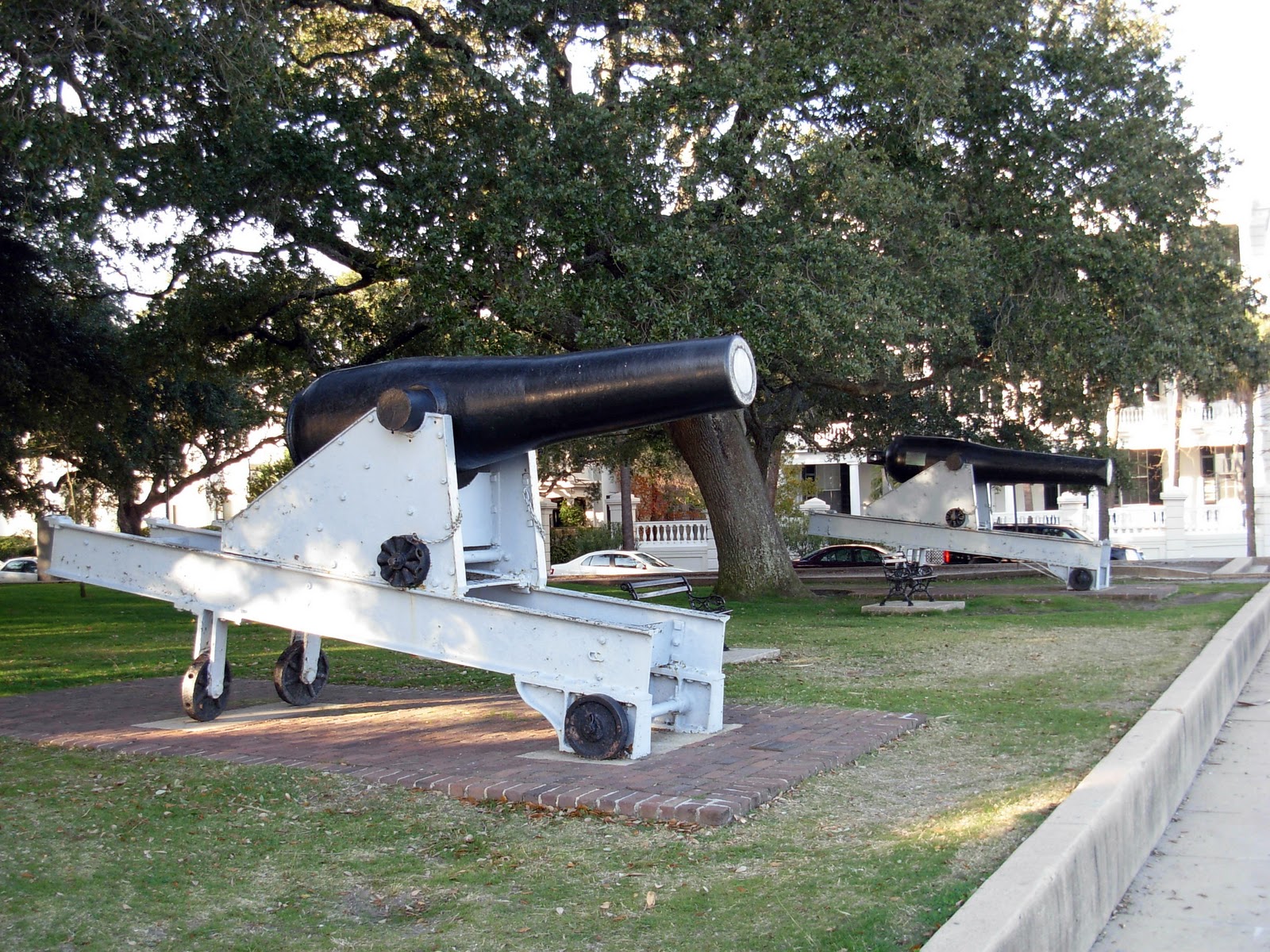
Guns from the USS Keokuk

Guns from the USS Keokuk

Cannons from the Keokuk are now on display at White Point Garden along South Battery.

1864 – Bombardment of Charleston

In a letter to him mother, Gus Smythe wrote:

You must not feel anxious about me up here, & never fear my falling down the stairs, tho’ there are 170 of them. Oh my, there goes that bell & such a cracking and shaking as this old steeple does get up whenever they ring … the first time you experience it you feel certain that it is going to fall immediately. It seems God’s providence was specially directed toward this vernerable – but shaky – old spire.