Today In Charleston History: May 3

1672- Fortifications.

A fort was completed at Albemarle Point. Even though plans were well underway to moving the colony to Oyster Point, security against the Spanish was still a major consideration.

Charles Town, 1671

Charles Town, 1671

1690- Politics. Religion. Slavery

Using his power as Proprietor, Seth Sothell called a Charles Town Parliament which voted to banish Governor Colleton. Citing the Fundamental Constitutions which stated “it is provided that the eldest proprietor that shall be in Carolina shall be governor,” Sothell then claimed the office of governor.

Sothell’s banishment of Colleton tempered his governing style. His administration in Charles Town was marked by substantial positive events.

  • Established just treatment of disliked foreigners (Huguenots).
  • Forbade supplying Indians with liquor and firearms.
  • Required licenses for all liquor retailers.
  • Provided for an organized militia and town watch.
  • Provided a store of gunpowder.
  • Granted a patent for a rice-husking machine.
  • Enacted a slave code, heavily based on the Barbadian. It included a provision for punishment of anyone who killed a slave.
1718-Bloodless Revolution

 Francis Yonge arrived in London to meet with the Proprietors. Yonge, a member of the Assembly, was sent to press the Colony’s case of grievances in person before the Lordships. He delivered a packet of letters written by Governor Johnson, Nicholas Trott and William Rhett. And then, Yonge waited for three months for a reply.

1780-The Seige of Charlestown.

Edward Rutledge

Edward Rutledge

Edward Rutledge, brother of Gov. Rutledge and signer of the Declaration of Independence, was captured by British cavalry with two other officers east of the Cooper. He was attempting to sneak out of the city with letters and communications to his brother and other officials.

GEORGE WASHINGTON’S VISIT: DAY 3

Tuesday, May 3, 1791

The president had breakfast with Elizabeth Grimke Rutledge at her home on Broad Street (John Rutledge House). Mr. Rutledge (Chief Justice of the S.C. Supreme Court) was on the Circuits and not in the city.
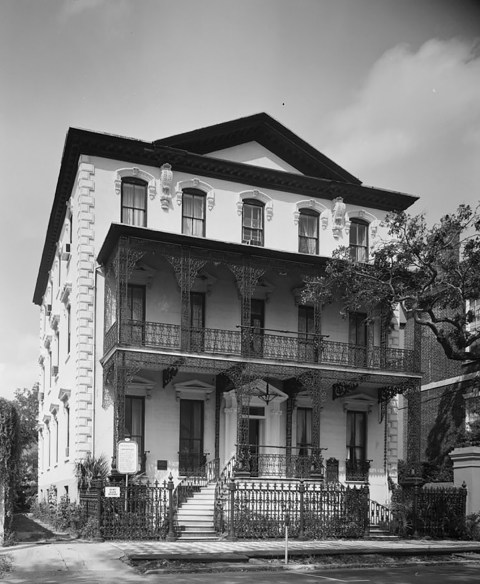
116 broad street - john rutledge house

John Rutledge House, 116 Broad Street. Library of Congress.

Later in the day, at his lodgings, he

was visited about 2 oclcock, by a great number of the most respectable ladies of Charleston – the first honor of the kind I had ever experienced and it was flattering as it was singular.

1898

Septima Poinsette Clark was born in Charleston, the second of eight children. Her father, once a slave, encouraged her to get an education. Clark attended public school, then worked to earn the money needed to attend the Avery Normal Institute, a private Charleston school for African Americans.
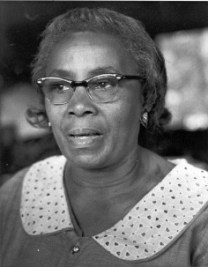
Septima_Poinsette_ClarkShe qualified as a teacher in 1916, but since Charleston did not hire black teachers, Clark was forced to take a position at a school on John’s Island. Three years later, she was teaching at the Avery Institute and joined the NAACP in an attempt to convince Charleston to hire black teachers.   Later, she moved to Columbia, and through the NAACP chapter there worked with Thurgood Marshall in a 1945 case that sought equal pay for black and white teachers. She described it as her “first effort in a social action challenging the status quo.”

Septima Clark’s work was commonly under-appreciated by Southern male activists. She became known as the “Queen mother” or “Grandmother” of the Civil Rights Movement in the United States. Martin Luther King, Jr. commonly referred to Clark as “The Mother of the Movement”. Clark’s argument for her position in the Civil Rights Movement was one that claimed “knowledge could empower marginalized groups in ways that formal legal equality couldn’t.”

To read more about her remarkable life and career as a Civil Rights pioneer, go to her page on the King Institute @ Stanford University.

Today In Charleston History: May 2

1739

In a letter to a friend, Eliza Lucas wrote:

Charles Town … is a polite, agreeable place. The people live very Gentile and very much in the English taste … there is two worthy Ladies in Charles town, Mrs. Pinckney and Mrs. Cleland, who are partial enough to me to be always pleased to have me with them and insist upon my making their houses my home with in town. [Note: the Pinckney house was on Union, (now State) Street.]

1780-The Seige of Charlestown.

Loyalist Maj. Patrick Ferguson and sixty American Volunteers marched to Haddrell’s Point to attack a small fort that stood on a causeway that led to Fort Moultrie. The fort, about 150 yards from the mainland, was defended by Capt. John Williams and twenty soldiers of the South Carolina 1st Regiment. The British took the fort while the cannons from Fort Moultrie fired on them until dark. The British soon fortified the fort for a possible attack.

GEORGE WASHINGTON’S VISIT: DAY 2

Monday, May 2, 1791

Washington had breakfast at Snee Farm, the home of Gov. Charles Pinckney. Pinckney apologized for the house, calling the home “a place so indifferently furnished and where your fare will be entirely that of a farm.”

After breakfast Washington crossed into Charleston from Haddrell’s Point which was the eastern terminus of the ferry. Washington was rowed across the river on a large barge by “12 American Captains of Ships, most elegantly dressed.” He noted:

 There were a great number of boats and barges on the river filled with Gentlemen and Ladies, as well as two boats of musicians, all of whom attended Washington across the river.

Washington was greeted at the Point by city recorder John Bee Holmes, and Gen. Charles Cotesworth Pinckney, and Edward Rutledge. A month after the meeting Washington offered Pinckney and Rutledge a seat on the Supreme Court, a seat that had recently been vacated by Edward’s brother, John Rutledge. Both men declined due to family finances.

Once in Charleston Washington was greeted by Lt. Gov. Isaac Holmes, Charleston intendant (mayor) Arnoldus Vanderhorst, and S. Carolina’s two U.S. Senators – Pierce Butler and Ralph Izard. The president was greeted at the Exchange Building where he stood on the balcony facing East Bay Street and watched a “procession in his honor to whom he politely and gracefully bowed as they passed in review before him.”

Washington was then taken to his lodgings on Church Street (Heyward-Washington House) where he was attended by several of Mr. Heyward’s servants.

Heyward-Washington_House

Thomas Heyward’s house @ 87 Church Street, where George slept. 

1822-Denmark Vesey Rebellion.

During a midnight meeting at his house on Bull Street, Denmark Vesey, a free black carpenter, told the gathered crowd that:

we were going to have a war and fight the white people … those that did not join must be regarded as an enemy and put to death. Who made you – God – and then aren’t you just as good as your master, if God made him & you, aren’t you as free?

 During the meeting Vesey set Sunday, July 14 as the date of the revolution. Why Sunday? On Sunday, thousands of people came into Charleston by river for worship services or to sell and purchase goods at the Public Market. And also, symbolically, it was Bastille Day. The blacks recruited for the revolution were instructed to bring “their hoes, hatchets, axes and spades, which might be used as offensive weapons, or as instruments to break open doors.” The leaders of the Rebellion were:

  • Ned Bennett: A trusted and loved slave in the household of Governor Thomas Bennett who lived at 19 Lynch Street (now Ashley Avenue), less than three blocks from Denmark’s home. On the night of the revolt, Ned’s job was to seize the State Arsenal and distribute the weapons, which included more than 200 muskets, bayonets and swords.
  • Rolla Bennett: Also a slave in service of Governor Bennett. Although Rolla admitted that governor treated him like a son, he volunteered to murder his master and his family on the night of the rebellion.
  • Batteau Bennett: Yet another trusted slave in the house of the governor. Batteau claimed he would rather murder his master or die violently resisting than continue his life as a privileged slave.
  • Monday Gell: Monday’s master, John Gell, owned a livery stable at 127 Church Street and regarded his slave as intelligent and dependable. Monday was an excellent harness maker and his master hired him out to a shop on Meeting street, letting his slave keep a portion of the earnings for himself.
  • Bacchus Hammett: An early and eager convert to Denmark’s vision. He stole a keg of gunpowder which was hidden for weeks at Denmark’s house.
  • Peter Poyas: A ship’s carpenter who “wrote in a good hand” and owned by James Poyas lived at 49 King Street and operated a shipyard on Bay Street. Peter had his own weapons and agreed with Denmark that “we are obliged to revolt.” Poyas may have been more eager than Denmark for the rebellion to take place. He often urged Denmark that “we cannot go on like this.”
1828
Thomas Tudor Tucker

Thomas Tudor Tucker

Thomas Tudor Tucker, a Charleston native, died in office as the Treasurer of the United States, a position he held for 26 years. He also was President James Madison’s personal physician.

1914

Rev.  Daniel Jenkins, who operated the Jenkins Orphanage House, received a telegram from Jules Hurtig that read “Bring with you the best musicians you have of small boys.

Hurtig was a booking agent on Broadway. He had seen a production of Uncle Tom’s Cabin in which the Jenkins Orphanage Band played a role. Hurtig was quick to realize the band’s commerical potential. He was also responsible for supplying American acts for Anglo-American Exposition, scheduled to be held in London, and he thought the Jenkins Bands would be a major draw.

Jenkins Orphanage Band "The Pickaninny Bands"

Jenkins Orphanage Band at the Anglo-American Expo in London.

Hurtig offered Rev. Jenkins a contract that paid $100 a week for a ten-week engagement, in addition to new uniforms for the band, all transportation and board for the band and caretakers. Jenkins agreed immediately. He was smart enough to bring more than just “young boys” to the Expo. The band would be performing a rigorous five hour program each day in London, on a regular stage in front of thousands of people, so Jenkins decided to bring several of his older, more accomplished and seasoned players in their late teens. He recognized that this was the most significant opportunity for the Jenkins Band to prove they were a serious musical entity. 

doin' the charlestonFor the entire story of the Jenkins Orphanage Band history, read Doin’ The Charleston.

Today In History: May 1 – Charleston First – First Memorial Day

A number of towns around the nation claim holding the first Memorial Day. The distinction generally goes to the town of Waterloo New York. Not so fast.

On May 1, 1865, more than 10,000 people gathered for a parade, to hear speeches and dedicate the graves of Union dead in what is now Hampton Park in Charleston. The group consisted of several thousand black freedmen, northern missionaries and teachers who had arrived in Charleston to teach in freedmen schools post-War.

memorial day - club house

Club House of the Planters Race Course where Union soldiers were imprisoned.

Hampton Park was originally the Planters Race Course and, during the final months of the Civil War, it was a hellish open-air Confederate prison. A total of 257 Union troops died at the camp, some of whom had been transferred from the infamously horrific Andersonville in Georgia before it was liberated.

The dead were originally buried in an unmarked, hastily-dug mass grave by the Confederates. After the war in April 1865, twenty-eight members of local black churches buried the soldiers in individual graves at the site of the camp. They built a fence around the cemetery and an arch over the entrance which read “The Martyrs of the Race Course.”

On May Day, 1865 the large assembly marched to the burial site. Nearly everyone brought flowers to place on the burial field. A New York Tribune correspondent witnessed the event, described as “a procession of friends and mourners as South Carolina and the United States never saw before.”

David Blight, a history professor at Yale, wrote about the event:

The symbolic power of the low-country planter aristocracy’s horse track (where they had displayed their wealth, leisure, and influence) was not lost on the freed people.

The procession began at 9:00 a.m., led by 3000 black children carrying roses and singing “John Brown’s Body.” They were followed by several hundred black women with baskets of flowers and crosses. Black men marched in cadence next, followed Union soldiers which included the famous 54th Massachusetts (made famous in the movie Glory) and the 34th and 104th U.S. Colored Troops. 

Inside the cemetery a children’s choir sang several spirituals, “We’ll Rally Around the Flag” and “The Star Spangled Banner.” Several black ministers read from Bible scriptures. After the service, the crowd gathered for a picnic, watched the soldiers drill and listened to speeches.

Burial site of soldiers on the race course.

Burial site of soldiers on the race course.

They called it Decoration Day, an annual ritual of remembrance. David Blight wrote:

This was the first Memorial Day. African Americans invented Memorial Day in Charleston, South Carolina. What you have there is black Americans recently freed from slavery announcing to the world with their flowers, their feet, and their songs what the war had been about. What they basically were creating was the Independence Day of a Second American Revolution.

In 1876 former confederate general Wade Hampton declared that it was time for white Southerners to “dedicate themselves to the redemption of the South.” Hampton was elected South Carolina governor that year in one of the most volatile elections in the state’s history, filled with riots, murders, intimidations and blatant voter fraud.

Hampton, running on his white-supremacy program, narrowly defeated Republican governor Daniel Chamberlain, despite the presence of Federal troops under General William T. Sherman in an attempt to stop violent mob action at the polls. On election night, the voter count in Laurens and Edgefield counties exceeded the total population – with most of the votes going to Hampton and the Democrats.

640px-WadeHamptonp274crop

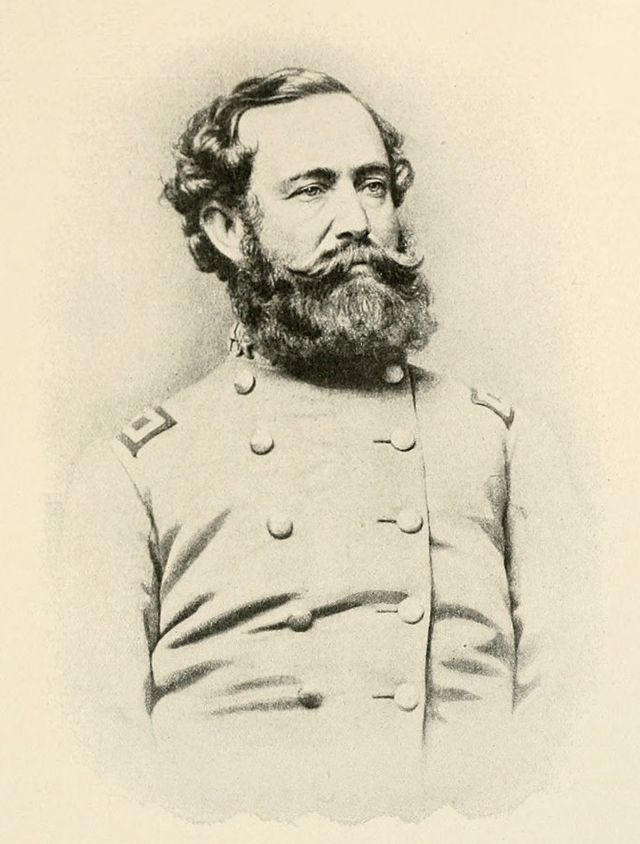
Gen. Wade Hampton

Hampton won the election by less than 1200 votes and each side claimed victory, accusing the other of fraud. To make matters worse, the Democrats won control of the South Carolina House and the Republicans won the Senate. Both parties moved into the State House and refused to leave, sleeping on the floor of their chambers and attempting to conduct legislative business. Outside, supporters of each side gathered as police and militia tried to keep the crowds from turning into mobs

After the South Carolina Supreme Court ruled in favor of the Republicans Chamberlain, with the support of Federal troops, was inaugurated as the governor on December 6, 1876. Hampton claimed that “the people of South Carolina have elected me Governor, and by the Eternal God, I will be the Governor!”

For the next four months South Carolina had rival houses and governors, each claiming to be the legitimate government. White citizens refused to pay their taxes to the Republican administration, but voluntarily contributed 10 percent of their money to the Democrat government. If a state agency wanted money to operate, they had to ask Hampton for funds. Soon there were defections from the Republican administration and Chamberlain’s power base faltered.

When Rutherford B. Hayes was inaugurated as the President of the United States both governors appeared before him. Hayes announced that “the whole army of United States would be inadequate to enforce the authority of Governor Chamberlain.” He ordered the evacuation of the Federal troops from South Carolina and in the first week of April 1877, Chamberlain and the Republicans vacated their offices.

Despite the chaos, the election accomplished Hampton’s goal; it wrenched control from post-War Republicans, many from the North, and back into the hands of the white Democrats. They began to institute a series of laws and reforms which removed tens of thousands of blacks from voter’s rolls. They also established a Confederate Memorial Day designed to help smother the memory of the annual Decoration Day for fallen Union soldiers.

David Blight wrote about the loss of Decoration Day:

As the Lost Cause tradition set in — the Confederate version of the meaning and memory of the war — no one in white Charleston or the state was interested in remembering the war through this event. 

hampton park locBy this time the race course cemetery was suffering from neglect, and the soldiers were reinterred at the Beaufort and Florence National Cemeteries. In 1902 the site of the race course and former cemetery became part of the fair grounds for the South Carolina Inter-State and West Indian Exposition. At the conclusion of the Expo, the city of Charleston acquired the land for a park, which they ironically named in honor of General (and governor) Wade Hampton.

Through the years Memorial Day was generally celebrated May 30. Beginning in 1971, the federal holiday was designated as the last Monday in May.

memorial day marker

Marker honoring the first Memorial Day and Union cemetery.

Today In Charleston History: May 1

1707-England 

The Act of Union took effect. The Scottish Parliament and the English Parliament united to form the Parliament of Great Britain. Anne becomes Queen of Great Britain.

1757 – Fortifications

Construction of the city’s fortifications were finished within ten months.  De Brahm’s design, a “continuous line of Ramparts, forming regular Bastions, detach’d or joined with curtains,”connected Granville’s Bastion with Broughton’s at White Point. The new wall was four feet taller than the previous one and the Gazette noted that “the sea is damn’d out.”

1763 – Marriage

John Rutledge married Elizabeth Grimke. There were to have ten children, eight that reached maturity.

1775 – Publishing

 Robert Wells of the South Carolina and American General Gazette, a committed Royalist, left Charlestown for England. His son, John Wells, assumed the duties of publisher and editor and espoused the Patriot cause until 1780.

106 Tradd Street, John Stuart House

106 Tradd Street, John Stuart House

False rumors that John Stuart, British Superintendent of Indian Affairs, was plotting to incite Indians to attack back country settlements, forced him to abandon his house at 106 Tradd Street. He was fearful of reprisals by the Secret Committee of Five, and other Revolutionaries. He fled to St. Augustine.

 1780-The Siege of Charlestown.

Provisions for the American army was reduced to seven weeks of rice. In order to taunt the Americans, the British began to fire shells armed, not with gunpowder and lead, but with rice & sugar. 

Being cut off from supply lines Lt. Governor Christopher Gadsden permitted Lincoln’s officers to confiscate foodstuffs from citizen’s houses. They discovered “scare a sufficiency for the supply of private families.” More than twenty civilians had been killed and thirty houses burned by British artillery.

GEORGE WASHINGTON’S VISIT: DAY I

May 1, 1791

The president’s party had breakfast at Hampton Plantation, the home of the widowed Harriet Pinckney Horry. Her mother, Eliza Lucas Pinckney, had been living with her daughter for several years.

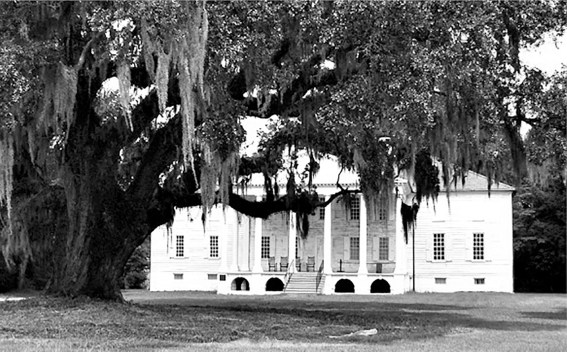
During the visit, Eliza asked Pres. Washington whether a certain oak tree should be cut down to create a better view from the portico. Washington replied that he liked the tree and the view. The tree was saved and from that day it was known as the Washington Oak.

On the road to Charleston County

Washington Oak at Hampton Plantation. Photo by author.

1865

A number of towns around the nation claim holding the first Memorial Day. The distinction generally goes to the town of Waterloo New York. Not so fast.

On May 1, 1865, more than 10,000 people gathered for a parade, to hear speeches and dedicate the graves of Union dead in what is now Hampton Park in Charleston. The group consisted of several thousand black freedmen, northern missionaries and teachers who had arrived in Charleston to teach in freedmen schools post-War.

memorial day - club house

Club House of the Planters Race Course where Union soldiers were imprisoned.

Hampton Park was originally the Planters Race Course and, during the final months of the Civil War, it was a hellish open-air Confederate prison. A total of 257 Union troops died at the camp, some of whom had been transferred from the infamously horrific Andersonville in Georgia before it was liberated.

The dead were originally buried in an unmarked, hastily-dug mass grave by the Confederates. After the war in April 1865, twenty-eight members of local black churches buried the soldiers in individual graves at the site of the camp. They built a fence around the cemetery and an arch over the entrance which read “The Martyrs of the Race Course.”

On May Day, 1865 the large assembly marched to the burial site. Nearly everyone brought flowers to place on the burial field. A New York Tribune correspondent witnessed the event, described as “a procession of friends and mourners as South Carolina and the United States never saw before.”

David Blight, a history professor at Yale, wrote about the event:

The symbolic power of the low-country planter aristocracy’s horse track (where they had displayed their wealth, leisure, and influence) was not lost on the freed people.

The procession began at 9:00 a.m., led by 3000 black children carrying roses and singing “John Brown’s Body.” They were followed by several hundred black women with baskets of flowers and crosses. Black men marched in cadence next, followed Union soldiers which included the famous 54th Massachusetts (made famous in the movie Glory) and the 34th and 104th U.S. Colored Troops. 

Inside the cemetery a children’s choir sang several spirituals, “We’ll Rally Around the Flag” and “The Star Spangled Banner.” Several black ministers read from Bible scriptures. After the service, the crowd gathered for a picnic, watched the soldiers drill and listened to speeches.

Burial site of soldiers on the race course.

Burial site of soldiers on the race course.

They called it Decoration Day, an annual ritual of remembrance. David Blight wrote:

This was the first Memorial Day. African Americans invented Memorial Day in Charleston, South Carolina. What you have there is black Americans recently freed from slavery announcing to the world with their flowers, their feet, and their songs what the war had been about. What they basically were creating was the Independence Day of a Second American Revolution.

In 1876 former confederate general Wade Hampton declared that it was time for white Southerners to “dedicate themselves to the redemption of the South.” Hampton was elected South Carolina governor that year in one of the most volatile elections in the state’s history, filled with riots, murders, intimidations and blatant voter fraud.

Hampton, running on his white-supremacy program, narrowly defeated Republican governor Daniel Chamberlain, despite the presence of Federal troops under General William T. Sherman in an attempt to stop violent mob action at the polls. On election night, the voter count in Laurens and Edgefield counties exceeded the total population – with most of the votes going to Hampton and the Democrats.

640px-WadeHamptonp274crop

Gen. Wade Hampton

Hampton won the election by less than 1200 votes and each side claimed victory, accusing the other of fraud. To make matters worse, the Democrats won control of the South Carolina House and the Republicans won the Senate. Both parties moved into the State House and refused to leave, sleeping on the floor of their chambers and attempting to conduct legislative business. Outside, supporters of each side gathered as police and militia tried to keep the crowds from turning into mobs

After the South Carolina Supreme Court ruled in favor of the Republicans Chamberlain, with the support of Federal troops, was inaugurated as the governor on December 6, 1876. Hampton claimed that “the people of South Carolina have elected me Governor, and by the Eternal God, I will be the Governor!”

For the next four months South Carolina had rival houses and governors, each claiming to be the legitimate government. White citizens refused to pay their taxes to the Republican administration, but voluntarily contributed 10 percent of their money to the Democrat government. If a state agency wanted money to operate, they had to ask Hampton for funds. Soon there were defections from the Republican administration and Chamberlain’s power base faltered.

When Rutherford B. Hayes was inaugurated as the President of the United States both governors appeared before him. Hayes announced that “the whole army of United States would be inadequate to enforce the authority of Governor Chamberlain.” He ordered the evacuation of the Federal troops from South Carolina and in the first week of April 1877, Chamberlain and the Republicans vacated their offices.

Despite the chaos, the election accomplished Hampton’s goal; it wrenched control from post-War Republicans, many from the North, and back into the hands of the white Democrats. They began to institute a series of laws and reforms which removed tens of thousands of blacks from voter’s rolls. They also established a Confederate Memorial Day designed to help smother the memory of the annual Decoration Day for fallen Union soldiers.

David Blight wrote about the loss of Decoration Day:

As the Lost Cause tradition set in — the Confederate version of the meaning and memory of the war — no one in white Charleston or the state was interested in remembering the war through this event. 

hampton park locBy this time the race course cemetery was suffering from neglect, and the soldiers were reinterred at the Beaufort and Florence National Cemeteries. In 1902 the site of the race course and former cemetery became part of the fair grounds for the South Carolina Inter-State and West Indian Exposition. At the conclusion of the Expo, the city of Charleston acquired the land for a park, which they ironically named in honor of General (and governor) Wade Hampton.

Through the years Memorial Day was generally celebrated May 30. Beginning in 1971, the federal holiday was designated as the last Monday in May.

memorial day marker

Marker honoring the first Memorial Day and Union cemetery.

#Today In Charleston History: April 30

1680-Religion.

 The Richmond arrived at Charles Town carrying a group of forty-five French Huguenots. Their voyage was subsidized by King Charles II for the purpose of introducing people “skilled in ye manufacture of silks, oyles, wines.” Among the new settlers were farmers, wheelwrights, grape growers, weavers saddlers, smiths, coopers, sailmakers, goldsmiths, brick makers and one doctor. One of the Huguenots,Judith Giton, the mother of Gabriel Manigault, wrote of her Carolina early experience:

After our arrival in Carolina, we suffered every kind of evil. In about eighteen months our elder brother … died of a fever. Since leaving France we had experienced every kind of affliction – disease-pestilence-famine-poverty-hard labor. I have been for six months together without tasting bread, working the ground like a slave.

 1965-Deaths
Helen Chandler

Helen Chandler

Helen Chandler died. She was born in Charleston, South Carolina on February 1, 1906. She began her acting career in New York at the age of nine and was on Broadway two years later in 1917. Her early performances include Arthur Hopkins’ 1920 production of Richard III, which starred John Barrymore, Macbeth in 1921 with Lionel Barrymore; Hedvig in Henrik Ibsen’s The Wild Duck in 1925 and Ophelia in the 1925 modern dress version of Hamlet starring Basil Sydney. By the time of her first film she had been in over twenty Broadway productions.

She made her film debut in 1927 in the silent film The Music Master and in 1930 joined Leslie Howard, Douglas Fairbanks Jr., and Beryl Mercer for the film version of the stage success Outward Bound. The unusual story told of a group of passengers on an ocean liner who gradually realize that they are all dead and will soon face the Last Judgment. Chandler, with her blonde hair and ethereal quality, was considered to be perfectly cast, and she received critical praise for her performance.

Chandler and Bela Lugosi in "Dracula".

Chandler and Bela Lugosi in “Dracula”.

Chandler is probably best remembered by movie fans as the fragile Mina, pursued and nearly vampirized by Bela Lugosi in the original “Dracula” (1931). In 1937 Chandler left Hollywood to return to the stage, but a dependency on alcohol and sleeping pills haunted her subsequent career, and in 1940 she was committed to a sanitarium. Ten years later she was disfigured in a fire, apparently caused by smoking in bed.

Helen Chandler died (following surgery for a bleeding ulcer) on April 30, 1965. Her body was cremated, and as no relative ever came forward to claim the remains, her ashes now repose in the vaultage section of the Chapel of the Pines Crematory in Los Angeles.

Today In Charleston History: April 29

1710 – Education

The Assembly passed an act to establish a

“Free School … for the instruction of Youth … in grammar, arts and sciences and the principals of Christianity.”

Requirements for the teacher included being able to teach “Latin and Greek and be of the Church of England.”

1753 – Politics

Former Chief Justice Charles Pinckney was appointed Agent for South Carolina in England. His entire family accompanied him to Britain – wife Eliza, sons Charles Cotesworth and Thomas and daughter Harriot. The sons were educated at Westminster School and Christ Church, Oxford and France. The sons’ friend, William Henry Drayton, accompanied the family and also entered school in Britain.

1780 – The Seige of Charlestown
John Laurens, 1780 (by Charles Willson Peale)

John Laurens, 1780 (by Charles Willson Peale)

American workers were “employed in closing the Horn Work” behind the lines. Gen. Lincoln informed his officers “that he intended the Horn Work as a place of retreat for the whole army” if the British drove them from the main line. Lt. Colonel John Laurens and his light infantry was assigned in front of the Horn Work to cover any retreat into it.

Remnants of the "horn work" at Marion Square.

Remnants of the “horn work” at Marion Square.

Today In Charleston History: April 28

1865

Two dozen men from the local African Methodist Episcopal churches organized a group called “Friends of the Martyrs and the Patriotic Association of Colored Men.” They built a white picket fence around the Union burial ground of the Washington Race Course with an arch which read, “The Martyrs of the Race Course.” The location was approximately near the present day intersection of Tenth Avenue and Mary Murray Boulevard.  

Washington Race Track - 1857. A one-mile loop around what is present day Hampton Park. Library of Congress

Washington Race Track – 1857. A one-mile loop around what is present day Hampton Park. Library of Congress

Washington_Race_Course_graves

Union graves behind the Washington Race Course.

1874

There was a run on the Freedmen’s Bank branch in Charleston. Within 2 months (after 9 years in business), the entire Bank would collapse.

“The reasons for the bank’s failure are debatable. Some scholars, such as Carl R. Osthaus, argue that the government forgot about the freedmen and made no great effort to relieve their economic plight. Other historians, including Walter L. Fleming, contend that government officials and bankers colluded for individual profit. The legacy of the Bank has been debated, too. Some write that African Americans lost their faith in the American dream and middle-class values and abandoned frugality. Others cite the establishment of black-owned banks less than fifteen years after the collapse of the Freedmen’s Bank as evidence that many African Americans remained enterprising. One thing is certain: freedmen adjusted quickly to the demands of a free-labor economy. In the words of Osthaus, they ‘made a massive investment of money.’ Over the life of the Bank, approximately 70,000 depositors had moved a little over 57 million dollars to and from their accounts.”

Today In Charleston History: April 27

1788

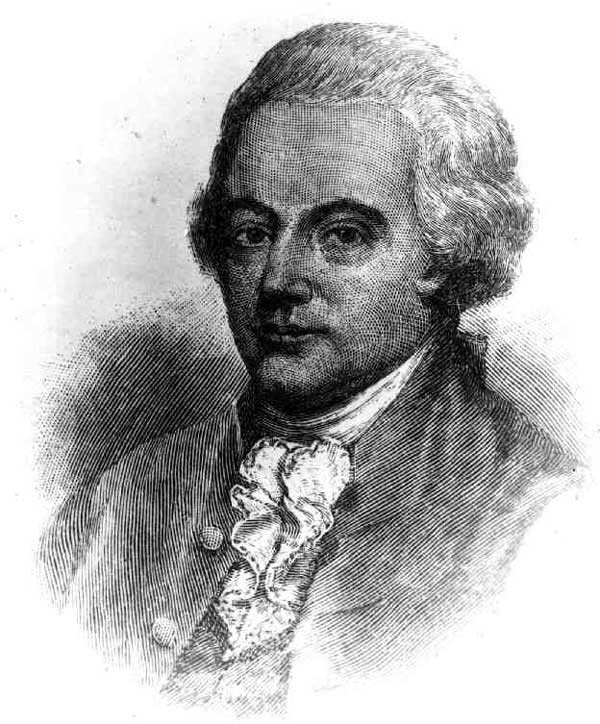
Charles Pinckney

Charles Pinckney

At Mepkin Plantation, Charles Pinckney married eighteen-year old Mary Eleanor (Polly) Laurens, with the blessing of her father, Henry. Pinckney’s friend, John Sanford Dart sarcastically wrote that he had “entered Hymen’s shackles with Miss Laurens.”

1838-Disasters

At 9:00 p.m., Friday evening, a fire started in shed behind Mrs. Babson’s house near the corner of King Street and Beresford Alley. It spread eastward, destroying about 560 houses and 598 other structures, or as the Daily Courier  reported: “at least one-fourth of the centre of our beautiful and flourishing city”

By 10:00 PM, it had crossed to the east side of King Street, and structures were being demolished to create firebreaks. At midnight, blazes raged down the south side of Market Street toward Meeting Street, and at 2:30 Saturday morning

“the Public Markets as far as Church Street were gone…, all the buildings on the south side of Market, the new Stores on the Burnt Lands, the splendid new hotel, …both sides of Meeting as far as Hasell Street – all, all are in ruins.”

Beth Elohim, 1818. Destoryed by the 1838 fire.

Beth Elohim, 1818. Destroyed by the 1838 fire.

The fire roared down Hasell, Society, and Wentworth streets, all the way to the Cooper River wharves. Most of Ansonborough was consumed, including Beth Elohim Synogogue. Moses C. Levy, however, rushed into the building to save the sacred scrolls.

The Citadel, Orphan House, Medical College, St. Andrew’s Society, Hebrew Orphan House and the German Friendly Society opened their buildings for housing of the displaced people.

1864-Civil War
George Trenholm

George Trenholm

After the fall of Richmond, Confederate Treasurer George Trenholm took flight southward with the rest of the Cabinet, but due to his ill health, was unable to continue running.  He resigned with the approval of President Jefferson Davis but was captured by Union troops and imprisoned at Fort Pulaski, near Savannah, Georgia.

1886

Mayor William Ashmead Courtney agreed to take a leave of absence due to his health. He planned to take a European vacation and return home in the fall. Courtney asked to be released from serving the rest of his term, citing exhaustion. City council advised for him to take a leave of absence “for as long as necessary to regain his health.

Today In Charleston History: April 26

1685-Piracy

The Proprietors recommended Governor Quarry be “dismissed from the Secretaryship for harboring pirates.”

During the years 1682-1686, there was much upheaval in the Carolina Colony. Due to political moves among the citizens the result was five Governors; Joseph Morton, Joseph West, Richard Kyrle, Robert Quarry, and James Colleton.

Colonel Robert Quarry was elected President of the Executive Council and Acting Governor from May to October of 1685. During the time of his government, a number of pirates put into Charles Town, and purchased provisions with their Spanish gold and silver. Whether the governor was ignorant of the treaty made with Spain, by which England had withdrawn her former toleration from these plunderers of the Spanish dominions; or whether he was afraid to bring them to trial, cannot be determined.

It is true that King Charles II, for several years after the restoration, winked at the pirates’ crimes and the crown actually often profited from their plundering. Charles II knighted Henry Morgan, a Welshman, who had plundered Porto Bello and Panama, and carried off large treasures. For several years these plunderers of the West Indies were successful and spread fear in every quarter of the Spanish dominions.

Their stolen gold and silver ensured to them a kind reception among the merchants in Charles Town who freely conducted business with the pirates. However, the Lords Proprietors, once learning of the encouragement given to pirates by Governor Robert Quarry, dismissed him from the office.

1780The Seige of Charlestown

Benjamin_lincolnGen. Benjamin Lincoln and his Patriot war council vowed to continue the fight against the British bombardment, although the city was effectively surrounded and the men worked “the whole day under the heaviest cannon and small arms fire.” Due to the hellish nature of the conditions the line soldiers endured, desertions became an issue for the American defenders.

1852-Road to Secession

The South Carolina state convention met in Columbia to consider action against the United States government for “frequent violations of the Constitution of the United States.”  Although no official action was taken, this meeting marked the beginning of a serious secession movement that came to fruition on December 20, 1860.

Read the Declaration of Causes here. 

1860 – Democrat Convention

Resolutions to protect the Fugitive slave law were introduced.  Rhode Island also introduced a resolution:

That we recognize to the fullest extent, the principle that to preserve the Union the equality of the States must be maintained, the decisions of the Courts enforced ; and that every branch of the Federal Government shall exercise all its Constitutional powers in the protection of persons and property both in the States and Territories;

Today In Charleston History: April 25

1660 – Restoration
Charles II

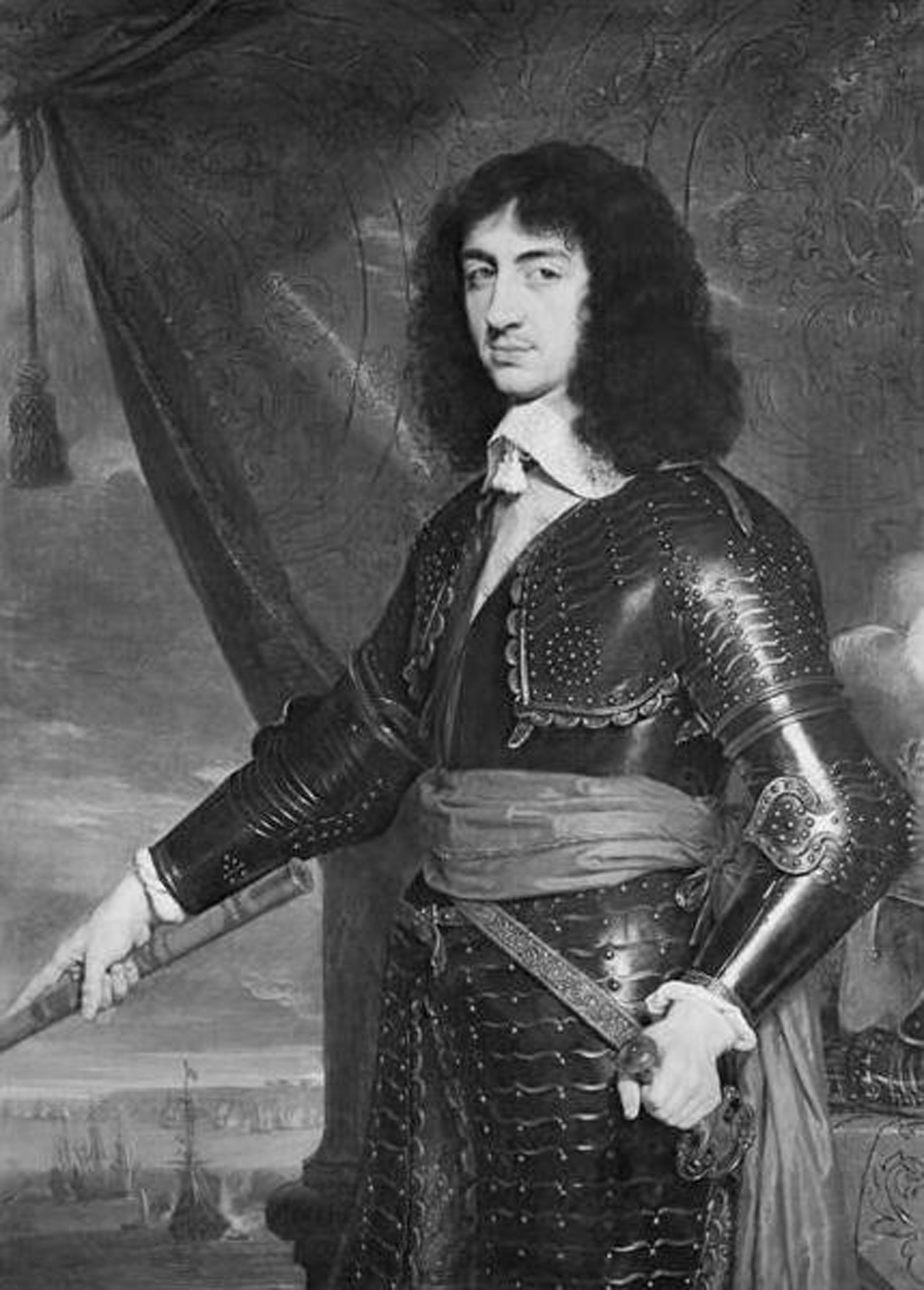
Charles II

Parliament meets and votes to restore Charles II to the English throne, ending 20 years of turmoil that started with the English Civil Wars.  The era of “Eat, Drink & Be Merry” began. 

1716Bloodless Revolution

Governor Craven returned to London. The Assembly asked Craven to plead their case of grievances against the Proprietors before the King, asking to become a Royal colony. Rev. Gideon Johnston accompanied Craven in a sloop out to the harbor to bid him farewell. During the return trip the sloop was swept over by a storm. Johnston drowned, and several days later his body washed up on the same bank of sand on which he had been marooned on the day he arrived in 1708.

1817
Joel Roberts Poinsett

Joel Roberts Poinsett

Joel Roberts Poinsett was offered the position of special commissioner to South America. Secretary of State Robert Rush stated, “No one has better qualifications for this trust than yourself.”  

Poinsett declined the honor explaining to President James Monroe that he had recently accepted a seat in the legislature of South Carolina and could not resign it “without some more important motive than this commission presents.”

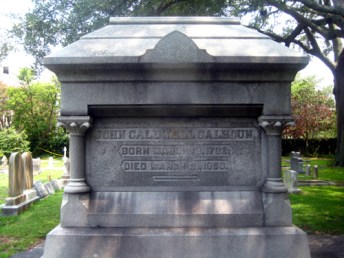
1850 – Burial of Calhoun

John C Calhoun was buried in the western cemetery of St. Phillip’s Church in an elaborate funeral ceremony.

john_caldwell_calhoun_grave

Calhoun’s tomb in St. Philip’s cemetery

1860 – Democrat Convention

Opening prayer by Dr. Rev. John Bachman. Most of the day was spent arguing over ground rules for the convention. It was then announced that during the night, John S. Robinson, Vermont delegate, died in his sleep at the Mills House. The Convention adjourned in his honor.