Today In Charleston History: June 4

1770

During the celebration of King George III’s birthday, Peter Timothy noted that, in comparison to the celebration over the John Wilkes affair and the arrival of the William Pitt statue:

few [houses] were illuminated because the People are not Hypocrites. They will not dissemble Joy, while they feel themselves unkindly treated, and oppressed.

1772-Slavery

The South Carolina Gazette, ran this advertisement: 

RUN AWAY: Dick, a mulatto fellow . . . a remarkable whistler and plays on the Violin.

1773

Henry Laurens was unhappy with the level of education available in England for his sons. He wrote about Oxford and Cambridge saying:

The two universities are generally, I might say universally censured. Oxford in particular is spoken of as a School of Licentiousness and Debauchery in the most aggravated heights.

1774-American Revolution

The First Provincial Congress adopted the American Bill of Rights and the Articles of Confederation. On that same date, the First Provincial Congress authorized the issue of £1,000,000 in paper currency for military defense of the Province, and appointed thirteen new members to the Council of Safety, with power to command all soldiers and to use all public money in the Province. No military person could now sit on the Council of Safety.

The Congress ordered that 1500 special troops be raised to

go forth and be ready to sacrifice our lives and fortunes against every foe in defense of the liberty outraged in the bloody scene on the 19th of April last near Boston.

1831   

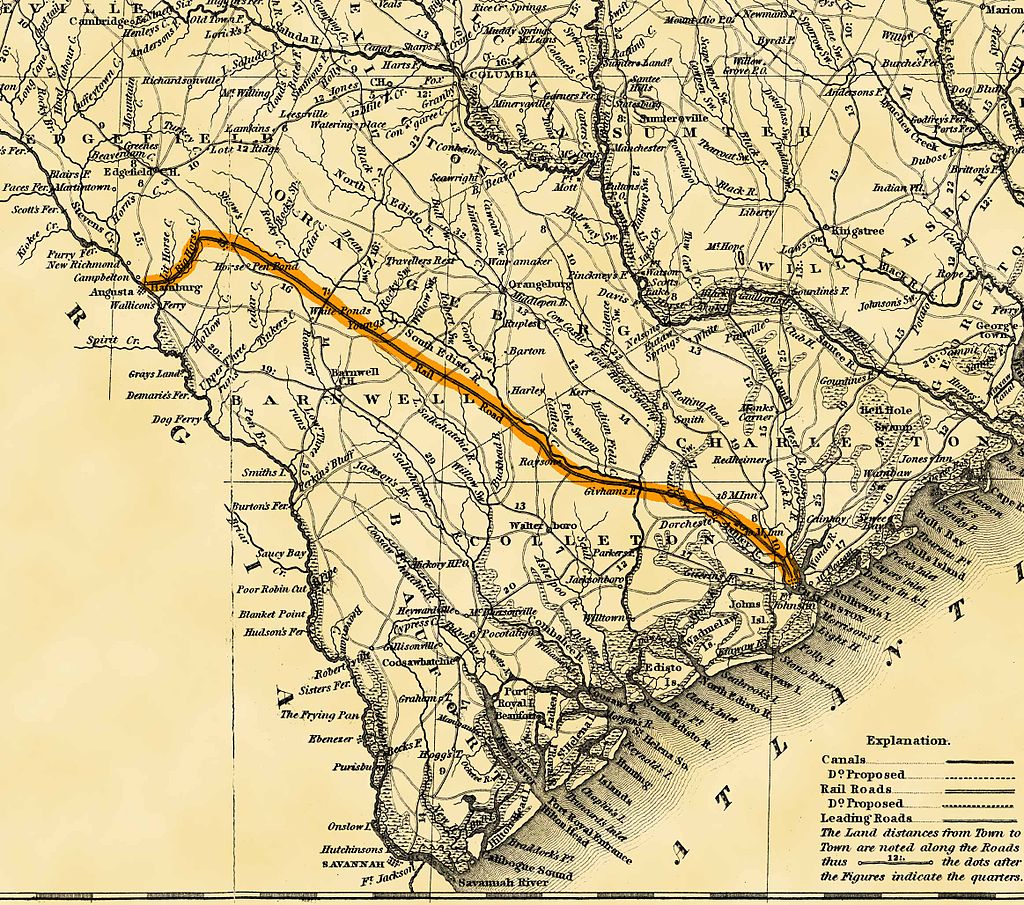
The final route of the Charleston & Hamburg Rail Road was confirmed. It was designed with nine turnouts – a parallel track joined to the mainline, an amazing innovation at that time. There were also twelve pumps/watering places for the locomotives.

Map of the rail road route.

Map of the Charleston & Hamburg rail road route.


1924

The Francis Marion Hotel opened for business.  Named for the Revolutionary War hero Francis Marion, the “Swamp Fox,”, it was built by local investors at a cost of $1.5 million from plans by noted New York architect W.L. Stoddard. when it opened the Francis Marion was the largest and grandest hotel in the Carolinas. The 1920s was the Golden Age of railroads, radio and grand hotels, and the Charleston Renaissance was in full bloom and the Francis Marion Hotel was “the place to be”.

evening post, june 4, 1924

Charleston Evening Post, June 4, 1924

Today In Charleston History: June 3

1812-War of 1812

John C. Calhoun introduced a bill in Congress supporting war against Great Britain. As chairmen of the Foreign Affairs Committee, Calhoun wrote, “The honor of a nation is its life. Deliberately to abandon it, is to commit an act of political suicide.” Calhoun was described as “the young Hercules who carried the war on his shoulders.” 

1850-Road to Secession.

One hundred seventy-six delegates from Virginia, South Carolina, Georgia, Alabama, Mississippi, Texas, Arkansas, Florida and Tennessee, met at McKendree Methodist Church in Nashville for nine days to consider a possible course of action if the United States Congress decided to ban slavery in the new territories being added to the country as a result of Westward Expansion and the Mexican-American War. 

Rhett2-246x300

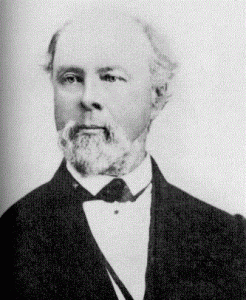
Robert Barnwell Rhett

With the death of John C. Calhoun in March 1850, radical secessionists, called “fire-eaters” including Robert Barnwell Rhett, Maxcy Gregg, James H. Adams, David F. Jamison, and Daniel Wallace, demanded that South Carolina secede, regardless of the course adopted by other slaveholding states. Cooperationists, meanwhile, professed their willingness to secede but argued that separate secession would leave South Carolina isolated and impotent. The fire-eaters were extreme advocates of southern rights. They walked out on the Nashville convention in 1850.

Most of this was in response to the Wilmot Proviso, a congressional proposal to ban slavery in the territory gained in the Mexican War, and the so-called Compromise of 1850, a series of measures maneuvered through Congress in an attempt to pacify both northern and southern interests. South Carolina secessionists brought their state to the brink of disunion but were disappointed by the growing acceptance of the Compromise of 1850 across the South. Procompromise Whigs and Democrats successfully played on party loyalty to wean southern states away from the notion of a southern party committed solely to the defense of slavery—a goal to which much of South Carolina was committed.

The convention adjourned without taking any action against the Union, and the issue of secession was temporarily tabled.

1864Bombardment of Charleston.

Gus Smythe, a member of the Confederate Signal Corps in Charleston, wrote to his sister, Sarah Anne, about the Union shelling from his perch in St. Michael’s Church steeple:

They are now using a very heavy gun, & the roar of the shells as they fly on their path of destruction is really awful. One struck quite close to the Steeple this morning just as I left, in Broad Street, between King and Meeting … Strange that these shells never give me a moments thought now. I hear them coming & they all seem a matter of course, & I pay no attention to them at all.

Gus Smythe

Gus Smythe

Today In Charleston History: June 2

1670- Slavery

The Three Brothers returned from Virginia with three enslaved Africans on board named John, Sr., Elizabeth and John, Jr.

 1762 – Mepkin Plantation Purchased
laurens

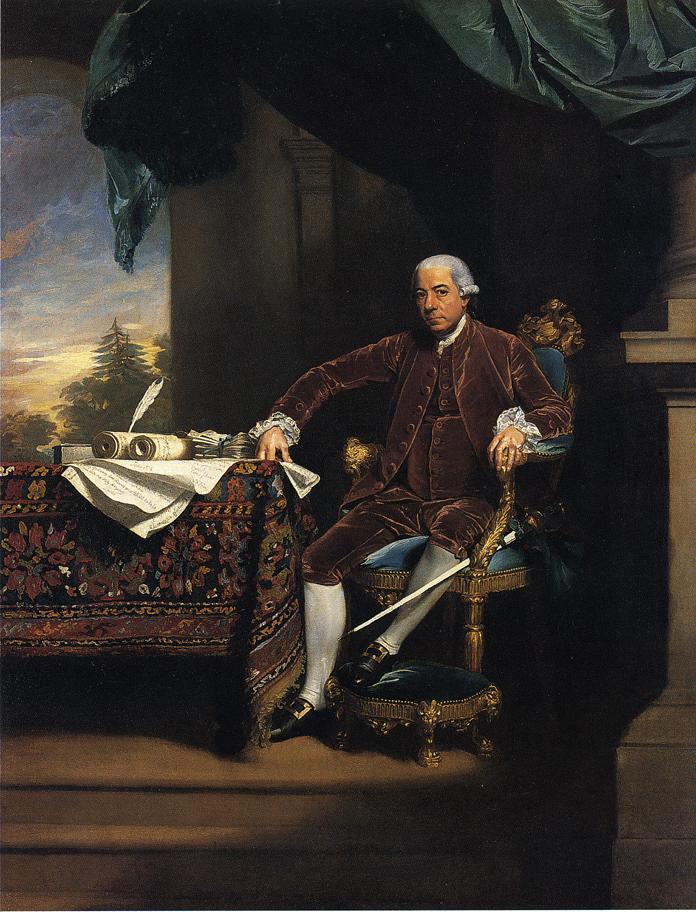
Henry Laurens

Henry Laurens returned from the war against the Cherokee and purchased the 3000-acre Mepkin Plantation in the Monck’s Corner area on the Cooper River for £8000 currency.  

Today it is Mepkin Abbey, a community of Roman Catholic monks established in 1949. Founded by the monks of Gethsemani in Kentucky, the brothers of Mepkin belong to the worldwide Order of Cistercians of the Strict Observance popularly known as Trappist.

1834 – Test Oath Case

The South Carolina Court of Appeals ruled 2-1 on the “test oath” case, M’Cready v. Hunt. The “test oath” pledged that the state militia must pledge “faithful and true allegiance” to the State of South Carolina. Attorney Robert Barnwell Rhett, argued for the test oath with the support of state Governor Robert Y. Hayne. He was opposed Charleston Unionist attorneys, James L. Petigru and Thomas S. Grimké.

The “Nullifiers” immediately called for the impeachment of the two jurists who voted against the oath. “Nullifier” legislators responded to the decision by calling for a constitutional amendment to legalize the test oath and assert the primacy of allegiance to South Carolina.

1866 – St. Michael’s Bells

The bells of St. Michael’s arrived at the Whitechapel Bell Foundry to be recast by Messrs. Mears and Stainbank in London. The bells had been taken out of the church and sent to Columbia for safekeeping, but were damaged during the burning of Columbia by Sherman’s troops. 

Today In Charleston History: June 1

1734 – Culture

A billiard table was advertised for sale at Ashley Ferry in the Gazette.

1738 – Treatment for Pox

The Gazette published Dr. Pitcarn’s treatment for small pox to help stop its spread. It consisted of bloodletting and the use of a syrup of white poppies. By the end of the summer 2112 people had come down with the disease, killing more than 400.  It was reported that there were not:

sufficient number of persons in health to attend the sick, and many persons perished from neglect and want. There was scarcely a house in which there had not been one of more deaths. Inoculation was at this time first attempted with some success and the disease soon after abated. 

1756-Arrivals

William Henry Lyttelton arrived in Charlestown as the Governor on the HMS Winchelsea. Crowds of citizens gathered to toast the new governor but Lyttelton’s term would be riddled with controversies. 

1775-American Revolution – Foundations.

 The Secret Committee of Five ordered the tarring and feathering of James Dealy and Laughlin Martin for rejoicing (supposedly) that Catholics, Negroes and Indians were going to be armed in an uprising against the people.  The two men were carted about the streets and banished from town.

1776-American Revolution
Lord William Campbell

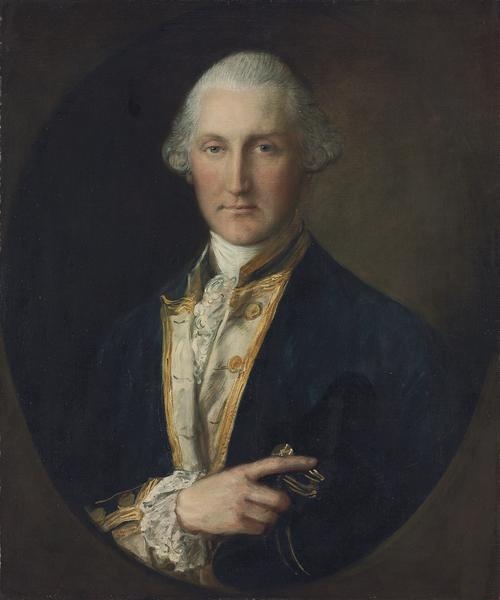
Lord William Campbell

Lord William Campbell, who, several months before, had left Charleston in the middle of the night in fear of being attacked, had been urging a major expedition against South Carolina to crush the rebellion in the South. On June 1, the British fleet, commanded by Sir Peter Parker and Sir Henry Clinton, appeared and “displayed about fifty sail before the town, on the outside of the bar.”

Col.  Moultrie described their effect on Charlestonians:

The sight of these vessels alarmed us very much, all was hurry and confusion, the president with his council busy in sending expresses to every part of the country, to hasten down the militia; men running about the town looking for horses, carriages and boats to send their families into the country; and as they were going out through the town gates to go into the country, they met the militia from the country marching into town…

1782 – Culture

Hamilton Stevenson advertised his services as a “painter of miniatures or a hair sylist.”

1822-Denmark Vesey Rebellion

Mingo Harth and Peter Poyas were interrogated by city officials. Another Slave, William Paul, had named them as part of a “conspiracy” against the whites.  Poyas laughed and called William Paul a young fool. Intendent (mayor)Hamilton was impressed that “these fellows behaved with so much composure and coolness.”

1825 – Politics

Joel Roberts Poinsett was appointed the first United States minister to Mexico.

1832 – Death
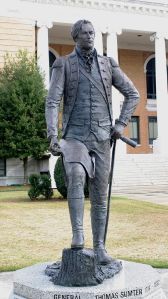
Statue of Gen. Sumter on the courthouse lawn, Sumter S.C.

Statue of Gen. Sumter on the courthouse lawn, Sumter S.C.

Thomas Sumter died, the last surviving Revolutionary War generals.

In February 1776, Sumter was elected lieutenant colonel of the Second Regiment of the South Carolina Line. He subsequently was appointed brigadier general, a post he held until the end of the war. Perhaps his greatest military achievement was his partisan campaigning, which contributed to Lord Cornwallis’ decision to leave the Carolinas for Virginia.

Sumter acquired the nickname, “Carolina Gamecock,” during the American Revolution for his fierce fighting tactics. After the Battle of Blackstock’s Farm, British General Banastre Tarleton commented that Sumter “fought like a gamecock”, and Cornwallis paid him the finest tribute when he described the Gamecock as his greatest plague.

1865 –  Reconstruction

By this time, more than 30,000 cartloads of material and debris had been removed out of the city under the U.S. Army’s supervision, using more than 200 laborers and 50 teams of animals. The debris was dumped in the marshes as landfill.

One visitor described the city as:

The splendid houses are all deserted, the glass in the windows broken, the walls dilapidated, the columns toppled over … arches demolished, mantels shattered, while fragments, great and small, of every description strew the floors … but where are the owners of these estates – where are they?

Charleston, after the War and fire destruction. Looking  west at St. John's Lutheran and Unitarian Churches

Charleston, after the War and fire destruction.

1882 – Politics 

The “Eight Box Law, written by Charlestonian Edward McCrady, Jr. and passed by the state assembly went into effect. The law got its name from the requirement that, on Election Day, there were to be eight separate ballot boxes for different offices. A voter had to be able to read in order to know where to place his ballot. At this time illiteracy rate among blacks was five times greater than whites. Another provision of the law was that every voter must re-register before June 1, 1882, or be forever banned from voting.

Within four years, tens of thousands of black voters in South Carolina were disenfranchised. Voting districts were redrawn, leaving only one majority black district. The state’s last 19th century black congressman was defeated for re-election in 1896