Today In Charleston History: May 2

1739

In a letter to a friend, Eliza Lucas wrote:

Charles Town … is a polite, agreeable place. The people live very Gentile and very much in the English taste … there is two worthy Ladies in Charles town, Mrs. Pinckney and Mrs. Cleland, who are partial enough to me to be always pleased to have me with them and insist upon my making their houses my home with in town. [Note: the Pinckney house was on Union, (now State) Street.]

1780-The Seige of Charlestown.

Loyalist Maj. Patrick Ferguson and sixty American Volunteers marched to Haddrell’s Point to attack a small fort that stood on a causeway that led to Fort Moultrie. The fort, about 150 yards from the mainland, was defended by Capt. John Williams and twenty soldiers of the South Carolina 1st Regiment. The British took the fort while the cannons from Fort Moultrie fired on them until dark. The British soon fortified the fort for a possible attack.

GEORGE WASHINGTON’S VISIT: DAY 2

Monday, May 2, 1791

Washington had breakfast at Snee Farm, the home of Gov. Charles Pinckney. Pinckney apologized for the house, calling the home “a place so indifferently furnished and where your fare will be entirely that of a farm.”

After breakfast Washington crossed into Charleston from Haddrell’s Point which was the eastern terminus of the ferry. Washington was rowed across the river on a large barge by “12 American Captains of Ships, most elegantly dressed.” He noted:

 There were a great number of boats and barges on the river filled with Gentlemen and Ladies, as well as two boats of musicians, all of whom attended Washington across the river.

Washington was greeted at the Point by city recorder John Bee Holmes, and Gen. Charles Cotesworth Pinckney, and Edward Rutledge. A month after the meeting Washington offered Pinckney and Rutledge a seat on the Supreme Court, a seat that had recently been vacated by Edward’s brother, John Rutledge. Both men declined due to family finances.

Once in Charleston Washington was greeted by Lt. Gov. Isaac Holmes, Charleston intendant (mayor) Arnoldus Vanderhorst, and S. Carolina’s two U.S. Senators – Pierce Butler and Ralph Izard. The president was greeted at the Exchange Building where he stood on the balcony facing East Bay Street and watched a “procession in his honor to whom he politely and gracefully bowed as they passed in review before him.”

Washington was then taken to his lodgings on Church Street (Heyward-Washington House) where he was attended by several of Mr. Heyward’s servants.

Heyward-Washington_House

Thomas Heyward’s house @ 87 Church Street, where George slept. 

1822-Denmark Vesey Rebellion.

During a midnight meeting at his house on Bull Street, Denmark Vesey, a free black carpenter, told the gathered crowd that:

we were going to have a war and fight the white people … those that did not join must be regarded as an enemy and put to death. Who made you – God – and then aren’t you just as good as your master, if God made him & you, aren’t you as free?

 During the meeting Vesey set Sunday, July 14 as the date of the revolution. Why Sunday? On Sunday, thousands of people came into Charleston by river for worship services or to sell and purchase goods at the Public Market. And also, symbolically, it was Bastille Day. The blacks recruited for the revolution were instructed to bring “their hoes, hatchets, axes and spades, which might be used as offensive weapons, or as instruments to break open doors.” The leaders of the Rebellion were:

  • Ned Bennett: A trusted and loved slave in the household of Governor Thomas Bennett who lived at 19 Lynch Street (now Ashley Avenue), less than three blocks from Denmark’s home. On the night of the revolt, Ned’s job was to seize the State Arsenal and distribute the weapons, which included more than 200 muskets, bayonets and swords.
  • Rolla Bennett: Also a slave in service of Governor Bennett. Although Rolla admitted that governor treated him like a son, he volunteered to murder his master and his family on the night of the rebellion.
  • Batteau Bennett: Yet another trusted slave in the house of the governor. Batteau claimed he would rather murder his master or die violently resisting than continue his life as a privileged slave.
  • Monday Gell: Monday’s master, John Gell, owned a livery stable at 127 Church Street and regarded his slave as intelligent and dependable. Monday was an excellent harness maker and his master hired him out to a shop on Meeting street, letting his slave keep a portion of the earnings for himself.
  • Bacchus Hammett: An early and eager convert to Denmark’s vision. He stole a keg of gunpowder which was hidden for weeks at Denmark’s house.
  • Peter Poyas: A ship’s carpenter who “wrote in a good hand” and owned by James Poyas lived at 49 King Street and operated a shipyard on Bay Street. Peter had his own weapons and agreed with Denmark that “we are obliged to revolt.” Poyas may have been more eager than Denmark for the rebellion to take place. He often urged Denmark that “we cannot go on like this.”
1828
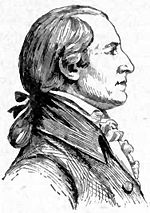
Thomas Tudor Tucker

Thomas Tudor Tucker

Thomas Tudor Tucker, a Charleston native, died in office as the Treasurer of the United States, a position he held for 26 years. He also was President James Madison’s personal physician.

1914

Rev.  Daniel Jenkins, who operated the Jenkins Orphanage House, received a telegram from Jules Hurtig that read “Bring with you the best musicians you have of small boys.

Hurtig was a booking agent on Broadway. He had seen a production of Uncle Tom’s Cabin in which the Jenkins Orphanage Band played a role. Hurtig was quick to realize the band’s commerical potential. He was also responsible for supplying American acts for Anglo-American Exposition, scheduled to be held in London, and he thought the Jenkins Bands would be a major draw.

Jenkins Orphanage Band "The Pickaninny Bands"

Jenkins Orphanage Band at the Anglo-American Expo in London.

Hurtig offered Rev. Jenkins a contract that paid $100 a week for a ten-week engagement, in addition to new uniforms for the band, all transportation and board for the band and caretakers. Jenkins agreed immediately. He was smart enough to bring more than just “young boys” to the Expo. The band would be performing a rigorous five hour program each day in London, on a regular stage in front of thousands of people, so Jenkins decided to bring several of his older, more accomplished and seasoned players in their late teens. He recognized that this was the most significant opportunity for the Jenkins Band to prove they were a serious musical entity. 

doin' the charlestonFor the entire story of the Jenkins Orphanage Band history, read Doin’ The Charleston.

Today In History: May 1 – Charleston First – First Memorial Day

A number of towns around the nation claim holding the first Memorial Day. The distinction generally goes to the town of Waterloo New York. Not so fast.

On May 1, 1865, more than 10,000 people gathered for a parade, to hear speeches and dedicate the graves of Union dead in what is now Hampton Park in Charleston. The group consisted of several thousand black freedmen, northern missionaries and teachers who had arrived in Charleston to teach in freedmen schools post-War.

memorial day - club house

Club House of the Planters Race Course where Union soldiers were imprisoned.

Hampton Park was originally the Planters Race Course and, during the final months of the Civil War, it was a hellish open-air Confederate prison. A total of 257 Union troops died at the camp, some of whom had been transferred from the infamously horrific Andersonville in Georgia before it was liberated.

The dead were originally buried in an unmarked, hastily-dug mass grave by the Confederates. After the war in April 1865, twenty-eight members of local black churches buried the soldiers in individual graves at the site of the camp. They built a fence around the cemetery and an arch over the entrance which read “The Martyrs of the Race Course.”

On May Day, 1865 the large assembly marched to the burial site. Nearly everyone brought flowers to place on the burial field. A New York Tribune correspondent witnessed the event, described as “a procession of friends and mourners as South Carolina and the United States never saw before.”

David Blight, a history professor at Yale, wrote about the event:

The symbolic power of the low-country planter aristocracy’s horse track (where they had displayed their wealth, leisure, and influence) was not lost on the freed people.

The procession began at 9:00 a.m., led by 3000 black children carrying roses and singing “John Brown’s Body.” They were followed by several hundred black women with baskets of flowers and crosses. Black men marched in cadence next, followed Union soldiers which included the famous 54th Massachusetts (made famous in the movie Glory) and the 34th and 104th U.S. Colored Troops. 

Inside the cemetery a children’s choir sang several spirituals, “We’ll Rally Around the Flag” and “The Star Spangled Banner.” Several black ministers read from Bible scriptures. After the service, the crowd gathered for a picnic, watched the soldiers drill and listened to speeches.

Burial site of soldiers on the race course.

Burial site of soldiers on the race course.

They called it Decoration Day, an annual ritual of remembrance. David Blight wrote:

This was the first Memorial Day. African Americans invented Memorial Day in Charleston, South Carolina. What you have there is black Americans recently freed from slavery announcing to the world with their flowers, their feet, and their songs what the war had been about. What they basically were creating was the Independence Day of a Second American Revolution.

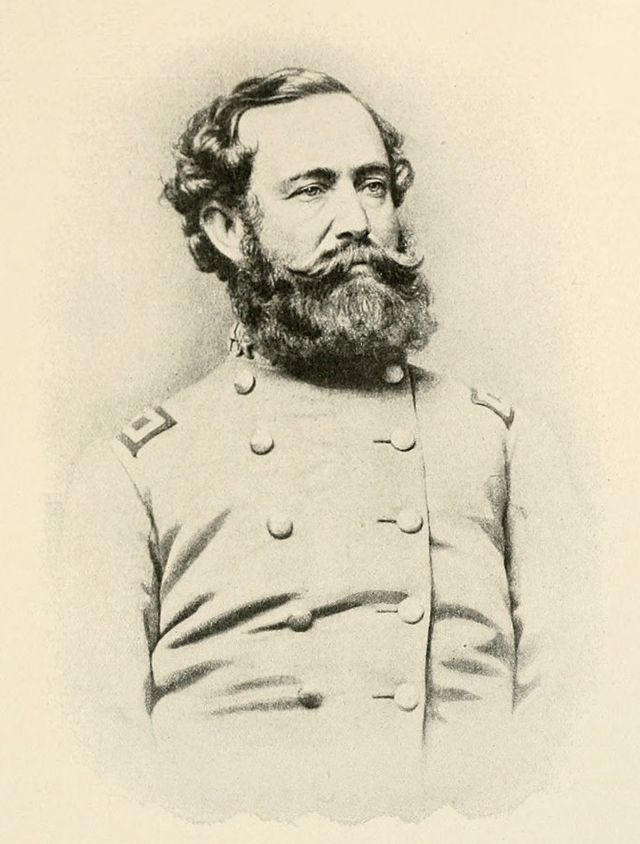
In 1876 former confederate general Wade Hampton declared that it was time for white Southerners to “dedicate themselves to the redemption of the South.” Hampton was elected South Carolina governor that year in one of the most volatile elections in the state’s history, filled with riots, murders, intimidations and blatant voter fraud.

Hampton, running on his white-supremacy program, narrowly defeated Republican governor Daniel Chamberlain, despite the presence of Federal troops under General William T. Sherman in an attempt to stop violent mob action at the polls. On election night, the voter count in Laurens and Edgefield counties exceeded the total population – with most of the votes going to Hampton and the Democrats.

640px-WadeHamptonp274crop

Gen. Wade Hampton

Hampton won the election by less than 1200 votes and each side claimed victory, accusing the other of fraud. To make matters worse, the Democrats won control of the South Carolina House and the Republicans won the Senate. Both parties moved into the State House and refused to leave, sleeping on the floor of their chambers and attempting to conduct legislative business. Outside, supporters of each side gathered as police and militia tried to keep the crowds from turning into mobs

After the South Carolina Supreme Court ruled in favor of the Republicans Chamberlain, with the support of Federal troops, was inaugurated as the governor on December 6, 1876. Hampton claimed that “the people of South Carolina have elected me Governor, and by the Eternal God, I will be the Governor!”

For the next four months South Carolina had rival houses and governors, each claiming to be the legitimate government. White citizens refused to pay their taxes to the Republican administration, but voluntarily contributed 10 percent of their money to the Democrat government. If a state agency wanted money to operate, they had to ask Hampton for funds. Soon there were defections from the Republican administration and Chamberlain’s power base faltered.

When Rutherford B. Hayes was inaugurated as the President of the United States both governors appeared before him. Hayes announced that “the whole army of United States would be inadequate to enforce the authority of Governor Chamberlain.” He ordered the evacuation of the Federal troops from South Carolina and in the first week of April 1877, Chamberlain and the Republicans vacated their offices.

Despite the chaos, the election accomplished Hampton’s goal; it wrenched control from post-War Republicans, many from the North, and back into the hands of the white Democrats. They began to institute a series of laws and reforms which removed tens of thousands of blacks from voter’s rolls. They also established a Confederate Memorial Day designed to help smother the memory of the annual Decoration Day for fallen Union soldiers.

David Blight wrote about the loss of Decoration Day:

As the Lost Cause tradition set in — the Confederate version of the meaning and memory of the war — no one in white Charleston or the state was interested in remembering the war through this event. 

hampton park locBy this time the race course cemetery was suffering from neglect, and the soldiers were reinterred at the Beaufort and Florence National Cemeteries. In 1902 the site of the race course and former cemetery became part of the fair grounds for the South Carolina Inter-State and West Indian Exposition. At the conclusion of the Expo, the city of Charleston acquired the land for a park, which they ironically named in honor of General (and governor) Wade Hampton.

Through the years Memorial Day was generally celebrated May 30. Beginning in 1971, the federal holiday was designated as the last Monday in May.

memorial day marker

Marker honoring the first Memorial Day and Union cemetery.

Today In Charleston History: May 1

1707-England 

The Act of Union took effect. The Scottish Parliament and the English Parliament united to form the Parliament of Great Britain. Anne becomes Queen of Great Britain.

1757 – Fortifications

Construction of the city’s fortifications were finished within ten months.  De Brahm’s design, a “continuous line of Ramparts, forming regular Bastions, detach’d or joined with curtains,”connected Granville’s Bastion with Broughton’s at White Point. The new wall was four feet taller than the previous one and the Gazette noted that “the sea is damn’d out.”

1763 – Marriage

John Rutledge married Elizabeth Grimke. There were to have ten children, eight that reached maturity.

1775 – Publishing

 Robert Wells of the South Carolina and American General Gazette, a committed Royalist, left Charlestown for England. His son, John Wells, assumed the duties of publisher and editor and espoused the Patriot cause until 1780.

106 Tradd Street, John Stuart House

106 Tradd Street, John Stuart House

False rumors that John Stuart, British Superintendent of Indian Affairs, was plotting to incite Indians to attack back country settlements, forced him to abandon his house at 106 Tradd Street. He was fearful of reprisals by the Secret Committee of Five, and other Revolutionaries. He fled to St. Augustine.

 1780-The Siege of Charlestown.

Provisions for the American army was reduced to seven weeks of rice. In order to taunt the Americans, the British began to fire shells armed, not with gunpowder and lead, but with rice & sugar. 

Being cut off from supply lines Lt. Governor Christopher Gadsden permitted Lincoln’s officers to confiscate foodstuffs from citizen’s houses. They discovered “scare a sufficiency for the supply of private families.” More than twenty civilians had been killed and thirty houses burned by British artillery.

GEORGE WASHINGTON’S VISIT: DAY I

May 1, 1791

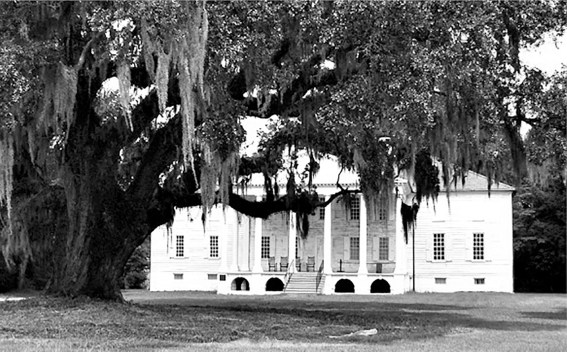
The president’s party had breakfast at Hampton Plantation, the home of the widowed Harriet Pinckney Horry. Her mother, Eliza Lucas Pinckney, had been living with her daughter for several years.

During the visit, Eliza asked Pres. Washington whether a certain oak tree should be cut down to create a better view from the portico. Washington replied that he liked the tree and the view. The tree was saved and from that day it was known as the Washington Oak.

On the road to Charleston County

Washington Oak at Hampton Plantation. Photo by author.

1865

A number of towns around the nation claim holding the first Memorial Day. The distinction generally goes to the town of Waterloo New York. Not so fast.

On May 1, 1865, more than 10,000 people gathered for a parade, to hear speeches and dedicate the graves of Union dead in what is now Hampton Park in Charleston. The group consisted of several thousand black freedmen, northern missionaries and teachers who had arrived in Charleston to teach in freedmen schools post-War.

memorial day - club house

Club House of the Planters Race Course where Union soldiers were imprisoned.

Hampton Park was originally the Planters Race Course and, during the final months of the Civil War, it was a hellish open-air Confederate prison. A total of 257 Union troops died at the camp, some of whom had been transferred from the infamously horrific Andersonville in Georgia before it was liberated.

The dead were originally buried in an unmarked, hastily-dug mass grave by the Confederates. After the war in April 1865, twenty-eight members of local black churches buried the soldiers in individual graves at the site of the camp. They built a fence around the cemetery and an arch over the entrance which read “The Martyrs of the Race Course.”

On May Day, 1865 the large assembly marched to the burial site. Nearly everyone brought flowers to place on the burial field. A New York Tribune correspondent witnessed the event, described as “a procession of friends and mourners as South Carolina and the United States never saw before.”

David Blight, a history professor at Yale, wrote about the event:

The symbolic power of the low-country planter aristocracy’s horse track (where they had displayed their wealth, leisure, and influence) was not lost on the freed people.

The procession began at 9:00 a.m., led by 3000 black children carrying roses and singing “John Brown’s Body.” They were followed by several hundred black women with baskets of flowers and crosses. Black men marched in cadence next, followed Union soldiers which included the famous 54th Massachusetts (made famous in the movie Glory) and the 34th and 104th U.S. Colored Troops. 

Inside the cemetery a children’s choir sang several spirituals, “We’ll Rally Around the Flag” and “The Star Spangled Banner.” Several black ministers read from Bible scriptures. After the service, the crowd gathered for a picnic, watched the soldiers drill and listened to speeches.

Burial site of soldiers on the race course.

Burial site of soldiers on the race course.

They called it Decoration Day, an annual ritual of remembrance. David Blight wrote:

This was the first Memorial Day. African Americans invented Memorial Day in Charleston, South Carolina. What you have there is black Americans recently freed from slavery announcing to the world with their flowers, their feet, and their songs what the war had been about. What they basically were creating was the Independence Day of a Second American Revolution.

In 1876 former confederate general Wade Hampton declared that it was time for white Southerners to “dedicate themselves to the redemption of the South.” Hampton was elected South Carolina governor that year in one of the most volatile elections in the state’s history, filled with riots, murders, intimidations and blatant voter fraud.

Hampton, running on his white-supremacy program, narrowly defeated Republican governor Daniel Chamberlain, despite the presence of Federal troops under General William T. Sherman in an attempt to stop violent mob action at the polls. On election night, the voter count in Laurens and Edgefield counties exceeded the total population – with most of the votes going to Hampton and the Democrats.

640px-WadeHamptonp274crop

Gen. Wade Hampton

Hampton won the election by less than 1200 votes and each side claimed victory, accusing the other of fraud. To make matters worse, the Democrats won control of the South Carolina House and the Republicans won the Senate. Both parties moved into the State House and refused to leave, sleeping on the floor of their chambers and attempting to conduct legislative business. Outside, supporters of each side gathered as police and militia tried to keep the crowds from turning into mobs

After the South Carolina Supreme Court ruled in favor of the Republicans Chamberlain, with the support of Federal troops, was inaugurated as the governor on December 6, 1876. Hampton claimed that “the people of South Carolina have elected me Governor, and by the Eternal God, I will be the Governor!”

For the next four months South Carolina had rival houses and governors, each claiming to be the legitimate government. White citizens refused to pay their taxes to the Republican administration, but voluntarily contributed 10 percent of their money to the Democrat government. If a state agency wanted money to operate, they had to ask Hampton for funds. Soon there were defections from the Republican administration and Chamberlain’s power base faltered.

When Rutherford B. Hayes was inaugurated as the President of the United States both governors appeared before him. Hayes announced that “the whole army of United States would be inadequate to enforce the authority of Governor Chamberlain.” He ordered the evacuation of the Federal troops from South Carolina and in the first week of April 1877, Chamberlain and the Republicans vacated their offices.

Despite the chaos, the election accomplished Hampton’s goal; it wrenched control from post-War Republicans, many from the North, and back into the hands of the white Democrats. They began to institute a series of laws and reforms which removed tens of thousands of blacks from voter’s rolls. They also established a Confederate Memorial Day designed to help smother the memory of the annual Decoration Day for fallen Union soldiers.

David Blight wrote about the loss of Decoration Day:

As the Lost Cause tradition set in — the Confederate version of the meaning and memory of the war — no one in white Charleston or the state was interested in remembering the war through this event. 

hampton park locBy this time the race course cemetery was suffering from neglect, and the soldiers were reinterred at the Beaufort and Florence National Cemeteries. In 1902 the site of the race course and former cemetery became part of the fair grounds for the South Carolina Inter-State and West Indian Exposition. At the conclusion of the Expo, the city of Charleston acquired the land for a park, which they ironically named in honor of General (and governor) Wade Hampton.

Through the years Memorial Day was generally celebrated May 30. Beginning in 1971, the federal holiday was designated as the last Monday in May.

memorial day marker

Marker honoring the first Memorial Day and Union cemetery.