SNOW FALLING ON CEDARS: A Review

If you’re looking for character development … this is not your book. If you’re looking for an exciting plot and story … this is not your book.

SnowFallingOnCedarsHowever, if you are looking for ponderous descriptions of landscapes and weather in an attempt to disguise how thin this story is … this IS your book. If you are looking for shallow, cardboard characters … this IS your book. If you are looking for a cure of insomnia … this IS your book.

I’ve always been amazed that literary critics buy into the notion that long descriptive passages and pages of character introspection equals great writing. Blame the literary professors who pass on this bias (probably because that’s the kind of fiction they write – so it must be brilliant, right?) to their students.

This prize-winning novel has a mystery so slight even Robert B. Parker and James Patterson would be embarrassed. It has so many ridiculous court room scenes that it makes me wonder if Mr. Guterson did his legal research by watching episodes of “Law & Order.” The main character is so unappealing that you wish for his demise. He spends most of the novel obsessing over a teenage love affair to the point of stalking and feeling sorry for himself and masturbating into his handkerchief.

The rest of the cast are such stock, cliqued characters it was like watching a paint-by-numbers TV show. The end of the novel is so abrupt you almost wonder if the printer made a mistake and the last 30 pages are mistakenly missing.

2 palmettos

CHARLESTON NOVELS TO READ (and some to avoid)

Here is a list of some of good (and not-so-good) fiction in which Charleston is one of the major settings. Obviously, there are plenty of books I am going to leave out. Since this is a list of my personal favorites (and otherwise) feel free to make your own list and send it to me!

WHAT TO READ

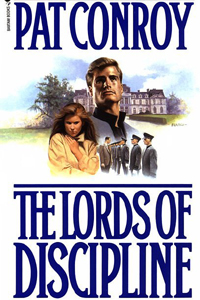
THE PRINCE OF TIDES & THE LORDS OF DISCIPLINE by Pat Conroy.

Thprince tidese Prince of Tides  follows the story of Tom Wingo, teacher and football coach who is reluctant to help his twin sister’s psychiatrists unlock their dysfunctional family secrets. When his sister attempts suicide, Tom travels to New York to help her and bit-by-bit the psychiatrist pulls the family history out of Tom. Calling the Wingo family dysfunctional is like calling James Patterson a hack … true but an understatment
lords discipline Discipline pissed off a lot of Charleston people when it was published because it was a little too close to the truth. Charleston people like to be in charge of the mirror and tend to become defensive when someone else describes the reflection. Both books, Tides and Discipline are page-turners. Conroy is, at worst, an emotional and compelling writer.

Great Mischief / Josephine Pinckney.
great mischiefA perfectly creepy little book that unfortunately is out of print. I had to buy it used on Amazon. The year is 1895, and much of sleepy little Charleston is still lit by gas. Timothy Partridge operates a rundown apothecary shop, where things have’t really changed much since the glory days of Romeo and Juliet; drugs are still hanging from nails on the walls, such as bat wings, hummingbird feathers and strange, fiery potions. Timothy is supporting his shrewish sister Penelope and has a roguish best friend, the drunken doctor Golightly, who is always encouraging Tim to live a little, stop being such a fussbudget, One creepy stormy evening a young woman enters, dashing into the shop in an urgent, insistent plea for some solanum. Tim knows instantly there’s something “off” about the girl, but he has no idea that she’s actually a witch from hell, who will intertwine herself to his life and change it–forever.

Carrion Comfort / Dan Simmons
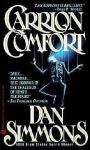
comfortThe War and Peace of the horror genre. One of my all time favorite books. It is December 1980, and a small circle of vampires—not the fanged blood drinkers of legend, but monstrously cruel human beings with the psychic ability to possess and dominate others—gather in Charleston for a reunion, where they score points by comparing the latest acts of extreme violence initiated on their command. It is a page-turning marvel, weaving multiple plot threads and over-the-top action sequences into a narrative of genuine, resonant power. One, Nina, is particularly proud of getting a faceless nobody to assassinate the Beatle John Lennon. But the game soon gives way to a power struggle of an even more ruthless sort. The mind controllers turn on one another, initiating a bloodbath fought with innocents snatched from their everyday lives.

Enter Charleston Sheriff Bobby Joe Gentry, nobody’s top nomination for action hero: An overweight, soft-spoken failed historian, who is baffled and angered by the sudden eruption of madness that has left Charleston littered with nine bodies in a single night. Gentry is out of his depth when his investigation begins to involve conspiracies that involve superpowers and cover-ups at the very highest levels of government power. He is soon joined by Saul Laski, an aging Jewish psychiatrist who has spent his life searching for the Nazi whose psychic powers he experienced during World War II, and Natalie Preston, a young black photographer whose own father was a victim of the massacre in Charleston. These woefully outnumbered three take on a global conspiracy, finding themselves alone in a world where any innocent can be possessed and turned into a murderous assassin without warning.

One of the creepiest characters is ‘sweet little old Charleston lady’ Melanie Fuller, one of the most evil creatures in modern literature.

Porgy / Dubose Heyward

porgy_dustjacketThe story of a crippled beggar who witnesses a murder during a dice game and later gives shelter to the murderer’s woman, the beautiful, haunted Bess. The Catfish Row community is united in its opposition to the union, but Porgy and Bess make each other happy, and their happiness only increases when they take in a child orphaned by a hurricane. Their idyll is brief, however. The murderer, Crown, returns for Bess, and Porgy, defending his family, kills him. The police detain him for questioning but never dream that a cripple could have been the killer, so Porgy returns triumphantly to the Row. The triumph turns to tragedy, however, when he learns that, while he was away, Sporting Life, the dope pusher, beguiled Bess with “happy dus'” and took her away to New York City to resume, it is implied,her career as a prostitute. The book, for all it’s melodrama, is beautifully written.

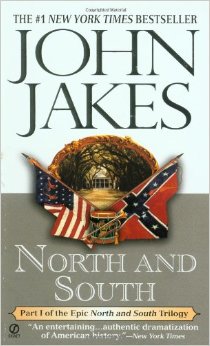
North & South – Love & War – Heaven & Hell / John Jakes
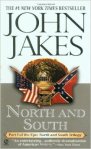
north and southHistorical fiction as it should be … well written, and well researched and full of forbidden love, illicit sex, double crosses and other intrigue. In North and South, two strangers, young men from Pennsylvania and South Carolina, meet on the way to West Point . . . The Hazards and the Mains are brought together in bonds of friendship and affection that neither man thinks can be shattered. And then the War begins.

Love & War: From the first Union rout in Virginia to the last tragic moments of surrender, here is a gigantic five-year panorama of the Civil War! Hostilities divide the Hazards and the Mains, testing them with loyalties more powerful than family ties. While soldiers from both families clash on the battlefields of Bull Run, Fredericksburg and Antietam, in intrigue-ridden Washington and Richmond, strong-willed men and beautiful women defend their principles with their lives … or satisfy illicit cravings with schemes that could destroy friends and enemies alike!

Heaven & Hell: The war ends, but there is no peace for the Hazards and the Mains in a nation still inflamed with bitterness and hatred. The defeated South teems with schemers and carpetbaggers … and the North has no place for scarred veterans such as Charles Main, who struggles to rebuild his life in the Plains cavalry, only to be stalked by a murderous nemesis seeking revenge against both families. A gripping portrait of Reconstruction America, and a fitting conclusion to the saga of two mighty dynasties!
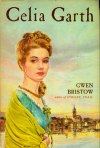
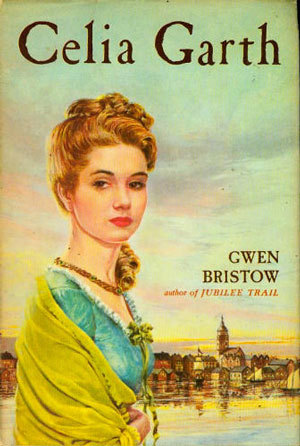
celia-garthCelia Garth: A Story of Charleston in the Revolution / Gwen Bristow

This young adult tale of Celia Garth, a 20 year old woman trying to make a living as a seamstress in Charleston, South Carolina during the Revolutionary war. Celia and her friends survive the seige of Charleston by the British, living through the constant shelling and lack of food until the final surrender. At first, things seem normal after the surrender and Celia begins to build a new life, but tragedy strikes after the British go back on their promises and Celia must start life afresh. This time, while working as a seamstress she is also a bit of a “spy” for the colonials.

Galilee / Clive Barker

galileeClive Barker has earned a reputation as the thinking person’s horror writer. His novels mix fantasy, psychology, and sheer creepiness in almost equal quantities. In Galilee, Barker soft-pedals the ghoulish in favor of the gothic. His novel (or as the author would have it, “romance”) tells the tale of two warring families caught up in a disastrous web of corruption, illicit sexuality, and star-crossed love, with a soupçon of the supernatural thrown in as well. On one side are the wealthy Gearys–a fictional stand-in for the Kennedys–and on the other are the Barbarossas, a mysterious black clan that has been around since the time (quite literally) of Adam.

Galilee chronicles the twisted course of this centuries-old family feud, which centers around the magical Barbarossa matriarch Cesaria and her son Galilee. Indeed, it’s the latter figure–one part Heathcliff to one part Christ–whose relationship with the Geary women sets a match to the entire powder keg of hostility and resentment. Mixing standard clichés of romance and some deep-fried Southern gothic, Baker created an intelligent and shameless potboiler.

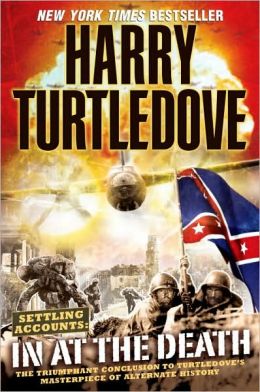
Settling Accounts: In at the Death/ Harry Turtledove

settling accountsThis is the last novel of the Settling Accounts tetralogy that presents an alternative history of WWII. It brings to a conclusion the multi-series compilation that is sometimes referred to as Timeline-191. This alternative history began with the Confederate States of America winning the Civil War in 1862, followed by a war between the United States and Confederate States of America in the 1880s which is also won by the South. In the conclusion, the United State detonates an atomic bomb in Charleston, wiping the city off the map, in retaliation for starting the War Between the States in 1861.

Forbidden / Rebel Sinclair
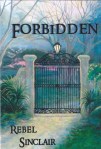
forbidden coverFull disclosure … this novel was written by my wife.  So … I admit a major amount of bias. Still, it’s a page-turner.

After witnessing a murder plot in Regency London, Lady Madeline Winchester flees to Charleston, South Carolina and the protection of Magistrate Exchange Agent, Nicholas Gales. Afraid and alone but for her starchy lady’s maid, Madeline is drawn to her dark, moody guardian and his plantation home of Myrtle Downs just as she is repelled by his society of prejudice and slavery.

In a world where breeding and birthright mean everything, there is no possibility of a future with a man like him – especially since Madeline is betrothed to a duke in her homeland. Drawn together by passion, yet torn apart by social differences and dreams of the past, Nicholas and Madeline have only each other to shield them from a darkness that has been orchestrating their lives in this perilous 19th century tale of intrigue and betrayal.

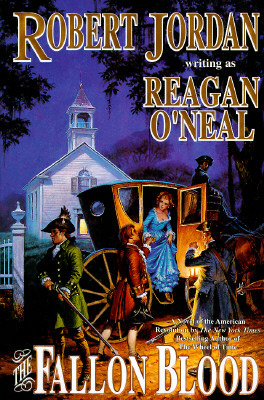
The Fallon Saga / Reagan O’Neal (Robert Jordan)

Great historical fiction on the same level with North & South. Written by Charlestonian James Rigney, Jr, more popularly known as Robert Jordan, author of the massively successful fantasy series, The Wheel of Time. Jordan died in Sept. 2007. Sharp-eyed tour guides often got a glimpse offallon him walking Tradd Street.

In The Fallon Blood, escaping brutal English overlords, 1760s Irishman Michael Fallon becomes an indentured servant to Charleston merchant Thomas Carver, where his infatuation with Carver’s sensual daughter Elizabeth causes life-changing complications. In The Fallon Pride, Michael Fallon’s son Robert Fallon survives years at sea fighting Barbary pirates and enduring the siege at Tripoli. He then returns to America with an Irish wife, Moira McConnell, and goes into business in Charleston where he raises a somewhat troublesome family. In The Fallon Legacy, James Fallon, the last scion of the Fallon line, strikes south and west, adventuring in New Orleans, Missouri, and finally Texas (then still part of Mexico). He loves and loses women, ranches and breeds horses, and becomes entangled in the schemes of shady men and women. Enemies made by Michael and Robert during their lifetimes converge upon James, who must find out if he has strength enough to stand against them.

WHAT TO AVOID

South of Broad / Pat Conroy. The worst book Conroy has written (so far!)! Avoid like a syphilitic whore.

Rhett Butler’s People by Donald McCaig. This is AWFUL!! One of the worst novels I’ve ever tried to read. Silly and poorly written. The narration is fuzzy and the story is well … silly. Why can’t they leave Gone With The Wind alone? First there was Scarlett by Alexandria Ripley which was a snore-fest and now this “Authorized Novel”. Rhett Butler should challenge the Margaret Mitchell estate to a duel for this insult!

All of the ‘island” books by Dorothea Benton Frank. You know … those books that have the fill-in-the-blank plot lines; the major change in each book is the characters’ names and the sea island she uses as the setting. Frank is the female James Patterson – books written for the barely literate.

All of Mary Alice Monroe’s Oprah-fied low country-based, let’s-save-the-turtles fiction.

William Gilmore Simms – praised in his time (1800s) by none other than Edgar Allan Poe, Simms is virtually unreadable today.


BEST SERIES of Crime Novels

In no certain order …

1. “Travis McGee” by John D. MacDonald. 21 books all with a color in the title (The Deep Blue Good-bye; Darker Than Amber; The Green Ripper, etc …)darker than amber

Travis McGee, works as a “salvage consultant” in Ft. Lauderdale and has all the best qualities of Magnum, Rockford, Bond, and Robin Hood, with the addition of yen philosophizing and rueful self-awareness. Must be read in consecutive order.

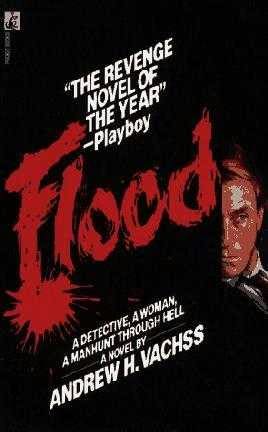
2. “Burke” by Andrew Vachss. 18 books.

floodVachss (rhymes with “tax”) is a lawyer who only represents children and youths and writes the darkest, most unrelenting series of books about crime and revenge. Main character Burke is one of the “children of the secret” – abused children who were victimized without ever experiencing justice, much less love and protection. To say the least, the adult Burke is a deeply conflicted character. Must be read in order.

3. “Sherlock Holmes” by Sir Arthur Conan Doyle. 4 novels and 5 collections of short stories.

What can you say? The all-time greatest, most famous detective in the world and his constant companion, Dr. Watson. No matter how edgy and steampunkish Hollywood makes the movies, these are still some of the greatest crime stories every written. 

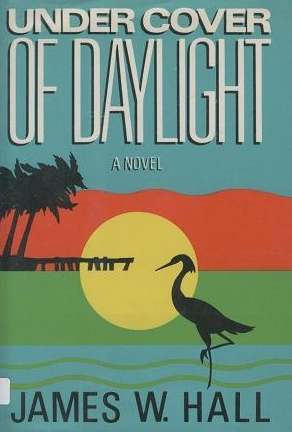
4. “Thorn” by James P. Hall. 14 books.

Thorn lives in the Florida Keys and makes his living tying lures for fly fishing. He also helps people out of sticky situations on occasion.  There’s quite a bit of Travis McGee in UnderCoverOfDaylight.Thorn, and a little bit of Burke also. You don’t have to read these books in order, but I highly recommend reading the first one (Under Cover of Daylight) so you will understand why Thorn is the way he is.

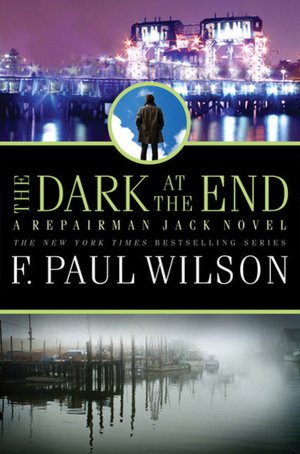
darkattheend5. “Repairman Jack” by F. Paul Wilson. 22 books.

Andrew Vachss calls Repairman Jack “righteous!” An apt description. Jack is a loner who lives off the public grid (no SSN, no official identity) and makes his living “fixing” extreme situations. Some may argue that since Jack’s adventures feature touches of the paranormal and science-fiction, horror and fantasy, this should not be listed in a “Crime Novel” series. I disagree, just for sheer enjoyment and the crime-ridden, violent world that Jack lives in.  Must be read in order.

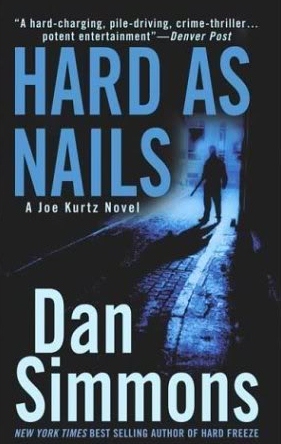
6. “Joe Kurtz” by Dan Simmons. 3 books  

hardasnailsHard Case, Hard Freeze, Hard As Nails are hard-boiled crime noir at its best. Simmons is one of my all-time favorite writers. In addition to these great novels, he has also written my two favorite horror novels (Carrion Comfort and Children of the Night), a sci-fi classic (Hyperion) and a great Hemingway historical novel (The Crook Factory). It helps to read them in order.

7. “Parker” by Richard Stark (Donald E. Westlake). 24 books.

parker-novel-donald-e-westlake-paperback-cover-artParker may be the meanest, nastiest character on this list. Very few redeeming qualities. These books are almost nihilistic. Highly recommend you read these in order – some of the books began the second after the previous book ends.

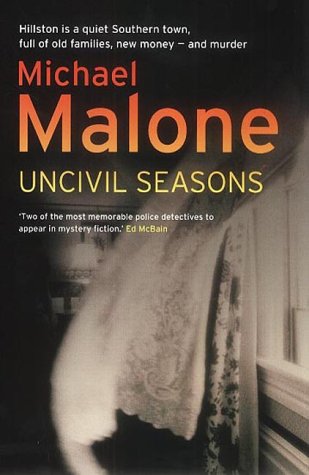
8. “Justin & Cuddy” by Michael Malone. 3 books 

uncivil seasonsUncivil Seasons, Time’s Witness, First Lady. Great literate mysteries set in small town North Carolina. Uncivil Seasons is one of the best mysteries I’ve ever read. Period.  Read in order.

9. “Lew Archer” by Ross MacDonald. 18 books.

lew archerWilliam Goldman calls these the “the finest series of detective novels ever written by an American.” MacDonald is the primary heir to Dashiell Hammett and Raymond Chandler but his writing built on the pithy style of his predecessors by adding psychological depth and insights into the motivations of his characters. Archer often unearthed the family secrets of his clients and of the criminals who victimized them. Lost or wayward sons and daughters were a theme common to many of the novels. Macdonald was one of the first to deftly combine the two sides of the mystery genre, the “whodunit” and the psychological thriller. Jonathon Kellerman is the modern heir of MacDonald’s noir. 

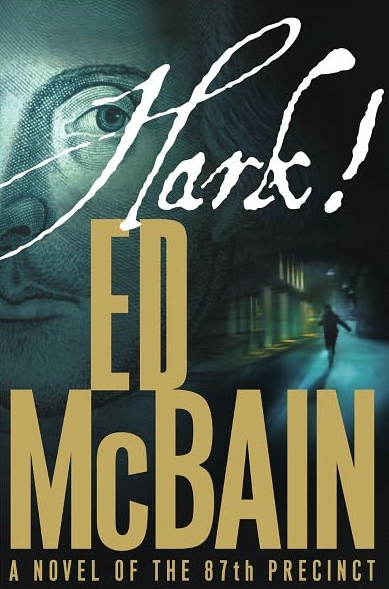
10. “87th Precinct” by Ed McBain. 56 books.

87th precinctABSOLUTELY THE BEST! It is impossible to rate this series too high. It is the most consistently entertaining police procedural novels written about day-to-day cops, the inspiration for “Hill Street Blues” and all the other more realistic, gritty cops show that followed through the 1980s, 90s and beyond. Steve Carella, Meyer Meyer, Bert Kling, Ollie Weeks, Cotton Hawes, and Andy Parker are just  a few of the memorable characters we have  come to know and love who work out of the 8-7. And of course, the Blind Man, one of the greatest, coolest criminals to grace crime pages. McBain died in 2005 so alas, there will be no more 8-7 books.

11. “Harry Bosch” (20+ books) and “The Lincoln Lawyer” series (5 books) by Michael Connelly.

brass-verdict_lConnelly is perhaps the best crime fiction writer of the last decade. Harry Bosch is an LA police detective. The books, dark and often violent, explore Bosch’s psyche as he investigate murders and crime in L.A. Harry’s illegitimate half-brother Michael Haller is called the “Lincoln lawyer,” since he is an unconventional defense lawyer who works out of the back seat of a Lincoln automobile. The “Lincoln” books are endlessly entertaining. 

12. “Inspector Lynley” by Elizabeth George. 21 books


lynleyBrilliant!
 Detective Inspector Thomas “Tommy” Lynley, 8th Earl of Asherton and Detective Sergeant Barbara Havers are with New Scotland Yard. The dynamic between the accomplished and aristocratic Lynley and the street smart, foul-mouthed, uncouth Havers is only the first brilliant part of these books. Their cases are psychological compelling, filled with comic characters (Havers in particular) and range across the whole of Great Britain. 

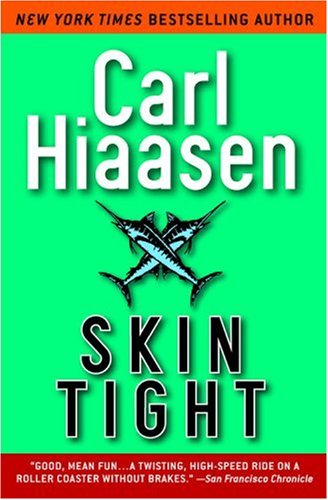
13.  “Crazy Florida” by Carl Hiassen. 15 novels. 

The most fun set of books on this list … by far! While strictly not a series, all of the Hiassen’s ‘crazy Florida” novels can all be lumped together. There are about a dozen skin tightrecurring characters (not in all the books) and enough thematic similarities that connect the novels. Tourist Season, Double Whammy, Skin Tight, Stormy Weather, Skinny Dip, etc .. are all comic caper masterpieces.  Embrace the insanity!   

14.  “Kenzie and Gennaro” by Dennis Lehane. 6 books.

 lehaneTwo private investigators in Boston, Patrick Kenzie and Angela Gennaro, who take cases that are gruesome, sad, and plain horrifying. Gritty, dark and confronting challenging moral questions, this is a compelling series, by a writer more famous for his stand alone novels, Mystic River  and Shutter Island.

15. “William Monk” by Anne Perry, 21 books

execution dockQuite possible the best crime fiction of the last 20 years. At the beginning of the series Monk is a London police inspector in the 1850s. The first book in the series opens with Monk injured in a carriage accident with a spotty memory of himself and his life. Over the next several novels, not only does Monk investigate crimes, he is also investigating himself, trying to understand what kind of person he is (was) and learning he does not want to be that person.

After the accident he met Hester Latterly, a Crimean War nurse and they became close. Only Latterly knew about Monk’s memory issues. In the second book, A Dangerous Mourning, Monk was fired from the police force for insubordination and became a private investigator. Lady Callandra Daviott (Hester’s best friend) financed his private investigations. Sir Oliver Rathbone was his love rival (he too wanted to marry Hester) and judicial adviser in his case.

In “Dark Assassin,” Monk joined the Thames River Police to pay a debt to a friend who died on a previous case. Although he finds the shift from street policing to river policing difficult, he earns the respect of his men and continues on in this position.

16. “Spenser” by Robert B. Parker. 35 books.

promised landI almost didn’t include Spenser here, but I had to. This is an infuriating series … the first 14 books are as good as PI fiction gets … and the rest are hit-and-miss. Hawk is one of the great characters in crime fiction. But then you also have Susan Silverman – Spenser’s main squeeze. The more important Susan Silverman becomes to the story the more annoying the book is. I keep hoping Susan gets killed and we get back the old, tougher Spenser, not the Oprah-fied Spenser we currently have. During the latter books Hawk became nothing more than a walk-on one-note character; it’s as if Parker was scared to explore the darker dynamics of Hawk and his world.  


South Carolina’s MOST EMBARRASSING POLITICIANS (A Partial List – due to length requirements )

PRESTON BROOKS was a member of the South Carolina State house of representatives in 1844. Brooks was elected to Congress in 1853 as a Democrat. On May 22, 1856, Brooks beat Senator Charles Sumner with his Gutta-percha wood walking cane in the Senate chamber because of a speech Sumner had made three days earlier, criticizing President Franklin Pierce and Southerners who sympathized with the pro-slavery violence in Kansas. In particular, Sumner lambasted Brooks’ kinsman, Senator Andrew Butler.

At first intending to challenge Sumner to a duel Brooks consulted with fellow South Carolina Rep. Laurence Keitt on dueling etiquette. Keitt instructed him that dueling was for gentlemen of equal social standing, and suggested that due to his coarse language in public, Sumner occupied a lower social status lower than a drunkard. Keitt argued that a duel was too good for Sumner.

Two days after the speech, on the afternoon of May 22, Brooks confronted Sumner as he sat writing at his desk in the almost empty Senate chamber. Brooks was accompanied by Keitt and Henry A. Edmunston of Virginia.

Brooks said, “Mr. Sumner, I have read your speech twice over carefully. It is a libel on South Carolina, and Mr. Butler, who is a relative of mine.”

As Sumner began to stand up, Brooks began beating Sumner on the head with his thick cane with a gold head. Sumner was trapped under the heavy desk (which was bolted to the floor), but Brooks continued to bash Sumner until he ripped the desk from the floor. By this time, Sumner was blinded by his own blood, and he staggered up the aisle and collapsed, lapsing into unconsciousness. Brooks continued to beat Sumner until he broke his cane, then quietly left the chamber. Several other senators attempted to help Sumner, but were blocked by Keitt who was holding a pistol and shouting “Let them be!” (Keitt would be censured for his actions.)

South Carolinians sent Brooks dozens of brand new canes, with one bearing the phrase, “Hit him again.” The Richmond Enquirer crowed: “We consider the act good in conception, better in execution, and best of all in consequences. These vulgar abolitionists in the Senate must be lashed into submission.”

Brooks survived an expulsion vote in the House but resigned his seat, claiming both that he “meant no disrespect to the Senate of the United States” by attacking Sumner and that he did not intend to kill him, for he would have used a different weapon if he had. His constituents thought of him as a hero and returned him to Congress.

However, Brooks’s attack on Sumner was regarded in the north as the act of a cowardly barbarian. One of the bitterest critics of the attack was Sumner’s fellow New Englander, Congressman Anson Burlingame. When Burlingame denounced Brooks as a coward on the floor of the House, Brooks challenged him to a duel, and Burlingame accepted the challenge. Burlingame, as the challenged party, specified rifles as the weapons, and to get around American anti-dueling laws he named the Navy Yard on the Canadian side of Niagara Falls as the site. Brooks backed out of the challenge, claiming that he would be murdered on his way north. Burlingame’s reputation as a deer hunter and a deadly shot with a rifle could also have been a factor. Brooks remained in office until his death in 1857. He is buried in Edgefield, SC.


JOHN (Honest John) JAMES PATTERSON was a businessman and U.S. Senator from SC. Born in Pennsylvania Honest John was perhaps the most successful swindler during Reconstruction. In fact, when there was a suggestion that the Republican Party should reform he replied, “Why, there are five more years of good stealing in South Carolina!” His greatest swindle was the manipulation of the Columbia, Greenville and Blue Ridge Railroads. The state spent $6 million and received nothing in return. Some estimates claim that Patterson absconded with more than a third of the money for the railroad venture.

Honest John was elected to the U.S. Senate in 1872. During that time, U.S Senators were selected by the state legislature. Patterson claimed the election cost him $40,000 in bribes to each state Legislator – bribed by the state’s own money which Honest John had stolen from the railroad swindle.


BENJAMIN TILLMAN (Pitchfork Ben) served as SC governor from 1890 to 1894, and as a U.S. Senator from 1895 until his death as a Democrat. Tillman also was a founder of Clemson University and served as one of its earliest trustees.

As a young man he was involved in the execution of a black state senator, Simon Coker. Two of Tillman’s men executed Coker with a shot to the head. Tillman ordered that a second shot was needed just in case he was playing possum.” Tillman believed that the payment for the death of one white man should be the death of seven blacks.Tillman began to attract statewide attention through his diatribes against blacks, bankers and aristocrats who he claimed were running and ruining the state. Tillman believed that farmers were “butchering the land by renting to ignorant lazy Negroes.”

He was present at the Hamburg Massacre (near current day Aiken, SC) in July 1876, during which an African-American federal militia was overthrown and its arms seized. After their surrender 6 members of the militia were killed in cold blood by a group of armed white citizens led by Tillman’s fellow “Red Shirts.”

As governor Tillman was largely responsible for calling the State constitutional convention in 1895 that disenfranchised most of South Carolina’s black men and instituted Jim Crow laws. As Tillman proudly proclaimed in 1900:

“We have done our level best [to prevent blacks from voting]…we have scratched our heads to find out how we could eliminate the last one of them. We stuffed ballot boxes. We shot them. We are not ashamed of it. We do not intend to submit to Negro domination and all the Yankees from Cape Cod to hell can make us submit to it.”

He was elected to the U.S. Senate in 1894, and was re-elected in 1900, 1906, and 1912. He served from 1895 to his death in 1918. A hotheaded and intemperate debater, Tillman became known as “Pitchfork Ben” after a speech he made on the Senate floor in 1896. In this speech, Tillman made several references to pitchforks and threatened to go to the White House and “poke old Grover [Cleveland] with a pitchfork” to prod him into action.

During his Senate career, he was censured by the Senate in 1902 after assaulting his counterpart SC Senator John L. McLaurin. As a result, the Senate added to its rules the provision that “No senator in debate shall, directly or indirectly, by any form of words impute to another Senator or to other Senators any conduct or motive unworthy or unbecoming a Senator.”He was also barred from the White House.

Reacting to news that Booker T. Washington had dined at the White House with President Theodore Roosevelt and his family, Tillman predicted, “The action of President Roosevelt in entertaining that nigger will necessitate our killing a thousand niggers in the South before they will learn their place again.”


COLEMAN BLEASE was elected SC governor (1910) and U.S. Senator (1924) favored complete white supremacy in all matters. He encouraged the practice of lynching, was steadfastly against the education of blacks, and he even derided one of his opponents for being a trustee of a black school. Blease once buried the severed finger of a lynched black man in the South Carolina gubernatorial garden.

In 1903, he praised Lt. Gov. Jim Tillman for the murder N.G. Gonzoles, editor of The State newspaper, who wrote editorials against Blease and Tillman.  Blease often advocated imprisonment for reporters or editors who published candidates’ speeches.

In addition, Blease failed to enforce laws and even encouraged breaking the law. His black chauffeur was fined twice for speeding and both times Blease pardoned him. Blease enjoyed the use of the pardon and he stated that he wanted to pardon at least one thousand men before he exited office because he wanted “to give the poor devils a chance.” He far exceeded his goal and it is estimated that he pardoned between 1,500 to 1,700 prisoners, some of whom were guilty of murder and other heinous crimes. Blease received payments to pardon criminals.

Blease had one positive opinion – he was for the drinking of beer. He stated:

“I also, in this connection, beg leave to call your attention to the evil of the habitual drinking of Coca-Cola, Pepsi-Cola and such like mixtures, as I fully believe they are injurious. It would be better for our people if they had nice, respectable places where they could go and buy a good, pure glass of cold beer, than to drink such concoctions.”


JOHN JENRETTE (Congressman 1975-80) is most famous for two actions during his days as a Congressman. First, he had sex with his then-wife, Rita Jenrette, behind a pillar on the steps of the Capitol Building during a break in a late night session of Congress. The comedy group “Capital Steps” takes their name from this escapade. Second, he was charged with and convicted for accepting a $50,000 bribe in the FBI Abscam sting operation conducted by the FBI in 1980. Jenrette was sentenced to two years in prison, of which he served 13 months. He had not been videotaped taking bribes, as some of his colleagues had, but he was recorded saying he’d been given cash by an associate.

In January 1981, Jenrette’s second wife, Rita, said she was seeking a divorce. Rita found $25,000 in $100 bills (much of it FBI bribe money) in her husband’s brown suede shoes. Rita didn’t help relations with the constituents back home when she once called them “cornballs.”

Rita is probably best known for (1) telling us that she and John had sex on the steps of the U.S. Capitol (and that became a hot stop on the Washington Sex Scandals tour for out-of-towners; and (2) posing nude in Playboy. She also wrote that she found him on Capitol Hill “drunk, undressed and lying on the floor in the arms of a woman who I knew was old enough to be his mother.”

In 1989 John Jenrette was convicted of shoplifting a necktie from a department store in Bailey’s Crossroads, VA. and was sentenced to 30 days.

AMERICAN ELSEWHERE: A Review

An mess of epic Lovecraftian proportions. This will be the last time I will read this author.

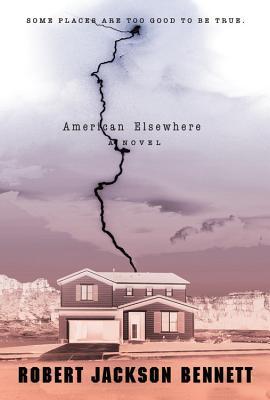
american elsewhereI read Bennett’s “Mr. Shivers” due to all the rave reviews it got, and found that book flat and very mediocre. However, due to consistent rave reviews of his other books I decided to give him another shot. Never again.

First thing: There need to be warning labels on Kindle novels that announce: WARNING, THIS BOOK IS WRITTEN IN PRESENT TENSE IN AN ATTEMPT TO BE EDGY AND COOL. I guarantee, 90% of people who read a book in the present tense translate all the passages into past tense as they read, so … what is the purpose?

Second: This novel is waaaaaaay too long, with characters that chaotically bounce in and out of the story. The story ended but my Kindle kept telling my I was only 90% finished. Lots of wasted prose at the end.

Third: Plot is convoluted (I am being kind), silly and ultimately dumb. Obviously Bennett was going for a Lovecraftian tale here, so he could check that particular genre of horror off his resume. I have no idea where he will go next, but it doesn’t matter, since I will not be reading it.

2 palmettos

ESSENTIAL TIME TRAVEL NOVELS

Yesterday, over beer and burgers, I got in a discussion with Savannah-based author James Caskey about our favorite time travel stories which prompted me to put together a list of essential novels in the genre.  Any of these would be great beach reading. So, forgo the weekly James Patterson published novel and go with one of these classics instead. Listed in alphabetical order


THE ANUBIS GATES by Tim Powers (1985)

anubis-gates-time-powers-gollanczQuite brilliant. The colonization of Egypt by western European powers is the launch point for power plays and machinations. Steeping together in this time-warp stew are such characters as an unassuming Coleridge scholar, ancient gods, wizards, the Knights Templar, werewolves, and other quasi-mortals, all wrapped in the organizing fabric of Egyptian mythology. The reluctant heroes fight for survival against an evil that lurks beneath the surface of their everyday lives.

BRING THE JUBILEE by Ward Moore (1953) 

jubileeThis is one of the first (and the best) of the alternative history novels that ask: What if the South won the Civil War? Politically complex, astute and endlessly fascinating. The point of divergence occurs when the Confederate States of America wins the Battle of Gettysburg and subsequently declares victory in the “War of Southern Independence” on July 4, 1864 after the surrender of the United States of America. The novel takes place in the impoverished United States in the mid-20th century as war looms between the Confederacy and its rival, the German Union. History takes an unexpected turn when the protagonist Hodge Backmaker, a historian, decides to travel back in time and witness the moment when the South won the war.

A CONNECTICUT YANKEE IN KING ARTHUR’S COURT by Mark Twain (1889)

connecticut yankeeThis story is both a whimsical fantasy and a social satire chock-full of brilliant Twainisms. Hank Morgan, a 19th century American-a Connecticut Yankee-by a stroke of fate is sent back into time to 6th century England and ends up in Camelot and King Arthur’s Court. Although of average intelligence, he finds himself with knowledge beyond any ofthose in the 6th century and uses it to become the king’s right hand man, and to challenge Merlin as the court magician. Astounded at the way of life in Camelot, Hank does the only thing he can think of to do: change them. In his attempt to civilize medieval Camelot he experiences many challenges and misadventures.

THE DANCERS AT THE END OF TIME by Michael Moorcock (1974 onward)

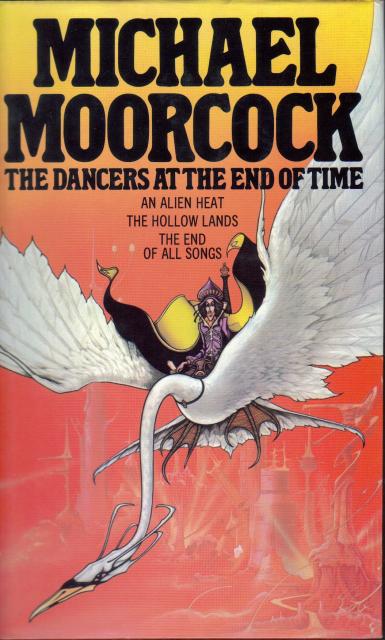
Dancers_at_the_end_of_timeEnter a decaying far, far future society, a time when anything and everything is possible, where words like ‘conscience’ and ‘morality’ are meaningless, and where heartfelt love blossoms mysteriously between Mrs Amelia Underwood, an unwilling time traveller, and Jherek Carnelian, a bemused denizen of the End of Time. The Dancers at the End of Time is a brilliant homage to the 1890s. The series include the following novels: An Alien Heat, The Hollow Lands and The End of All Songs.

GLIMPSES by Lewis Shiner (1993)

glimpsesThe first rock n roll time-travel novel! In the song “American Pie” Don McLean asked the question: “Can music save your mortal soul?” Glimpses answers that question with a resounding “YES!” Ray Chackleford is an unstable, self-employed electronics repairman whose marriage is foundering and whose father has recently died. These unresolved relationships are complicated when Ray travels to the Mexican site of his father’s death and promptly falls in love with a woman even more unstable than he. In the midst of this emotional turmoil, Ray–a rock drummer during his youth in the late Sixties–begins to hear music in his head and manages to transfer to tape legendary unfinished recordings by Jim Morrison, Brian Wilson, and Jimi Hendrix. This music is accompanied by “journeys” into the troubled lives of these rock musicians. Shiner’s appealing main character and his gripping style overcome the less believable aspects of his story. If you love classic rock and roll, this is a must read!

THE GODS THEMSELVES by Issac Asimov (1972)

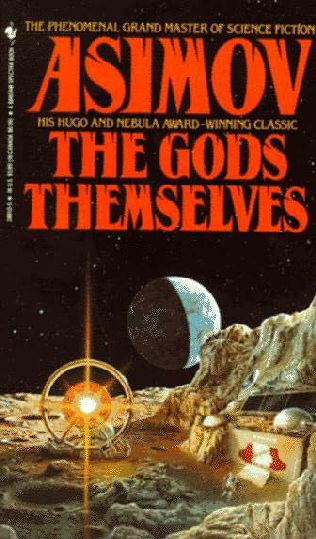
In the year 2100, mankind on Earth, settlers in a lunar colony and gods themselvesaliens from the para-universe, a strange universe parallel in time to our own, are faced with a race against time to prevent total destruction of the Earth. The invention of the Inter-Universe Electron Pump has threatened the rate of hydrogen fusion in the sun, leading, inevitably, to the possibility of a vast explosion — and the vapourization of the Earth exactly eight minutes later . . . Asimov, is always, accurate and brilliant. The science is plausible.

THE LIGHT OF OTHER DAYS by Arthur C. Clark & Stephen Baxter (2000)

light of other daysTwo titans of hard SF–multiple award-winning British authors Clarke (Rendezvous with Rama) and Baxter (The Time Ships)–team up for a story of grand scientific and philosophical scope. Ruthless Hiram Patterson, the self-styled “Bill Gates of the twenty-first century,” brings about a communication revolution by using quantum wormholes to link distant points around Earth. Not content with his monopoly on the telecommunications industry, Patterson convinces his estranged son, David, a brilliant young physicist, to work for him. While humanity absorbs the depressing news that an enormous asteroid will hit Earth in 500 years, David develops the WormCam, which allows remote viewers to spy on anyone, anytime. The government steps in to direct WormCam use–but before long, privacy becomes a distant memory. Then David and his half-brother, Bobby, discover a way to use the WormCam to view the past, and the search for truth leads to disillusionment as well as knowledge. Only by growing beyond the mores of the present can humanity hope to survive and to deal with the threats of the future, including that asteroid. The exciting extrapolation flows with only a few missteps, and the large-scale implications addressed are impressive indeed.

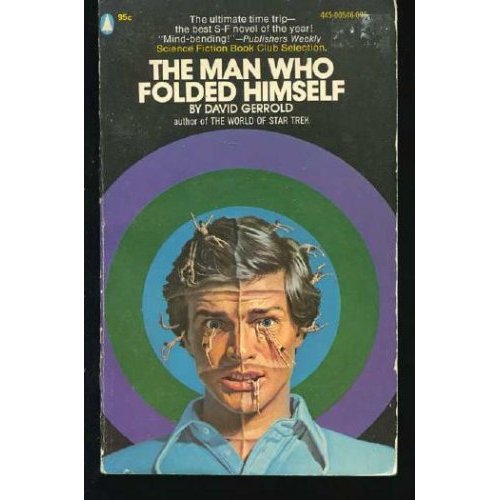
THE MAN WHO FOLDED HIMSELF by David Gerrold (1973)

folded himselfDaniel Eakins inherits a time machine and soon realizes that he has enormous power to shape the course of history. He can foil terrorists, prevent assassinations, or just make some fast money at the racetrack. And if he doesn’t like the results of the change, he can simply go back in time and talk himself out of making it! But Dan soon finds that there are limits to his powers and forces beyond his control. A wild ride!

PASTWATCH: THE REDEMPTION OF CHRISTOPHER COLUMBUS by Orson Scott Card (1996)

pastwatchTagiri and Hassan are members of Pastwatch, an academic organization that uses machines to see into the past and record it. Their project focuses on slavery and its dreadful effects, and gradually evolves into a study of Christopher Columbus. They eventually marry and their daughter Diko joins them in their quest to discover what drove Columbus west. Columbus, with whom readers become acquainted through both images in the Pastwatch machines and personal narrative, is portrayed as a religious man with both strengths and weaknesses, a charismatic leader who sometimes rose above but often fell beneath the mores of his times. An entertaining and thoughtful history lesson.

REPLAY by Ken Grimwood (1986)

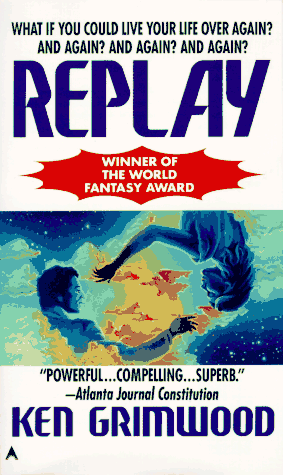
replayWhat if you could live your life over and over, and over again? Jeff Winston, a failing 43-year-old radio journalist, dies and wakes up in his 18-year-old body in 1963 with his memories of the next 25 years intact. He views the future from the perspective of naive 1963: “null-eyed punks in leather and chains . . . death-beams in orbit around the polluted, choking earth . . . his world sounded like the most nightmarish of science fiction.” Grimwood transcended genre with this carefully observed, literate and original story. Jeff’s knowledge soon becomes as much a curse as a blessing. After recovering from the shock (is the future a dream, or is it real life?), he plays out missed choices. In one life, for example, he falls in love with Pamela, a housewife who died nine minutes after Jeff; they try to warn the world of the disasters it faces, coming in conflict with the government and history. A third replayer turns out to be a serial killer, murdering the same people over and over. Jeff and Pamela are still searching for some missing part of their lives when they notice they are returning closer and closer to the time of their deaths, and realize that the replays and their times together may be coming to an end. A brilliant book. An all-time classic.

SLAUGHTERHOUSE-FIVE by Kurt Vonnegut (1969)


slaughterhouse_five“Listen: Billy Pilgrim has become unstuck in time.”
After he is abducted by aliens from the planet Tralfamadore, Pilgrim’s life unfolds in a display of plot-scrambling virtuosity, concentrating on his shattering experience as an American prisoner of war who witnesses the firebombing of Dresden. Okay, we’ve all read it.  If not … what are you doing reading this blog? ‘Nuff said.

TIME AND AGAIN by Jack Finny (1970)

Time-and-Again-Novel-CoverSimon Morley, an artist with a premium on imagination, is chosen as a possible subject by a group operating on the theory that time is charted by a myriad of details and if surrounded by what appear to be the artifacts and events of an era, they might be able to project themselves into the actual time slot. For weeks Simon is secluded in an apartment in New York’s famous landmark, the Dakota, where he dresses, eats, entertains himself and reads newspapers in tire style of the New York of 1894 and finally he walks out into the Central Park of that January. As Simon wanders and takes photos of the familiar-but-different New York landscape, he becomes involved in the lives of several of his 19th century acquaintances. And there is a mystery that Simon is determined to solve that has to do with a suicide and a cryptic letter that ends “the sending of this should cause the Destruction by Fire of the entire World.” 

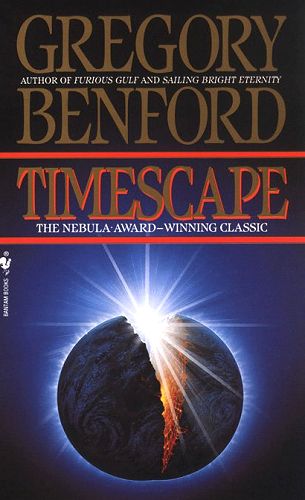
TIMESCAPE by Gregory Benford (1980)

timescapeIt’s 1998 and a physicist in Cambridge, England, attempts to send a message backward in time. Earth is falling apart, and a government faction supports the project in hopes of diverting or avoiding the environmental disasters beginning to tear at the edges of civilization. It’s 1962, and a physicist in California struggles with his new life on the West Coast, office politics, and the irregularities of data that plague his experiments. Then he receives an unusual message … 

TO SAY NOTHING OF THE DOG by Connie Willis (1997)

To_Say_Nothing_of_the_DogIn 2057, Ned Henry, an Oxford expert in the 20th century, jumps back and forth from the 1940s to correct a loose screw in the works of the time continuum. A tongue-in-cheek raspberry to Victorian novels, the story unfolds with such madcap screwball intensity it makes the pages burn your fingers as you read. This a fun ride!

UP THE LINE by Robert Silverberg (1969) up the line

Being a Time Courier was one of the best jobs Judson Daniel Elliott III ever had. It was tricky, though, taking group after group of tourists back to the same historic event without meeting yourself coming or going. Trickier still was avoiding the temptation to become intimately involved with the past and interfere with events to come. The deterrents for any such actions were frighteningly effective. So Judson Daniel Elliott played by the book. Then he met a lusty Greek in Byzantium who showed him how rules were made to be broken…and set him on a family-history-go-round that would change his past and his future forever! 
CHARLESTON’S GHOSTS – an interview with author James Caskey

Recently I had the opportunity to talk to Savannah author, James Caskey, about his new book, Charleston’s Ghosts: Hauntings in the Holy City (Manta Ray Books, 2014). Caskey is a kindred spirit – tour guide, researcher, storyteller and curious about the historical truth, no matter how many toes and sensibilities get stepped on.   charleson ghostsWe met several years ago when Caskey was the writer and producer of a television program, Phantoms of History.  He kindly asked me and my wife, Rebel Sinclair, to be a part of the show, which illustrated (and de-constructed) some of Charleston’s most famous ghost stories. Since that time, we have managed to find several opportunities to meet and talk (usually over food and spirits.)  


JONES: I understand why you wrote your first book, Haunted Savannah. You are a Savannah tour guide and operate a ghost tour business, so the book was a natural extension of your research for your tours. What inspired you to expand your research to other cities?

CASKEY: I’ve always been a storyteller. When I was younger I was an artist—I actually went to art school, and even in that creative medium, my paintings had a strong linear narrative. My art told historical stories, even the portraiture. Then in 2001 I got introduced to the world of guided walking tours, and it was just a natural fit for me: I had already been telling ghost stories for years, and it was sort of funny that there was this flash like: Wait, I can get paid for this?

james-720x300

James Caskey

I had been researching ghost stories even before I opened Cobblestone Tours, and what I found surprised me: not only were most of the ghost stories which other guides were telling as accepted truth sometimes wrong, but their history was frequently way off base, as well. The nighttime tour landscape back then was dotted with fictional tales of monsters (presented as fact) that lived in lairs under the cemetery, that sort of thing. I wanted to do better than that. I began writing initially as a way of giving my own employees a study manual for their stories, my version of ‘Cliffs Notes for Ghost Tours.’ I found that I really enjoyed the research aspect, and loved sharing the stories because the true history was so much better than the bogus folklore, most of the time. True life is almost always better than fiction. Well, my little hobby grew from there. I was three years into this process when I realized I was writing a book, a volume which eventually became Haunted Savannah. It published in 2005. This is a very roundabout way of explaining that once the Savannah book was in stores, I really missed that ‘researching and writing’ process. It took me a long time to muster up the courage to tackle another major writing project. Once I decided to do it, though, I really wanted to engage a city with which I was completely unfamiliar. I mean, New Orleans is over eleven hours away by car, one way, and I knew very little about it. It was a big leap. The book is very much about that journey and exploration, and fortunately I get a lot of feedback from readers that they find that level of honesty refreshing. There was definitely a fear of failure, and some moments of confusion, mixed in with the joy of unveiling an exotic and personally unknown place. New Orleans has some great stories.

JONES: Your books are as much history as they are ghost stories. What are the major problems you encounter in this type of research?

CASKEY: Well, you have a certain type of person who prefers the erroneous folklore: some just really want their pre-conceived notions confirmed. However, the documented history I present in my books is unvarnished, and often less tidy than the version you might hear on a ghost tour. It can be an uncomfortable thing, to eviscerate a legend that another person believes as fact. I know from our discussions that you experienced the same exact thing regarding Lavinia Fisher when you wrote Wicked Charlestonthe fictionalized wedding dress, the erroneously high body count, etc. People will really argue for the campfire tale sometimes, even if you can back your assertations up, point by point. I want to present both sides: the legend AND the facts. If people just want a recounting of the bogus folklore, well… those books are already out there. Don’t get me wrong, I love a good story and folklore can be very entertaining, but you’re also going to learn the truth from my books. I don’t research and write to satisfy people’s expectations: my writing is really a process of discovery.

JONES: Why did you choose Charleston as the subject for your third book?

CASKEY: Charleston SC is one of the most tragic and historically violent places in North America. It is haunted by more than just ghosts: secession, slavery, great fires, yellow fever, and a uniquely brutal timeline. There was no question whether or not I was going to write about it, the only question was when.

JONES: Are there major differences in the paranormal history between New Orleans, Savannah and Charleston? If so, what are they?

CASKEY: Honestly, I’m more fascinated by the similarities. Each location once had a huge Native American population, if you go back to before their contact with Spanish and English explorers. There was a horrific genocide in the American South, starting in the mid-1500’s, on a scale which is scarcely conceivable today. The American Indian populations were largely eradicated. All three towns had their formation shortly after that cauldron of disease, war, and death. It’s no wonder so many Southern seaport cities have such haunted reputations!

JONES: What was your favorite Charleston ghost story before you wrote the book? Is it still your favorite?

CASKEY: I probably liked the Old Exchange and Provost Dungeon the most, going in. I still love it, but there are other stories which sparked my interest a little more, like Madame Talvande and the Sword Gates on Legare Street. Charleston has such a wonderfully twisted history, and is a fertile ground for storytellers.

JONES: What was the most surprising story you uncovered during your research about Charleston?

CASKEY: There are more than a few good candidates, but I would have to say that the story that most surprised me was the Tavern on East Bay. It’s just this tiny little liquor store; looking at it from the outside, one would never expect the supercharged ghost story it holds within. I talked to owner Gary Dow for hours, and it was by far the most entertaining day I’ve ever had as a researcher. The real surprise was his attitude toward the supernatural things happening to him on a nearly daily basis: he is fiercely protective of his ghosts. If you think the TV program ‘Ghost Adventures’ is the way to deal with spirits, you know, taunting and aggressive, well, Gary will politely take you to school on that subject. He likes his ghosts, and by every indication, the feeling is mutual.

JONES: What is the most haunted location in Charleston, and why?

CASKEY: I would have to say that block on Queen Street between Meeting and King is the most haunted, if you’re asking about concentration of stories. The Mills House, Poogan’s Porch, and Husk all have stories. Following a hunch, one day I had lunch at 82 Queen in that same block, and I casually asked my server if that spot was haunted. He looked at me like I was crazy and said, “Yes, of course it is.” I do know that area burned in the Great Fire of 1861, so perhaps the high number of hauntings in that area has something to do with that tragic event.

JONES: Any plans to research and write about other cities?

CASKEY: Yes, although I plan on taking a little break, I definitely would like to continue writing. There are a number of cities on my haunted hit-list.

JONES: Other than reading your new book, what are some of the must-do things to do during a visit to Charleston?

CASKEY: Eating and drinking have to be high on the list for anyone visiting Charleston. It’s a city famous for its food and hospitality. During one of my research trips while writing the book, I observed a family checking in to the hotel that had packed coolers full of cheap processed lunchmeat and sodas, and I couldn’t help but think that they were missing a major component of their vacation. It was oddly sad. To me, to not partake of the local cuisine would be like visiting Nashville (Music City) and only listening to ‘bubblegum pop’ the entire time. Other than that, I’d recommend taking a cultural tour of Charleston. Try a carriage or walking tour, and a couple of different house museums or heritage sites. The Old Slave Mart Museum on Chalmers Street is especially worthwhile. Oh, and you simply have to experience sunset at a rooftop bar. The view of the church-steepled skyline is pretty spectacular.


Contact James Caskey at JamesBCaskey.com.   To take a Savannah ghost or pub tour, contact GhostSavannah.com. 

HOW (AND WHY) I BECAME A NARRATIVE-NONFICTION AUTHOR

It was 2004. I was forty-five years old. During most of my 20s and 30s I had written several novels (unpublished and mostly unfinished.) In 2001 I became a city of Charleston tour guide and began to immerse myself in the city’s history, reading almost every book written about Charleston. Some were entertaining, most were factual, and many were often boring. I began to compile my favorite tidbits from all these books and other sources. You know: prominent powerful gentleman gets caught in a compromising circumstance; cross-dressing socialite throws a debutante ball for two chihuahuas; a whorehouse operates out of a service station (from the back seat of a car on a lift) in the middle of the historic district – kind of like an antebellum TMZ.

One day, a fellow tour guide was reading through my computer notes and asked, “How many pages of this stuff do you have?” I looked. It was about 50,000 words. He suggested, “You ought to write a book.”

Bam! Light bulb! It had never dawned on me to write something other than fiction. In less than three months (discounting the three years I spent reading and compiling my notes) I had written a 70,000 word manuscript titled Wicked Charleston. The first publisher I queried, The History Press, bmarks books - wicked cover (hi res)ought it.They requested I turn the manuscript into two volumes, so after another month of work I had two books finished, Wicked Charleston: The Dark Side of the Holy City and Wicked Charleston, Volume 2: Prostitutes, Politics and Prohibition.

My goal with the Wicked books was to write a “good parts” version of Charleston history. I took inspiration from one of my favorite novels of all time by one of the best writers of the past 50 years, William Goldman’s 1973 classic, The Princess ride. Those who are familiar with the novel (as opposed to those only familiar with the equally classic movie based on the novel) know that Goldman’s novel was the “good parts” version of a rather turgid old-fashioned satirical romance written by someone named S. Morgenstern. Of course, none of that was true. It was nothing more than an ingenious literary device created by Goldman.

None thmarks books - doin book covere less, Goldman inspired me to write a “good parts” version of Charleston history, leaving out all the stuff I found boring. Seven years later, both books are still in print and selling steadily. Since then I have managed to write and publish three more works of narrative non-fiction, the most recent was published in September 2013, Doin’ the Charleston: Black Roots of American Popular Music. & the Jenkins Orphanage Legacy.

And now, on to the next project. What is it? Well, I keep threatening to write a book titled How The South Started the War of Northern Aggression. Maybe this time around I just might.