Remember the first time you heard the 1976 LP, Boston? It blew you away. Swirling twin guitars, a sound that mixed Led Zep with Yes and The Beatles, hard rockin’ songs with a melody, high harmonies, soulful singing by Brad Delp, and one mean ass rock and roll organ.
Remember the anticipation as you waited (and waited and waited and waited) for Boston’s second LP? And then, it finally arrived! Don’t Look Back. So you tossed it on your turntable (for those of you under 30, Google it) and you listened to the LP. And about halfway through Side Two you started to get a sour feeling in your belly. The album was good … but was not great. It was … the same, but not better. After two years, this is what you got? So, you listened to it again. For the next few days you walked around thinking: “Oh man, this sucks.”
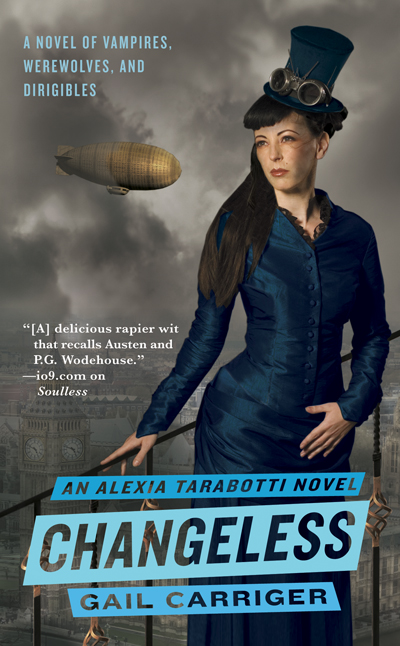
Welcome to CHANGELESS, the literary equivalent of Boston’s Don’t Look Back.
CHANGELESS is the sequel to SOULLESS.(Read theSoullessreview) It was Bram Stoker mixed with the sensibility of Jane Austen set in Charles Dickens’ London. It was a world in which vampires, werewolves and ghosts were accepted in English society. Author Gail Carriger deftly pulled off a screwball comedy of manners.
So what’s wrong with CHANGELESS? Nothing really, except the disarming freshness has worn off. The wackiness of an English woman without a soul who can disarm vampires and werewolves with a thrust of her silver-coated parasol and sitting in council with Queen Victoria discussing the “vampire problem” is no longer new. Carriger has done little to move the story (and her world) into something else. We are stuck in a world that we already know, in a story that seems stale and mundane. Maybe that’s my own fault, since I found Soulless so delightful I am guilty of creating false expectations. I have an sneaking suspicion that two years from now, I will rate this book higher than I do right now.
Like Don’t Look Back, it’s more of the same thing … more than just a mere shadow, but it serves to remind you how brilliant the initial offering is.
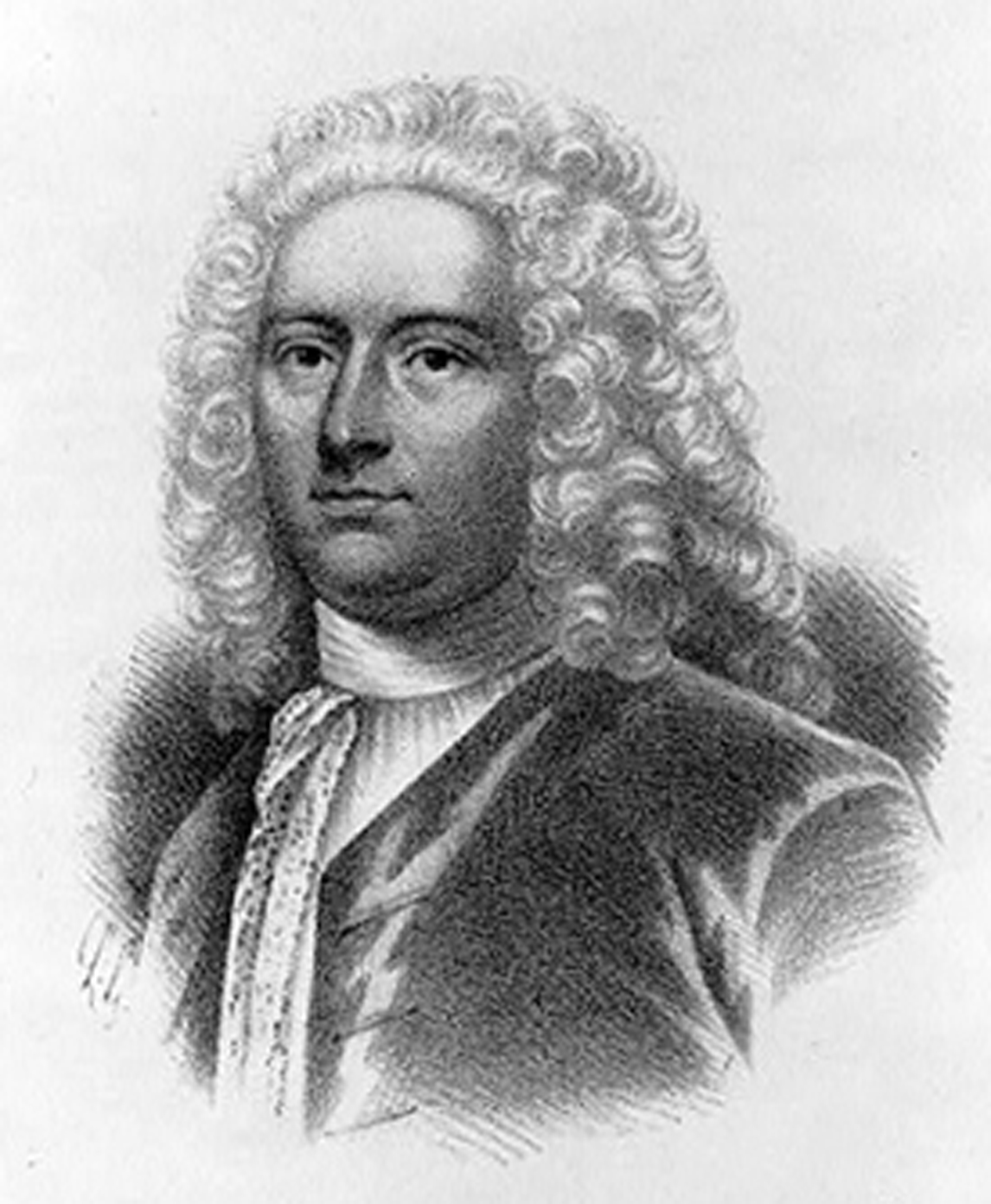
Sir John Yeamans died in Carolina. He was one of original landgraves of the Carolina colonial and became governor. In 1674 Yeamans was removed from office, and at once sailed for Barbados, where he soon afterward died. Robert Weir wrote:
Yeamans epitomized the enterprising Barbadians who played a large part in settling South Carolina. That some, like him, resembled pirates ashore probably both promoted and retarded development of the colony; it certainly contributed to political factionalism endemic during the early years.
1769 – American Revolution – Foundations.
William Henry Drayton was a twenty-seven year old planter who refused to join the Association. Educated in England, Drayton had expensive tastes and his fondness for gambling left him deeply in debt. He was described as “a rather frivolous young lightweight, unable to get his life in order.”
When Drayton discovered there was no market for his plantation goods, he attacked the Association in the Gazette. The publication of his name was “an infringement of individual rights” and “only the legislature could brand a man an enemy of his country.” He contemptuously called Gadsden: “either traitor or madman who looks upon himself as a monarch … the ruler of the people …[who should be] locked in an insane asylum until the change of the moon.”
1776 – American Revolution – Continental Congress.
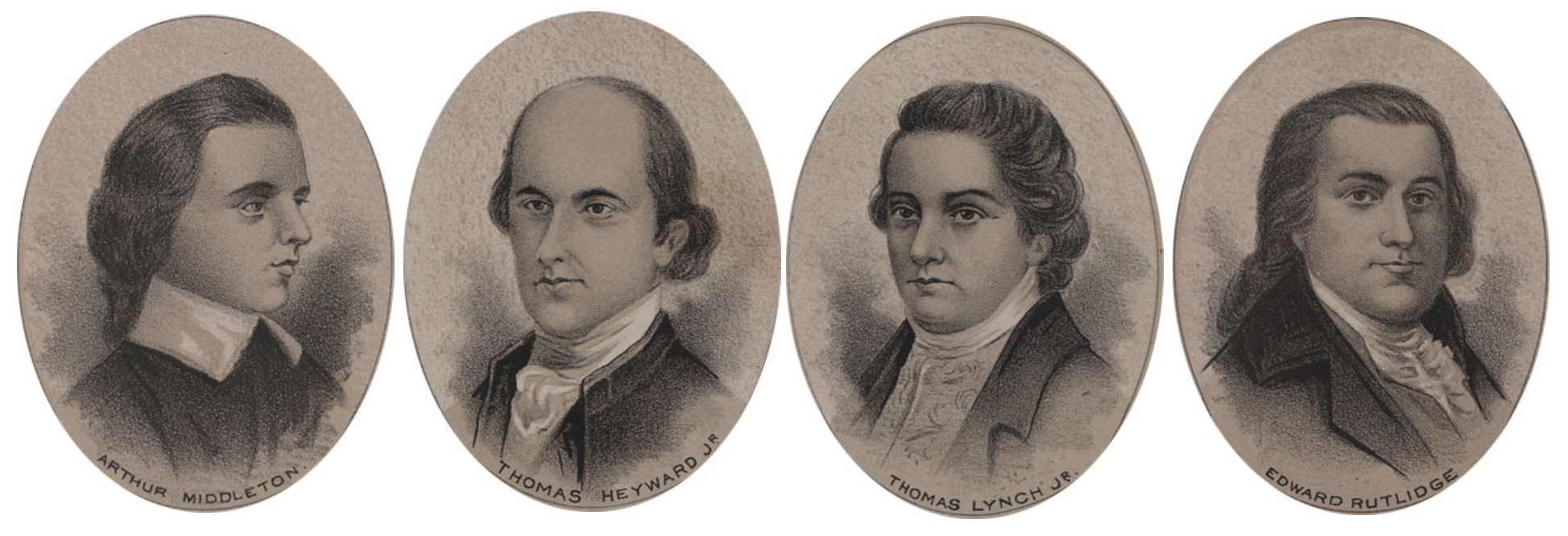
Most of the members of the Continental Congress officially signed the Declaration of Independence on this day. They then turned their attention to creating a union of the thirteen colonies. South Carolina signers were: Edward Rutledge, Arthur Middleton, Thomas Heyward, Jr. and Thomas Lynch, Jr.
South Carolina signers of the Declaration of Independence.
1781 – British Occupation.
A group of citizens meet Lord Rawdon at the Miles Brewton House to plead for Issac Hayne’s life. Col Hayne’s son, William Hayne wrote:
I recollect also going with my brother Issac & sister Sarah in Company of my Aunt Peronneau to Lieut. Col. Balfour … and on our knees presenting a petition to him in favor of my father but without effect.
1807
The trial of Aaron Burr began before a packed house. His daughter,Theodosia Burr Alston, sat in the courtroom next to her Charleston husband, Joseph Alston, during the trial. It was written about her:
There is nothing in human history that is more touching than her devotion during this ordeal. Beautiful, intelligent far beyond the average woman of her time, she was the center of admiration throughout the trial.
1836 – Religion.
Angelina Grimke Weld
Angelina Grimke was moved to speak at a silent prayer at the Orange Street Quaker Meeting in Philadelphia. She was interrupted by Jonathon Edwards, suggesting that she stop speaking. This convinced Angelina that she could no longer live in Philadelphia, since the Quakers were not supportive of her abolitionist views. She wrote, “The incident has proved the means of releasing me from those bonds which almost destroyed my mind.”
She became a full-fledged public abolitionist.
1864 – Bombardment of Charleston.
In the North Channel just outside the Charleston harbor during the morning, Union officers were exchanged for an equal number of Confederate officers.
By the mid-1950s many of the big bands had folded. Jazz music had been brought to its knees by the explosion of rock ‘n roll – Bill Haley, Buddy Holly, Chuck Berry and Elvis. In addition, jazz was going through a radical change. The traditional swing big bands were being usurped by the harder-edged Be Bop and smooth West Coast Cool schools of music.
Duke Ellington had managed to financially keep his band together through the royalties of his popular compositions in the 1920s and 40s. They occasionally played shows at ice-skating rinks. In 1956 Ellington did not even have a recording contract.
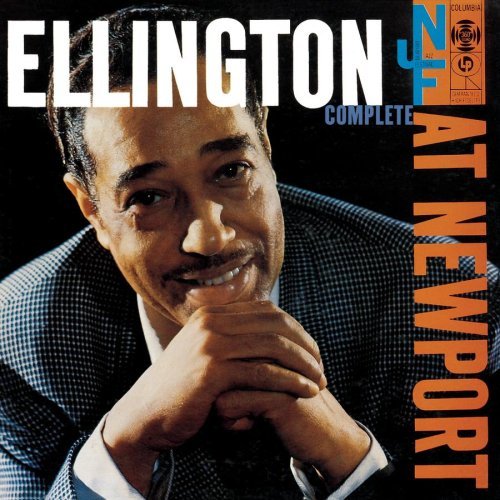
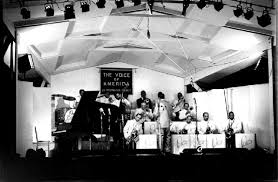
On the night of July 7, 1956 at the Newport Jazz Festival, after a series of thunderstorms had dampened the collective spirits of the Eastern Seaboard patrons, The Duke Ellington Orchestra took the stage. Ellington paid for the performance to be recorded out of his own pocket.
Ellington at Newport 1956 was to become Ellington’s biggest selling recording, although only about 40% of the original recording was actually live. The remainder was recorded in the studio to provide “patches” and filler for the less than perfect live portions.
Ellington Orchestra on the Newport stage
During the concert the Duke announced that they were pulling out “some of our 1938 vintage.” It was a pair of blues, “Diminuendo in Blue” and “Crescendo in Blue.” The two songs were to be joined by an improvised interval played by tenor saxophonist Paul Gonsalves. Ellington had been experimenting and reworking the songs for several years before the Newport performance. The night of the show, Ellington told Gonsalves to “blow as long as you feel like blowing.”
As performed at Newport, the new version kick-started Ellington’s waning career and secured the band financially for the rest of Ellington’s life. Gonsalves played a 27-chorus solo backed only by bassist Jimmy Woode, drummer Sam Woodyard, and Ellington himself punctuating piano chords. Through-out the song there are several audible comments from the band members. The Duke himself is often heard urging the saxophonist, shouting “Come on, Paul — dig in! Dig in!” About five minutes into Gonsalves’ solo, the sedate wine-and-cheese crowd realized they were witnessing a magical moment. They started dancing in the aisles and can be heard cheering and shouting at the band.
The usually sedate wine-and-cheese crowd at Newport dancing to Gonsalves’ solo
When the solo ended Gonsalves collapsed in exhaustion, and the full band returned for the “Crescendo in Blue” portion. The real crescendo of “Crescendo in Blue” however starts at the 13:15 minute mark, as trumpet player Cat Anderson (of Charleston, SC) stands up and begins to play several octaves above the Orchestra for the final minute of the song. In a moment worthy of any classic rock concert, the already excited crowd is brought to the edge of hysteria by Anderson’s screaming trumpet. When the song ends, pandemonium ensues for several moments as the Duke tries to quiet the crowd.
Truly one of the most classic recorded moments in jazz history.
“Diminuendo And Crescendo In Blue”
Remastered 1999 CD: Ellington at Newport (Complete)
Disc one
“The Star Spangled Banner” – 1:10
Father Norman O’Connor Introduces Duke & the Orchestra / Duke Introduces Tune & Anderson, Jackson & Procope – 3:36
Electromagnetic pulses can result from natural phenomena and, in much greater strength, from nuclear blasts. The result of an EMPs is the destruction of unprotected electronic circuitry, about 95% of it in the United States. A nuclear bomb set off at a high altitude would cause electronics over a large swathe of the planet to fail and almost nothing has been done to protect the US from this threat.
This frightening novel depicts what life might be like in the case of an EMP attack. With no electronics -vehicles won’t run; no phones, computers, radios, or televisions; no electricity. America descends into the Middle Ages. In One Second After, a lack of food and medicine leads to mass death. Society crumbles quickly. Cities turn against the countryside; friends and neighbors turn against each other in a desperate struggle to survive. Criminals take advantage.
Forstchen humanizes it by giving a detailed look at how events unfold around the idyllic small town of Montreat College in North Carolina.The weeks pass, and society deteriorates quickly – food runs out, people die due to lack of treatment and medicine, tyrants try to take advantage of the weak and confused, and criminals run rampant.
One Second After is a masterpiece of dystopian literature that ranks with 1984 and Brave New World, but is even more horrific. IT IS A PAGETURNER! You will have restless nights while you are reading this, and several nights after. Particularly when you realize that our government has done nothing to prepare this country for this serious threat.
NOTE: I did not list any James Patterson books since it should be obvious you need to avoid Patterson. If you enjoy Patteron’s books I order to stop reading my blog IMMEDIATELY.
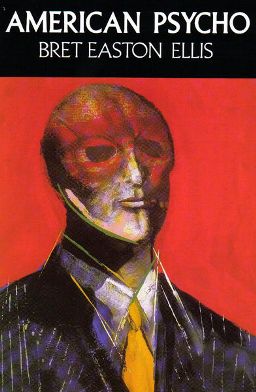
AMERICAN PSYCHO by Brett Easton Ellis
Sick and badly written. A cruel and vicious book. Anyone who is in a relationship with Mr. Ellis needs to re-think their decision. There are not words strong enough to describe how bad this book is.
COLD MOUNTAIN by Charles Fraizer
Quite simply, one of the worst books of the past decade. It is a great example of the group think among today’s university-driven literary community and publishing industry. The book is sophomoric in style, using purple phrases with awkward flourishes that most English 101 instructors will give you a failing grade for using. It is also a great example of a major problem in today’s publishing industry – an author has a wild success with a bad book, so he is given a huge amount of money to produce an even worse book, Thirteen Moons.
FINNEGAN’S WAKE by James Joyce.
It’s a classic, right? Yes, classic shit. The last section of the novel consists of 24,212 words and two sentences. Yes, you read that correctly, two sentences and 24,000 words! Enough said.
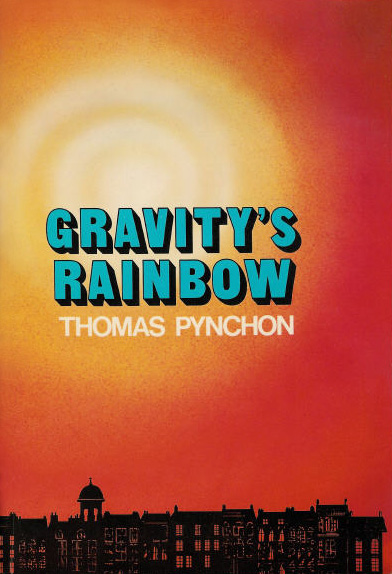
GRAVITY’S RAINBOW by Thomas Pynchon
The 11 members of the Pulitzer Prize committee were on the right track when they described the book as “unreadable, turgid, overwritten and obscene.”
They were actually being nice.
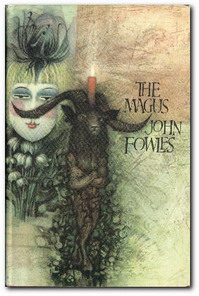
THE MAGUS by John Fowles
Self-important and full of 1960ish mysticism and oblique literary games. AWFUL!
The great actor Peter Sellers was once asked, “If you had a chance to live your life over again, what would you do differently?” Sellers answered, ” I would not read “The Magus.”
Amen, Peter.
SCARLETT: THE SEQUEL TO MARGARET MITCHELL’S GONE WITH THE WIND by Alexandra Ripley
Granted, this was a no-win idea from the get-go. Hell, even the title is ridiculous. But the book turned out to be boring, boring, boring.
And the other “approved” book, Rhett Butler’s People fares no better.
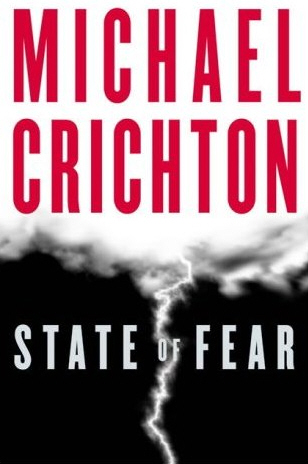
STATE OF FEAR by Michael Crichton
First of all, forget all the political yammering around this novel (by the same folks that think Tom Clancy is a good writer) and the claims for “scientific authenticity.” IT’S BAD AND BORING!
Crichton has never been on anyone’s list of good writers; his prose is clumsy and his characterizations are TV depth (hence all the successful movies and TV shows made from his writings).
THE SHANNARA BOOKS (almost all of them!) by Terry Brooks
Second rate recycled Tolkien. Brooks’ prose is often as unwieldy as a 200 lb sword. . What is frightening is how many have been published. As of this moment there are 20+ Shannara novels. Mr. Brooks … have mercy! Take a vacation!!!!
How bad are these books? Pauly Shore bad! Michael Bolton awful!
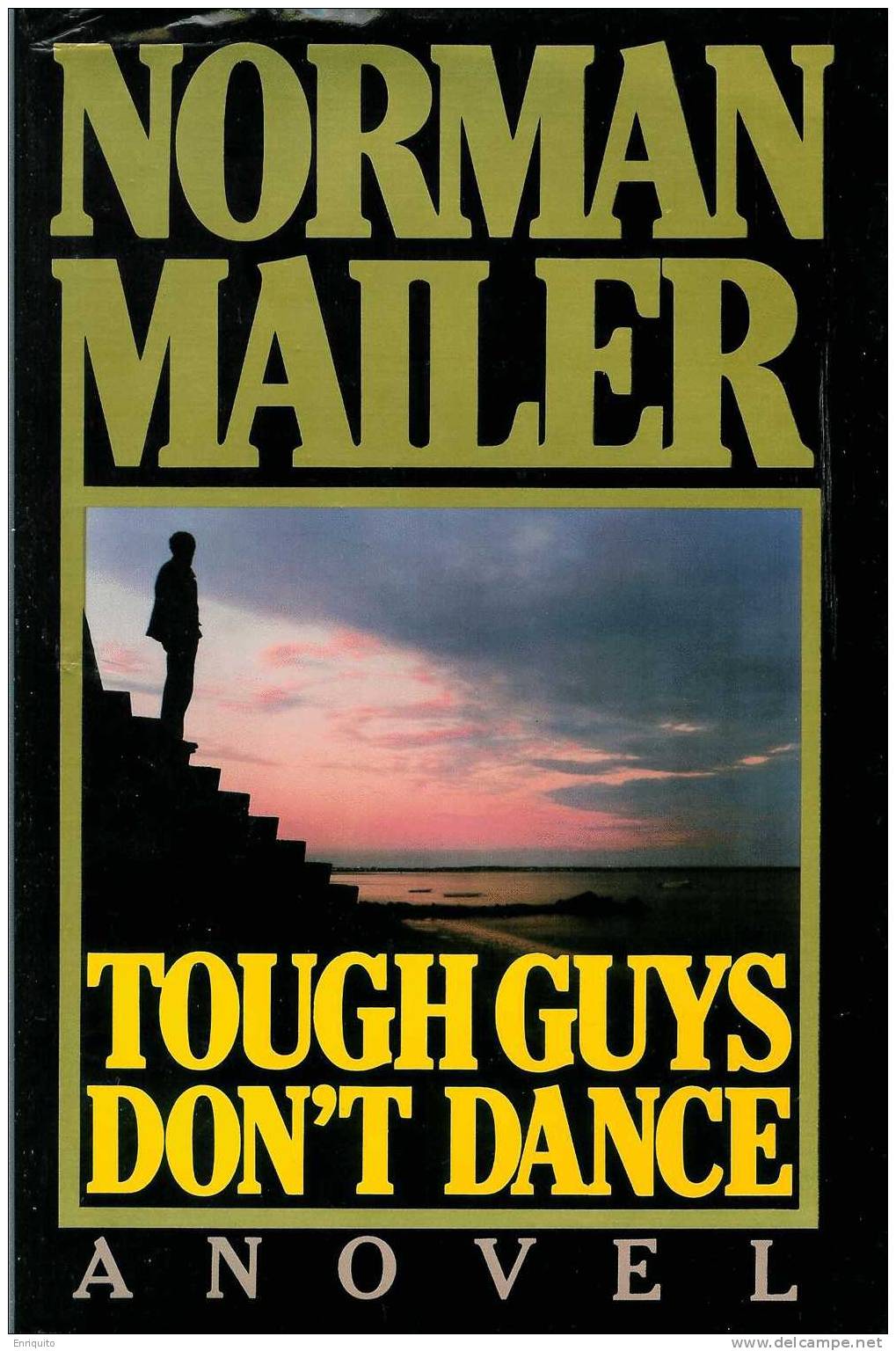
TOUGH GUYS DON’T DANCE by Norman Mailer
A boring mess. The book is the result of a self-important (and often good) writer thinking that because he is an “important artist” he could write a better hard-boiled mystery than those two-bit hacks like Hammet, Chandler and MacDonald.
This is scary because many aspects of this novel are no longer fiction.
Read the news … NOT the American media, who rarely tells you the true stories of what is happening in the world. Information insulation is another form of control.
CARRION COMFORT by Dan Simmons (1989)
A great vampire novel, with a twist. The vampirism featured here is psychic, not blood-letting . A small group of people have an Ability, where they can possess someone mentally and use them to do their bidding. They also use their Ability to Feed, prolonging their lives by mentally drawing sustenance from people.
The battle among the Users with the Ability for power leads for a gargantuan plot and a cast of more than two dozen characters, from Nazis to southern sheriffs, to Holocaust survivors to Hollywood moguls to CEOs of the world’s largest corporations. Riveting and compelling.
Come on HBO … how about a mini-series?????
GHOST STORY by Peter Straub (1979)
An old-fashioned, c-r-e-e-p-y ghost story. Four elderly New England men are haunted an event in their past … they got away with murder … or did they?
As they ask in the novel: “What was the worst thing you’ve ever done?””I won’t tell you that, but I’ll tell you the worst thing that ever happened to me… the most dreadful thing…”
THE GIRL NEXT DOOR by Jack Ketchum (1989)
Not for the faint-hearted! The Girl Next Door is a dark and twisted story told through the eyes of a preteen boy. Set in the 1950s, it is a fictionalized account of one of America’s grizzliest true crime stories. D-i-s-t-u-r-b-i-n-g.
I AM LEGEND by Richard Matheson (1954)
The novel that got me hooked on dark fiction and dystopian novels back when I was fifteen years old. Robert Neville is the apparent sole survivor of a pandemic whose symptoms resemble vampirism. It is implied that the pandemic was caused by a war, and that it was spread by dust storms in the cities and an explosion in the mosquito population.
The book follows Neville’s daily life in Los Angeles as he attempts to comprehend, research, and possibly cure the disease, to which he is immune. His past is revealed through flashbacks: the disease claimed his wife and daughter, and he was forced to kill his wife after she seemingly rose from the dead as a vampire and attacked him.
Forget the most recent Hollywood version of this novel starring Will Smith … READ THE BOOK!!
THE HOT ZONE by Richard Preston (1994)
This non-fiction bio-thriller is about the origins and incidents involving viral hemorrhagic fevers, particularly ebola-viruses and marburg-viruses. You may begin to compulsively wash your hands and stay away from EVERYONE with a cough. Stephen King called the book, “one of the most horrifying things I’ve ever read.”
And the U.S. govt. is bringing two ebola victims to America as I write this.
HOUSE OF LEAVES by Mark Z. Danielewski (2000)
A young family moves into a small home on Ash Tree Lane and discovers something is terribly wrong: their house is bigger on the inside than it is on the outside!
One of the oddest, most challenging books you will read in a looong time. Bewildering and claustrophobic.
IT by Stephen King (1986)
I debated about putting The Shining in this place, but I opted for It.
King’s most epic horror story that pushes ALL the right buttons … misfit kids, bullies, disappearing children and a malevolent clown!
THE KILLER INSIDE ME by Jim Thompson (1952)
Lou Ford, a 29-year-old deputy sheriff in a small Texas town appears to be a regular, small-town cop leading an unremarkable existence; beneath this facade, however, he is a cunning, depraved sociopath with sadistic sexual tastes. Horrific and darkly humorous.
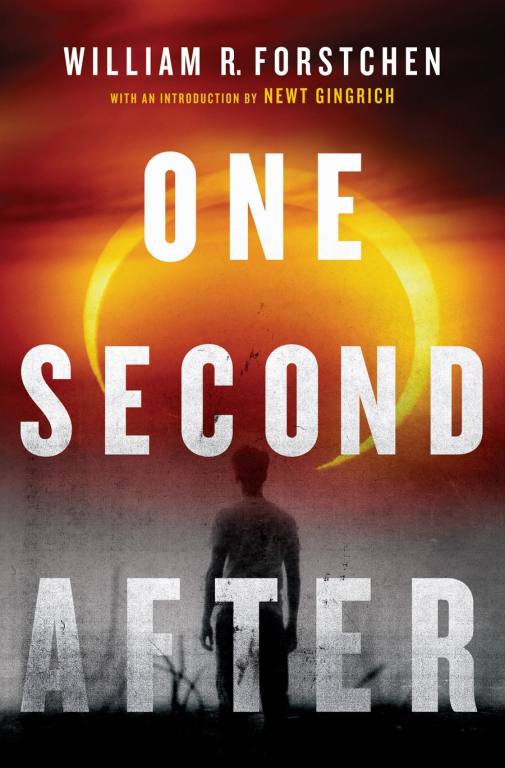
ONE SECOND AFTER by William Fortschen (2009)
The scariest book I have ever read. Period.
Electromagnetic pulses can result from natural phenomena and, in much greater strength, from nuclear blasts. The result of an EMP is the destruction of unprotected electronic circuitry. With no electronics -vehicles won’t run; no phones, computers, radios, or televisions; no electricity. America descends into the Middle Ages.
In One Second After, we follow a small North Carolina mountain town quickly crumble. The lack of food and medicine leads to mass death. Cities turn against the countryside; friends and neighbors turn against each other in a desperate struggle to survive.
Read it and began your stockpiling.
SILENT SPRING by Rachel Carson (1962)
This book single-handedly helped ban DDT across the world, resulting in the death of millions of people due to malaria which resurfaced. This was the book that started the environmental movement and it’s scary that people still defend this.
Why are there no members of the world famous Jenkins Orphanage Band in the South Carolina Entertainment and Music Hall of Fame, or the Lowcountry Music Hall Of Fame? The Hall has such luminaries as Andie McDowell (we still watch “Groundhog Day” despite her being in it), Leeza Gibbons (celebrity-news reader) and Vanna White (the only professional letter-turner in the Hall of Fame.) The Hall also counts as members Rob Crosby, Bill Trader and Buddy Brock. (Yeah, I know, you’ll probably have to Google them to find out who they are too.)
I am not saying that any of these people don’t deserve to be in the Hall – they probably do. But not to the exclusion of more deserving artists. I would like to nominate several artists currently not in the Hall who influenced and enriched American culture in more deserving ways than interviewing celebrities on “Entertainment Tonight” or being eye candy for a game show.
From the 1890s to the 1940s the Jenkins Orphanage Band traveled across the United States and across Europe performing on street corners, on Broadway and for royalty. Members of the Jenkins Band were instrumental in transforming the music performed during 19th century minstrel shows into blues, ragtime and ultimately, jazz. My nominees are:
EDMUND THORNTON JENKINS
Edmund Thorton Jenkins
Born – April 9, 1894, Charleston, South Carolina Died- September 12, 1926, Paris, France
His father, Rev. Daniel Jenkins operated the Orphan Aid Society (a.k.a. the Jenkins Orphanage) which operated a boy’s brass band as a fundraising tool, as a kind of minstrel show on the sidewalks of towns up and down the East Coast. Called “Jenks” by everyone, he received private piano lessons from a white man in Charleston, Mr. Dorsey, and quickly mastered the piano, clarinet and violin. His father insisted that he work as a music instructor for the Jenkins Band, and also travel with them. Jenks resented having to lead a group of ragamuffin orphans who mugged, strutted and played-the-fool during their street performances. He felt it was beneath him. He wanted to play serious music. The kids, of course, made fun of the prim and dandified Jenks.
In 1910 Jenks enrolled in Morehouse College in Atlanta, Georgia to study music. Two years later he was forced by his father to leave college in order to accompany the Jenkins Band to London, where it was a featured act at the Anglo-American Expo. When the Expo came to an abrupt close, due to the outbreak of World War I, Jenks convinced his father to pay his tuition to the Royal Academy of London. For seven years Jenks excelled in his studies, winning awards for composition, and becoming a master in several instruments. During his time at the Academy he composed “Charlestonia: A Rhapsody.”
After graduation he moved to Paris where he became one of the most sought after musicians in the most popular Parisian nightclubs. Paris was “jazz mad” in the 1920s and for several years Jenks embraced the glamorous, hedonistic life of Paris. However, in 1925 he began to compose an opera, “Afram” and expanded and orchestrated “Charlestonia: A Rhapsody” which he conducted successfully in Belgium with a full orchestra. In July 1926, he was admitted to a Parisian hospital for appendicitis. He contracted pneumonia and died on September 12, 1926, cutting short the career of a promising young black composer. He is buried at the Humane Friendly Cemetery in Charleston, SC.
Listen to “Charlestonia”, composed by Edmund Thornton Jenkins.
TOMMY BENFORD
Tommy Benford in 1978
Born – April 19, 1905, Charleston, West Virginia. Died – March 24, 1994, Mount Vernon, New York.
Benford became the Jenkins Orphanage Band’s ace drummer. In 1920 he was playing in New York City and gave drumming lessons to a young wunderkind named Chick Webb. In 1928, he was the drummer for some of the most influential jazz music ever recorded as part of Jelly Roll Morton’s Victor Records sessions.
During the Depression Benford moved to Europe and for the next 30 years recorded hundreds of songs with more than a dozen bands. His most famous recording session was with Coleman Hawkins, Django Reinhardt, Stephane Grapelli and Bennie Carter, released as Coleman Hawkin’s All-Stars.
He continued to play music until his death in 1994, a career that spanned seventy years.
Watch/listen here: “Sweet Georgia Brown” by Coleman Hawkins’s All-Stars (featuring Tommy Benford).
JABBO SMITH
Jabbo Smith
Born – December 25, 1908, Pembroke, Georgia. Died, New York City – January 1991.
Raised in the Jenkins Orphanage, Jabbo quickly became one of the best Jenkins Band musicians during the years of 1915-1924. Brash and flamboyant, he was a natural performer. At age 17 he was playing in New York City at Smalls Paradise, the second most popular club in Harlem (most popular was the Cotton Club.) He became the hottest trumpet player in the city, which is like being the hottest guitar player in the hottest rock and roll band (think Eric Clapton, Jimmy Page and Eddie Van Halen.)
In 1927 he recorded one track with the Duke Ellington orchestra (“Black and Tan Fantasy”) filling in for the ailing Bubber Miley. Duke offered him a permanent job with the Ellington Orchestra, which Jabbo turned down because Duke only offered $90 a week, and Smith was making $150 with the Paradise Orchestra.
In 1928-29 Jabbo played with James P. Johnson (composer of the song “Charleston”) and Fats Waller in the Broadway show Keep Shufflin. When the show closed in Chicago Jabbo recorded nineteen historic songs for the Brunswick Record Company that are still considered some of the most influential jazz recordings. They are considered to be the first cool jazz improvisations and be-bop style playing.
By the 1950s Jabbo Smith was out of music, living in Wisconsin. As a swan song, in the 1980s he returned to Broadway in the show One Mo’Time and became the darling of New York for several months. Jabbo is a key link in the development of modern jazz trumpet playing: Louis Armstrong →Jabbo Smith →Roy Eldridge →Dizzy Gillespie→Miles Davis→Wynton Marsalis.
Watch/listen here: “Lina Blues” by Jabbo Smith.
FREDDIE GREEN
Freddie Green
Born – March 31, 1911, Charleston, S.C. Died – March 1, 1987, Las Vegas, Nevada.
Freddie Green had the longest job in jazz history, guitar player for the Count Basie Orchestra from 1937 to his death in 1987 – fifty years. He was in the Basie Orchestra longer than Count Basie himself!
As a child Freddie used to sing and dance on the streets of Charleston and became friends with members of the Jenkins Orphanage Band. Though never an orphan, he played with the Band and remained in New York City during their tour in 1932. Five years later he was discovered playing at the Black Cat Club in Harlem and asked to join the Basie Orchestra, forming what became known as the All-American Rhythm section: Basie-piano, Green-guitar, Walter Page – bass, and Jo Jones-drums.
For the next 50 years Freddie Green became the “left hand” of the Basie Orchestra, the spiritual force that held the music together. Across the world he became known a “Mr. Rhythm,” the greatest rhythm guitar player in jazz history. It is almost impossible to find a photo of the Basie Orchestra that does not include Green.
He became a composer and arranger for the orchestra and the arbitrator of good music. Byron Stripling, trumpet player for Basie said, “If an arranger comes in and his work is jive, Freddie just shakes his head and it’s all over.”
Green died in Las Vegas after a Basie Orchestra performance ending one of the quietest most legendary musical careers of the 20th century. Irving Ashby described Freddie Green’s influence on music as: “Rhythm guitar is like vanilla extract in cake, you can’t taste it when it’s there, but you know when it’s left out.”
Watch/listen here: “Corner Pocket” by the Count Basie Orchestra (written and arranged by Freddie Green.)
CAT ANDERSON
Cat Anderson
September 12, 1916, Greenville, South Carolina.
Died – April 29, 1981, Los Angeles, California.
During the late 1930s, Anderson became the latest in a line of hot trumpet players in the Jenkins Band. He developed a technique of playing in high registers, two octaves above the rest of the band. It was Anderson’s way of showing off, and getting the girls in the audience to notice him. Wynton Marsalis called Anderson “one of the best” scream trumpet players ever.
After leaving the Jenkins Band in 1937, Anderson played for several bands, and performed at the Apollo Theater in Harlem. During World War Two, Anderson played in a Special Services Army Band, performing for troops on bases across the world.
In 1945, he joined Lionel Hampton’s Band and then was hired by Duke Ellington, and became a featured player for the Duke during the next 20 years. Ellington re-arranged many of his classic songs to take advantage of Anderson’s talent for “scream” trumpet playing. Anderson is heavily featured in one of the most popular jazz recordings ever, the 1956 Newport Jazz Festival.
Through the 50s, 60s and 70s Anderson led several bands himself, and recorded several solo classic LPs with various Ellington sidemen.
Watch/listen here: Cat Anderson trumpet solo w/ the Duke Ellington Orchestra.
If you agree these men should be in the South Carolina Entertainment Music Hall of Fame, please forward/share/like /comment this article. You can read the entire story of the Jenkins Orphanage in my book, DOIN’ THE CHARLESTON.
Magnolia Cemetery is one of the greatest unknown treasures in Charleston, South Carolina. Hopefully, this book will help spread the word. For years, I’ve been hearing about this manuscript. People waxing enthusiastically about “this manuscript Ted has about Magnolia.” They kept promising it was going to dig up some dirt of those buried there (pun intended). I even ran into a couple of people who had a copy of it and promised to let me read it … to no avail.
I met Ted once in passing, through a mutual friend – it was a mere introduction, “hello”, “how are you?” and it was over. Within a year he was gone, so I never had the chance to discuss this work with him.
I have spent many pleasant hours wandering beneath the oaks and Spanish moss and taking hundreds of photos. Magnolia is thoroughly Southern (and soooo Charleston), filled with Gothic flourishes and amazing history etched on the headstones. When tourists ask me what is the one thing to see in Charleston my answer is always “Magnolia Cemetery.”
Magnolia Cemetery
City of the Silent is a simple book – several hundred concise bios of some of the notables buried in the cemetery. If you’re a Charleston history neophyte, you will learn some interesting stuff. There is a preponderance of Civil War figures (of course!), politicians, writers of questionable importance, society belles, gangsters, lawyers, and one madam. One. So much for the dirt.
If you’re a Charleston history nut (guilty) … you already know most of this stuff. So I was (and I am) a bit disappointed with the info contained within – most of it is already available in published form in one book or another.
However, the book is worth it’s hefty cover price (well, almost) for the map of the cemetery and the locations of everyone mentioned. With this book in hand, and the map you can take a stroll and find the graves and read the stories. And that is what you should do with it. Read it, mark your favorite people (see my list below) and then take a trip to Magnolia Cemetery and spend an afternoon in the tranquil presence of history – scoundrels and heroines – and everything in between.
Magnolia Cemetery, pyramid tomb
MY LIST OF FAVORITE PEOPLE IN MAGNOLIA CEMETERY
Daisy Breaux Calhoun – real name: Margaret Rose Anthony Julia Josephine Catherine Cornelia Donovan O’Donovan Simonds Gummere Calhoun. (I’m not joking.)
Langdon Cheves, Jr. – father of the Confederate Air Force.
Susan Pringle Frost – patron saint of Charleston preservationists.
Frank Hogan – bootlegger, murder victim
Leon Dunlap – bootlegger, acquitted murderer (who shot Frank Hogan)
The Crew of the H.L. Hunley – Confederate submariners.
Tristam Tupper Hyde – Charleston mayor who enforced Prohibition. (served one term)
Thomas McDow – doctor and murderer.
Josephine Pinckney – the best Charleston writer and period – period! Two classics: Three O’Clock Dinner, a superb comedy of society manners and Great Mischief, a delicious little horror book where the entrance to hell is somewhere around the corner of King and Broad Streets.
Robert Barnwell Rhett – Secessionist firebrand and newspaper editor.
George Trenholm – Confederate financier, and model for Rhett Butler.
Julius Waties and Elizabeth Waring – probably my all time favorite Charleston story. If you want to know the story … buy this book, or pick up of my own modest books about Charleston, Wicked Charleston, Volume II: Prostitutes, Politics & Prohibition. The story of the judge and his second wife is covered in great detail.
Bob Hope died today (July 27) in 2003 at age 100. One of the most popular, and recognizable entertainers in the world he performed in vaudeville, on Broadway, was a huge movie star, was a fixture on television for 50 years and performed 57 USO tours across the world in front of American soldiers. And yet, he went out of his way to spend three minutes with me in 1978.
I was a student at Francis Marion College in Florence, SC and working part-time on the campus grounds crew. It was a Saturday morning in late September and I was mowing the grass around the Smith University Center – Bob Hope was performing later that night. As I was mowing a large tour bus pulled up to the Center (200 feet away) and several people got out, including Mr. Hope. Everyone else entered the building, except Hope. He shaded his hand over his eyes and walked across the parking lot to where I was mowing.
As he approached I switched off the mower. He stuck out his hand, “Hi, I’m Bob Hope. Are you a student here?” he asked. When I said I was, he asked me, “What are you studying?”
Over the next few minutes he asked me “Where are you from?” and “What are your plans after graduation?” Then he said, “Whatever else you do, make sure you travel and see some of the world and America. Good luck, young man.”
As he turned to leave I managed to say, “Mr. Hope, it was an honor to meet you.” He stopped and said, “Well, I thank you, but I’m just an entertainer who got lucky. I’m not that important.”
“Mr. Hope,” I called out, “who’s the sexiest woman you’ve ever performed with?’
Without a pause he called out, “Ann Margret!” and he waved and strolled inside the building.
About five minutes later one of his staff people came out and brought me a bottle of Coke. “Mr. Hope said to make sure you got this,” the staff member said.
Not only was Bob Hope an American treasure, he admitted what every American man knows … Ann Margret is smokin’!
Published in 2009 Soulless asks a very simple question: Can a soulless spinster find love with an Alpha werewolf in Victorian London?
Poor Alexia Tarabotti. Living in Victorian London as a spinster is not the most enjoyable of lives. However, Alexia has the extra burden of not having a soul – which has the power to neutralize supernatural powers. She is also half-Italian (another burden) and has just murdered a vampire with her parasol in the library during a party, breaking almost every rule in polite society. When the officials arrive to investigate the murder, the head officer is none other than Lord Maccon – loud, messy, gorgeous and werewolf – who is nursing a secret hankering for Miss Tarabotti.
That’s Chapter One. Where do you go from there? Into the realm of hysterical hijinks, drawing room dilemmas and passionate kisses, all served with the very best of tea.
SOULLESS is a delicate literary lampoon, seamlessly merging the darkness of Bram Stoker with the sensibility of Jane Austen set in Charles Dickens’ London. Gail Carriger pulls it off with aplomb. The heroine has much in common with Austen’s Elizabeth Bennett – witty, forthright and headstrong – but also has the additional talent of being lethal with a parasol. The writing style is very much Austenish, with its formality and cleverness, which induces not merely giggles and snickers but out right guffaws.
Here is a typical paragraph:
Professor Lyall was reminded of his Alpha’s origins. He might be a relatively old werewolf, but he had spent much of that time in a barely enlightened backwater city in the Scottish Highlands. All the London ton acknowledged Scotland as a barbaric place. The packs there cared very little for the social niceties of daytime folk. Highland werewolves had a reputation of doing atrocious and highly unwarranted things, like wearing smoking jackets to the dinner table. Lyall shivered at the delicious horror of the very idea.
Sweet, and sublime. Unfortunately, SOULLESS will be invariably compared to the recent Jane Austen “rewrites,” Pride & Prejudice & Zombies and Sense & Sensibility & Sea Monsters, but this is much better. In addition to her Austen sensibilities, Carriger also has a bit of Terry Pratchett, P. G. Wodehouse and Douglas Adams in her psyche. SOULLESS contains a complete re-imagining of vampire and werewolf lore, an accurate portrayal of Victorian society, a screwball comedy and a splash of steampunk tossed in for entertainment.
As part one of The Parasol Protectorate, this paved the way for the following novels: Changeless, Blameless, Heartless and Timeless.

 Remember the anticipation as you waited (and waited and waited and waited) for Boston’s second LP? And then, it finally arrived! Don’t Look Back. So you tossed it on your turntable (for those of you under 30, Google it) and you listened to the LP. And about halfway through Side Two you started to get a sour feeling in your belly. The album was good … but was not great. It was … the same, but not better. After two years, this is what you got? So, you listened to it again. For the next few days you walked around thinking: “Oh man, this sucks.”











 MarkJonesBooks