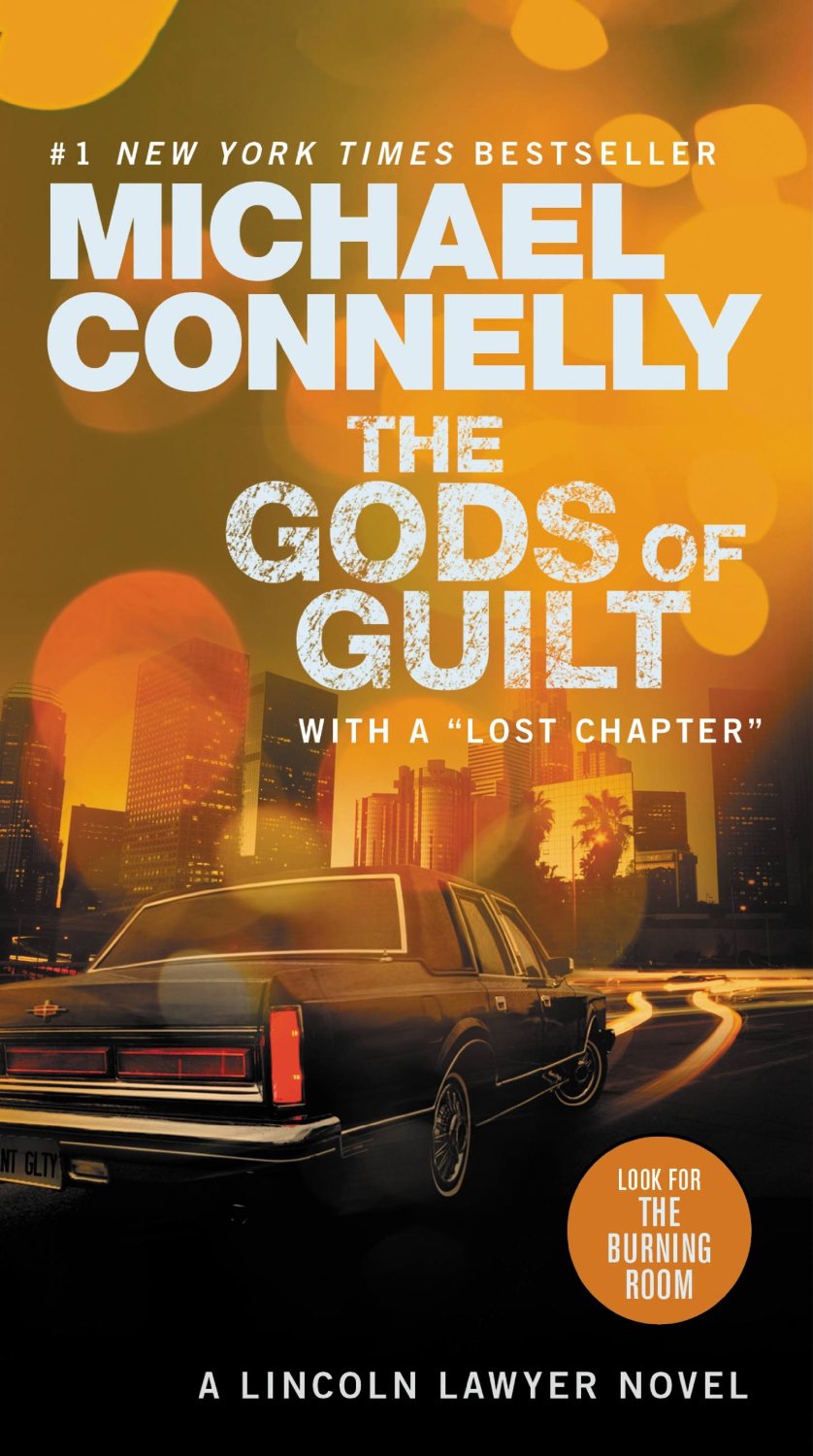
The Gods of Guilt: A Review

gods of guiltSeems like it’s impossible for Mr. Connelly to write a bad book. “The Gods of Guilt” is one of his best. Once again, ethically-suspect Mickey Haller (The Lincoln Lawyer) is back at work with an impossible case, a new love (?) and personal problems up the wazoo … not to mention someone is trying kill him.

Mickey Haller gets a text, “Call me ASAP – 187,” and the California penal code for murder immediately gets his attention. Murder cases have the highest stakes and the biggest paydays, and they always mean Haller has to be at the top of his game.

When Mickey learns that the victim was his own former client, a prostitute he thought he had rescued and put on the straight and narrow path, he knows he is on the hook for this one. He soon finds out that she was back in LA and back in the life. Far from saving her, Mickey may have been the one who put her in danger. Haunted by the ghosts of his past, Mickey must work tirelessly and bring all his skill to bear on a case that could mean his ultimate redemption or proof of his ultimate guilt.

One of the joy of Connelly’s books are the full fledged secondary characters that pop up and weave in and out his stories. Another part of his brilliance, even though his books have continuing characters, who overlap into different series, you can pick up any one of his books, and feel right at home.

Highly recommended!

4 palmettos

Advent: A Review

S-l-o-w.

ADVadventENT, the first of a projected trilogy, suffers from the same flaw that made Jonathan Strange & Mr Norrell so tough to read – long meandering pages of description and character musings. The story is more atmospheric than intriguing or compelling. My advice to novelists … Charles Dickens and Jane Austen are dead, stop trying to write like them!

The main character, Gavin, wallows in his own self pity for about two thirds of the book – no one understands him, how alone he is, how he keeps seeing Mrs. Grey everywhere – blah! blah! blah! Johann is just as bad … stuck in a narrative time loop telling the same story over and over and over again. 

I can’t imagine reading the rest of this trilogy.

2 palmettos

Today In Charleston History: August 15

1739

The Security Act was passed by the Assembly in response to white fears about the majority Negro population. The Act required that all white men carry firearms to church on Sunday. Anyone not in compliance of the law by September 29 would be subjected to a fine.

1779 – Births.
Joseph Alston

Joseph Alston

Joseph Alston was born in Charleston. He was a future governor of South Carolina and inherited one of the state’s largest fortunes. He would later marry Theodosia Burr, daughter of vice-president Aaron Burr.  

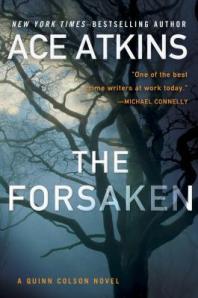
THE FORSAKEN: A Review

Thirty-six years ago, a nameless black man wandered into Jericho, Mississippi, with nothing but the clothes forsakenon his back and a pair of paratrooper boots. Less than two days later, he was accused of rape and murder, hunted down by a self-appointed posse, and lynched.
Now evidence has surfaced of his innocence, and county sheriff Quinn Colson sets out not only to identify the stranger’s remains, but to charge those responsible for the lynching. As he starts to uncover old lies and dirty secrets, though, he runs up against fierce opposition from those with the most to lose—and they can play dirty themselves.

Even though this is the 4th book in the Colson series, this is the first one I have read and most likely the last.  I found it more than a little cliqued … another Southern redemption story about past wrongs … ALWAYS racial. Plowing the same ground that Greg Ilies is tilling in his most recent novels.  Found the characters little more than stage dressing … Colson the white knight, stoic ex-military sheriff; his tough, lesbian (of course) deputy; a local strip club owner who is a misunderstood businessman and politician, etc … etc …

Pretty tiring . 

2 palmettos

Today In Charleston History: August 14

1743-Slavery. Executions

 A Mr. Snowden was set on fire by a Negro man, who was convicted and publicly burned to death.

clergy banished1774

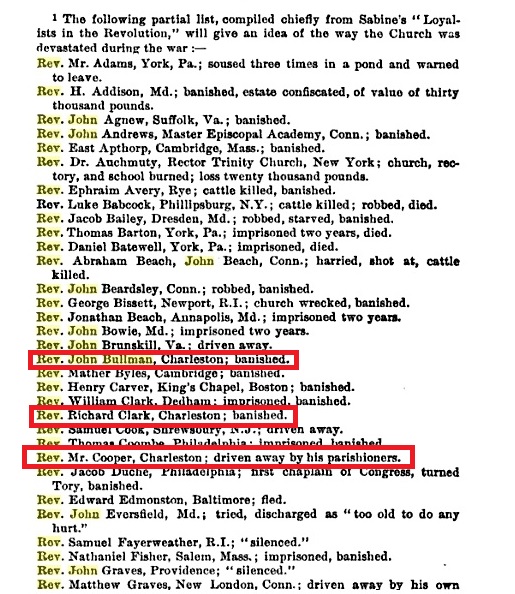
 The Sunday morning departure of Christopher Gadsden and Thomas Lynch to Philadelphia to attend the Continental Congress created a stir in Charlestown. Most of the clergy were on the side of the Revolutionaries. However, Rev. John Bullman, assistant minister at St. Michael’s Church, boldly preached a sermon titled “The Christian Duty of Peaceableness.” In a thinly veiled reference to the Boston Tea Party, he stated it was not the place of “a silly clown or illiterate mechanic (Sam Adams) to meddle in the affairs of princes and governors.” He called Gadsden and Lynch both “traitors.” Unfortunately for Bullman, many Charlestonians were sympathetic to the Boston resistance. The vestry voted 42-33 and dismissed him from the pulpit.

1863 

The Commission for the Removal of Non-Combatants submitted a list of “Camp-Grounds” prepared to receive refugees around South Carolina, which included: Summerville, Ridgeville, Branchville and St. Matthews.

ttd16-31901

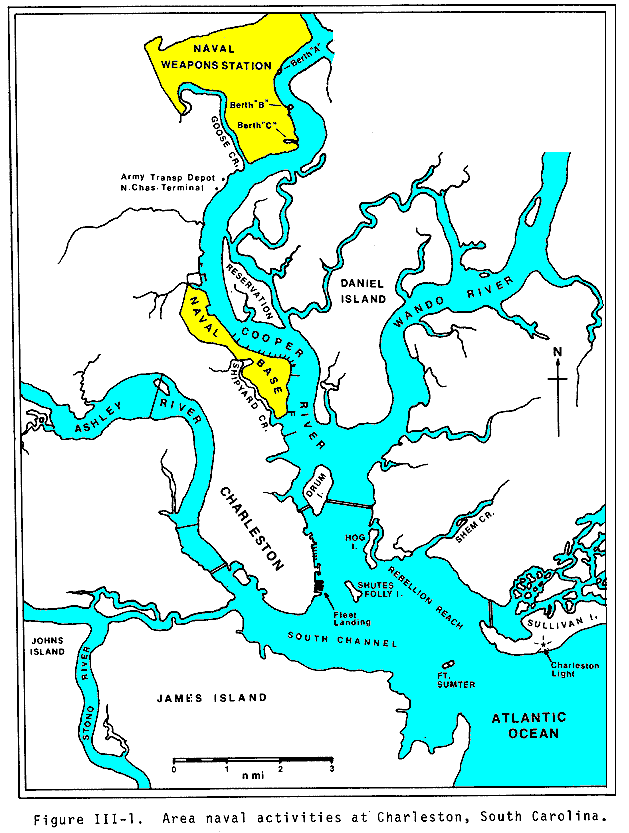
 Charleston sold 170 acres of land along the Cooper River to the United States for $200 per acre for the construction of a naval facility.

Today In Charleston History: August 13

1783-City Incorporated

 Edward Rutledge, Thomas Heyward and Thomas Bee, proposed a bill of incorporation for Charlestown. An elected intendant (mayor) and thirteen wardens would have the power to govern the city, whose name was changed to Charleston.


1864 – Civil War
Clubhouse of the race course where Federal officers were imprisoned.

Clubhouse of the race course where Federal officers were imprisoned.

By this time there were 6000 Federal prisoners within the city limits. Many of them were housed in the City Jail at the corner of Franklin and Magazine Streets. Others were housed around the corner in Roper Hospital at the corner of Queen and Logan Streets. The majority were held at the Charleston racecourse. Most of the Federal prisoners considered their imprisonment in Charleston to be a life-saving change, away from the hellish conditions of Andersonville. Lt. Benjamin Calef wrote:

We reached Charleston on the morning of August 13, and were kept waiting a long time in the Street, when I procured some fresh figs, bread and milk, and seated on the curb-stone, made an excellent breakfast … I should not omit to speak of the long piazza at the front [of Roper Hospital], on which I have spent so many hours with my pipe for my companion.

charleston-prison

Charleston Jail and prison.

Happy Birthday, William Goldman

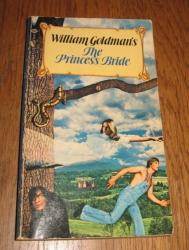
William-GoldmanMr. Goldman, you were my first favorite author. In 1974 I was 14 years old and I purchased a paperback novel titled The Princess Bride and I never looked at fiction ever the same again.

I remember walking around saying “Hello, my name is Inigo Montoya, you killed my father. Prepare to die!’ And everyone looked at me like I was an idiot. But I didn’t care. After I read the book three times in a row, I went and found paperback copies of everything you had written up to then. The Temple of Gold (1957); Your Turn To Curtsy; My Turn To Bow (1958); Soldier In The Rain (1960); Boys and Girls Together (1964); No Way To Treat A LadyI (1964); The Thing Of It Is … (1967). I was hooked! 

princesspb

First edition copy of The Princess Bride, 1974.

And then I discovered you had also written one of the coolest movies ever – Butch Cassidy and the Sundance Kid, and won an Academy Award for Best Screenplay. Then came the novels (and screenplays) for Marathon Man (“Is it safe?”)and Magic (a perfectly creepy book and a disturbing movie with Anthony Hopkins.)   

All told, 16 novels, 9 books of non-fiction, 38 screenplays and two Academy Awards (Butch and All The President’s Men). And  of course, the best book about Hollywood, Adventures in the Screen Trade, hands down the funniest book every written, in which you shared Hollywood’s greatest unspoken secret (until then)  … goldman, nobody knows anything

And of course, your heroic effort to get The Princess Bride made into a movie that reflected what your readers expected of that special book may be your greatest contribution to cinematic history. When it was released in 1987, I was suddenly confronted with everyone walking around saying “Hello, my name is Inigo Montoya, you killed my father. Prepare to die!'”  All I could do was smile, happy that millions more people (who would never read a book) had finally
discovered the quirky joys of Bride.William-Goldman-Quotes-1

Mr. Goldman, you have been a major part of my life for 40 years, and even though I would have appreciated a few more novels …  I cannot say “thank you”  enough.

download

The Gold Coast & The Gate House: A Review

Okay, so I know how much other critics love these two books. I am also a Demille fan. The
Charm School, Word of Honor, The General’s Daughter
and Plum Island are all good books. Exciting thrillers and well written. So I know Demille is capable of writing good books. 

I read The Gold Coast when it was first published in 1990, and remember not being impressed at all. FAST FORWARD to 2009 – with great hype, Demille’s sequel to Gold Coast was published  and I was v-e-r-y  disinterested.

However, recently, I decided to give the books a second chance and re-read the first book before I read the new one. Halfway through Gold Coast for the second time I found myself very impatient. One question kept popping up in my head: Who the f*@k cares? I found nothing about any of the three main characters sympathetic.

In fact, by page 350 I was hoping everyone would die. Alas, only the so-called “bad guy” Frank Bellarosa gets it in the end. Frank’s crime was being an Italian and daring to move into the cloistered white-bread preppy culture of snobs and shallow people along the Gold Coast – and tempting his ultra uptight neighbors John and Susan Sutter. According to the book’s description, John’s narrative voice is “sardonic – often hilarious.” Someone at the publishers has a different definition of hilarious than most of us.

I was thankful when it was finished, and pissed that John and Susan were still breathing valuble oxygen. So it was with trepidation that moved on to The Gate House. Ten years after his wife Susan killed Mob boss Frank Bellarosa, John Sutter returns to the cloistered life on the Gold Coast. John spends pages and pages ruminating about how terrible life is at the country club, on his yacht and in his mansion. Most of his problems are due to the fact that he is too much of a wienie to actually say “screw it” and leave the so-called good life behind. His annoying wife Susan is still annoying. She has a six-figure income from a family trust fund and is a spoiled bratty bitch. What John sees in her – other than her money and taste for kinky sex – is beyond me. So, if you enjoy reading about spoiled, self-important people clinging to an out-dated lifestyle I can recommend several books about Charleston in the 1860s. Stay away from this piece of boring crap.

HINT: next time have the editor actually EDIT and cut out the boring $h!t -75% of these books.

2 palmettos

Today In Charleston History: August 11

1735 – SLAVERY.

Abraham, a Negro man owned by Mr. Samuel Jones, was baptized by Rev. Nathan Bassett of the Independent Church.

1847 – BORN TODAY

Ben Tillman was born near Trenton, South Carolina. Tillman rose to power as a representative of poor white residents of the state. He was elected governor of South Carolina in 1890 and began instituting populist reforms, including Jim Crow laws. He was elected to the United States Senate in 1894, serving until his death.

He was forced to leave school at the age of 16 in order to join the Confederate Army. He was stricken with a bacterial infection in his left eye before he could enlist. The eye was subsequently removed. He joined a paramilitary effort to overthrow Republican rule in South Carolina, taking part in the “Hamburg Massacre” of 1876, in which armed citizens overwhelmed the federal militia. Tillman’s leadership in this event established him as a leading white supremacist and launched his political career.

tillmanTillman was elected governor of South Carolina in 1890, serving for a single term. During this time, he established an agricultural school that would become Clemson University.

As governor he tirelessly promoted a culture of race-based discrimination and violence. Tillman’s supporters dubbed him the “Champion of White Men’s Rule and Woman’s Virtue” for his support of lynching as a punishment for alleged sexual misconduct by African Americans. The decade of the 1890s saw a spike in mob violence, particularly lynching, that was tolerated and even encouraged by Tillman and his allies.

Tillman was elected to the United States Senate in 1894. He held the office until his death in 1918. In Washington, Tillman developed a reputation as a hot-head. He threatened to stab President Cleveland with a pitchfork, earning the nickname “Pitchfork Ben,” received a formal censure for assaulting another senator and was barred from entering the White House.

Tillman died on July 3, 1918, in Washington, D.C. A statue of Tillman was erected outside the South Carolina State House in 1940 and stands to this day.

Today In Charleston History: August 10

1664 

Capt. William Hilton sailed from Barbados to find a location in Carolina for settlement. He sailed into Port Royal Sound and claimed the island that protected the mouth of the harbor in his name – Hilton Head..

adventure

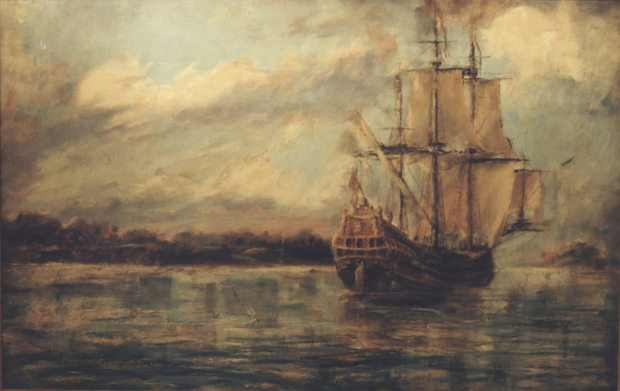
The Adventure, Captain William Hilton’s merchant ship, painted in 1963 by long time Hilton Head Island resident Walter Greer – is currently on display at Coastal Discovery Museum at Honey Horn.

In 1662 at the request of a group of merchants in Boston, Captain William Hilton set sail from Charlestown, Massachusetts aboard the ship Adventure to explore the Carolina coast. After investigating the area around Cape Fear (North Carolina), Hilton returned to Massachusetts with enough information to have a detailed map made of the area.

The next year a group of businessmen from New England, London and Barbados commissioned Hilton for a second voyage to explore the Carolina coast. Hilton, once again commanding Adventure, set sail, from Barbados on August 10, 1663. During this voyage he explored the entrance to Port Royal Sound and noted, just inside the entrance to the sound, the existence of a headland —a high point of land used as a reference point by mariners. Later this headland would be called Hilton’s Head and soon the island on which it was located would be called Hilton Head Island.