Charleston: America’s Most Popular Dance

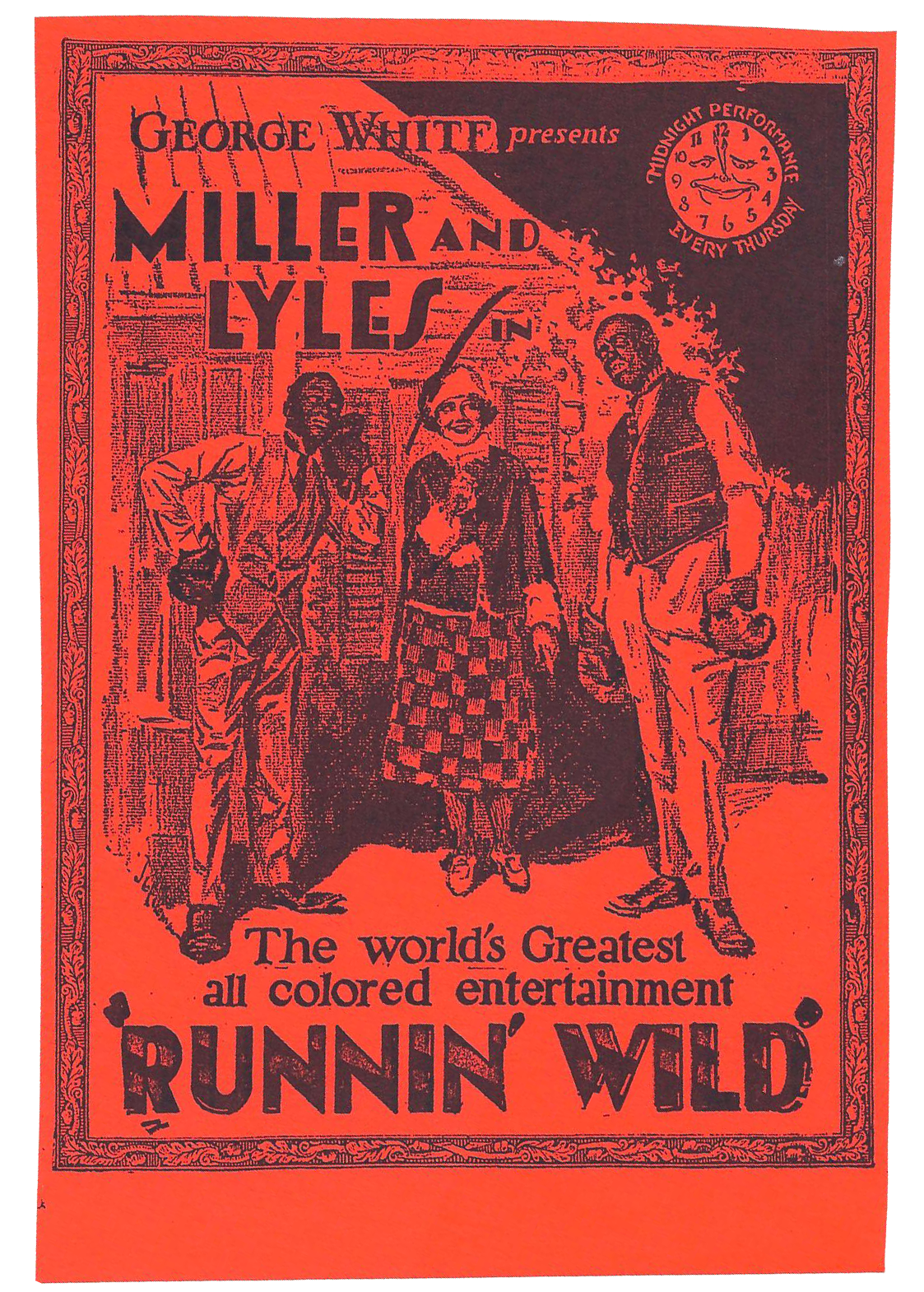
Runnin-Wild-ProgramOn October 29th, 1923, a black musical named Runnin’ Wild opened on Broadway, with songs by James P. Johnson and Cecil Mack. The first act of the show ended with the song “Charleston.” Elizabeth Welsh, as the character of Ruth Little in the show, performed the dance with chorus boys called the “Dancing Redcaps.” Elida Webb, the choreographer, claimed to have invented the dance, which, of course, was not true.

The dance called the Charleston has deep roots that trace back to the Ashanti tribe from the Gold Coast of Africa. As those Africans were enslaved and brought into America, many of their tribal customs were passed down through generations living on South Carolina low country plantations along the coast. By the turn of the 20th century hundreds of thousands of emancipated slaves, called “geechie” – slang for people from the low country, had moved to Chicago and New York for economic opportunity. Their syncopated minstrel-style music of the 1890s became ragtime, blues and ultimately, jazz. The Jenkins Orphanage Band of Charleston performed on the streets of Harlem during the first decade of the 20th century and the description of their dance steps sounds very much like the modern-day Charleston.

In fact, the composer of the song “Charleston,” James P. Johnson, talked about his inspiration for the song.

The people who came to The Jungle Casino [Harlem] were mostly from around Charleston, S.C. They picked their [dance] partners with care that would give them a chance to get off. It was while playing for these Southern dancers that I composed a number of Charlestons, eight of them, all with the same dance rhythm. One of these later became my famous ‘Charleston’ when it hit Broadway.”

 Another Harlem piano player, Willie “the Lion” Smith recalled that “the kids from the Jenkins Orphanage Band of Charleston used to do Geechie steps when they were in New York on their yearly tour.”  What cannot be denied is that by the end of 1923 everybody in America was doing the Charleston.

Nothing else epitomizes the spirit and joyous exuberance of the 1920s as the Charleston. Other dance crazes have had their fifteen minutes of fame: the Waltz, the Tango, the Hokey-pokey, the Twist, the Hustle, the Macarena, and even Break dancing. None of them, however, managed to influence and infect an entire generation so thoroughly the way the Charleston did. Almost 100 years later, the image of the Jazz Age is always a Flapper doing the Charleston. No other American decade can be so neatly summed up in one simple image.

 Tin Pan Alley songwriters in New York quickly turned out hundreds of “Charleston” songs. Charleston contests became a regular part of Dance halls and hotels everywhere, from big cities to small towns. One of the most famous scenes in American cinema is the Charleston dancing contest in It’s A Wonderful Life with James Stewart and Donna Reed falling into the swimming pool as the dance floor opens up. Hospitals across America began to admit patients complaining of “Charleston knee.”

Many non-dancing jobs of the day required black employees to be competent to dance or teach the Charleston in order to be hired. There were hundreds of advertisements in the New York papers looking for a waiter, a maid, a cook, or a gardener with the stipulation: “Must be able to Charleston!”
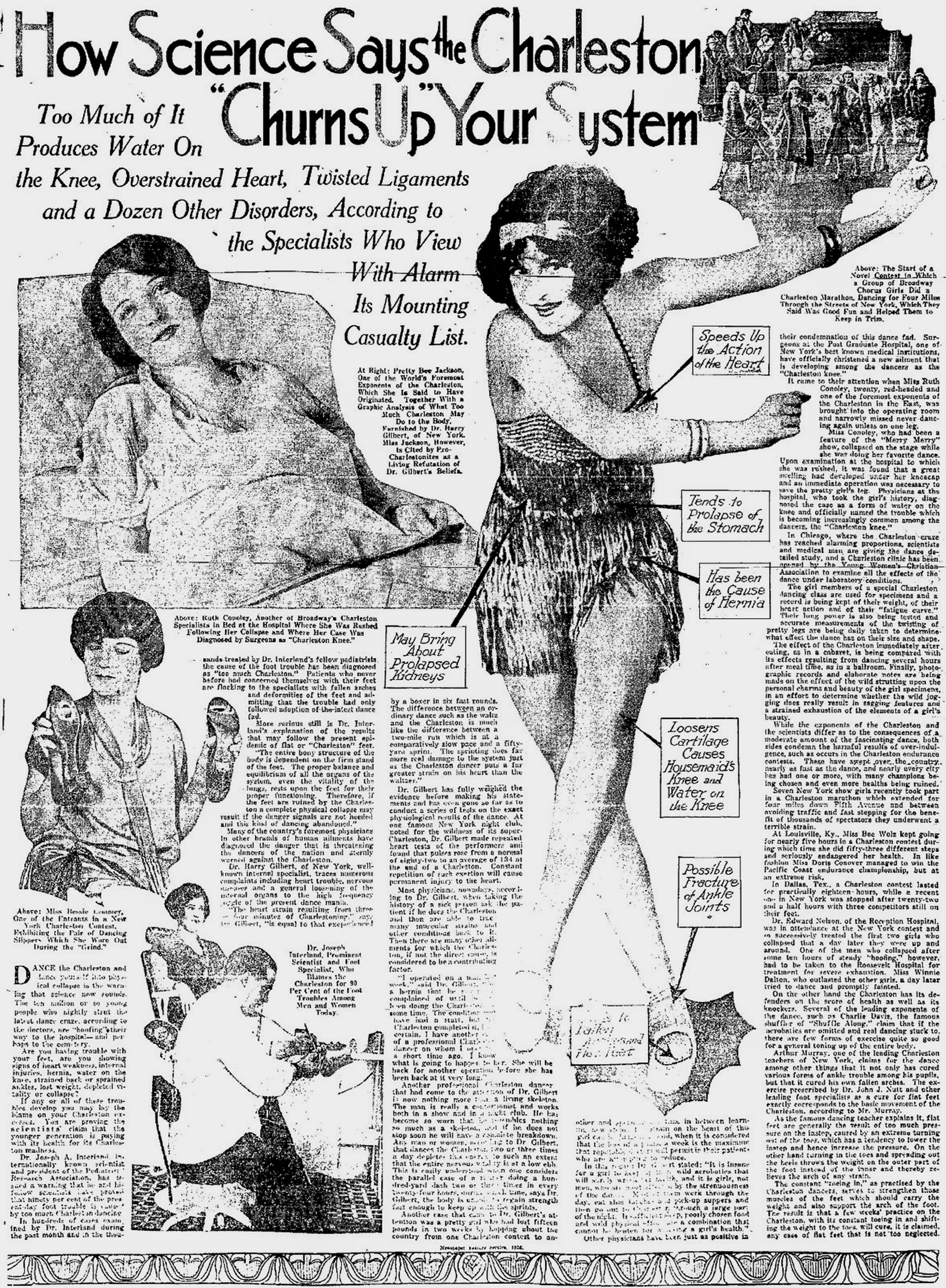
 16b. Charleston - Churns You Up - 28 March 1926However, not everyone was infected with Charleston fever. In London, sixty teachers of ballroom dancing were taught the “Charleston” in July 1925 and pronounced it “vulgar.” That is, until the Prince of Wales, Prince Edward, learned it and performed it very skillfully in public. The Vicar of St. Aidan’s however, thought that “any lover of the beautiful will die rather than be associated with the Charleston. It is neurotic! It is rotten! It stinks! Phew, open the windows!”

In 1925, tragedy struck. The press found a physician in Seneca, Kansas, who claimed that “pretty Evelyn Myers,” age 17, had died of peritonitis brought on by dancing the Charleston too violently. Variety Magazine reported that in Boston, the vibrations of Charleston dancers were so strong that it caused the Pickwick Club to collapse, killing fifty of its patrons. The headline screamed:

 WAS THIS BUILDING STAMPED DOWN BY ‘CHARLESTON’ DANCERS? 

pickwick club_filtered

 More than 200 people – police, fireman and volunteers – worked for twenty hours digging through the rubble of the building to free the trapped victims. Following the catastrophe, the Boston mayor’s office issued an edict banning the Charleston from public dance-halls. Other cities followed suit, banning the dancing of the Charleston for safety reasons, but nothing could stop the Charleston stampede. The more the authorities preached against it, the more popular the Charleston became.

 Mayor Frank Borden, Jr, of Bradley Beach, New Jersey, outlawed the dance from the city-owned ballroom. He cited “broken shins” as his reason. “I have no objection to a person dancing their feet and head off, but I think it best that they keep away from the Charleston.” Richard Zober of Passaic, New Jersey also banned the Charleston in his town. “I think it would be safer and better for all concerned,” he said. An article syndicated by the International Feature Service read: 

“From coast to coast the ‘Charleston’ has caught the country swaying to its curious rhythm. No dance, since jazz first came into vogue, has created such a furor. Enthusiasts ecstatically stamp to its syncopated measures, while others, equally in earnest, denounce it. But the controversy that is carried on everywhere concerning this latest mania has failed to stem its tide of popularity. America is “Charleston” mad!” 

Emil Coleman, a famous orchestra leader, declared that the “Charleston” is “the most characteristically American of any of the modern dances whose peculiar accent in time is the musical expression of the native (black) temperament.” One female evangelist in Oregon called the Charleston “the first and easiest step toward hell.”

Some dance ballrooms gave up trying to discourage the frenetic Charleston all together and just posted large signs on the dance floor that read: PCQ – PLEASE CHARLESTON QUIETLY! 

CharlestonQuietly

Today In Charleston History: August 23

1770 – American Revolution – Foundations.
laurens

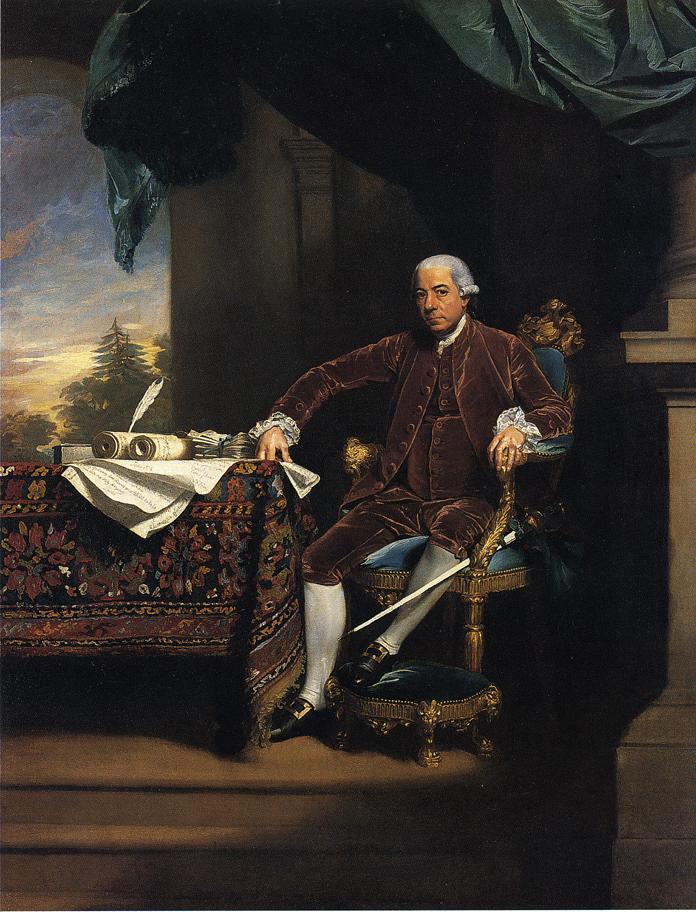
Henry Laurens

News arrived that Boston, New York and Philadelphia had joined Georgia and Rhode Island in breaking their agreements with the non-importation Association. Henry Laurens wrote:

I am so disappointed in my Expectations of several Colonies North … to their late important Resolutions that I am in a humour to disbelieve the Sincerity of the majority of all Politicians …

1783

Henry Laurens left the American treaty negotiations in Paris to travel to Vigan, France in order visit his ailing brother, James.

1864 – Bombardment of Charleston.

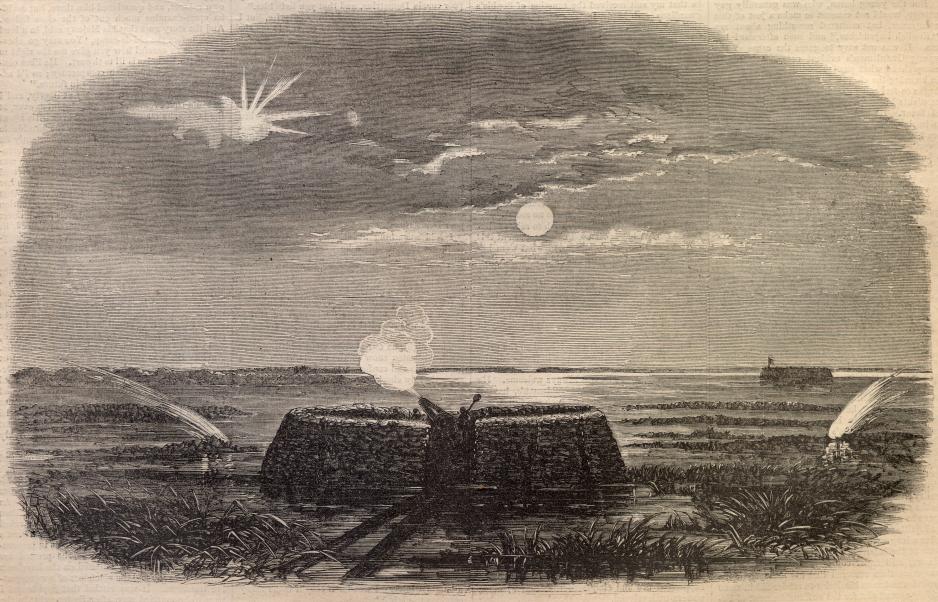
That night, the Swamp Angel resumed shelling Charleston, on the thirty-sixth round the gun barrel blew up, the psychological threat remained real.

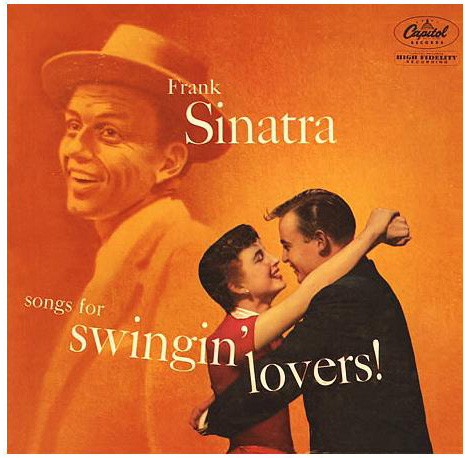
Songs for Swingin’ Lovers! by Frank Sinatra (Essentials – Music)

Songs for Swingin’ Lovers! was the tenth studio album recorded by Frank Sinatra, his fourth for Capitol Records, arranged by Nelson Riddle and released in March 1956. It helped to complete Sinatra’s “comeback.”

Songsforswinginlovers1


During the 1940s Sinatra had been one of the biggest stars in America – as a crooner for the bobbysoxers with Tommy Dorsey and as a solo artist. He had also transitioned easily into a successful movie career in a couple of musicals with Gene Kelly. However, by 1951, his career was waning. In February he was walking through Times Square and the Paramount Theater marquee glowed in announcement of Eddie Fisher in concert. Swarms of teen-age girls had gathered in frenzy, swooning over the current singing idol. For Sinatra this display of enthusiasm for Fisher validated a long-time fear – he was washed up. In a moment of sheer despair he attempted suicide by sticking his head in the oven and turning on the gas. A friend found him in the apartment, lying on the floor sobbing. He claimed he was such a failure that he could not even commit suicide.

In September, Sinatra made his Las Vegas debut at the Desert Inn which led to a career boost. Two years later, 1953, he appeared in the eve-of-Pearl Harbor drama From Here to Eternity (1953), for which he won an Academy Award for Best Supporting Actor. This role and performance marked a turnaround in Sinatra’s career. He signed with Capital Records and was paired with orchestra director / arranger Nelson Riddle.

Sinatra And Riddle

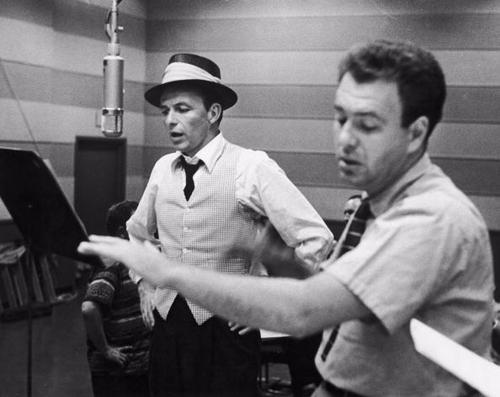
Frank Sinatra & Nelson Riddle

After the ballad-heavy and moody In the Wee Small Hours, Frank Sinatra and Nelson Riddle returned with an LP of up-tempo, swinging material called Songs for Swingin’ Lovers! The LP was filled with reinterpreted pop standards (by Riddle), whose inspired arrangements turned these older songs into something new, hip and joyful.

Riddle’s arrangements obviously inspired and invigorated Sinatra. He sings with supreme confidence, authority, wit and joy, turning in creative and iconic renderings of well-known lyrics. The LP’s centerpiece is a breathtaking, re-defining version of “I’ve Got You Under My Skin,” – a bone fide musical classic. No other version of this song ever sounds right after you’ve heard Sinatra and Riddle’s version.

In 2000 the album was inducted into the Grammy Hall of Fame, and ranked #306 on Rolling Stone magazine’s list of the 500 greatest albums of all time.  Almost fifty years later it is still 45 minutes of sheer musical bliss.

Songs For Swingin’ Lovers / Frank Sinatra

Recorded: October 17, 1955 – January 16, 1956. Released, March 1956

Track listing
  1. “You Make Me Feel So Young” (Mack Gordon, Josef Myrow) – 2:57
  2. “It Happened in Monterey” (Billy RoseMabel Wayne) – 2:36
  3. You’re Getting to Be a Habit with Me” (Al DubinHarry Warren) – 2:19
  4. You Brought a New Kind of Love to Me” (Irving KahalPierre NormanSammy Fain) – 2:48
  5. Too Marvelous for Words” (Johnny MercerRichard A. Whiting) – 2:29
  6. Old Devil Moon” (Y. HarburgBurton Lane) – 3:56
  7. Pennies from Heaven” (Arthur JohnstonJohnny Burke) – 2:44
  8. Love is Here to Stay” (George GershwinIra Gershwin) – 2:42
  9. I’ve Got You Under My Skin” (Cole Porter) – 3:43
  10. I Thought About You” (Mercer, Jimmy Van Heusen) – 2:30
  11. We’ll Be Together Again” (Frankie LaineCarl T. Fischer) – 4:26
  12. Makin’ Whoopee” (Gus KahnWalter Donaldson), – 3:06
  13. Swingin’ Down the Lane” (Kahn, Isham Jones) – 2:54
  14. Anything Goes” (Porter) – 2:43
  15. How About You?” (Ralph Freed, Lane) – 2:45

Today In Charleston History: August 22

1863 – Bombardment of Charleston. 1:30 a.m.

swamp angel

Swamp Angel, the Federal gun that fired upon Charleston.

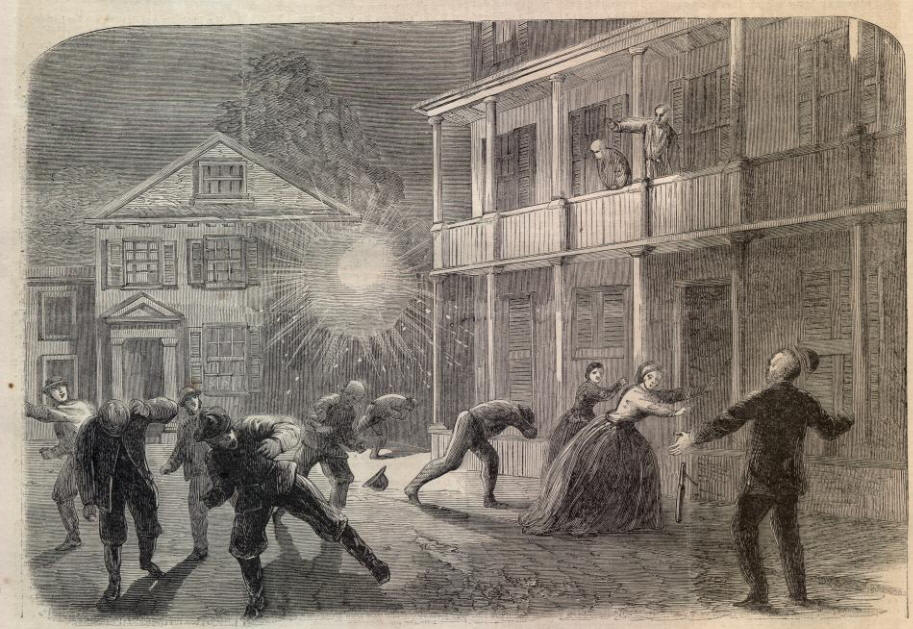
A Federal shell burst just north of the City Market at the corner of Pinckney and Church Streets. It was a 200-pounder shot from the “Swamp Angel.” British war correspondent and illustrator, Frank Vizetelly, was staying at the Charleston Hotel on Meeting Street. Unable to sleep, he was in his room reading Les Miserables when he was:

startled by a noise that …resembled the whirr of a phantom brigade of cavalry galloping in mid-air. My first feeling was that of utter astonishment; but a crash, succeeded by a deafening explosion in the very Street on my apartment was situate, brought me with a bound to the centre of the room … At first I thought a meteor had fallen, but another rush and whirr right over the hotel, and another explosion, settled any doubts I might have had: the city was being shelled.

I will defy anyone who witnessed what I witnessed on leaving my room, not to have given way to mirth … terrified gentlemen rushing about in the scantiest of costumes …One perspiring individual of portly dimensions was trotting to and fro with one boot on and the other in his hand and this was nearly all the dress he could boast …

charleston-bombardment

Frank Vizetelly’s illustration of the first shot

Capt. Charles C. Pinckney, an ordinance officer stationed in Charleston under General Roswell S. Ripley, wrote:

I rode down Smith Street about 2 o’clock A.M. The streets were entirely deserted, yet every house was lighted up. What does it mean?  Have the Yankees slipped in and taken the town while I was asleep? I urged the horse, & reached Headquarters. Without notice, a city full of sleeping women & children – a bombardment without military significance  … was clearly & purely spite!

bombardment, broad street 1864

Miss Pauline Heyward wrote in her diary:

Father went to Charleston on Sunday, and returned today, the Yankees are shelling the City … One shell went thro the roof of a house and straight thro the first floor … and thro the brick wall … into the yard that was paved, and there buried itself six feet into the earth.

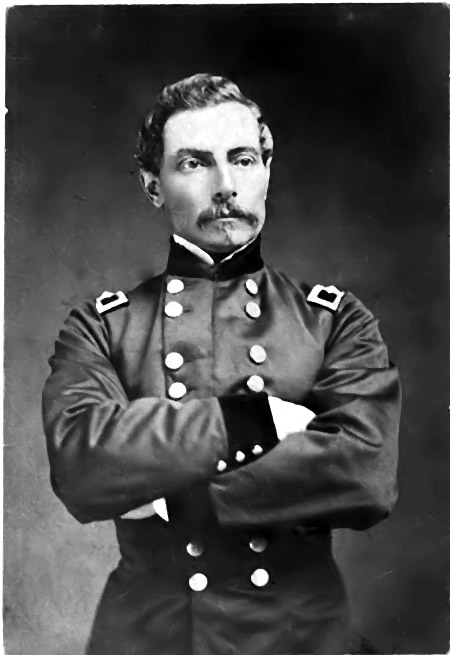
Confederate Gen. P.G.T. Beauregard wrote Union Gen. Gillman, accusing the Union officer:

you now resort to the novel measure of turning your guns on the old men, the women and children, and the hospitals of a sleeping city, an act of inexcusable barbarity … if you fire again on this city … without granting a somewhat more reasonable time to remove non-combatants, I shall feel compelled to employ such stringent means of retaliation as my available …

 During the night a free “Negro” fire company extinguished the first fire from the bombardment.

THE PASSAGE: A Review

First, the good things:

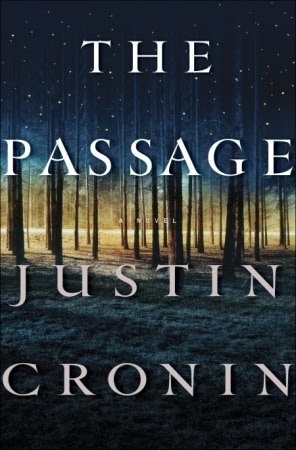
There is NO Bella in this book. No misty eyed teenage romance. There is no soul-searching Lestat who laments his life in overlong paragraphs filled with purple prose. There is no erudite Count with a cape. No Victorian damsels in flimsy nightgowns and heaving bosoms. In Justin Cronin’s The Passage, the “vampires” are the result of a military genetic experiment gone horribly wrong and ultimately, out of control. They are vicious, nasty, virtually unstoppable and very very hungry. The first 250 pages of The Passage are the best fiction I have read this year.

Now the bad:

passageUnfortunately, the book is 766 pages long. With two sequels on the way. The novel covers over 1000 years. The first section follows modern day events. A military/ scientific expedition in South America captures a jungle virus and takes the secret to a lab for study. They discover the virus increases strength in test monkeys and prolongs their lifespan. The government hatches plans to create a Super Soldier. FBI agent Brad Wolgast is put on special assignment with the military to bring “volunteer test subjects” from death row prisons across America to be infected with the virus. But when Wolgast is ordered by his military superiors to capture a 10 year old girl, Amy, and deliver her to the lab, he rebels. The army hunts them down and Amy is taken to the lab to be tested. Then, the world goes to hell.

Twelve of the infected creatures escape the lab and overnight destroy the entire military installation. Wolgast and Amy barely escape and spend the next several years living in isolation. Then … one day there is a brilliant explosion to the west. Amy is blinded by the nuclear blast, and Wolgast slowly dies of radiation poisoning.

The book then jumps 1000 years in the future. The creatures (called Virals or Jumps) have wiped out most of the human population. Ninety per cent of infected humans die – ten per cent become Virals themselves.

What follows is an alternately entertaining, horrific, tedious and ultimately, frustrating apocalyptic story of the human survivors and their civilization. This is where author Justin Cronin falls woefully short of his goals. Having published two short modern and very literary novels, Cronin branches into territory usually reserved for such “inferior” writers as Stephen King, Robert McCammon and Richard Matheson. When “serious” writers stoop to write horror or science fiction – genre fiction! – the result is usually well-written crap.

Several years ago we got the novel Jonathon Strange & Mr. Norrel, an old fashioned English novel about magic and evil. The literary world loved it … heaped praise upon it and claimed that it “redefined the horror novel.” It sure did – it redefined the horror novel as tedious and stodgy. The Historian was also forced upon us as a “brilliant re-working of the vampire legend.” The only brilliant thing about the book was its ad campaign. The book was literary sawdust. Remember when Norman Mailer (a literary giant, just ask him) claimed he could write a great mystery novel, and we got Tough Guys Don’t Dance? If you actually finished that book, your place in heaven is assured. Those of us going to hell will probably have to reread it for eternity.

There are sections of The Passage, and I mean dozens of pages, that beg to be skipped. Cronin often forgets he is NOT writing a mainstream novel where nothing is supposed to happen. He has chosen to write a genre novel for money … and of course, he can make it better than those popular writers because, after all … he is a serious novelist.

If you really want to read this kind of story, I recommend 2009’s The Strain, with a similar story and sweep (now a TV event on FX) or how about two all-time apocalyptic classics: The Stand by Stephen King and Swan Song by Robert MacCammon. Those two pulp writers managed to write a couple of horrific novels that are everything The Passage isn’t … great. 

For all its posturing (and intellectual promotion among the literary elites) The Passage is not a bad novel, just not a good one. I’m betting the Hollywood movie will be better than the book.

3 palmettos

THE LOST SYMBOL: A Review

HOW TO WRITE A BESTSELLER.

the_lost_symbolLet’s see: Your previous novel sold more copies than Wilt Chamberlain had sexual partners. What do you do for an encore?

  • Replace the Catholic Church with the Freemasons. Check!
  • Replace DaVinci’s painting “The Last Supper” with the architecture of Washington, DC. Check!
  • Keep the hero from your previous books, Robert Langdon. Check!
  • Replace Silas (from The Da Vinci Code), who practiced corporal mortification, with Mal’akh, a tattooed, self-castrated and brilliant villain who is in search of an ancient source of power. Check!
  • Toss in another brilliant (and gorgeous, of course) female character named Dr. Katherine Solomon. Check!
  • Make sure the characters get to visit most of the major buildings in DC. Check!
  • 5 million copies for a first run printing. Check!
  • Start thinking about the next project … hmmm, the Boy Scouts have some shady things in their past, don’t they? Check!

Final thoughts: The Lost Symbol is bad, but not as bad as Pat Conroy’s South of Broad. No one expects Dan Brown to deliver good writing … Conroy however, we do. Beyond bad, beyond comprehension. Recommended if you’re into agony.


Companion Read: The Brotherhood of the Rose by David Morrell.

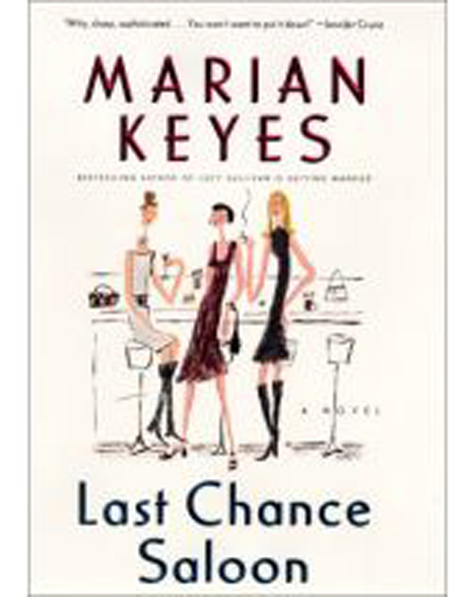
LAST CHANCE SALOON: A Review

Three friends from a small Irish town have lived in London for the past 12 years. Kathleen leads a quiet, orderly existence as an accountant for an advertising agency. She’s happy on her own, believing that romantic relationships only lead to pain. Tara shares a flat with her boyfriend, Thomas, and works as a computer analyst. Thomas is an opinionated cheapskate who constantly badgers Tara about her weight, but hey, it’s better than being single and she really does love him (she just doesn’t like him very much). Of the three, the gay man Fintan is the happiest, with a fashion design career and a caring partner.

last chanceKatherine is by far the most interesting and well-developed character. She is called the Ice Queen at by the men at her work, but she is doggedly pursued by her good-natured co-worker Joe, Katherine rebuffs him constantly until he stops his pursuit, and then Katherine realizes she is jealous when Joe begins to date another co-worker. Slowly, she releases the emotional baggage and wounds that have kept her distant for over a decade. By the end, she is by far the most settled character and her course of lie is set.

Tara is a difficult character to like. Her live-in BF, Thomas is unlikeable in every regard, but her low self-esteem keeps her in the relationship. It takes her waaay too long to grow a backbone and drop the loser, but at that point the reader has given up on liking her. Fintan is alternating cheery, flamboyant and brooding. His battle with cancer mainly serves as an impetus for Katherine and Tara to change their static lives.

Irish-born Keyes is the most literate of the British slate of chick-lit writers; she also has the best sense of humor and her writing gets better with each book. Last Chance Saloon was Keyes’ first non-first person narrative, jumping between five different character viewpoints effortlessly. She seems to be on her way to inheriting the mantle left  from the death of Maeve Binchy.

Breezy, funny and not-too-annoying as chick-lit. 


3 palmettos

Today In Charleston History: August 21

AUGUST 21

1687 – Piracy.

A small fleet of ships, commanded by Rear-Admiral Sir John Narborough, was dispatched “for suppressing pirates in the West Indies.” It was England’s first serious attempt at restraining the ever-growing threat from buccaneers. Pirates coming into any of the ports of the province [English controlled] were “to be seized and imprisoned, and their ships’ good and plunder were to be taken and kept in custody until his Majesty’s Royal pleasure should be known.”

One observer remarked “only the poor Pyrats were hanged; rich ones appear’d publicly and were not molested in the least.”

1863 –  Bombardment of Charleston.  

Gen. Gillmore wrote a note to General P.G. T. Beauregard, which was delivered to Gen. Johnson Hagood, commander of the Confederate Battery Wagner on Morris Island at 11:15 a.m. Gillmore demanded that Morris Island and Fort Sumter be evacuated, or the city would be shelled. He wrote that should Beauregard:

refuse compliance with this demand, or should I receive no reply thereto within four hours after it was delivered into the hands of your subordinate at Ft. Wagner for transmission, I shall open fire on the city of Charleston from batteries already established within easy and effective range at the heart of the city.

Later than night, Lt. Nathan Edwards took a compass reading of the white steeple of St. Michael’s Church from the “Swamp Angel” battery, in order to properly aim the gun at Charleston.

General_P_G_T_Beauregard

P.G.T. Beauregard

Beauregard was out inspecting the city’s fortifications and not present when the Gillman’s note was delivered to Beauregard’s chief of staff, Brig. Gen. Thomas Jordan. Gillmore forgot to sign the note (whether by accident or by design has never been ascertained) so Jordan returned it to Gillmore’s headquarters for verification. By the time the note was signed and returned to Confederate headquarters it was 9:00 a.m. the following morning and sixteen Union shells had already hit Charleston.

Today In Charleston History, August 20

AUGUST 20    

1731

In an attempt to establish an accurate land and rent roll, the Assembly passed the Quitrent Act. It voided all of the old Proprietary patents and ordered that, within eighteen months, these and all other land titles must be registered.

A law also established the South Carolina currency at a ratio of seven for one with sterling.

1781
st. michaels alley

St. Michael’s Alley, circa 1920

Francis Sheftall, a Jew who came to Charlestown after the fall of Savannah, wrote that after the occupation she:

rented a house in St. Michael’s Alley at the rate of 50 pounds sterling a year, and where the money is to come from god only knows for there is nothing but hard Money goes here and that I can assure you is hard enough to be got.

Today In Charleston History: August 19

AUGUST 19

1776 – American Revolution – Continental Congress.  

Edward Rutledge wrote that the states would not approve the Articles of Confederation “as they stand now.” The southern delegations opposed the provision that each state should contribute financially in proportion to their population, including slaves.

edward rutledge 2In an argument which was to continue for the next ninety years, Southern delegates argued that slaves were wealth-producing property, not people. Thomas Lynch, Jr. of South Carolina said that if the North wanted to debate whether slaves were property “there is an End of the Confederation.”

Edward Rutledge argued it was “unfair to base taxes on one form of wealth-producing property and not others, such as land and livestock.” He also wrote:

I propose that the States should appoint a special Congress to be composed of new Members for this purpose – and that no Person should disclose any part of the present plan.