Today In Charleston History: October 14

1735 – Religion

At the request of James Oglethorpe and through the offices of the Society for the Propagation of the Gospel, John Wesley and his brother Charles sailed from Kent, England on the Simmonds to Savannah, as minister to the new settlers.

1776 – American Revolution

The Legislature announced the sale of several hundred chests of tea, which had been stored in the Exchange basement for three years. The tea had been seized from the ship Magna Carta in June 1774. The money from the sale of the tea was used in support of the Patriot cause in South Carolina.

The besement, or "dun

The basement, or “dungeon” of the Exchange.

Today In Charleston History: October 13

1758 –Deaths 

Charles Pinckney died of malaria in Charlestown. His wife, Eliza, was nearly overcome with her grief. She wrote to her sons:

How shall I write to you! What shall I say to you! You have met with the greatest loss … Your dear, dear father, the best and most valuable of parents, is no more! He met the king of terrors without the least terror … and without agony, and went like a Lamb into eternity, into a blessed Eternity! where I have not the least doubt he will reap immortal joy for Ever and Ever.

1807
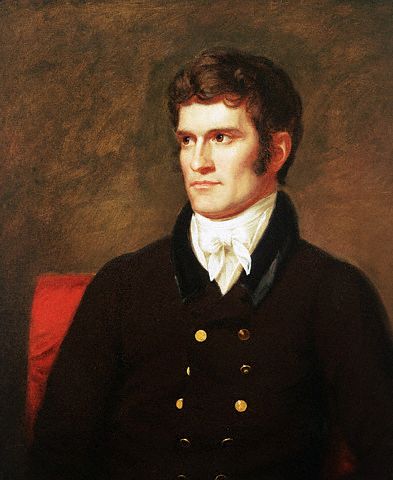
1822 portrait of John C. Calhoun ... before he became so scary-looking.

1822 portrait of John C. Calhoun … before he became so scary-looking.

John C. Calhoun was elected to the South Carolina general assembly from his home town Abbeville, SC.

Today In Charleston History: October 12

1492 – The Roots of America

Christopher Columbus’ Spanish-financed expedition landed on what is now The Bahamas. This discovery attracted the attention of Europe to the riches available in the New World, inspiring France, Portugal, Spain, England, and the Dutch to send explorers. Without this successful expedition, the history of the founding of North America would be completely different. 

1833   

Thomas Grimke died after a visit to his sisters Sarah and Angelina Grimke in Philadelphia. He was their last close tie to Charleston. They were now completely cut off from their hometown.grimke sisters

1861

A blockade-running ship, Theodora, left Charleston under the command of Captain Thomas Lockwood. On board were the two Confederate European representative, James Mason and John Slidell. The ship was owned by a syndicate headed by F. T. Porcher. George A. Trenholm, officer for Fraser, Trenholm and Company, put up half the money to supply the ship for voyage, in return for a handsome profit. Mason and Slidell were taken to Havana, Cuba to catch passage to England. They were captured by the USS San Jancinto and arrested.

She was built as Carolina at Greenpoint, N.Y., in 1852 for service as a coastal packet out of Charleston, S.C., occasionally crossing to Havana, Cuba. Upon outbreak of Civil War she was strengthened and refitted as the Gordon, under Capt. T. J. Lockwood, and placed in commission as a privateer at Charleston on 15 July 1861.

Historic Charleston Image #2 : Three views of 1 Broad Street

1 meeting st

1 Broad Street, Harper’s Weekly. East Bay Street to the left, Broad Street to the right.

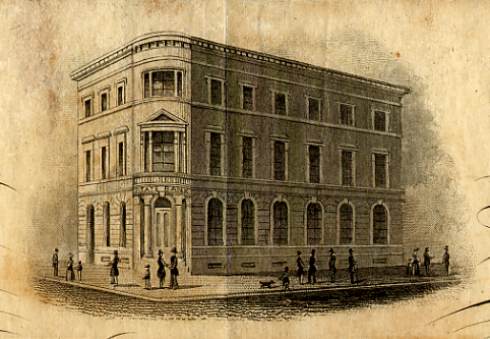
An handsome 1853 structure designed and built by Edward C. Jones and Francis Lee, prominent Charleston architects in the Italian Renaissance Revival style. It is faced with Connecticut brownstone at a cost of $100,000 for the State Bank of South Carolina.

During the War Between the States, the building sustained damage by Federal shelling and was purchased and rehabilitated by George A. Trenholm, infamous Charleston blockade runner and former Treasurer of the Confederacy. Trenholm was sued by the Federal government after the War for the import duties on his illegal blockade goods and was forced to liquidate the building.   

1 broad street, state_bank

An engraving showing the Bank of the State of South Carolina building in Charleston from a bank stock certificate.

In 1875 the building was purchased by another former blockade runner, George W. Williams, who founded the Carolina Savings Bank in the structure. By 1897 the bank was on the first floor while the second floor housed the offices for Southern Bell, the new established phone company. The third floor housed the local office of the U.S. Weather Bureau.

Throughout the 20th century, the building housed a series of banks. It is currently vacant.

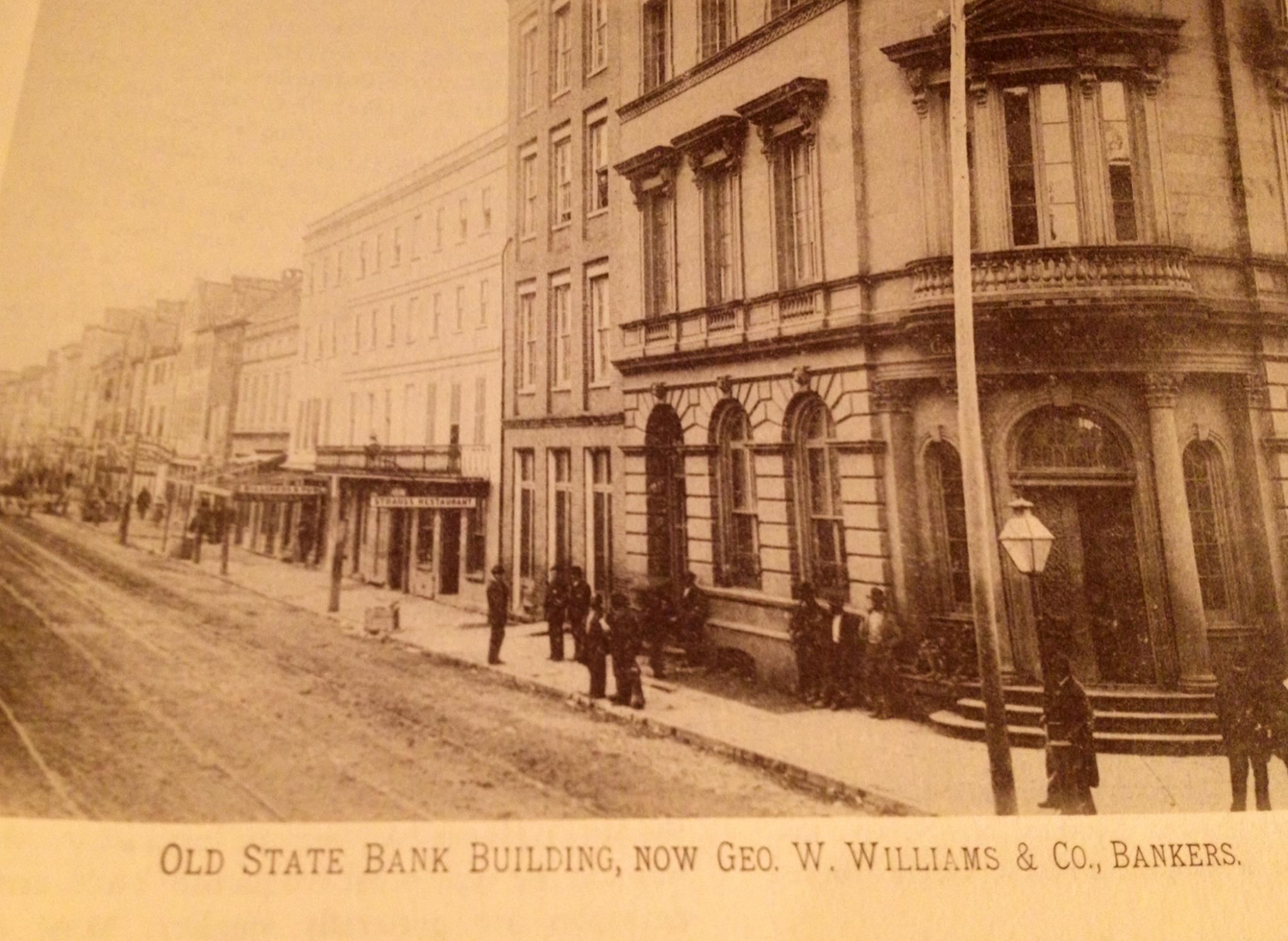
1 Broad Street

1 Broad Street, looking down East Bay, circa 1910. The row of buildings stretching down East Bay is the now-famous Rainbow Row

Time and Again: A Review (Essentials – Books)

Did illustrator Si Morley really step out of his 20th century New York City apartment one night – right into the winter of 1882?

The U.S. Government believed he did, especially when Si returned with a portfolio of brand-new sketches and tintype photos of a world that no longer existed … or did it?
Time-and-Again-Novel-Cover Simon Morley, an advertising sketch artist, is approached by U.S. Army Major Ruben Prien to participate in a secret government project. He is taken to a huge warehouse on the West Side of Manhattan, where he views what seem to be movie sets, with people acting on them. It seems this is a project to learn whether it is feasible to send people back into the past by what amounts to self-hypnosis—whether, by convincing oneself that one is in the past, not the present, one can make it so.

640px-The_Dakota_1880s

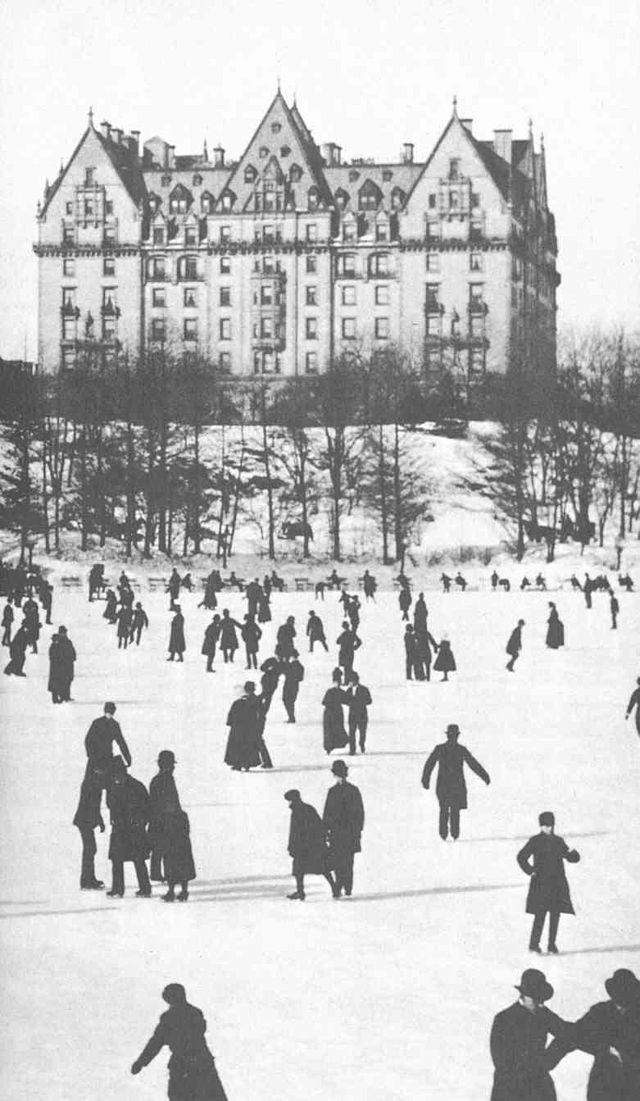
One of Sy Morley’s photos taken during his travel back in time to NYC of 1880.

Published in 1970, Time and Again is one of the greatest and most famous time travel books ever written, and deservedly so. Finney’s time travel premise is that if one gets into the “mindset” so to speak – wears the clothes, speaks the dialect, uses only those things that were available in 1882 in New York City, then the black hole will open up and transport one back to that time. Which is exactly what happened to Simon Morley as he sat and lived in his government rented apartment overlooking Central Park.

Indeed, Central Park itself is a major theme within this book, as it seems to be the clock around which New York City was able to judge its progress over the years. Simon Morley does have many adventures within the Manhattan of 1882, and as he rents lodging in lower Manhattan, he meets and falls in love. Thus Finney sets the scene for the conflict of love and time travel, forcing his protagonist to make a decision between different time periods.

Written with a charming magic of historical detail and illustrated with photos “taken by Morley” which are actually just historical photos of old New York. Highly recommended!

Companion Read: Replay by Ken Grimwood

Today In Charleston History: October 11

1803

 Capt. Joseph Vesey married his fourth wife, Maria Blair, a wealthy Charleston widow. He moved back into town and purchased a house at 41 Anson Street, which was destroyed by the 1838 fire. His man servant, Denmark, lived in the house with the couple. 

Currently the location is a private home, constructed in 1840.

Today In Charleston History: October 10

1765 – Elections

The people of the back country of South Carolina decided to show their unhappiness with the Charlestown politicians during the election. Many rode more than 100 miles to vote. The voters of St. Paul’s parish (Colleton County) arrived to discover that the election had been held ten days before the announced date. They were told by Charlestown officials that was due to an error by the printer, which no one believed.

1935
p&b6

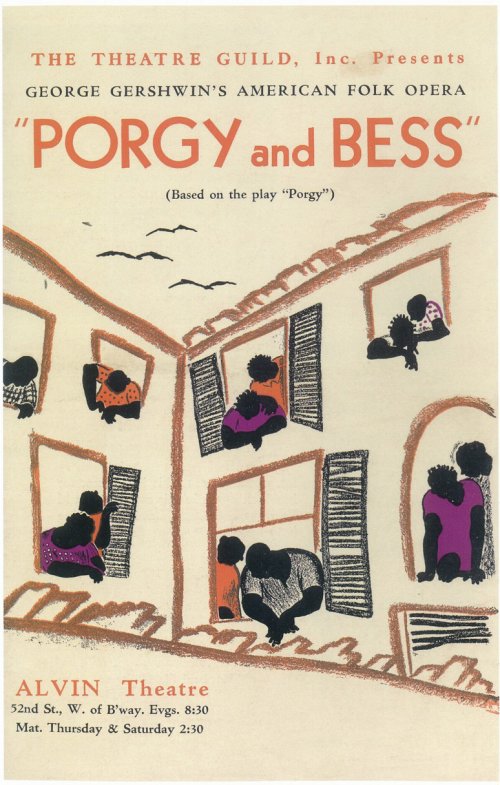
Original playbill

The New York opening of Porgy and Bess took place at the Alvin Theatre in New York City and ran for 124 performances, impressive for an opera, and but woefully short for a musical. The reviews were decidedly mixed. Brooks Atkinson wrote in the New York Times, October 9, 1935:

After eight years of savory memories, Porgy has acquired a score, a band, a choir of singers and a new title, Porgy and Bess, which the Theatre Guild put on at the Alvin last evening … Although Mr. Heyward is the author of the libretto and shares with Ira Gershwin the credit for the lyrics, and although Mr. Mamoulian has again mounted the director’s box, the evening is unmistakably George Gershwin’s personal holiday … Let it be said at once that Mr. Gershwin has contributed something glorious to the spirit of the Heywards’ community legend.

Composer/critic Virgil Thomson, writing for the New York Herald-Tribune, was less kind, calling Gershwin’s incorporation of blues and jazz influences into a “serious” operatic score to be “falsely conceived and rather clumsily executed…crooked folklore and half-way opera.”

17b. porgy and bess (loc) blank pg. 170

Porgy and Bess, original cast

Today In Charleston History: October 9

1784

Capt. Joseph Vesey imported “3000 Gallons of rum and 1 Negroe Woman from Guadaloupe on the brig Le Vigilant.”

By this time Vesey’s manservant, Telemaque, as he was known in the African population, had been taught to read by his master and was an important part of Vesey’s business. Telemaque realized city slaves had larger freedom of movement than those living on plantations. More than half of Telemaque days were spent apart from his Master’s house and business, a freedom of movement enjoyed by a majority of the slaves in Charlestown.  As Frederick Douglass wrote, “A city slave is almost a freeman, compared with a slave on the plantation.”

Through the years Telemaque became fluent in French, English, and Gullah, the common language among the slaves, born out of a diverse linguistic pool. His formal name was difficult for most Africans to pronounce, so it had been simply shortened to a nickname, “Telmak.” 

1886, Natural Disaster – Charleston Earthquake

Forty days after the earthquake, mass food distribution by the Earthquake Relief Committee (ERC) to the citizens of Charleston ended. There were less than 300 people in need, who were cared for by other charities.

eq - harpers illustrations

Harper’s Weekly – images of Charleston relief efforts

Today In Charleston History: October 8

1678

Captain Florence O’ Sullivan claimed two town lots on Oyster Point.

1698 – Slavery

The Assembly passed “An Act for the Encouragement of the Importation of White Servants.” Afraid of the growing number of blacks who had been imported as slaves, the South Carolina Assembly passed a law granting £13 to anyone who would bring a white male servant into the province as “…the great number of negroes which of late have been imported into this Colony may endanger the safety thereof.”

The Act also set out terms of indenture service: those over sixteen years old should serve at least four years, those under sixteen no less than seven years.

1817

John C. Calhoun was appointed Secretary of War by Pres. James Monroe. He would hold the position for eight years.

John_C_Calhoun_by_Mathew_Brady,_1849

Today In Charleston History: October 7

1765 – Stamp Act

The Stamp Act Congress convened in New York City. South Carolina was the only southern colony to send representatives:

  • Christopher Gadsden  a wealthy Charleston merchant and plantation owner. He was an important figure in South Carolina’s Sons of Liberty and later served in the Continental Army
  • Thomas Lynch  – a major South Carolina plantation owner and a friend of co-delegate Christopher Gadsden, he later actively supported independence.
  • John Rutledge – at 26, Rutledge was the youngest delegate in attendance. He was the provincial attorney general at the time and later served in a variety of pro-independence roles in South Carolina. He was briefly appointed Chief Justice of the United States by George Washington in 1795.

For the first time, the South Carolina men learned of the violent August protests in Boston in which the stamp officer, Andrew Oliver, was hanged in effigy and Sheriff Greenleaf and Lt. Gov. Hutchinson were stoned when they tried to intervene. 

gadsden and rutledge